When you see a billboard advertising "VW EV lease deals starting at $299/month," it's easy to assume you're getting a bargain. But leasing an electric vehicle involves a unique set of financial variables that don't apply to traditional gas cars—specifically, how the federal tax credit works, the reality of EV depreciation, and the hidden costs of insurance and charging.
As we move through the 2026 model year, Volkswagen's electric lineup—primarily the ID.4 and the newly refreshed ID.7—presents a compelling case for leasing over buying, largely due to a specific quirk in the tax code. This guide dissects the actual math behind those lease offers, separating marketing gloss from the real cost of ownership.
The "Lease Loophole": Why VW EV Lease Deals Are So Aggressive
To understand why VW can offer such competitive lease rates on the ID.4, you have to understand the difference between the New Clean Vehicle Credit (§30D) and the Commercial Clean Vehicle Credit (§45W).
For a consumer buying an EV outright, the §30D credit is a minefield of restrictions: your income must be below certain caps, the vehicle's MSRP cannot exceed $80,000 (for SUVs like the ID.4) or $55,000 (for sedans), and the battery must meet strict critical-mineral and component sourcing requirements from the US or its free-trade partners.
However, when you lease a vehicle, the leasing company (the lessor) is technically the buyer. Under §45W, the commercial credit has no MSRP caps, no income caps, and no battery-sourcing restrictions. Most automakers, including Volkswagen, pass this $7,500 incentive directly to the lessee as a "lease cash" rebate, which acts as a capitalized cost reduction. This is why you'll often see VW EV lease deals that effectively lower the monthly payment by $100–$150 compared to financing the same car.
Federal Tax Credit Rules: Buying vs. Leasing (2026)
- Buying (§30D): Income caps apply ($150k single / $300k joint). MSRP caps apply. Battery sourcing rules apply. Point-of-sale transfer available.
- Leasing (§45W): No income caps. No MSRP caps. No battery sourcing rules. Credit goes to the lessor (usually passed to you as a rebate).
- State/Local Incentives: Vary wildly by region. Check your local utility for Level 2 charger rebates or off-peak charging credits.
2026 VW ID.4: The Lease Baseline
The 2026 Volkswagen ID.4 remains the volume seller for VW's electric lineup. While the ID.7 sedan is available, the ID.4's SUV form factor and pricing make it the primary target for most lease shoppers. Here is the spec sheet you need to know before signing.
| Spec | 2026 VW ID.4 Pro S (RWD) | 2026 VW ID.4 AWD Pro S |
|---|---|---|
| MSRP (approx) | $46,000 | $51,000 |
| Battery / Chemistry | 82 kWh (usable) / NMC | 82 kWh (usable) / NMC |
| EPA Range | 291 miles | 263 miles |
| Real-World Range (70 mph Hwy) | ~245 miles | ~220 miles |
| Peak DC Fast Charge | 170 kW | 170 kW |
| 10-80% Charge Time | ~28 minutes | ~28 minutes |
| Horsepower | 282 hp | 335 hp |
| 0-60 mph | 7.7 seconds | 5.4 seconds |
Real-World Range Note: The EPA sticker says 291 miles for the RWD model, but that assumes a mix of city and highway driving. On a purely highway road trip at 70+ mph, expect roughly 245 miles of range. In freezing temperatures (below 32°F), NMC chemistry can see a 20–30% reduction, dropping effective range to ~180–200 miles. The ID.4's heat pump (standard on most trims) helps mitigate this, but physics is physics.
5-Year Total Cost of Ownership: Lease vs. Buy vs. Gas
Let's run the numbers on a 36-month lease (the standard VW deal structure) versus buying the ID.4 and versus buying a comparable gas SUV (like the Tiguan). We'll project the EV costs over 5 years (60 months) to account for what happens after the lease ends—specifically, the cost to either buy out the lease or switch to a new vehicle.
| Cost Category | VW ID.4 (Lease + Buyout) | VW ID.4 (Buy Outright) | Gas SUV (Tiguan AWD) |
|---|---|---|---|
| Purchase/Lease Payments | $22,000 (36 mo) + $28k buyout | $48,000 (after credit) | $38,000 |
| Fuel / Charging | $3,600 | $3,600 | $9,500 |
| Maintenance | $1,200 | $1,800 | $4,500 |
| Insurance (5 yr) | $11,500 | $11,500 | $9,000 |
| Depreciation (Net Loss) | High (EV resale volatility) | High (EV resale volatility) | Moderate |
| Est. 5-Year Cash Out | ~$66,300 | ~$64,900 | ~$61,000 |
Note: The "Lease + Buyout" scenario assumes you lease for 3 years and then finance the residual for 2 years. The "Buy Outright" scenario assumes you capture the $7,500 lease cash or §30D credit upfront. Gas costs assume $3.50/gal at 25 MPG combined; EV charging assumes $0.16/kWh national average.
The Charging vs. Gas Math: Where You Actually Save
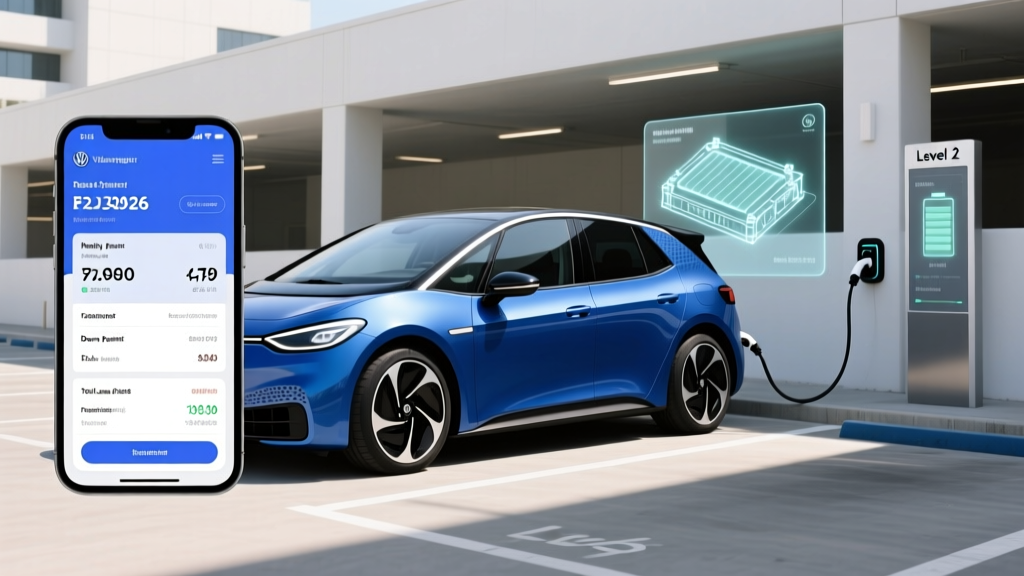
The primary financial advantage of the ID.4 is fuel. However, the savings depend entirely on your access to cheap home charging. If you are forced to rely exclusively on DC fast charging networks like Electrify America or Tesla Superchargers (open to non-Teslas), your "fuel" cost can actually exceed that of a gas car.
| Energy Source | Cost per Unit | Cost per Mile (ID.4) | Cost per Mile (Gas SUV) |
|---|---|---|---|
| Home Level 2 (National Avg) | $0.16 / kWh | $0.05 | $0.14 (at 25 MPG) |
| Home Solar / Off-Peak | $0.08 / kWh | $0.025 | $0.14 |
| Public DC Fast Charger | $0.48 / kWh | $0.15 | $0.14 |
The ID.4 averages about 3.0 miles per kWh (or ~33 kWh/100 miles). At the national average home electricity rate of $0.16/kWh, you are paying roughly 5 cents per mile. A comparable gas SUV getting 25 MPG at $3.50/gallon costs 14 cents per mile. Over 12,000 miles a year, that's a savings of $1,080 annually—but only if you charge at home.
Maintenance and Insurance: The Hidden Variables
Maintenance on the ID.4 is minimal. There are no oil changes, no spark plugs, no transmission fluid, and the cabin air filter is a $30 DIY job. The regenerative braking system significantly extends the life of the friction brake pads; it's not uncommon for EV brake pads to last 100,000+ miles. However, you must factor in tire wear. EVs are heavy (the ID.4 AWD is over 4,700 lbs) and produce instant torque, which can wear through tires 20–30% faster than a gas car.
Insurance, unfortunately, is the budget killer. EV insurance premiums are typically 15–25% higher than equivalent gas vehicles. Insurers cite higher repair costs, specialized parts, and the total-loss risk associated with battery damage. For a 2026 ID.4, expect to pay roughly $2,300/year in insurance, compared to $1,800 for a Tiguan. Always get a quote before signing the lease.
Depreciation: The Case for Leasing
EV depreciation has been volatile over the last three years. Due to rapid price cuts by Tesla and the influx of new models, used EV values plummeted in 2023–2024. While the market has stabilized in 2026, EVs still generally depreciate faster than reliable gas SUVs like the Toyota RAV4.
This is exactly why leasing is the safer financial play for a VW EV. When you lease, the leasing company (not you) takes the risk on the car's future value. If the ID.4's resale value tanks in three years because a new solid-state battery SUV hits the market, you simply hand the keys back and walk away. If you buy, that depreciation is your loss.
FAQ: VW EV Lease Questions Answered
Can I buy the ID.4 at the end of the lease?
Yes, VW Finance typically allows a lease buyout at the residual value stated in your contract. However, check the fine print: some third-party lessors do not allow buyouts, though VW's captive finance arm usually does.
Does the ID.4 qualify for the $7,500 tax credit if I buy?
It depends on the battery sourcing. As of 2026, the US-built ID.4 (Chattanooga, TN) has shifted supply chains to meet critical mineral requirements, but you must verify the specific VIN on the IRS portal before purchasing to ensure it qualifies under §30D. Leasing bypasses this check entirely.
What happens if I exceed my mileage limit on the lease?
Standard VW leases are 10,000 or 12,000 miles per year. Excess mileage fees are typically $0.20 to $0.25 per mile. If you are a high-mileage driver, the fuel savings of the EV might be eaten up by these penalties.
Is the free charging offer still available?
VW has historically offered 3 years of free 30-minute sessions on Electrify America for new ID.4 buyers/lessees. This promotion changes frequently; verify with your local dealer if it is active for the 2026 model year.
Final Verdict: Who Should Lease the ID.4?
The 2026 VW EV lease deals are a strong option for drivers who have access to home charging, drive fewer than 15,000 miles a year, and want to hedge against EV depreciation risk. The "lease cash" rebate effectively lowers the barrier to entry, making the monthly payment competitive with gas crossovers. However, if you drive high miles, lack home charging, or cannot afford the higher insurance premiums, the math may not work in your favor.