The Short Answer: Is There a VW Electric Golf in 2026?
Volkswagen does not sell a vehicle badged "Electric Golf" in the United States for the 2026 model year. The original e-Golf was discontinued after 2019. Today, VW's electric lineup centers on the ID.4 compact crossover (the closest US-available successor in spirit and price) and the ID.3 hatchback, which is sold in Europe but not officially imported to the US. If you're searching for a "VW electric Golf," you're likely looking at one of three paths: a used e-Golf (2015–2019), the new ID.4 as VW's mainstream EV, or a grey-market ID.3. This guide breaks down each option with real numbers so you can decide which fits your budget and driving needs.
The e-Golf Legacy: What VW's Original EV Got Right (and Wrong)
Before VW pivoted to its dedicated MEB electric platform, the e-Golf was essentially a standard Golf with a battery stuffed underneath. For model years 2015–2016, it carried a 24.2 kWh battery delivering just 83 miles of EPA range. The 2017–2019 refresh bumped that to a 35.8 kWh pack with a 125-mile EPA range — adequate for city commuting but a tough sell for anyone with highway ambitions or cold winters.
The e-Golf's charm was its normalcy. It drove like a Golf, looked like a Golf, and charged on a standard J1772/CCS connector. But its limitations are stark by 2026 standards:
- Battery: 35.8 kWh gross (~31.5 kWh usable), NMC chemistry
- EPA Range: 125 miles (2017–2019); expect 90–105 miles in cold weather or sustained highway driving
- DC Fast Charging: Peak 50 kW on CCS — 10–80% in roughly 45 minutes
- Level 2 Charging: 7.2 kW onboard charger, ~4.5 hours for a full charge
- Motor Output: 134 hp, 214 lb-ft torque; 0–60 mph in ~9.6 seconds
- Used Market Price (2026): $11,000–$17,000 depending on mileage and battery health
If you're considering a used e-Golf, the critical question is battery State of Health (SoH). After 7–10 years, expect 80–90% capacity retention depending on climate and charging habits. Always request a pre-purchase battery diagnostic. The original EPA-rated 125 miles could realistically be 100–112 miles on a well-maintained example.
The ID.4: VW's Real Electric Golf Successor in America
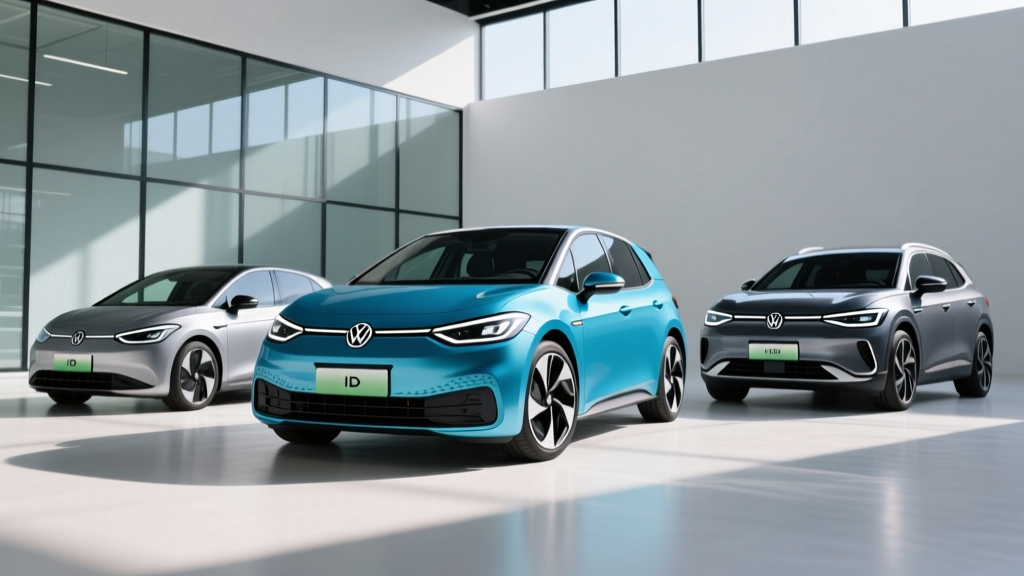
For US buyers who want a new VW electric vehicle in the Golf's price bracket, the 2026 VW ID.4 is the answer. It's technically a compact crossover, not a hatchback, but it occupies the same practical, affordable, everyday-EV niche the Golf once held.
| Spec | Standard Range (RWD) | Pro S AWD |
|---|---|---|
| Battery (usable) | 62 kWh (NMC) | 82 kWh (NMC) |
| EPA Range | 206 miles | 275 miles |
| Real-World Range (highway/cold) | ~160–180 miles | ~220–245 miles |
| Motor Power | 201 hp | 335 hp (dual motor) |
| 0–60 mph | ~7.7 sec | ~5.4 sec |
| Peak DC Fast Charge | 140 kW | 175 kW |
| 10–80% DC Charge Time | ~28 min | ~30 min |
| Level 2 Charge Rate | 11 kW | 11 kW |
| MPGe (combined) | 107 MPGe | 98 MPGe |
| Base MSRP | $39,735 | $48,735 |
| Battery/Powertrain Warranty | 8 years / 100,000 miles (70% capacity retention) | |
Real-World Range Reality: The EPA 275-mile figure on the Pro S AWD assumes moderate temperatures and mixed driving. On a 70-mph highway run in 30°F weather, expect closer to 200–215 miles before you need to plug in. VW's thermal management system is competent but not class-leading; preconditioning the battery via the app before DC fast charging is essential for hitting peak charge speeds.
The ID.3: The Hatchback VW Won't Sell You (In the US)
If you specifically want a hatchback — the true Golf form factor — VW builds exactly that: the ID.3. Launched in 2020 and refreshed for 2024–2025, it's Europe's best-selling VW electric car. In its latest iteration, the ID.3 Pro S carries a 77 kWh battery with up to 340 miles of WLTP range (roughly 280–290 miles EPA-equivalent). It's nimble, practical, and priced competitively in Europe at around €35,000–€45,000.
The problem? VW does not sell the ID.3 in the United States and has no announced plans to do so for 2026 or 2027. The US market gets the ID.4 and the larger ID.Buzz van. Grey-market imports are technically possible but involve significant cost, homologation hurdles, and no warranty support. For most American buyers, the ID.3 remains an enviable "what if."
EV vs. Gas vs. Hybrid: What Does a VW Electric Golf Cost to Own?
Let's put real numbers behind the decision. Below, we compare a used 2019 e-Golf, a new 2026 ID.4 Pro S AWD, a comparable gas hatchback (2026 VW Golf GTI as a spiritual benchmark), and a plug-in hybrid alternative (2026 Toyota Prius Prime) over a 5-year, 75,000-mile ownership period.
| Cost Factor | Used 2019 e-Golf | 2026 ID.4 Pro S AWD | 2026 Golf GTI (Gas) | 2026 Prius Prime (PHEV) |
|---|---|---|---|---|
| Purchase Price | $14,000 | $48,735 | $34,500 | $34,000 |
| Federal Tax Credit (§30D) | Up to $4,000 (used EV)* | Up to $7,500 (new EV)* | $0 | Up to $7,500* |
| Fuel/Energy (5 yrs) | $2,250 | $3,750 | $7,500 | $3,000 |
| Maintenance (5 yrs) | $1,200 | $1,500 | $3,500 | $2,800 |
| Insurance (5 yrs est.) | $5,500 | $8,500 | $6,500 | $6,000 |
| Estimated Depreciation | $4,000 | $16,000 | $12,000 | $10,500 |
| Total 5-Yr Cost | $18,950 | $46,485 | $51,500 | $35,800 |
*Tax credit eligibility depends on income caps, MSRP limits, battery sourcing requirements, and point-of-sale transfer rules under IRS §30D. The used-EV credit (§25E) is capped at $4,000 or 30% of sale price, whichever is lower, on vehicles under $25,000. Always verify current-year eligibility with a tax professional.
The used e-Golf is the cheapest path to VW electric ownership by a wide margin, but you accept limited range, aging battery risk, and no new-car warranty. The ID.4 is costlier upfront but delivers modern range, fast charging, and full warranty coverage. The PHEV Prius Prime splits the difference: electric-only commuting with gas backup for road trips.
Charging at Home: The Make-or-Break Question
Every EV buying guide must address the elephant in the garage: do you have access to home charging? This single factor determines whether EV ownership is a delight or a chore.
| Level | Power (kW) | Miles Added per Hour | Full Charge Time | Typical Use Case |
|---|---|---|---|---|
| Level 1 (120V outlet) | 1.2–1.4 kW | ~3–4 mi/hr | ~60+ hours | Emergency/top-up only |
| Level 2 (240V, 48A) | 11 kW | ~30–33 mi/hr | ~8 hours | Overnight home charging |
| DC Fast (175 kW peak) | 175 kW | ~230 mi/hr (peak) | 10–80% in ~30 min | Road trips, public stations |
A Level 2 home charger is practically mandatory for daily EV satisfaction. Installation costs vary widely:
| Component | Low Estimate | High Estimate |
|---|---|---|
| Level 2 Charger Hardware (e.g., ChargePoint Home Flex, Emporia) | $350 | $700 |
| Electrician Labor (240V/50A circuit run) | $500 | $2,000 |
| Permit & Inspection | $50 | $300 |
| Electrical Panel Upgrade (if needed, 100A→200A) | $1,500 | $4,000 |
| Total (no panel upgrade) | $900 | $3,000 |
| Total (with panel upgrade) | $2,400 | $7,000 |
If you live in an apartment or condo without dedicated parking and charging access, a PHEV like the Prius Prime or a gas vehicle may be more practical until public charging infrastructure matures in your area. The AFDC charging locator can help you assess public options near your home and commute.
Common EV Misconceptions — Fact-Checked
| Myth | Fact |
|---|---|
| "EV batteries need replacing every few years." | VW warranties the ID.4 battery for 8 years/100,000 miles with a 70% capacity retention guarantee. Industry data shows most NMC batteries retain 85–90% capacity at 100K miles. Full replacement costs $12,000–$18,000 but is rarely needed. |
| "Cold weather destroys EV range." | Cold reduces range — expect 15–30% loss in sub-freezing temps. The ID.4's heat pump (standard on many trims) mitigates this. Preconditioning while plugged in preserves range. It's a real limitation, not a dealbreaker for most climates. |
| "Charging takes too long for road trips." | The ID.4 Pro S charges 10–80% in ~30 minutes at a 175 kW DC station. Combined with rest stops and meals, this adds ~15–20 minutes per 200 miles of highway driving. Planning apps like A Better Routeplanner optimize stops. |
| "EVs are always cheaper to own." | Not always. Higher insurance premiums, upfront purchase costs, and depreciation can offset fuel savings. The 5-year TCO depends on your mileage, electricity rate, and whether you qualify for tax credits. Run the numbers for your specific situation. |
| "The VW ID.4 qualifies for the full $7,500 tax credit." | Eligibility depends on your income (≤$150K single / $300K joint), the vehicle's MSRP (≤$80K for SUVs), and battery mineral/component sourcing rules that tighten annually. The ID.4 assembled in Chattanooga, TN has qualified for partial or full credits depending on model year — always verify on fueleconomy.gov before purchasing. |
Decision Framework: Which VW Electric Golf Path Is Right for You?
Choose the Used e-Golf (2017–2019) if:
- Your daily round-trip commute is under 60 miles
- You have reliable Level 2 home charging
- Your budget is under $18,000
- You live in a mild climate (less cold-weather range loss)
- You want the true Golf hatchback experience
Choose the New 2026 ID.4 if:
- You need 250+ miles of real-world range for road trips
- You want modern DC fast charging (175 kW) for travel
- You qualify for the §30D federal tax credit (up to $7,500)
- You want a full 8-year battery warranty and the latest ADAS (Travel Assist, lane-centering)
- You can accept a crossover body style instead of a hatchback
Choose a PHEV Alternative (Prius Prime, etc.) if:
Wait or Look Elsewhere if:
- You absolutely need a new VW electric hatchback in the US — VW has not announced a US-spec ID.2 or ID.3 for 2026–2027
- You need a vehicle under $25,000 with 250+ mile range — no new EV meets this in 2026 without incentives
Frequently Asked Questions
Does VW still make the e-Golf?
No. The VW e-Golf was discontinued after the 2019 model year in the US. It was replaced in VW's lineup by the ID.4 crossover, which launched for the 2021 model year. Used 2017–2019 e-Golfs remain available on the secondary market.
Can I buy the VW ID.3 hatchback in the United States?
Not through official VW channels. The ID.3 is sold exclusively in Europe, the UK, and select other markets. VW has cited US regulatory requirements, market preferences for crossovers, and dealership network considerations as reasons for not importing it. Grey-market importation is possible but expensive and impractical for most buyers.
What is the real-world range of the 2026 VW ID.4?
The EPA rates the ID.4 Pro S AWD at 275 miles. In real-world highway driving at 70+ mph, expect 230–245 miles in mild weather and 200–215 miles in freezing temperatures. The Standard Range RWD model's 206-mile EPA rating translates to roughly 165–180 miles on the highway.
How long does it take to charge a VW ID.4 at home?
With an 11 kW Level 2 home charger (240V, 48A), a full charge from empty takes approximately 8 hours for the 82 kWh battery. Most owners plug in overnight and wake up to a full charge every morning, which is the ideal EV ownership experience.
Does the VW ID.4 qualify for the $7,500 federal EV tax credit?
The ID.4 assembled at VW's Chattanooga, Tennessee plant has qualified for varying levels of the §30D credit depending on model year and evolving battery sourcing rules. For 2026, eligibility depends on critical mineral and battery component requirements, your income (≤$150K single / ≤$300K joint), and the vehicle's MSRP (≤$80K for SUVs/crossovers). The credit can now be transferred to the dealer at point of sale for an instant price reduction. Always verify current eligibility at fueleconomy.gov and consult a tax professional.
What does it cost to charge a VW ID.4 vs. fueling a gas Golf?
At the US average electricity rate of ~$0.17/kWh, fully charging the 82 kWh ID.4 battery costs roughly $13.94, yielding about $0.05 per mile. A gas Golf GTI getting 28 MPG combined at $3.40/gallon costs about $0.12 per mile. Over 15,000 miles per year, the ID.4 saves approximately $1,050 in energy costs annually — more if your electricity rate is lower or you have access to free workplace charging.
Is the VW ID.4 self-driving?
No. The ID.4 features VW's IQ.DRIVE suite, which includes Travel Assist — a SAE Level 2 driver-assistance system combining adaptive cruise control and lane-centering. The driver must remain fully attentive, keep hands on the wheel, and supervise at all times. This is not autonomous driving. Only Level 4 services like Waymo operate without a human driver, and those are limited to specific geofenced areas.