Quick Answer: Is VW's Electric Lineup Worth Buying in 2026?
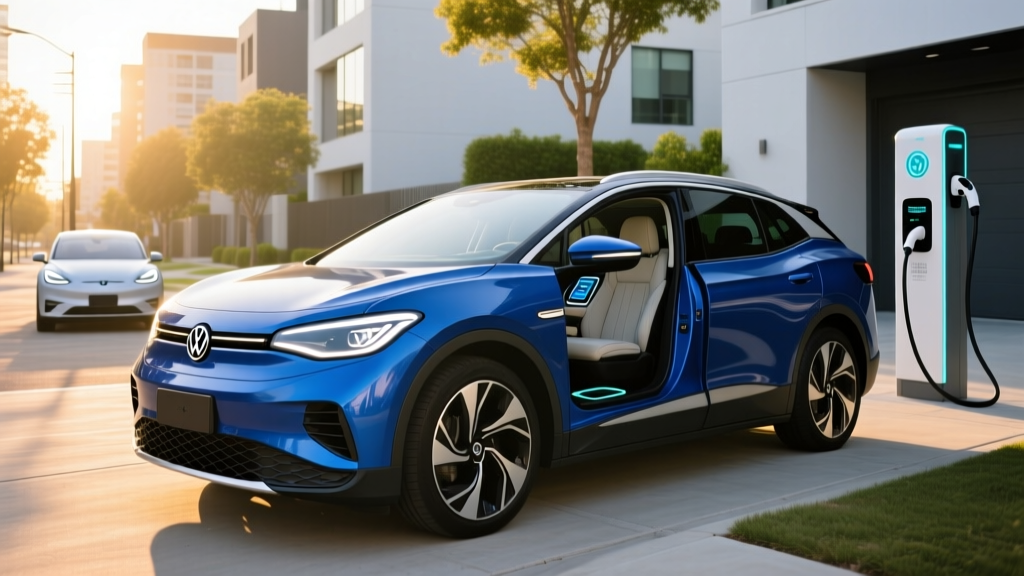
Volkswagen's primary EV offering in the U.S. is the ID.4, a compact electric SUV starting at $44,990 MSRP (Pro trim) with an EPA-estimated 275 miles of range on the rear-wheel-drive model. The all-wheel-drive Pro S variant adds dual motors (335 HP) and drops range to 263 miles. For buyers with access to home Level 2 charging and moderate daily commutes, the ID.4 is a practical, family-sized EV. However, its DC fast-charging speed (peak 170 kW) trails competitors like the Hyundai Ioniq 5 (peak 240 kW), and real-world highway range typically lands between 230–250 miles. Federal tax credit eligibility under IRS §30D depends on battery sourcing, buyer income, and MSRP caps — verify your specific situation before purchasing.
What VW Electric Cars Are Available Right Now?
Volkswagen's U.S. EV lineup centers on the ID.4, built at the company's Chattanooga, Tennessee plant. The ID. Buzz (an electric microbus revival) launched for the 2025 model year and continues into 2026, but it occupies a niche minivan segment at a higher price point (~$59,995 starting MSRP). The ID.7 sedan, announced for European and Chinese markets, has not been confirmed for U.S. sale as of early 2026.
For mainstream buyers evaluating VW and electric cars for the first time, the ID.4 remains the volume model and the one most likely to cross-shop against the Tesla Model Y, Hyundai Ioniq 5, Ford Mustang Mach-E, and Chevrolet Equinox EV.
| Spec | Pro (RWD) | Pro S AWD |
|---|---|---|
| EPA Range | 275 mi | 263 mi |
| Battery (usable) | 82 kWh, NMC | 82 kWh, NMC |
| Horsepower | 282 HP | 335 HP |
| 0–60 mph | ~7.7 sec | ~5.4 sec |
| Peak DC Fast Charge | 170 kW | 170 kW |
| 10–80% DC Charge Time | ~30 min | ~30 min |
| Level 2 Charge Rate | 11 kW (AC) | 11 kW (AC) |
| MPGe (combined) | 104 MPGe | 98 MPGe |
| Cargo Volume | 30.3 cu ft (rear seats up) | 30.3 cu ft |
| Base MSRP | $44,990 | $51,490 |
| Battery/Powertrain Warranty | 8 yr / 100,000 mi | 8 yr / 100,000 mi |
Real-World Range: What the EPA Sticker Doesn't Tell You
The EPA's 275-mile figure for the ID.4 Pro assumes a mix of city and highway driving at moderate temperatures. In practice, several factors compress that number:
EPA Sticker: 275 miles (Pro RWD)
Real-World Expectations:
- Highway (70–80 mph, summer): ~235–250 miles
- Highway (70–80 mph, winter 30°F): ~195–215 miles
- Mixed city/suburban (moderate climate): ~255–270 miles
The ID.4 uses an NMC (nickel manganese cobalt) battery pack, which offers strong energy density but is more sensitive to cold-weather capacity loss than LFP chemistry. VW's thermal management system includes a heat pump on higher trims (standard on Pro S and above), which helps mitigate winter range loss by ~10–15% compared to resistance heating.
If your daily round-trip commute is under 60 miles and you can charge at home overnight, even winter range remains more than sufficient. But if you regularly drive 200+ miles between charging stops on road trips, you'll need to plan around the ID.4's charging-curve taper — more on that below.
Charging Speed: The ID.4's Most Common Criticism
The ID.4 peaks at 170 kW on a DC fast charger. That's adequate but noticeably slower than the Hyundai Ioniq 5 (240 kW peak), Kia EV6 (240 kW), or Tesla Model Y (~250 kW on V3 Superchargers). Here's what that means in practice:
| Level | Power | Miles Added per Hour | Typical Use Case |
|---|---|---|---|
| Level 1 (120V) | ~1.4 kW | ~4–5 mi/hr | Emergency / trickle |
| Level 2 (240V, 48A) | 11 kW | ~33–36 mi/hr | Home overnight, workplace |
| DC Fast Charge | 170 kW peak | ~190 mi in 30 min (10–80%) | Road trips, public stations |
Charging-curve reality: The 170 kW peak only sustains from roughly 10% to 30% State of Charge (SoC). Above 50%, the rate tapers to ~100 kW, and above 80%, it drops sharply to ~50 kW or less. This is normal for NMC packs managed conservatively to protect longevity, but it means a 10–90% charge takes closer to 45 minutes rather than the ~30 minutes for 10–80%.
The ID.4 uses the CCS1 connector for DC fast charging and J1772 for Level 2 AC. VW has not yet transitioned to the NACS (Tesla-style) connector on the ID.4 as of the 2026 model year, though adapters for Tesla Supercharger access are available from third-party suppliers and VW has announced future NACS adoption.
Cost Breakdown: ID.4 vs. a Comparable Gas SUV
Let's compare the 2026 ID.4 Pro ($44,990) against a similarly equipped gas compact SUV — the 2026 Honda CR-V EX AWD (~$37,000 MSRP, 30 MPG combined) — over 5 years and 75,000 miles.
| Category | VW ID.4 Pro (RWD) | Honda CR-V EX (AWD, Gas) |
|---|---|---|
| Purchase Price (MSRP) | $44,990 | $37,000 |
| Federal Tax Credit (§30D)* | –$3,750 to $7,500 (varies) | $0 |
| Fuel / Electricity (75k mi) | $3,100 (home L2 @ $0.14/kWh) | $9,375 (gas @ $3.75/gal, 30 MPG) |
| Maintenance (5 yr) | $1,200 (tire rotation, cabin filter, fluid top-off) | $3,500 (oil changes, filters, brakes) |
| Insurance (5 yr avg.) | $9,500 ($1,900/yr avg.) | $7,500 ($1,500/yr avg.) |
| Estimated Depreciation | $18,000 (~40%) | $14,800 (~40%) |
| Total 5-Year Cost | $37,040 – $40,790 | $52,575 |
*Federal tax credit under IRS §30D ranges from $3,750 to $7,500 depending on battery critical-mineral and component sourcing, buyer income caps ($150K single / $300K joint AGI), and MSRP limits ($55K for SUVs). The ID.4 is assembled in Tennessee, but battery sourcing requirements change — confirm eligibility at purchase. Point-of-sale transfer is available through registered dealers.
The ID.4's higher insurance premiums (typically 15–25% above gas equivalents) partially offset fuel savings. However, the total cost gap narrows significantly with the tax credit, and home charging at off-peak electricity rates maximizes savings. Public DC fast charging at $0.40–$0.60/kWh erodes the fuel-cost advantage — plan accordingly if you lack home charging.
Federal Tax Credit: Does the ID.4 Qualify?
Tax credit eligibility for the ID.4 is not guaranteed and depends on several moving targets under current IRS §30D rules:
- MSRP cap: SUVs must be ≤$80,000 — the ID.4 clears this easily ($44,990–$56,490 across trims).
- Buyer income cap: Modified AGI ≤$150,000 (single) or ≤$300,000 (married filing jointly).
- Battery sourcing: A percentage of critical minerals and battery components must be sourced from the U.S. or free-trade-agreement countries. These thresholds increase annually, and qualifying credit may be $3,750 (partial) or $7,500 (full) depending on the model year's compliance.
- Point-of-sale transfer: You can transfer the credit to the dealer at purchase, reducing your out-of-pocket cost immediately rather than waiting for tax filing.
Action step: Ask the dealer for the vehicle's IRS credit determination letter before signing. Battery sourcing compliance can vary by production batch. Consult a tax professional for your specific situation.
First-Time EV Buyer Checklist: What to Know Before You Buy
If you're evaluating VW and electric cars as your first EV purchase, these practical considerations matter more than spec-sheet numbers:
1. Home Charging Access Is Non-Negotiable for Most Owners
Over 80% of EV charging happens at home. A Level 2 (240V, 48A) home charger adds ~33 miles of range per hour, meaning a full overnight charge from 20% to 100% takes roughly 8 hours. Installation costs vary widely:
| Component | Cost Range |
|---|---|
| Level 2 Charger (hardwired, 48A) | $400 – $700 |
| Electrician labor (standard install, 240V/50A circuit) | $500 – $1,500 |
| Permit / inspection | $50 – $200 |
| Electrical panel upgrade (if needed, 100A → 200A) | $1,500 – $3,500 |
| Total (no panel upgrade) | $950 – $2,400 |
| Total (with panel upgrade) | $2,450 – $5,900 |
Always get a quote from a licensed electrician before purchasing. If you live in an apartment or lack a dedicated parking spot with electrical access, public charging dependency will significantly increase your per-mile fuel cost and daily friction.
2. Your Driving Pattern Determines Whether the ID.4 Fits
The ID.4 works well for daily commutes under 80 miles round-trip, weekend errands, and road trips of 200–300 miles with one DC fast-charge stop. It's less ideal if you regularly tow (max tow rating: 2,700 lbs — light trailers only) or drive 400+ miles in a single day through charging-sparse corridors.
3. Climate Matters More Than You Think
If you live in a region with sustained sub-freezing winters (Minnesota, Maine, Montana), expect 20–30% range loss on the ID.4's NMC pack. Preconditioning the battery while plugged in helps — the ID.4 supports scheduled departure preconditioning through the infotainment system — but cold weather remains the single biggest range variable.
Common Misconceptions About VW's Electric Cars
| Myth | Fact |
|---|---|
| "The battery will need replacing in 5 years." | VW warranties the battery for 8 years / 100,000 miles against degradation below 70% capacity. Real-world NMC degradation averages 10–15% over 8 years based on fleet data from similar platforms. |
| "EVs are worse in the cold." | EVs start instantly in cold weather (no cranking, no cold-start emissions). Range drops 20–30%, but preconditioning while plugged in mitigates this. Traction is comparable to any AWD vehicle with winter tires. |
| "I can charge on any public charger." | The ID.4 uses CCS1 for DC fast charging. Tesla Superchargers (NACS) require an adapter, and CHAdeMO stations (Nissan Leaf standard) are incompatible. Check PlugShare for CCS-compatible stations on your routes. |
| "The ID.4 is self-driving." | VW's IQ.DRIVE suite is SAE Level 2 — it provides adaptive cruise control and lane-centering assist, but you must keep your hands on the wheel and eyes on the road at all times. It is not autonomous. |
| "EV maintenance is zero." | No oil changes or spark plugs, but tires wear faster (heavier vehicle, instant torque), cabin air filters need replacement, brake fluid requires periodic service, and the 12V auxiliary battery still needs monitoring. |
Decision Framework: Should You Buy the VW ID.4?
Choose the VW ID.4 if:
- You want a mainstream-brand electric SUV with a physical dealer network for service.
- Your daily driving is under 80 miles round-trip with home Level 2 charging access.
- You value a comfortable, quiet ride over sporty handling or class-leading charging speed.
- You can take advantage of the §30D tax credit (verify sourcing eligibility at purchase).
Look elsewhere if:
- You need the fastest possible DC charging for frequent long road trips — consider the Hyundai Ioniq 5 (240 kW peak, 10–80% in ~18 min) or Tesla Model Y (Supercharger network access).
- You need a third row — the ID.4 is strictly a two-row, 5-passenger SUV. Look at the Kia EV9 or Tesla Model X.
- You lack home charging and your area has sparse public CCS infrastructure.
- You want a lower entry price — the Chevrolet Equinox EV starts around $33,000 (before credits) with comparable range.
Frequently Asked Questions
Does the VW ID.4 qualify for the full $7,500 federal tax credit?
It depends on battery sourcing compliance for the specific production batch, your income, and MSRP. Some ID.4 units qualify for the full $7,500; others may qualify for $3,750 (partial credit if only one of the two sourcing thresholds — critical minerals or battery components — is met). Ask your dealer for the IRS determination letter and confirm at irs.gov.
How long does it take to charge the ID.4 at home?
On a Level 2 (240V, 48A) home charger delivering 11 kW, a full charge from 10% to 100% takes approximately 7.5–8 hours. Most owners charge overnight and wake up to a full battery every morning. Level 1 (120V standard outlet) adds only ~4–5 miles per hour and is suitable only for emergencies or very low daily mileage.
Is the ID.4 good for road trips?
Adequate, with planning. The 275-mile EPA range means you'll stop every 200–230 miles on the highway to keep a safety buffer. At a 170 kW DC fast charger, a 10–80% top-up takes ~30 minutes. Use apps like PlugShare or A Better Routeplanner to map CCS-compatible chargers along your route. The charging speed is the ID.4's weakest competitive point — rivals like the Ioniq 5 and Tesla Model Y recharge noticeably faster.
What happens if the ID.4 battery degrades?
VW warranties the high-voltage battery for 8 years or 100,000 miles, whichever comes first, against capacity loss below 70% of original. If degradation exceeds that threshold within the warranty period, VW will repair or replace the battery at no cost. Out-of-warranty replacement costs are estimated at $12,000–$18,000 based on current NMC pack pricing, though this figure is expected to decline as battery costs fall industry-wide.
Can I charge the ID.4 at a Tesla Supercharger?
Not natively — the ID.4 uses the CCS1 connector, while Tesla Superchargers use NACS. Third-party CCS-to-NACS adapters (from companies like Lectron or A2Z) are available for ~$200–$350 and enable Supercharger access, though charging speed may be limited. VW has signaled future NACS adoption, but 2026 ID.4 models still ship with CCS1.
How does the ID.4 compare to a plug-in hybrid (PHEV)?
A PHEV like the Toyota RAV4 Prime offers ~42 miles of electric-only range before the gas engine engages, eliminating range anxiety for long trips but requiring you to maintain both an electric and gas powertrain. The ID.4 is fully electric — zero tailpipe emissions, lower maintenance, and lower per-mile fuel cost if you charge at home. If you can't install a home charger or regularly drive 300+ miles in areas with poor charging infrastructure, a PHEV may be a more practical bridge.