The Quick Answer: Who Should Buy the VW Electric Buzz?
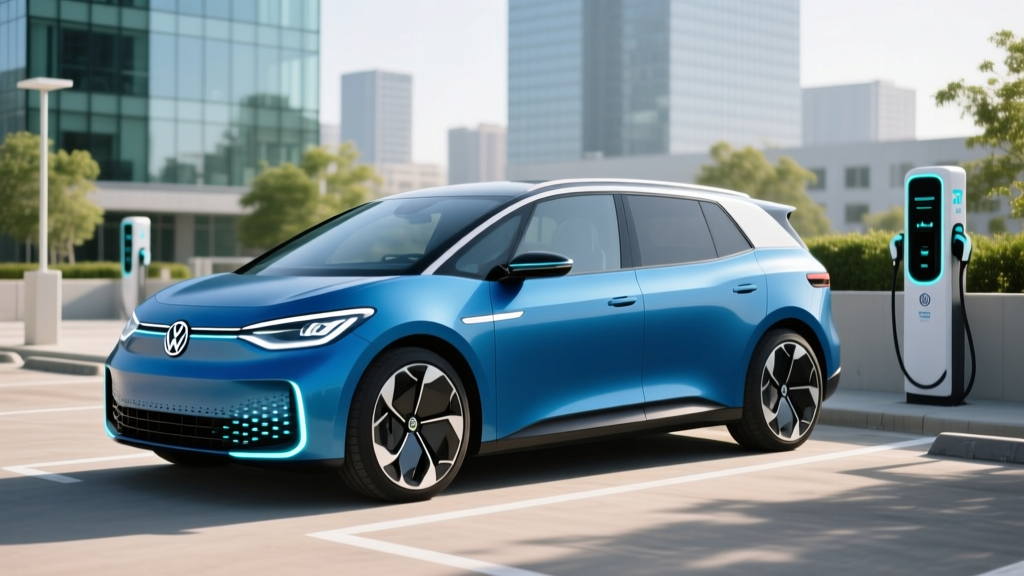
The 2026 Volkswagen ID. Buzz delivers EPA-estimated 234 miles of range (rear-wheel drive) from a 91 kWh usable battery, starts around $59,995, and charges at up to 170 kW DC. It's the only three-row electric minivan on the US market. Buy it if you need family-hauler space with home Level 2 charging access and mostly drive under 180 miles daily. Skip it if you regularly road-trip 300+ miles in cold weather, rely solely on public charging, or need a sub-$45K entry price. Federal §30D tax credit eligibility is uncertain due to battery-sourcing rules — verify with your tax professional before relying on $7,500 in savings.
VW Electric Buzz Specs at a Glance
Before we get into ownership realities, here are the exact numbers that matter for the 2026 ID. Buzz. Volkswagen offers both rear-wheel drive (RWD) and all-wheel drive (4Motion AWD) configurations on the long-wheelbase US model.
| Spec | ID. Buzz RWD | ID. Buzz AWD |
|---|---|---|
| EPA Range | 234 miles | 217 miles |
| Battery (usable) | 91 kWh, NMC | 91 kWh, NMC |
| Horsepower | 282 hp | 335 hp |
| 0–60 mph | ~7.9 sec | ~6.5 sec |
| Max DC Charge Rate | 170 kW | 170 kW |
| 10–80% DC Time | ~26 min | ~26 min |
| Level 2 (240V) Rate | ~11 kW | ~11 kW |
| MPGe (combined) | 87 MPGe | 82 MPGe |
| Cargo (behind 3rd row) | 18.4 cu ft | 18.4 cu ft |
| Max Cargo | 144.3 cu ft | 144.3 cu ft |
| Starting MSRP | $59,995 | $64,995 |
| Battery/Powertrain Warranty | 8 yr / 100,000 mi | 8 yr / 100,000 mi |
Sources: EPA / fueleconomy.gov, Volkswagen USA. Real-world range on highway drives at 75 mph typically falls 10–15% below EPA; in freezing temperatures, expect 20–30% loss.
Real-World Range: What the EPA Sticker Doesn't Tell You
The 234-mile EPA figure for the RWD Buzz looks modest against sedans like the Hyundai Ioniq 6 (361 mi) or even the Tesla Model Y (320 mi). But minivan buyers aren't cross-shopping sedans — they're comparing against the Chrysler Pacifica Hybrid (32 mi electric + gas) or the Toyota Sienna Hybrid (36 mpg). The Buzz's 234 miles is enough for most daily family logistics, but context matters.
Range Reality Check
EPA Sticker: 234 miles (RWD) / 217 miles (AWD)
Real-world highway (70–75 mph, moderate temps): ~195–210 miles
Cold weather (below 32°F, highway): ~160–180 miles
City/suburban mixed driving: ~220–235 miles
The ID. Buzz's boxy shape creates significant aerodynamic drag at highway speeds, which is the primary range killer on road trips. In city driving, regenerative braking recovers energy and efficiency improves substantially.
For a family that drives 30–50 miles daily with a home Level 2 charger, the Buzz's range is a non-issue — you plug in each night and wake up full. But if your routine includes 200-mile highway stretches in winter, plan for a mid-trip DC fast charge. At 170 kW peak, the Buzz adds roughly 120 miles in 15 minutes at a compatible Electrify America or Tesla Supercharger (NACS adapter) station, though the charge curve tapers significantly above 80% State of Charge.
Cost Breakdown: ID. Buzz vs Gas Minivan Over 5 Years
The upfront premium for the electric Buzz is real. A 2026 Toyota Sienna LE starts around $39,000, while the ID. Buzz starts at $59,995 — a ~$21,000 gap. But operating costs tell a different story, especially if you charge at home.
| Cost Factor (5 Years / 75,000 mi) | VW ID. Buzz RWD | Toyota Sienna Hybrid |
|---|---|---|
| Purchase Price (base MSRP) | $59,995 | $39,000 |
| Estimated Federal Tax Credit (§30D) | $0–$7,500* | $0 |
| Fuel / Energy Cost | $3,750–$5,625** | $8,100*** |
| Maintenance (5 yr) | ~$1,800 | ~$3,200 |
| Insurance (5 yr avg) | ~$12,500 | ~$9,800 |
| Estimated Depreciation | ~$24,000 | ~$14,000 |
| Approx. 5-Year Total Cost | $74,045–$84,045 | $74,100 |
* §30D credit eligibility depends on battery component sourcing, critical minerals, buyer income caps ($150K single / $300K joint), and MSRP caps ($80K for vans/SUVs). Check current rules at irs.gov. Many imported VW battery packs may not qualify — confirm before purchase.
** Assumes $0.13–$0.19/kWh (national residential avg) and 2.5 kWh/mi efficiency. Public DC fast charging is 2–3× more expensive.
*** Assumes $3.40/gal avg and 36 mpg combined.
The math shows near-parity over five years when you factor in the Buzz's lower fuel and maintenance costs, but depreciation and insurance tilt the balance. EV depreciation has been steeper than hybrids in recent years, and the Buzz's premium price means a larger absolute depreciation hit. Insurance runs 15–25% higher for the Buzz due to its repair costs and EV parts pricing.
The Home Charging Requirement
This cost analysis assumes home Level 2 charging at residential electricity rates. Without home charging, you'll rely on public DC fast chargers at $0.35–$0.55/kWh, which can push your 5-year energy cost above $9,000 — eliminating the fuel savings advantage entirely. A Level 2 home charger installation typically costs $800–$2,500 (charger + electrician + permit), assuming your electrical panel has capacity. If you need a panel upgrade from 100A to 200A, add $1,500–$3,000.
How the ID. Buzz Compares: EV, Hybrid, and Gas Minivans
The US minivan market doesn't offer many electrified options. Here's how the Buzz stacks up against its closest alternatives:
| Vehicle | Powertrain | Range / MPG | Starting Price | Best For |
|---|---|---|---|---|
| VW ID. Buzz (RWD) | BEV | 234 mi EPA | $59,995 | Electric-first families w/ home charging |
| Toyota Sienna Hybrid | HEV | 36 mpg combined | ~$39,000 | Budget-conscious, high-mileage drivers |
| Chrysler Pacifica Hybrid | PHEV | 32 mi electric + 30 mpg | ~$51,000 | Short electric commutes + road-trip flexibility |
| Kia Carnival Hybrid | HEV | 33 mpg combined | ~$41,000 | Value-oriented families wanting hybrid efficiency |
The Pacifica Hybrid is the closest middle ground: 32 miles of electric-only driving covers most school runs and errands, then the gas engine kicks in for longer trips. If you're not ready to commit fully to electric, it's a pragmatic bridge. But if you want zero tailpipe emissions and your daily driving stays under ~180 miles, the Buzz offers a more modern EV experience with lower per-mile energy costs.
Charging the ID. Buzz: What to Expect
The Buzz uses a CCS1 connector natively (2025–2026 US models) and can access Tesla Superchargers via a NACS adapter as VW joins the broader network transition. Here's what charging looks like in practice:
| Charging Level | Power | Speed | Use Case |
|---|---|---|---|
| Level 1 (120V) | ~1.4 kW | ~4 mi/hr | Emergency top-up only |
| Level 2 (240V, 48A) | ~11 kW | ~33 mi/hr; full charge in ~9 hr | Daily home charging |
| DC Fast Charge | Up to 170 kW | ~120 mi in 15 min (10–80% in ~26 min) | Road trips |
Charging curve reality: The Buzz peaks near 170 kW only between roughly 10–30% State of Charge. From 30–60%, it sustains around 130–140 kW, then tapers to under 60 kW above 80%. This means a 10–80% session takes about 26 minutes, but pushing to 100% adds another 25–30 minutes. On road trips, plan to charge to 80% and move on — it's faster overall.
The Buzz does not currently include a heat pump in the US market (standard in Europe), which means cabin heating in cold weather draws directly from the battery and reduces range more than a heat-pump-equipped EV would. If you live in a climate with extended sub-freezing winters, factor that 20–30% range penalty into your daily calculations.
Common Misconceptions About the VW Electric Buzz
| Myth | Fact |
|---|---|
| "It qualifies for the full $7,500 federal tax credit." | Unlikely as of 2026. The §30D credit requires battery components and critical minerals to meet US-sourcing thresholds. VW's ID. Buzz battery cells are sourced from suppliers that may not meet current thresholds. Always verify at fueleconomy.gov before purchasing. |
| "234 miles isn't enough for a family road trip." | With DC fast charging adding ~120 miles in 15 minutes, a 500-mile trip requires two stops of ~20 minutes each — comparable to gas-car rest stops with kids. |
| "EV batteries need replacing every few years." | VW warranties the Buzz battery for 8 years/100,000 miles against degradation below 70% capacity. Industry data shows modern NMC batteries typically retain 85–90% capacity after 100,000 miles. |
| "It charges as fast as a Tesla." | At 170 kW peak, the Buzz is slower than the Tesla Model Y (~250 kW) or Hyundai Ioniq 5 (~240 kW). It's adequate, not class-leading. |
| "I can charge it on a regular outlet overnight." | Level 1 (120V) adds only ~4 miles per hour. A full charge would take over 50 hours. You need a 240V Level 2 circuit for practical daily use. |
Decision Framework: Is the VW Electric Buzz Right for You?
Buy the ID. Buzz If:
- You have home Level 2 charging (or can install it) — this is the single biggest factor in EV satisfaction.
- Your daily driving is under 180 miles, even accounting for cold-weather range loss.
- You need three rows and want the only all-electric minivan available in the US market.
- You value the driving experience — the Buzz is quiet, smooth, and surprisingly quick for a 5,500-lb van.
- You're comfortable with a ~$60K starting price and understand the total cost of ownership is competitive but not cheap.
Look Elsewhere If:
- You can't charge at home and would rely entirely on public infrastructure — the cost and convenience math breaks down.
- You regularly drive 300+ miles in cold weather without time for charging stops.
- Budget is the priority — a Sienna Hybrid at ~$39K saves $20K+ upfront with excellent efficiency.
- You want maximum range per dollar — the Buzz's 234 mi EPA at $60K is 0.0039 miles per dollar; a Model Y at 320 mi and $48K delivers 0.0067.
- You need best-in-class fast charging — Hyundai/Kia's 800V architecture (Ioniq 5, EV6) charges significantly faster.
First-Time EV Buyer Checklist for the ID. Buzz
If the Buzz is your first electric vehicle, here's what to prepare before signing:
- Audit your electrical panel. A Level 2 charger needs a dedicated 40–60 amp circuit. If your home has a 100A panel, you may need an upgrade ($1,500–$3,000) — get a licensed electrician's quote first.
- Map your local DC fast chargers. Open the Electrify America, EVgo, and PlugShare apps. Confirm there are 150+ kW stations along your most common road-trip routes.
- Verify tax credit eligibility. Check irs.gov for current §30D rules, including income caps, MSRP limits ($80K for vans), and battery sourcing requirements. The point-of-sale transfer option lets you apply the credit at the dealer — but only if the vehicle qualifies.
- Get insurance quotes before buying. EV insurance premiums are typically 15–25% higher than comparable gas vehicles. Get quotes from 2–3 carriers for the exact trim you're considering.
- Test the third row and cargo space in person. The Buzz's 18.4 cu ft behind the third row is tight compared to the Sienna's 33.5 cu ft. Fold the seats to see if your stroller, groceries, and luggage fit your actual life.
- Understand the warranty. VW covers the battery at 8 years/100,000 miles (70% minimum capacity retention). The basic vehicle warranty is 4 years/50,000 miles. Battery replacement outside warranty, if ever needed, could cost $15,000–$25,000 based on current NMC pack pricing.
Frequently Asked Questions
Does the VW ID. Buzz have a frunk (front trunk)?
No. Unlike many EVs, the ID. Buzz does not include a front trunk. The hood area houses HVAC and electronics components. All cargo space is in the rear — 18.4 cu ft behind the third row, expanding to 144.3 cu ft with both rear rows folded.
Can the VW Electric Buzz tow?
The US-spec ID. Buzz has a maximum towing capacity of 2,500 pounds when properly equipped. That's enough for a small utility trailer or a pair of jet skis, but not a large camper. The Toyota Sienna Hybrid, by comparison, is rated at 3,500 pounds.
Is the ID. Buzz available with all-wheel drive?
Yes. The 2026 ID. Buzz 4Motion AWD adds a front motor for 335 combined horsepower and a 6.5-second 0–60 time, at the cost of 17 miles of EPA range (217 vs 234). AWD starts at $64,995. If you live in a snowy climate, the traction benefit may be worth the range and price trade-off.
What happens if the battery degrades?
Volkswagen warrants the high-voltage battery for 8 years or 100,000 miles, whichever comes first, guaranteeing at least 70% of original capacity. Real-world data from similar NMC packs (like those in the ID.4) suggests typical degradation of 8–12% over the first 100,000 miles. If capacity drops below 70% within the warranty period, VW will repair or replace the battery at no cost.
How does the ID. Buzz perform in cold weather?
Without a heat pump in the US market, the Buzz's cabin heating draws significant energy from the 91 kWh battery. Expect 20–30% range reduction in sustained sub-freezing temperatures. Preconditioning the cabin and battery while plugged in (via the VW app) mitigates this — it warms the car using grid power instead of battery. On a 20°F day with highway driving, plan for roughly 160–180 miles of usable range from the RWD model.
Does it work with Tesla Superchargers?
Volkswagen has been transitioning to NACS (Tesla's charging connector). For 2025–2026 ID. Buzz models equipped with CCS1, a VW-approved NACS adapter enables access to Tesla's Supercharger network. Confirm adapter availability and compatibility with your dealer at the time of purchase, as the transition timeline has shifted across model years.