The VW Electric Bug Reality Check: What You Need to Know
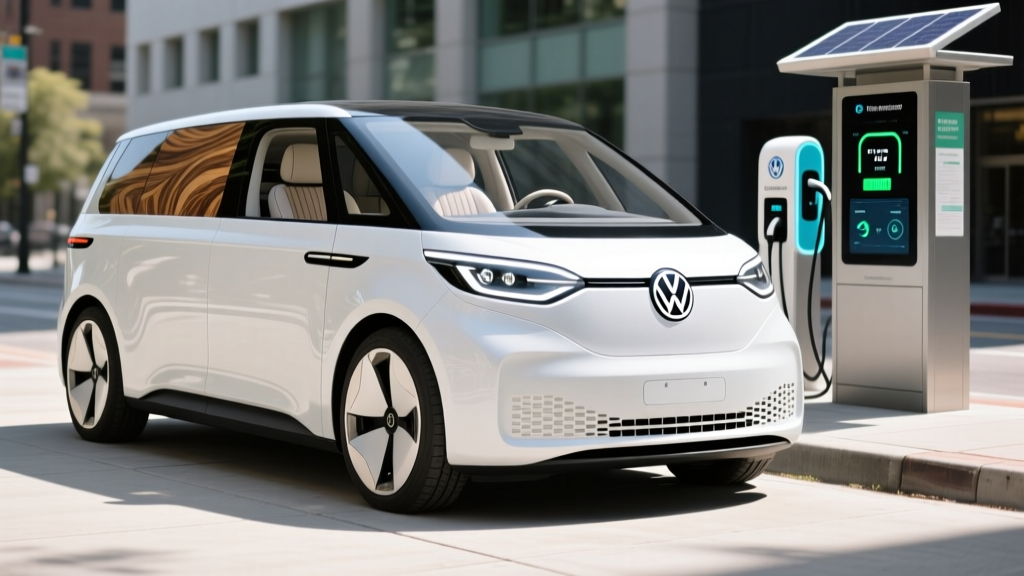
Bottom line: The "VW electric bug" most buyers are searching for is the 2025–2026 Volkswagen ID. Buzz — a retro-styled, three-row electric minivan inspired by the classic Microbus. It starts at $61,495 (1st Edition, before destination), delivers an EPA-estimated 234 miles of range (RWD) or 231 miles (AWD 4MOTION), and charges at up to 170 kW on DC fast chargers. It does not qualify for the $7,500 federal §30D tax credit due to battery-sourcing requirements, though leasing may unlock incentives passed through the dealer.
If you landed here wondering whether Volkswagen has revived the iconic Type 2 bus as a modern EV, the answer is yes — but with important caveats. The ID. Buzz is a genuine electric vehicle built on VW's MEB platform, not a concept or a compliance car. However, its range, pricing, and tax-credit status mean it fits a specific buyer profile. Below, we break down the numbers, compare it to gas and hybrid alternatives, and give you a framework to decide if this retro EV minivan earns a spot in your driveway.
ID. Buzz Specs: Range, Battery, Charging, and Performance
| Specification | ID. Buzz Pro S (RWD) | ID. Buzz 4MOTION (AWD) |
|---|---|---|
| Base MSRP (1st Edition) | $61,495 | $66,495 |
| EPA Range | 234 miles | 231 miles |
| Battery (usable) | 86 kWh, NMC | 86 kWh, NMC |
| Horsepower | 282 hp | 335 hp |
| 0–60 mph | ~7.9 sec (est.) | ~5.9 sec (est.) |
| DC Fast Charge (peak) | 170 kW | 170 kW |
| 10–80% DC Charge | ~26 min | ~26 min |
| Level 2 Charge (max) | 11 kW | 11 kW |
| MPGe (combined) | ~87 MPGe | ~85 MPGe |
| Seating | 7 passengers | 7 passengers |
| Battery/Powertrain Warranty | 8 yr / 100,000 mi | 8 yr / 100,000 mi |
Real-world range reality: The EPA sticker says 234 miles, but expect ~185–200 miles in sustained 75 mph highway driving and ~155–175 miles in freezing temperatures (below 30°F) without aggressive preconditioning. The ID. Buzz's boxy aerodynamics (high drag coefficient) and ~5,000 lb curb weight work against efficiency at highway speeds. Plan road trips around 180-mile legs to maintain a comfort buffer.
The 86 kWh NMC (nickel-manganese-cobalt) battery pack provides adequate capacity for daily driving and moderate road trips. At a DC fast charger, the ID. Buzz peaks at 170 kW — respectable but not class-leading. Expect the charge curve to taper noticeably above 80% SoC; that 10–80% time of roughly 26 minutes assumes optimal battery preconditioning. On a Level 2 home charger at 11 kW, a full charge takes approximately 8.5 hours, making overnight replenishment straightforward if you have a 48-amp circuit.
ID. Buzz vs. Gas and Hybrid Minivans: Cost and Efficiency
The ID. Buzz competes in the three-row family hauler segment, where the Toyota Sienna (hybrid), Honda Odyssey (gas), and Chrysler Pacifica (PHEV) dominate. Here's how the numbers stack up:
| Metric | VW ID. Buzz (RWD) | Toyota Sienna Hybrid | Honda Odyssey (Gas) | Chrysler Pacifica PHEV |
|---|---|---|---|---|
| Base Price | $61,495 | $38,085 | $39,635 | $51,095 |
| EPA Range / Tank | 234 mi (battery) | ~640 mi (17.9 gal) | ~440 mi (19.5 gal) | 32 mi electric + ~430 mi gas |
| Combined Efficiency | 87 MPGe | 36 MPG | 22 MPG | 82 MPGe (elec) / 30 MPG (gas) |
| Fuel/Energy Cost per Mile | ~$0.045 (home) / ~$0.12 (DC) | ~$0.095 | ~$0.155 | ~$0.06 (elec) / ~$0.12 (gas) |
| Seating | 7 | 7–8 | 7–8 | 7 |
| Federal Tax Credit | Not eligible (§30D) | None | None | $7,500 (if eligible) |
The cost-per-mile picture is clear: the ID. Buzz is the cheapest to "fuel" if you charge at home on a residential electricity rate (~$0.13/kWh national average, per EIA data). At roughly $0.045 per mile on home charging, you'll spend about $675 to drive 15,000 miles annually. The Sienna hybrid would cost around $1,425 at $3.40/gallon, and the Odyssey roughly $2,325.
But the upfront price gap is massive. The ID. Buzz costs $23,000+ more than a Sienna before incentives — and without the federal tax credit, that gap stays wide. You'd need to drive roughly 150,000 miles at the per-mile savings to break even on purchase price alone. For buyers who keep vehicles 5–7 years and drive 12,000–15,000 miles annually, the math is challenging unless the EV's lower maintenance costs and potential state incentives close the gap.
Total Ownership Cost: 5-Year Breakdown
| Cost Category (5 yr / 75,000 mi) | VW ID. Buzz (RWD) | Toyota Sienna Hybrid |
|---|---|---|
| Purchase Price (base) | $61,495 | $38,085 |
| Federal Tax Credit | $0 | $0 |
| Fuel / Energy | $3,375 (home charging) | $7,125 ($3.40/gal avg) |
| Maintenance | ~$1,500 | ~$3,200 |
| Insurance (est. avg) | ~$10,500 | ~$7,500 |
| Estimated Depreciation | ~$25,000 | ~$14,000 |
| Total 5-Year Cost | ~$101,870 | ~$70,910 |
| Cost Per Mile | ~$1.36 | ~$0.95 |
This table tells the honest story: the ID. Buzz costs significantly more to own over five years, primarily because of its higher purchase price and steeper projected depreciation. EV insurance premiums tend to run 15–25% higher than comparable ICE vehicles, and the ID. Buzz's premium pricing compounds that. Maintenance savings are real — no oil changes, no transmission fluid, fewer brake replacements thanks to regenerative braking — but they save roughly $1,700 over five years, not enough to offset the purchase premium.
Important: These figures assume 100% home charging at $0.13/kWh. If you rely heavily on DC fast charging (at $0.35–$0.48/kWh on networks like Electrify America), your energy costs roughly triple to $8,000–$10,000 over five years, narrowing the fuel-cost advantage to near zero.
Federal Tax Credit and Incentive Status
Under current IRS §30D rules, the ID. Buzz does not qualify for the $7,500 federal clean vehicle credit. The vehicle's battery pack does not meet the critical-minerals and battery-component sourcing thresholds that tightened through 2024–2025. This is a significant financial disadvantage versus the Chrysler Pacifica PHEV, which does qualify for buyers meeting income and MSRP requirements.
§30D credit requirements the ID. Buzz fails:
- ❌ Battery component manufacturing (must be North American — ID. Buzz battery is sourced from overseas suppliers)
- ❌ Critical minerals sourcing (must meet escalating percentage thresholds)
- ✅ MSRP cap ($80,000 for vans/SUVs — ID. Buzz qualifies on price)
- ✅ Buyer income cap ($300k MFJ / $150k single — buyer-dependent)
Leasing loophole: Under the commercial clean vehicle credit (§45W), dealers who lease the ID. Buzz may receive a $7,500 credit and pass some or all of it to you as a lease incentive. This is not guaranteed — it depends on the dealer and VW Financial Services' current programs. Always ask explicitly about lease incentive pass-through before signing.
Some states offer additional rebates or HOV-lane access for EVs regardless of federal credit status. Check your state's energy office or DMV for current programs, but don't assume availability — these change annually.
First-Time EV Buyer Considerations for the ID. Buzz
Home Charging Is Nearly Mandatory
The ID. Buzz's 86 kWh battery makes Level 1 (120V) trickle charging impractical — it would add roughly 3–4 miles per hour of charging, meaning a full charge would take over 24 hours. A Level 2 home charger (240V, 48-amp circuit) adds roughly 25–28 miles per hour, allowing overnight replenishment. Expect to pay $800–$2,200 for a quality Level 2 unit plus professional installation, with potential panel-upgrade costs of $1,500–$3,000 if your home has a 100-amp service panel.
Public Charging for Road Trips
The ID. Buzz uses the CCS1 connector (not NACS/Tesla). VW has committed to NACS adoption on future models, but the current ID. Buzz requires CCS-compatible DC fast chargers — widely available on Electrify America, EVgo, and ChargePoint networks. The 170 kW peak charge rate means you'll add roughly 140–160 miles in a 25-minute session under ideal conditions. Plan road trips with charging stops every 170–180 miles in warm weather, every 140–150 miles in cold weather.
Cold-Weather Range Loss
The ID. Buzz's large, boxy body and NMC chemistry are susceptible to cold-weather range reduction. In temperatures below 30°F, expect 25–35% range loss — that 234-mile EPA figure drops to roughly 155–175 miles. The heat pump (standard on US models) helps reduce HVAC energy draw, but physics is physics: cold batteries charge slower and hold less usable energy. If you live in the upper Midwest or Northeast, this is a real daily-winter constraint, not a theoretical concern.
Driving Patterns That Work (and Don't)
The ID. Buzz excels as a suburban family hauler with predictable daily mileage under 100 miles and access to home charging. It struggles as a frequent road-trip vehicle for families covering 400+ miles in a day — the combination of moderate range, 170 kW charging, and boxy efficiency means more stops and longer dwell times than rivals like the Rivian R1S or even a Sienna hybrid filling up in 5 minutes.
Common Myths About the VW Electric Bug
| Myth | Fact |
|---|---|
| "It's just a concept; you can't actually buy it." | The ID. Buzz went on sale in the US for the 2025 model year and is currently available through VW dealerships. |
| "It qualifies for the $7,500 federal tax credit." | It does not meet §30D battery-sourcing requirements. Lease incentives may apply — ask the dealer. |
| "234 miles of range means I can drive 234 miles." | Highway and cold-weather driving reduce real range to 155–200 miles. Plan conservatively. |
| "Charging is as fast as filling a gas tank." | Best case: ~26 minutes for 10–80%. Worst case (cold, un-preconditioned): 40+ minutes. |
| "It's basically a Tesla with retro styling." | The ID. Buzz uses VW's MEB platform with CCS charging, not Tesla's Supercharger network (without adapters). |
Decision Framework: Should You Buy the ID. Buzz?
Buy the VW ID. Buzz if:
- You want a distinctive, retro-styled electric minivan and can absorb the $61K+ price without a federal tax credit.
- Your daily driving is under 100 miles and you have reliable Level 2 home charging.
- You value the driving refinement, instant torque, and low per-mile energy cost of an EV over maximum range.
- You live in a state with additional EV rebates or HOV-lane incentives that help close the cost gap.
- You plan to lease and can negotiate a pass-through of the $7,500 commercial credit.
Choose a gas or hybrid minivan (Sienna, Odyssey) if:
- You regularly drive 300+ miles in a day and don't want to plan around 25-minute charging stops.
- You lack home charging access and would rely on public DC fast chargers (erasing the fuel-cost advantage).
- Your budget tops out around $40,000–$50,000 and you need three rows.
- You live in a region with extreme cold (sub-10°F winters) and limited charging infrastructure.
- Total cost of ownership over 5 years is your primary purchase criterion.
Consider the Chrysler Pacifica PHEV if:
- You want 32 miles of electric-only range for school runs and errands, plus gas-engine flexibility for road trips.
- You qualify for the $7,500 federal credit (income and MSRP eligible), bringing effective price to ~$43,595.
Frequently Asked Questions
Is the VW electric bug actually called the ID. Buzz?
Yes. "VW electric bug" is a colloquial search term people use when looking for Volkswagen's electric revival of the classic Microbus/Type 2. The official name is the Volkswagen ID. Buzz. The "bug" association comes from VW's heritage with the Beetle and the nostalgic styling cues the ID. Buzz borrows from the original bus.
Can I charge the ID. Buzz at a Tesla Supercharger?
Not natively. The ID. Buzz uses the CCS1 connector. Tesla's NACS connector is different. VW has announced future models will adopt NACS, but current ID. Buzz owners need a CCS-to-NACS adapter for Supercharger access — and not all adapters are certified for DC fast charging. Stick to Electrify America, EVgo, and other CCS networks for guaranteed compatibility.
How long will the ID. Buzz battery last?
VW warranties the high-voltage battery for 8 years or 100,000 miles, guaranteeing at least 70% capacity retention. NMC chemistry typically degrades 10–15% over the first 100,000 miles under normal use. Real-world data from other MEB-platform vehicles (ID.4) suggests the battery should retain 85–90% capacity at 50,000 miles with proper charging habits (avoiding routine 100% charges and frequent DC fast charging in extreme heat).
Is the ID. Buzz self-driving?
No. The ID. Buzz comes equipped with VW's IQ.DRIVE suite, which is a Level 2 driver-assistance system per SAE classification. It includes adaptive cruise control, lane-keeping assist, and emergency braking. You must keep your hands on the wheel and eyes on the road at all times. This is not autonomous driving.
What does it cost to insure the ID. Buzz?
Expect annual premiums of $1,800–$2,600 depending on your state, driving record, and coverage level. EVs generally cost 15–25% more to insure than comparable gas vehicles due to higher repair costs (specialized body panels, high-voltage system precautions, and limited collision-repair networks). Get quotes from at least three insurers before purchasing — EV-specific insurers like Tesla Insurance (where available) or providers with EV experience may offer better rates.