The Quick Answer: Is There a VW Electric Beetle?
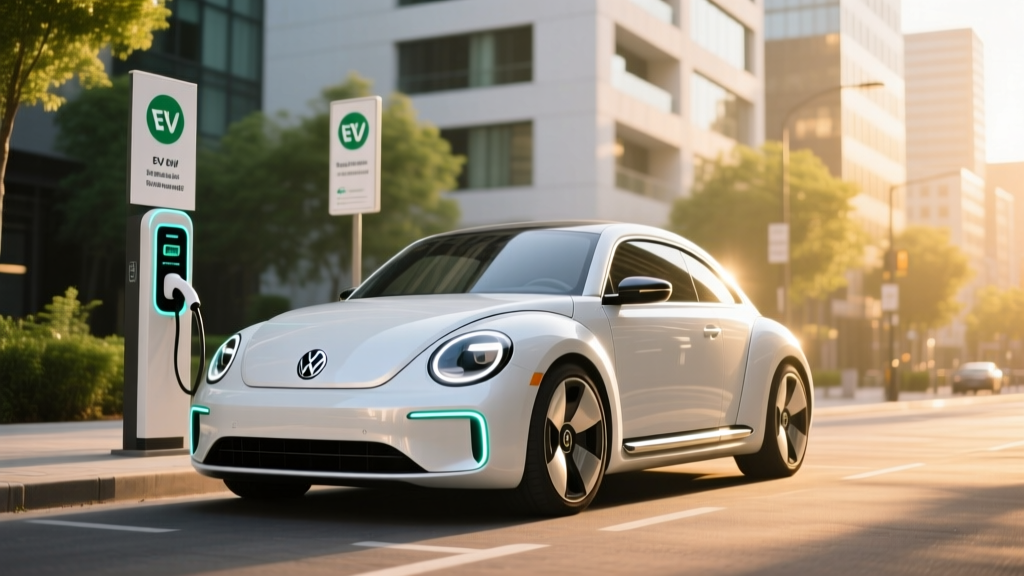
No. As of 2026, Volkswagen has not announced, confirmed, or released a production VW Electric Beetle. The last Beetle rolled off the production line in 2019 as a gasoline-only model. While VW has teased retro-styled EV concepts (including the ID.2all and ID.Life), none carry the Beetle nameplate. If you want a retro-styled compact EV or a practical VW electric vehicle today, your real options are the VW ID.4 (EPA range up to 291 miles, starting at $38,995) or the upcoming VW ID.2 (announced for Europe, U.S. availability unconfirmed). Below, we break down what exists, what doesn't, and what to actually buy.
Why the VW Electric Beetle Doesn't Exist (Yet)
Volkswagen discontinued the Beetle after the 2019 model year, ending a production run that spanned two generations of the modern retro-styled car. The decision was driven by declining sales and VW's strategic pivot toward its ID. family of purpose-built electric vehicles on the MEB platform.
Since then, speculation about an electric Beetle revival has persisted, fueled by:
- VW's stated willingness to explore retro designs on EV platforms (the ID.Buzz microbus being the prime example)
- Patent filings and design studies that occasionally surface in automotive media
- The general trend of automakers leveraging nostalgia (see: Ford's Mustang Mach-E, Hyundai's Ioniq 5 retro-pixel styling)
However, VW's current product roadmap through 2028 focuses on the ID.2, ID.4, ID.5, ID.7, and ID.Buzz. A Beetle-badged EV would require a dedicated business case, and VW has not signaled one. The MEB platform's skateboard architecture could technically support a Beetle-shaped body, but the two-door coupe and convertible form factors that defined the Beetle are less practical than the crossovers and hatchbacks dominating buyer preferences.
Real VW Electric Vehicles You Can Buy in 2026
Since the VW Electric Beetle isn't an option, here's what Volkswagen actually offers U.S. buyers looking for electric transportation, with exact specifications:
| Spec | 2026 VW ID.4 (RWD Standard) | 2026 VW ID.4 (AWD Pro S) | 2026 VW ID.Buzz (U.S. spec) |
|---|---|---|---|
| EPA Range | 291 miles | 263 miles | 231 miles |
| Battery (usable) | 82 kWh (NMC) | 82 kWh (NMC) | 91 kWh (NMC) |
| Peak DC Fast Charge | 175 kW | 175 kW | 170 kW |
| 10–80% DCFC Time | ~28 min | ~28 min | ~30 min |
| Level 2 Charge Rate | 11 kW | 11 kW | 11 kW |
| Horsepower | 282 hp | 335 hp | 282 hp (RWD) / 330 hp (AWD) |
| 0–60 mph | 7.3 sec | 5.4 sec | 7.1 sec (RWD) |
| Starting MSRP | $38,995 | $46,795 | $59,995 |
| EPA MPGe (combined) | 104 MPGe | 95 MPGe | 87 MPGe |
| Battery Warranty | 8 yr / 100,000 mi | 8 yr / 100,000 mi | 8 yr / 100,000 mi |
Sources: EPA fueleconomy.gov, VW ID.4 official specs
Real-World Range Reality Check
The ID.4's EPA-rated 291 miles is achievable in mild-weather city and suburban driving. Expect ~240–260 miles in sustained 70 mph highway driving, and ~200–220 miles in freezing temperatures (below 32°F) due to battery chemistry limitations and cabin heating demands. The ID.Buzz's boxy aerodynamics hit highway efficiency harder — plan for roughly 185–200 miles on a road trip at interstate speeds.
EV vs. Gas Compact: What a Beetle EV Would Have Cost to Run
Even though the Electric Beetle doesn't exist, we can model what a hypothetical compact VW EV would save compared to the last gasoline Beetle (2019 2.0T, EPA 26 MPG combined) and versus a current compact gas car like a Honda Civic (EPA 34 MPG combined). We'll use the ID.4 as our stand-in EV, at a U.S. average electricity rate of $0.17/kWh and gasoline at $3.40/gallon.
| Annual Cost (12,000 mi/yr) | VW ID.4 (EV) | 2019 VW Beetle 2.0T (Gas) | 2026 Honda Civic (Gas) |
|---|---|---|---|
| Energy/Fuel Cost | $620 | $1,570 | $1,200 |
| Maintenance (oil, filters, brakes) | $300 | $650 | $550 |
| Annual Insurance (avg.) | $1,850 | $1,400 | $1,500 |
| Total Annual Running Cost | $2,770 | $3,620 | $3,250 |
Over five years and 60,000 miles, the EV saves roughly $3,650–$4,250 in energy and maintenance compared to the gas Beetle, even factoring in higher EV insurance premiums. However, the ID.4's higher purchase price ($38,995 vs. the Beetle's ~$24,000 final MSRP in 2019) means the break-even point on total cost of ownership sits around year 4–5, depending on your local electricity rates and whether you qualify for federal or state incentives.
Federal Tax Credit: What You Can Actually Claim
The §30D Clean Vehicle Credit under current IRS rules offers up to $7,500 for qualifying new EVs, but eligibility is complex and vehicle-specific:
- MSRP cap: SUVs/vans (ID.4, ID.Buzz) capped at $80,000; sedans at $55,000
- Buyer income cap: $150,000 single / $225,000 head of household / $300,000 joint (modified AGI)
- Battery sourcing: Increasing percentages of critical minerals and battery components must be sourced from the U.S. or FTA partners — this requirement tightens annually and can disqualify otherwise eligible vehicles
- Point-of-sale transfer: You can apply the credit as an upfront dealer discount (if the dealer is IRS-registered) rather than waiting for tax filing
- Assembly: Vehicle must undergo final assembly in North America
As of 2026, the VW ID.4 (built in Chattanooga, TN) has qualified for partial or full §30D credit depending on the battery-sourcing phase-in schedule, but VW's official credit status can change mid-year as supply chains shift. Always verify current eligibility on fueleconomy.gov before purchasing. A tax professional can confirm your personal income eligibility.
First-Time EV Buyer: What You Must Know Before Purchasing
If you came here looking for a cute, compact VW EV and are now considering the ID.4 or another electric vehicle, here are the practical realities no brochure will emphasize:
Home Charging Is Non-Negotiable for Most Owners
Over 80% of EV charging happens at home. A Level 2 home charger (240V, 32–48 amps) adds roughly 25–35 miles of range per hour of charging and fully replenishes an ID.4 overnight. Installation costs vary widely:
| Item | Typical Cost Range |
|---|---|
| Level 2 charger hardware (e.g., ChargePoint Home Flex, Emporia Vue) | $350–$700 |
| Electrician labor (240V circuit, 50-amp breaker) | $500–$2,000 |
| Electrical panel upgrade (if needed, 100A→200A) | $1,500–$3,500 |
| Permit and inspection | $100–$400 |
| Total (no panel upgrade) | $950–$3,100 |
| Total (with panel upgrade) | $2,450–$6,600 |
If you live in an apartment or lack garage/driveway access, public DC fast charging is viable but costs 2–3× more per mile than home charging and accelerates battery wear if used exclusively. Check your local charging infrastructure map before committing.
Charging Speed: Understanding kW vs. kWh
This is the single most common EV confusion, and it matters for trip planning:
- kWh (kilowatt-hours) = energy capacity. The ID.4's 82 kWh battery is like a 16-gallon gas tank — it's how much energy the car holds.
- kW (kilowatts) = power/rate. A 175 kW DC fast charger is like a high-flow fuel pump — it's how fast energy goes in.
The ID.4 peaks at 175 kW but only sustains that rate briefly between roughly 10–30% State of Charge. The charge curve tapers significantly above 80% — going from 80–100% can take nearly as long as 10–80%. On road trips, plan to charge from 10–80% (~28 minutes) and keep driving rather than topping off.
Cold Weather Cuts Range — Plan for It
Lithium-ion batteries lose efficiency in cold temperatures. At 20°F, expect 20–30% range reduction compared to EPA estimates, due to increased internal resistance and energy used for battery and cabin heating. The ID.4's available heat pump (standard on Pro S trims) mitigates this by ~5–8% compared to resistive heating, but the loss is unavoidable. If you live in northern climates, budget your daily range around the winter figure, not the sticker.
Myths vs. Facts: Common EV Misconceptions
| Myth | Fact |
|---|---|
| "EV batteries need replacing every 5 years" | Modern NMC and LFP batteries are warranted for 8 years/100,000 miles to retain ≥70% capacity. Real-world data from Geotab's fleet study shows average degradation of ~1.8% per year — most batteries outlast the vehicle. |
| "EVs are worse for the environment because of electricity generation" | Even on the dirtiest U.S. grids, EVs produce fewer lifetime emissions than comparable gas cars (per EPA analysis). On cleaner grids or with home solar, the advantage widens dramatically. |
| "Public charging is unreliable everywhere" | Reliability varies by network. Tesla Superchargers average 99%+ uptime. Electrify America and EVgo have improved significantly since 2024, but rural corridors still have gaps. Apps like PlugShare provide real-time station status. |
| "You'll save money immediately with an EV" | Upfront EV purchase prices remain higher than gas equivalents. Savings accumulate over 3–5 years through lower fuel and maintenance costs, especially with home charging and available tax credits. |
| "A VW Electric Beetle is available if you look hard enough" | It does not exist. Any listing or site claiming otherwise is either referencing aftermarket EV conversions of vintage Beetles (typically $40,000–$80,000 from specialty shops) or speculative render articles. |
Decision Framework: What Should You Actually Buy?
Choose the VW ID.4 If:
- You want a practical, mainstream VW electric crossover with proven MEB-platform reliability
- You need 260+ real-world highway miles of range and 175 kW DC fast charging for road trips
- You have (or can install) Level 2 home charging
- You qualify for partial or full §30D credit, bringing effective price below $35,000
Choose the VW ID.Buzz If:
- You want VW's retro-styled EV (the closest spiritual successor to the Beetle's nostalgic appeal)
- You need three rows and van-like cargo space
- You accept a higher starting price (~$59,995) and shorter real-world highway range (~185–200 mi)
Wait or Look Elsewhere If:
- You specifically want a compact, two-door, retro-styled EV — no mainstream automaker currently offers one in the U.S.
- The VW ID.2 (announced for Europe, ~€25,000) eventually reaches the U.S. market as a sub-$30,000 compact hatchback (unconfirmed for 2027+)
- You lack home charging access and your area has limited public DCFC infrastructure — consider a PHEV like the Toyota Prius Prime (44 mi electric-only range, 52 MPG combined) as a bridge
Frequently Asked Questions
Will VW ever make an electric Beetle?
There is no official announcement or confirmed timeline. VW executives have said they're open to retro-styled EVs (the ID.Buzz proves this), but the Beetle nameplate is not in the publicly known product roadmap through 2028. If it happens, expect it on the MEB or next-gen SSP platform, likely as a compact hatchback rather than a two-door coupe.
Can I convert a classic VW Beetle to electric?
Yes, several specialty shops (e.g., Zelectric Motors, EV West) offer vintage Beetle EV conversions. Expect to pay $40,000–$80,000+ for a professional conversion with 100–150 miles of range, modern safety notwithstanding. These are not eligible for federal EV tax credits and lack modern crash structures, airbags, or ADAS features.
What's the cheapest VW electric car available in the U.S.?
The 2026 VW ID.4 Standard starts at $38,995 before incentives. With the full $7,500 §30D credit (if eligible), the effective price drops to approximately $31,495 — competitive with well-equipped gas compact SUVs.
How does the ID.4's charging speed compare to competitors?
The ID.4's 175 kW peak is mid-pack. The Hyundai Ioniq 5 peaks at ~240 kW (10–80% in ~18 min), and the Tesla Model Y peaks at ~250 kW on V3 Superchargers. The ID.4's ~28-minute 10–80% time is adequate for road trips but not class-leading.
Is the ID.4 a good first EV?
It's a solid, conservative choice — comfortable ride, competitive range, reasonable charging speed, and VW's dealer network for service. It won't lead in any single category (the Ioniq 5 charges faster, the Model Y has more cargo space and Supercharger access), but it avoids major weaknesses. For a first-time EV buyer who values mainstream brand support and doesn't need cutting-edge specs, it's a strong option.