Quick Answer: Is the VW e-Golf Still Worth Buying in 2026?
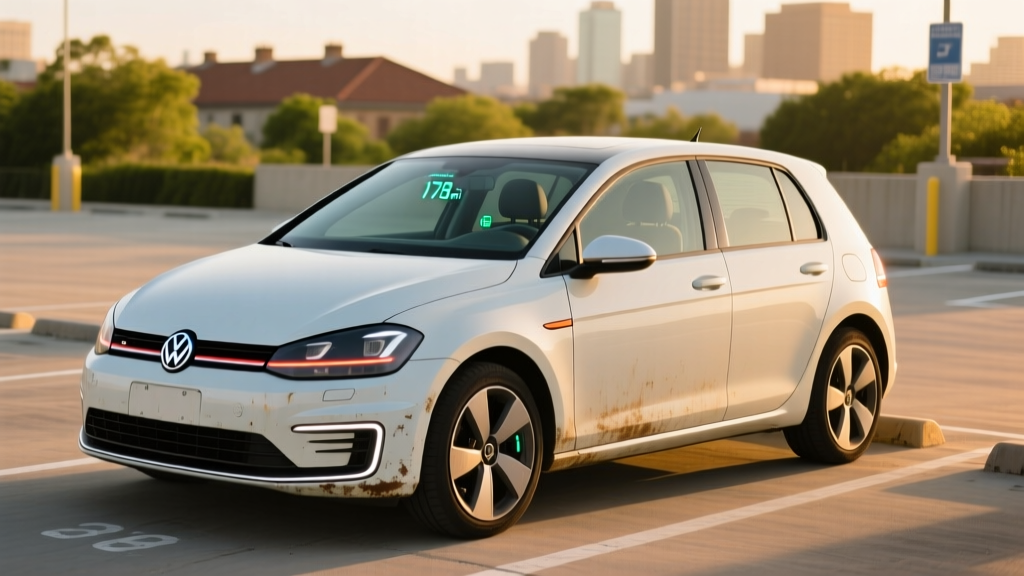
The Volkswagen e-Golf is a discontinued model (last sold in the U.S. for the 2019 model year) that remains one of the best-value entry points into EV ownership on the used market. With an EPA-estimated 125 miles of range (2017–2019 models), a 35.8 kWh battery, and used prices typically between $9,000–$16,000 depending on mileage and condition, it's a practical commuter car for drivers with home charging and a round-trip commute under 90 miles. It does not qualify for the federal §30D new-vehicle tax credit, but may qualify for the up-to-$4,000 used-EV credit if purchased from a dealer and meeting IRS income and price caps.
What the e-Golf Electric Actually Offers
Volkswagen built the e-Golf as a compliance-era electric version of its iconic Golf hatchback. Sold in the U.S. from 2015 through 2019, it received a significant battery upgrade for the 2017 model year — jumping from a 24.2 kWh pack to a 35.8 kWh pack (usable capacity approximately 31.5 kWh). If you're shopping for a used e-Golf, the 2017–2019 models are the ones to target.
Here's the essential spec sheet for the 2017–2019 e-Golf:
| Spec | Value |
|---|---|
| EPA Range | 125 miles |
| Battery (Total / Usable) | 35.8 kWh / ~31.5 kWh |
| Battery Chemistry | NMC (Nickel Manganese Cobalt) |
| Motor Output | 134 hp / 214 lb-ft torque |
| 0–60 mph | ~9.0 seconds |
| EPA Efficiency | 119 MPGe combined (28 kWh/100 mi) |
| DC Fast Charge (CCS) | 50 kW peak |
| 10–80% DC Charge Time | ~45 minutes |
| Level 2 Onboard Charger | 7.2 kW |
| Level 2 Full Charge Time | ~5 hours |
| Connector | CCS1 (DC) / J1772 (AC) |
| Battery Warranty (Original) | 8 years / 100,000 miles |
For context, the EPA's fueleconomy.gov listing confirms the 125-mile combined range and 119 MPGe rating.
Real-World Range vs. EPA Sticker
Real-World Expectation: ~95–115 miles highway; ~80–100 miles in cold weather (below 35°F)
The e-Golf's 125-mile EPA figure was competitive for a 2017 commuter EV, but real-world conditions compress that number. Highway driving at 70+ mph typically yields 95–115 miles before you're hunting for a charger. In winter conditions — particularly below freezing — expect a 20–30% range reduction due to battery chemistry limitations and cabin heating demands. The e-Golf uses a resistive PTC heater rather than a heat pump, which draws significantly more energy in cold weather.
For a driver with a 40-mile round-trip commute, some local errands, and home charging, the e-Golf works comfortably in three-season conditions. In deep winter, you'll want to precondition the cabin while plugged in (a feature the e-Golf supports via its timer settings) to preserve range.
Charging the e-Golf: Speeds and Practicalities
Charging speed is where the e-Golf's age shows most clearly. Here's a breakdown by charging level:
| Level | Power | Miles Added per Hour | Full Charge Time |
|---|---|---|---|
| Level 1 (120V household) | ~1.2 kW | ~4–5 miles/hr | ~26+ hours |
| Level 2 (240V home/public) | 7.2 kW | ~25 miles/hr | ~5 hours |
| DC Fast Charge (CCS) | 50 kW peak | ~150 miles/hr (to 80%) | ~45 min (10–80%) |
The 50 kW DC fast-charging peak is the critical limitation. Modern EVs charge at 150–350 kW, meaning a 10–80% top-up in 15–25 minutes. The e-Golf's 45-minute DC session makes it viable for occasional longer trips but not for frequent road-tripping. The charge curve also tapers noticeably above 80% SoC, as is standard for NMC chemistry.
Level 2 home charging at 7.2 kW is perfectly adequate for overnight replenishment. A full charge from near-empty takes about 5 hours, meaning even a late-evening plug-in gives you a full battery by morning. Installation of a 240V Level 2 home charger typically runs $500–$1,500 for equipment plus $800–$2,500 for electrician labor, depending on panel proximity and whether a service upgrade is needed.
Notably, the 2015–2016 e-Golf models came with only a 6.6 kW onboard charger, and some base-trim 2017 models (the SE trim) had DC fast charging as an optional extra. Verify CCS capability before purchasing — the SEL Premium trim included it standard.
e-Golf vs. Gas Golf vs. Modern EVs: The Numbers
| Metric | Used e-Golf (2017–19) | New VW Golf GTI (Gas) | 2026 Chevy Equinox EV (Base) |
|---|---|---|---|
| Purchase Price | $9,000–$16,000 | ~$32,000 | ~$33,000 |
| EPA Range / Tank | 125 miles | ~380 miles | 319 miles |
| Fuel / Energy Cost per Mile | ~$0.04–$0.06 (home charging) | ~$0.12–$0.15 (gas) | ~$0.04–$0.06 |
| Annual Fuel/Energy (12k mi) | ~$480–$720 | ~$1,440–$1,800 | ~$480–$720 |
| Annual Maintenance | ~$200–$400 | ~$600–$900 | ~$200–$400 |
| DC Fast Charge Speed | 50 kW | N/A | ~150 kW |
| Federal Tax Credit Eligibility | Up to $4,000 (used EV credit) | None | Up to $7,500 (§30D, if eligible) |
The e-Golf's value proposition is simple: very low purchase price, minimal running costs, and adequate range for commuting. A gas Golf or GTI gives you unlimited range and quick refueling but costs roughly $1,000–$1,200 more per year in fuel and maintenance. A new budget EV like the Equinox offers triple the range and faster charging but at 2–3× the upfront cost.
5-Year Ownership Cost Breakdown
| Category | Estimated Cost |
|---|---|
| Purchase Price (avg.) | $12,500 |
| Used EV Tax Credit (if eligible) | –$4,000 |
| Net Purchase | $8,500 |
| Home Level 2 Charger Install | $1,200–$2,500 |
| Electricity (5 yrs, 12k mi/yr) | $2,400–$3,600 |
| Maintenance (5 yrs) | $1,000–$2,000 |
| Insurance (5 yrs, avg.) | $5,500–$7,500 |
| Estimated Depreciation (5 yrs) | $3,000–$5,000 |
| Total 5-Year Cost (est.) | $17,600–$25,100 |
For comparison, a new $32,000 gas Golf GTI over five years typically costs $38,000–$48,000 in total ownership when accounting for fuel, maintenance, insurance, and steeper depreciation. The e-Golf wins decisively on cost — if its range fits your driving pattern.
The used EV tax credit (IRS §25E) can knock up to $4,000 off the purchase price, but eligibility requires: buying from a licensed dealer (not private party), a sale price at or below $25,000, buyer income under $75,000 single / $150,000 married filing jointly, and the vehicle must be at least two model years old. Always verify current-year rules with a tax professional.
Common Misconceptions About the e-Golf
| Myth | Fact |
|---|---|
| "125 miles of range is useless." | The average U.S. daily commute is ~35 miles round-trip (FHWA data). 125 miles covers 90%+ of daily driving for most households with home charging. |
| "The battery will need expensive replacement." | NMC packs from this era are showing ~10–15% degradation at 80,000–100,000 miles. VW's original 8-year/100,000-mile battery warranty may still cover some 2018–2019 models. Full replacement runs $6,000–$9,000 if needed, but most packs outlast the car's economic life. |
| "It charges too slowly for road trips." | True for frequent road-trippers. But for 95% of driving (commuting, errands), overnight Level 2 charging at home is all you need. The CCS port handles occasional longer trips with planning. |
| "Used EVs are risky with no warranty." | Federal law mandates 8-year/100,000-mile battery and powertrain warranty on EVs. A 2019 e-Golf with 50,000 miles still has battery warranty coverage through 2027 or 100,000 miles. |
| "It can't handle cold weather." | Range drops 20–30% in sub-freezing temps — that's ~90 miles. Preconditioning while plugged in mitigates this significantly. Owners in northern climates do it routinely. |
Battery Health and Degradation: What to Check
The e-Golf's 35.8 kWh NMC battery is liquid-cooled, which helps longevity compared to passive-air-cooled packs (like the early Nissan Leaf). Real-world data from owner forums and fleet studies suggests average degradation of roughly 1–2% per year under normal use, meaning a 2018 e-Golf in 2026 likely retains 85–92% of its original capacity — translating to roughly 105–115 miles of usable range.
Before purchasing, take these steps:
- Request a battery health report. Some VW dealers can pull State of Health (SoH) data via OBD-II diagnostics. Third-party tools like OBDeleven or Carista can also read battery health metrics.
- Check for warranty coverage. The 8-year/100,000-mile battery warranty means a 2018 model is covered through 2026, and a 2019 model through 2027 — assuming the vehicle hasn't exceeded 100,000 miles.
- Look for signs of abuse. Repeated DC fast charging to 100%, prolonged storage at very low or very high SoC, and extreme heat exposure accelerate degradation. Ask the previous owner about charging habits.
- Test the actual range. Charge to 100% and drive a mixed route. If the car shows fewer than 100 miles at full charge, significant degradation has occurred.
Who Should Buy the e-Golf (And Who Shouldn't)
Decision Framework
Buy the e-Golf if:
- Your daily round-trip commute is under 80 miles
- You have access to home Level 2 charging (garage or driveway with 240V access)
- You want the lowest possible entry price into EV ownership
- You live in a moderate climate, or can precondition in winter
- You want a refined, well-built hatchback with solid handling
- Road trips are infrequent (1–2 per year) and you can plan charging stops
Skip the e-Golf and consider a newer/longer-range EV if:
- Your daily driving exceeds 100 miles regularly
- You rely exclusively on public charging (50 kW DC is painfully slow for daily use)
- You live in an extreme cold climate and can't charge at home
- You take frequent road trips and don't want to plan around 45-minute charge stops
- You need more than 53 cu ft of cargo space (the e-Golf offers 52.7 cu ft with seats folded — respectable, but compact)
Practical Buying Tips for a Used e-Golf
When shopping for a used e-Golf in 2026, keep these specifics in mind:
Target the 2017–2019 model years. The pre-2017 models had only 83 miles of EPA range (24.2 kWh battery) and are far less practical. The 2017 refresh is the one to get.
Prefer the SEL Premium trim. It includes DC fast charging (CCS) as standard, leather seats, navigation, and the more powerful 7.2 kW onboard charger. The SE trim may lack DC fast charging unless the optional package was added.
Budget for tires and brakes. The e-Golf uses low-rolling-resistance tires that wear faster than standard rubber. Brake pads last longer thanks to regenerative braking, but the rotors can develop surface rust from infrequent friction-brake use — a common EV trait.
Verify software updates. VW issued several software updates for the e-Golf's battery management system and infotainment. Confirm these were applied at a dealer.
Check NHTSA recall records for the specific VIN. The e-Golf had a small number of recalls, including one related to the battery management system on certain 2017 models.
Frequently Asked Questions
Does the VW e-Golf qualify for any tax credits in 2026?
Not the new-vehicle §30D credit (the car is discontinued). However, it may qualify for the IRS §25E used clean vehicle credit — up to $4,000 or 30% of the sale price, whichever is less. Requirements include purchase from a licensed dealer, sale price at or below $25,000, buyer income under $75,000 (single) or $150,000 (married filing jointly), and the vehicle must be at least two model years old. Check IRS guidelines for current-year rules and consult a tax professional.
How long does the e-Golf battery last?
VW warranted the battery for 8 years or 100,000 miles against defects and capacity loss below 70%. Real-world data suggests NMC packs from this era retain 85–92% capacity at 7–8 years with normal use. Many e-Golfs are still running on their original batteries with 80,000+ miles. Full replacement, if needed, costs approximately $6,000–$9,000 at a dealer.
Can I road-trip in an e-Golf?
Yes, but with significant planning. The 50 kW DC fast-charging speed means 45-minute stops every ~90–100 miles. Apps like PlugShare or A Better Routeplanner are essential. For drivers who road-trip more than 3–4 times per year, a longer-range EV (250+ miles) with 150+ kW charging is a better fit.
Is the e-Golf good for apartment dwellers without home charging?
Generally no. With 125 miles of range and 50 kW DC charging, relying entirely on public infrastructure means frequent, time-consuming charging sessions. Level 1 charging from a standard 120V outlet adds only ~4–5 miles per hour — about 50 miles overnight — which may work for very low-mileage drivers but is impractical for most.
How does the e-Golf compare to a used Nissan Leaf or Chevy Bolt?
The 2017–2019 Leaf (40 kWh) offers 151 miles of EPA range but uses passive air cooling, making it more prone to degradation in hot climates. The Chevy Bolt EV (2017–2022) offers 238 miles and 55 kW DC charging, making it far more versatile — but used prices are typically $4,000–$8,000 higher. The e-Golf trades range for a lower purchase price and a more refined driving experience.
What maintenance does the e-Golf require?
Minimal compared to a gas car. No oil changes, no spark plugs, no transmission fluid. Expect cabin air filter replacement ($20–$40), brake fluid flush every 2 years, tire rotation every 5,000–7,500 miles, and eventual tire replacement. Coolant for the battery thermal management system should be checked per VW's schedule. Annual maintenance costs average $200–$400.