The Electric VW Bus: Quick Answer
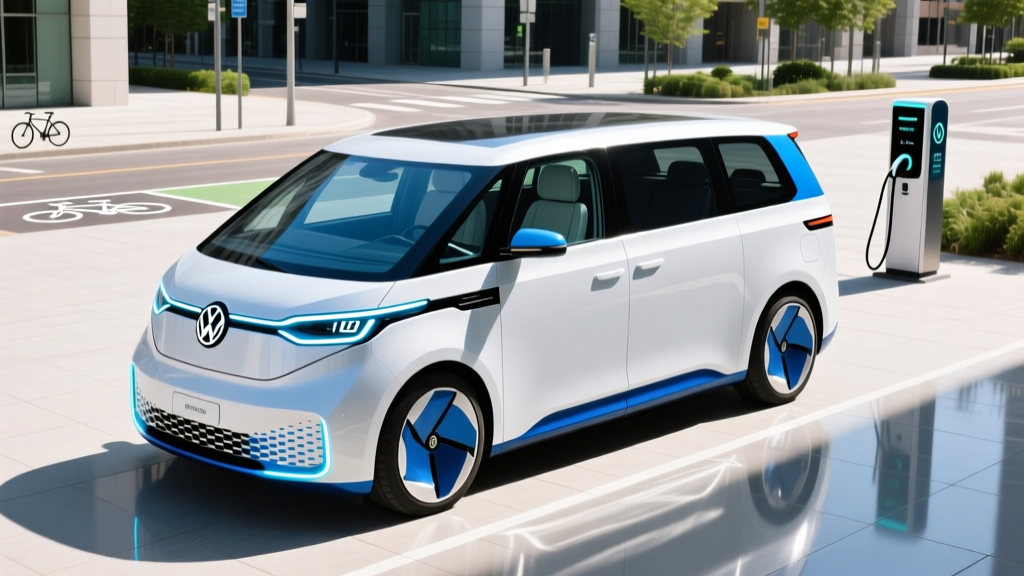
The electric VW Bus is the Volkswagen ID. Buzz, a retro-styled three-row electric van that went on sale in the U.S. for the 2025 model year and continues into 2026. It offers an EPA-estimated 234 miles of range (Standard Wheelbase) from a 91 kWh usable battery, DC fast-charges at up to 185 kW (10–80% in roughly 26 minutes), and starts at approximately $59,995 before destination. The long-wheelbase version extends range to an EPA-estimated 231 miles despite its larger battery due to added weight and frontal area. Federal §30D tax credit eligibility depends on battery sourcing, income caps, and MSRP limits — and at its price point, the ID. Buzz faces strict qualification hurdles under current IRS rules.
What Exactly Is the Electric VW Bus?
Volkswagen revived its iconic Microbus as the ID. Buzz, built on the same MEB platform that underpins the ID.4 crossover. Unlike the original air-cooled, rear-engine Type 2, the ID. Buzz places its electric motor at the rear (standard) or adds a front motor for 4Motion all-wheel drive (long-wheelbase). The design pays homage to the 1960s van with a two-tone paint option, a short overhang, and a flat floor, but the powertrain is thoroughly modern.
For the U.S. market, VW skipped the short-wheelbase European version initially and launched with the long-wheelbase (LWB) model for 2025, adding a Standard Wheelbase (SWB) variant shortly after. Both seat up to seven passengers across three rows, making the ID. Buzz one of the very few electric three-row vehicles available alongside the Kia EV9 and Rivian R1S.
Range, Battery, and Charging: The Numbers That Matter
The ID. Buzz uses an NMC (nickel manganese cobalt) lithium-ion battery pack. Here's how the two wheelbase options stack up on paper — and on the road.
| Spec | SWB (RWD) | LWB (RWD) | LWB (4Motion AWD) |
|---|---|---|---|
| Battery (usable) | 91 kWh | 91 kWh | 91 kWh |
| EPA Range | 234 mi | 231 mi | 220 mi (est.) |
| Motor Output | 282 hp | 282 hp | 369 hp (combined) |
| 0–60 mph | ~7.9 sec | ~7.9 sec | ~6.5 sec |
| Peak DC Charge Rate | 185 kW | 185 kW | 185 kW |
| 10–80% DC Fast Charge | ~26 min | ~26 min | ~26 min |
| Level 2 Charge Rate | 11 kW | 11 kW | 11 kW |
| Level 2 Full Charge Time | ~8.5 hr | ~8.5 hr | ~8.5 hr |
| MPGe (combined) | ~87 MPGe | ~85 MPGe | ~82 MPGe (est.) |
| Towing Capacity | Not rated | Not rated | Not rated |
| Cargo (behind 3rd row) | 18.0 cu ft | 26.8 cu ft | 26.8 cu ft |
| Base MSRP | ~$59,995 | ~$61,995 | ~$65,995 |
Real-World Range vs. EPA Sticker
The EPA's 234-mile figure assumes a mix of city and highway driving at moderate temperatures. In real-world conditions:
- Highway driving at 70–75 mph: Expect roughly 195–215 miles. The ID. Buzz's tall, boxy profile creates significant aerodynamic drag, which hits efficiency hard at sustained speeds.
- Cold weather (below 32°F): Range can drop to 165–185 miles due to battery chemistry limitations and cabin heating demand. The ID. Buzz does include a heat pump on higher trims, which mitigates some loss.
- City / suburban mixed driving (55°F–75°F): You'll see results close to or slightly above the EPA number, around 230–245 miles, thanks to regenerative braking in stop-and-go traffic.
For a vehicle this size, these numbers are respectable — but they're not road-trip territory without planning. A 300-mile drive will require at least one 25-minute DC fast-charge stop.
Understanding the Charge Curve
The ID. Buzz peaks at 185 kW on a DC fast charger, but like all EVs, it doesn't sustain that rate for the entire session. The charge curve tapers significantly above 80% State of Charge (SoC). That 10–80% time of ~26 minutes assumes you arrive at the charger with a low battery and a properly preconditioned pack. Charging from 80–100% can add another 20+ minutes. Practical tip: On road trips, plan stops at 15–20% SoC and charge only to 80% for the fastest experience.
How the Electric VW Bus Compares to Gas Minivans
The ID. Buzz doesn't have a direct electric rival in the three-row van segment. Its closest competitors are gas-powered minivans: the Toyota Sienna (hybrid), Honda Odyssey, and Chrysler Pacifica (including its PHEV variant). Here's how they compare on the metrics that matter to family hauler buyers.
| Metric | VW ID. Buzz (LWB) | Toyota Sienna (HEV) | Honda Odyssey | Chrysler Pacifica PHEV |
|---|---|---|---|---|
| Powertrain | BEV (electric) | Hybrid (HEV) | Gas V6 | Plug-in Hybrid |
| EPA Range / Tank | 231 mi (electric) | ~600 mi (14.5 gal) | ~480 mi (19.5 gal) | 32 mi electric + ~430 mi gas |
| MPGe / MPG Combined | ~85 MPGe | 36 MPG | 22 MPG | 82 MPGe (elec) / 30 MPG (gas) |
| Fuel/Energy Cost per Mile | ~$0.04–0.06 | ~$0.10 | ~$0.16 | ~$0.05 (elec) / ~$0.12 (gas) |
| Seating | 7 | 7–8 | 7–8 | 7 |
| Cargo (behind 3rd row) | 26.8 cu ft | 33.5 cu ft | 32.8 cu ft | 32.3 cu ft |
| Starting Price | ~$61,995 | ~$38,085 | ~$39,690 | ~$51,095 |
| AWD Available | Yes (4Motion) | Yes | No | No |
The trade-off is clear: The ID. Buzz costs $20,000+ more upfront than a Sienna or Odyssey, offers less range per "tank," and provides less cargo space behind the third row. What it gives back is dramatically lower per-mile energy cost (especially with home charging), near-silent operation, instant torque, zero tailpipe emissions, and a design that turns heads in every parking lot.
Real Ownership Costs: 5-Year Breakdown
The sticker price is only part of the equation. Here's a realistic five-year, 75,000-mile ownership cost comparison assuming $3.50/gallon gas, $0.14/kWh home electricity, and a mix of 80% home / 20% public charging for the ID. Buzz.
| Cost Category | VW ID. Buzz (LWB) | Toyota Sienna (HEV) | Honda Odyssey |
|---|---|---|---|
| Purchase Price (base) | $61,995 | $38,085 | $39,690 |
| Federal Tax Credit (§30D) | $0–$7,500* | $0 | $0 |
| Fuel / Energy | $3,800 | $7,500 | $12,300 |
| Maintenance | $1,500 | $3,200 | $3,800 |
| Insurance (avg.) | $10,500 | $7,800 | $7,500 |
| Estimated Depreciation | $24,000 | $14,000 | $16,000 |
| Total 5-Year Cost | $73,795–$81,295 | $56,585 | $63,290 |
*The §30D federal tax credit for the ID. Buzz depends on battery-component and critical-mineral sourcing requirements that change annually. The vehicle's MSRP must be at or below the $80,000 van/SUV cap, and buyer income must not exceed $300,000 (joint) / $150,000 (single). Check current eligibility at IRS.gov or confirm with a tax professional. The credit can be transferred to the dealer at point of sale as of 2024 onward.
Key takeaways from the cost data:
- Energy savings are real: The ID. Buzz saves roughly $3,700–$8,500 in fuel over five years compared to gas minivans, with the biggest gap versus the Odyssey.
- Maintenance is cheaper: No oil changes, no transmission fluid, fewer brake replacements (thanks to regenerative braking). Budget roughly half of what a gas van requires.
- Insurance costs more: EV insurance premiums run 15–30% higher than comparable gas vehicles due to repair costs and battery replacement risk. Get quotes before committing.
- Depreciation is the wild card: EV depreciation has been volatile. The ID. Buzz's retro appeal may help it hold value better than other EVs, but the premium purchase price means more dollars at risk.
First-Time EV Buyer Essentials: What to Know Before You Sign
Home Charging Is Non-Negotiable for Most Owners
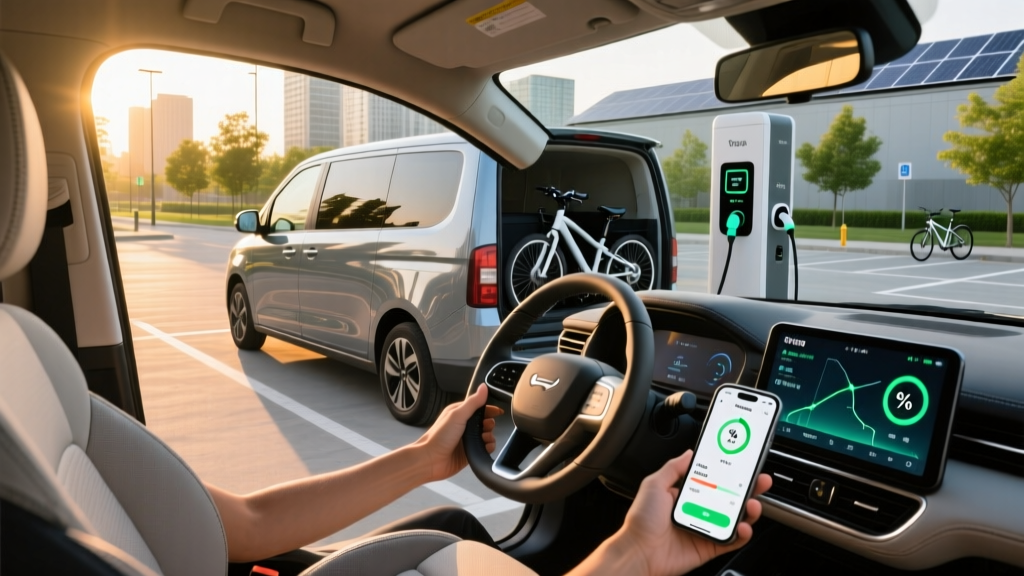
With a 91 kWh battery, relying on Level 1 (120V household outlet) charging would take over 90 hours for a full charge — effectively useless for daily use. A Level 2 home charger (240V, 48-amp circuit) at 11 kW will replenish the battery overnight in about 8.5 hours.
| Item | Low Estimate | High Estimate |
|---|---|---|
| Level 2 Charger (hardware) | $400 | $750 |
| Electrician labor (240V circuit) | $600 | $2,000 |
| Permit & inspection | $50 | $300 |
| Electrical panel upgrade (if needed) | $1,500 | $3,500 |
| Total | $1,050 | $6,550 |
If your home has a 200-amp electrical panel with spare capacity, expect the lower end of that range. Homes with older 100-amp panels may need an upgrade, which significantly increases cost. Some utilities offer rebates of $250–$500 for charger installation — check with your local provider. Always hire a licensed electrician and pull a permit; improper EV charger wiring is a fire risk.
Public Charging Reality Check
The ID. Buzz uses the CCS1 connector for DC fast charging. Volkswagen has committed to adopting NACS (Tesla's connector) on future models, and current VW EVs are expected to gain Supercharger access via an adapter. As of 2026, check with your dealer on adapter availability and compatibility.
At a public DC fast charger rated 150+ kW, expect to pay $0.30–$0.48 per kWh depending on the network (Electrify America, EVgo, ChargePoint). A 10–80% session (roughly 64 kWh) costs $19–$31 — still cheaper than a comparable gas fill-up, but significantly more than home charging at $0.14/kWh.
Common Misconceptions About the Electric VW Bus
| Myth | Fact |
|---|---|
| "It gets 300+ miles of range." | The EPA rates it at 231–234 miles. Real-world highway range is closer to 200 miles. Don't plan road trips around the sticker number. |
| "Everyone gets the $7,500 tax credit." | Eligibility depends on battery sourcing, buyer income (§30D caps), and MSRP limits. Many buyers will qualify for a partial credit or none at all. Verify at IRS.gov. |
| "It charges as fast as a Tesla." | At 185 kW peak, the ID. Buzz charges slower than the Tesla Model Y (~250 kW) or Hyundai Ioniq 5 (~240 kW). Plan for ~26-minute 10–80% stops, not 18-minute ones. |
| "It's basically a VW minivan." | It's smaller inside than a Sienna or Odyssey. Third-row space and cargo volume are tighter. Think of it as a compact people-mover, not a full-size minivan replacement. |
| "The battery will need replacing soon." | VW covers the battery with an 8-year / 100,000-mile warranty guaranteeing at least 70% capacity retention. NMC batteries in liquid-cooled packs typically retain 85–90% capacity at 100,000 miles based on industry data. |
Decision Framework: Is the Electric VW Bus Right for You?
Choose the VW ID. Buzz If:
- You want a distinctive, head-turning electric family vehicle and don't need minivan-maximum cargo space.
- You have reliable Level 2 home charging and drive fewer than 180 miles per day (covering real-world range with a buffer).
- You value low per-mile energy costs, quiet operation, and instant electric torque around town.
- You're willing to pay a premium (~$60K+) for design, EV technology, and the VW brand.
- You want available AWD (4Motion on the LWB) for snow or light off-pavement use.
Look Elsewhere If:
- You regularly drive 300+ miles between stops and don't want to plan DC fast-charge breaks.
- You need maximum cargo volume or regularly carry seven adults — a Sienna or Odyssey still wins on interior space.
- You don't have access to home or workplace Level 2 charging. Public-only charging at $0.30–$0.48/kWh erodes much of the cost advantage.
- Your budget is under $45,000. The Sienna hybrid delivers 36 MPG combined for nearly half the price.
- You need towing capability — the ID. Buzz is not currently rated for towing in the U.S.
Battery Longevity and Warranty
Volkswagen provides an 8-year / 100,000-mile battery warranty that guarantees the pack will retain at least 70% of its original usable capacity. The 91 kWh NMC pack is liquid-cooled, which is critical for long-term health — active thermal management reduces degradation from fast charging and extreme temperatures.
Based on industry-wide data from similar MEB-platform vehicles (ID.4, Audi Q4 e-tron), owners can expect roughly 5–8% degradation over the first 50,000 miles, with the curve flattening significantly afterward. A full battery replacement outside of warranty would cost an estimated $15,000–$22,000 — though this is rare within the first 150,000 miles for liquid-cooled packs.
Maximizing battery life: Avoid routinely charging to 100% for daily use (set the charge limit to 80–90% for daily driving, 100% only before road trips). Use DC fast charging sparingly when Level 2 is available. In extreme cold, precondition the battery using the vehicle's scheduled departure feature before driving.
Frequently Asked Questions
Is the electric VW Bus actually available to buy in the U.S.?
Yes. The VW ID. Buzz went on sale in the United States starting in late 2024 as a 2025 model and continues for the 2026 model year. It's available through VW dealerships nationwide, though inventory varies by region. Both Standard Wheelbase and Long Wheelbase configurations are offered.
How much does it cost to charge the ID. Buzz at home?
At the U.S. average residential electricity rate of roughly $0.14/kWh, a full 91 kWh charge costs about $12.74. That's good for roughly 200–230 real-world miles, working out to approximately $0.055–$0.064 per mile — roughly one-third the per-mile cost of a gas Odyssey at $3.50/gallon. See the EPA's EV fuel cost calculator for state-specific electricity rates.
Can the ID. Buzz use Tesla Superchargers?
As of 2026, the ID. Buzz uses the CCS1 connector natively. Volkswagen has announced plans to transition to the NACS connector on future models, and adapter-based Supercharger access for existing CCS vehicles is being rolled out across the industry. Confirm current adapter availability and Supercharger network compatibility with your VW dealer.
Does the ID. Buzz qualify for the $7,500 federal tax credit?
It may, but eligibility is not guaranteed. Under IRS §30D rules, the credit depends on: (1) battery component and critical mineral sourcing requirements that tighten each year, (2) buyer income not exceeding $300,000 joint / $150,000 single, and (3) the vehicle MSRP staying under the $80,000 van/SUV cap. The ID. Buzz's MSRP clears the cap, but battery sourcing requirements may reduce or eliminate the credit. Consult a tax professional and check the IRS's current qualified vehicle list before relying on the credit in your purchase decision.
How does the ID. Buzz handle in cold weather?
Like all EVs, the ID. Buzz loses range in freezing temperatures — expect a 20–30% reduction, bringing real-world range down to roughly 165–185 miles. Higher trims include a heat pump, which is significantly more efficient than resistive cabin heating and helps preserve range. Preconditioning the battery while plugged in (using the VW app's scheduled departure feature) reduces cold-weather efficiency losses and improves regenerative braking performance on startup.
What's the warranty coverage?
Volkswagen provides a 4-year / 50,000-mile basic vehicle warranty and an 8-year / 100,000-mile battery warranty (70% capacity retention threshold). This is competitive with the segment and in line with other MEB-platform VW vehicles.