The Short Answer: VW Bug EV Conversion Kits
A complete VW Beetle EV conversion in 2026 typically costs between $8,000 (DIY, basic kit) and $35,000+ (turnkey professional build), excluding the donor car. Most builds yield 60–150 miles of real-world range depending on battery size (15–40 kWh), and use standard J1772 Level 2 charging at 3.3–7.2 kW. These kits are best suited for hobbyists, weekend drivers, and classic-car enthusiasts who want electric drivability — not daily commuters who need reliable 250+ mile range and DC fast charging.
What Is a VW Bug EV Conversion Kit?
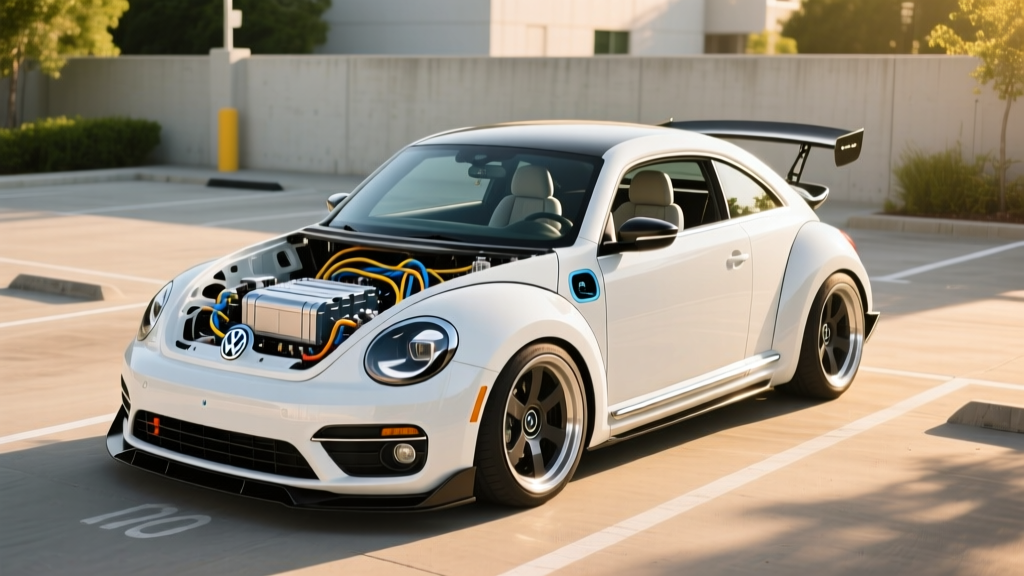
An EV conversion kit replaces the Beetle's air-cooled flat-four gasoline engine and fuel system with an electric motor, motor controller, battery pack, onboard charger, and associated wiring. The classic Beetle (produced 1938–2003 in various markets) is one of the most popular EV conversion platforms in the world because of its simple rear-engine layout, light curb weight (~1,800–2,100 lbs), and enormous aftermarket support.
Most kits designed for the Beetle retain the original transaxle or adapt a single-speed reduction gear, keeping the conversion relatively bolt-in. Major kit suppliers in 2026 include EV West, Electric Classic Cars (UK-based, ships globally), and smaller specialists like Zelectric Motors (which focuses on air-cooled VWs specifically). Some fabricators also source components individually — pairing a NetGain Hyper9 motor with a Thunderstruck controller and salvaged Tesla or Nissan Leaf battery modules — to reduce cost.
Kit Pricing and Full Build Cost Breakdown
The sticker price on a "kit" can be misleading because it rarely includes everything needed for a road-ready conversion. Here's what a realistic budget looks like across three common build tiers:
| Component / Service | Budget DIY Build | Mid-Range Kit Build | Professional Turnkey |
|---|---|---|---|
| Donor VW Beetle (running) | $3,000–$8,000 | $5,000–$12,000 | $8,000–$20,000 (restored) |
| Motor + Controller | $2,500–$4,000 | $3,500–$6,000 | $5,000–$8,000 |
| Battery Pack (cells + BMS + enclosure) | $3,000–$6,000 (salvaged modules) | $5,000–$10,000 (new LFP/NMC) | $8,000–$15,000 |
| Onboard Charger + DC-DC Converter | $600–$1,200 | $1,000–$2,000 | $1,500–$2,500 |
| Throttle, Wiring, Adapters, Hardware | $800–$1,500 | $1,200–$2,500 | $2,000–$3,500 |
| Instrumentation / Display | $200–$500 | $500–$1,200 | $1,000–$2,500 |
| Labor (if professional) | $0 (self) | $0–$5,000 (partial) | $10,000–$20,000 |
| Registration / Inspection / Title | $200–$800 | $200–$800 | $200–$1,500 |
| Total Estimated Cost | $10,300–$22,000 | $16,400–$39,500 | $35,700–$73,000 |
For context, a professionally built Zelectric Beetle typically starts around $55,000–$65,000 and can exceed $90,000 for a concours-quality restoration with modern amenities like regenerative braking, power steering, and upgraded suspension to handle battery weight.
Range, Charging, and Performance: Real Numbers
Most VW Bug EV conversions are not attempting to rival a Tesla Model 3. The physical constraints of the Beetle's chassis — limited space for batteries, no liquid cooling provisions in basic kits, and a lightweight frame not designed for heavy packs — set hard ceilings on what's achievable.
Typical Build Specifications
| Spec | Budget Build | Mid-Range Build | High-End Build |
|---|---|---|---|
| Battery Capacity (usable) | 14–20 kWh | 22–32 kWh | 35–45 kWh |
| Battery Chemistry | Salvaged NMC (Leaf/Tesla) | New NMC or LFP modules | Custom NMC or LFP pack |
| EPA-Equivalent Range | 50–75 mi | 80–120 mi | 130–170 mi |
| Real-World Range (mixed) | 40–60 mi | 65–100 mi | 100–140 mi |
| Motor Power | 30–50 kW (40–67 HP) | 50–80 kW (67–107 HP) | 75–120 kW (100–160 HP) |
| 0–60 mph | 12–18 sec | 8–12 sec | 5–8 sec |
| Level 2 Charge Rate | 3.3 kW (J1772) | 6.6 kW (J1772) | 6.6–7.2 kW (J1772) |
| Full Charge Time (Level 2) | 5–7 hours | 4–5 hours | 5–7 hours |
| DC Fast Charging | Not available | Rare / optional | Available (some builds, CCS) |
Real-World Range Reality: A 25 kWh pack in a Beetle weighing ~2,400 lbs (post-conversion) will deliver roughly 3.5–4.0 miles per kWh in mixed driving. That means 87–100 miles on a full charge under ideal conditions. Expect 20–30% range loss in cold weather (below 40°F) if your kit lacks battery heating, and 15–20% loss at sustained highway speeds above 65 mph due to the Beetle's poor aerodynamics (Cd ~0.48). Plan for 55–70 usable miles in winter or highway-heavy driving.
EV Conversion vs. Buying a New EV: Cost Comparison
The most common question from prospective converters: wouldn't I be better off just buying a new EV? The answer depends entirely on your goals. If you want daily-driver reliability, warranty coverage, and 250+ mile range, a new EV wins on pure practicality. If you want a unique classic car with zero tailpipe emissions and enjoy the build process, a conversion has value that a spec sheet can't capture.
| Factor | VW Bug EV Conversion (Mid-Range) | 2026 Chevrolet Equinox EV (2LT) | Keep Gas Beetle (Restored) |
|---|---|---|---|
| Total Upfront Cost | $16,000–$40,000 | ~$33,000–$38,000 MSRP | $12,000–$25,000 (restoration) |
| Federal Tax Credit (§30D) | $0 (not eligible — conversions excluded) | Up to $7,500 (subject to income/MSRP/sourcing rules) | $0 |
| Range | 65–100 mi (real-world) | ~315 mi (EPA est.) | ~250 mi (8 gal tank, ~31 MPG) |
| Fuel/Energy Cost per Mile | ~$0.04–$0.06/mi (home charging at $0.14/kWh) | ~$0.04–$0.05/mi | ~$0.11–$0.14/mi (at $3.40/gal) |
| Annual Maintenance | $200–$500 (minimal) | $300–$600 | $800–$2,000 (classic car upkeep) |
| Insurance (Annual) | $600–$1,500 (classic/specialty) | $1,200–$2,000 | $400–$900 (classic agreed-value) |
| Warranty | None (kit components vary) | 3yr/36k basic, 8yr/100k battery | None (aftermarket parts) |
| Safety Features | None beyond original 1960s–70s design | Full ADAS suite, airbags, crumple zones | None beyond original design |
Sources: fueleconomy.gov for efficiency data; IRS §30D clean vehicle credit rules.
Ownership Considerations: What First-Time Converters Must Know
Home Charging Is Nearly Mandatory
Without DC fast charging (which most Beetle conversions lack), you will depend entirely on Level 1 (120V, ~1.4 kW) or Level 2 (240V, 3.3–7.2 kW) charging. A Level 1 outlet adds roughly 4–5 miles of range per hour — meaning a full charge of a 25 kWh pack takes 15–18 hours. A Level 2 home station is strongly recommended. Budget $500–$1,500 for a quality Level 2 EVSE (like a ChargePoint Home Flex or Emporia Vue) and $800–$3,000 for electrician installation, depending on whether your panel needs an upgrade to support a 40A or 50A circuit.
Registration and Street Legality Vary by State
EV conversions must pass state-specific inspections to be registered for road use. Some states (California, Oregon, Washington) have relatively straightforward processes for converted vehicles. Others require specialty construction titles, brake certifications, or weight inspections. Budget $200–$1,500 and several weeks for paperwork. Check your state DMV's requirements before starting the build.
Insurance Requires Specialty Providers
Standard auto insurers often won't cover a converted vehicle at its build value. You'll likely need a classic-car or specialty-vehicle policy from providers like Hagerty or Grundy, which offer agreed-value coverage. Premiums for a $30,000 converted Beetle typically run $600–$1,500/year, but you'll need documentation of the conversion components and their value.
Safety Is a Genuine Limitation
This is the most under-discussed aspect of EV conversions. A 1968 or 1973 Beetle has no crumple zones, no airbags, no anti-lock brakes, and no electronic stability control. Adding a 300–600 lb battery pack changes the weight distribution and increases total vehicle mass. If you plan to drive in modern traffic regularly, understand that you are in one of the least crash-protective vehicles on the road. This is acceptable for weekend and show driving — it is a serious consideration for daily commuting.
Common Misconceptions About VW Bug EV Conversions
| Myth | Fact |
|---|---|
| "Conversions qualify for the $7,500 federal EV tax credit." | False. IRS §30D credits apply only to new, qualifying clean vehicles from certified manufacturers. Aftermarket conversions do not qualify. Some states offer separate incentives for conversions — check your state energy office. |
| "You'll get 200 miles of range easily." | False for most builds. The Beetle's limited battery space and weight constraints typically cap range at 60–150 miles real-world. Achieving 200+ miles requires a large, heavy, expensive pack that compromises handling and may exceed the car's structural design limits. |
| "It's just plug-and-play — anyone can do it in a weekend." | False. Even "bolt-in" kits require high-voltage wiring, battery management system configuration, throttle calibration, brake system upgrades, and safety inspections. A realistic timeline for a competent DIYer is 100–300 hours over several months. |
| "Electric means zero maintenance." | Partially true. You eliminate oil changes, fuel system repairs, and exhaust work. But you still maintain brakes, suspension, tires, and the 12V auxiliary system. Battery health monitoring and thermal management add new maintenance considerations. |
| "Any mechanic can service it." | False. Most general mechanics won't touch a high-voltage EV conversion. You'll either self-service, find an EV-specialist shop, or rely on the kit manufacturer for support. |
Decision Framework: Should You Convert or Buy?
Choose a VW Bug EV Conversion If:
- You own or want to own a classic Beetle and want to drive it more often without gasoline costs and maintenance headaches
- You have access to a garage with 240V charging (or can install it)
- Your typical trips are under 50 miles round-trip
- You enjoy hands-on mechanical projects or have a trusted fabricator
- You value uniqueness and the classic-car experience over modern safety and convenience
- You understand this is a hobby/enthusiast vehicle, not a primary daily driver
Buy a New or Used Production EV If:
- You need reliable daily transportation with 200+ miles of range
- You want DC fast charging for road trips (10–80% in 20–30 minutes)
- You need modern safety features (airbags, ABS, automatic emergency braking)
- You want a warranty, dealer service network, and federal tax credit eligibility
- You don't have the time, tools, or budget for a multi-month conversion project
- You drive in heavy modern traffic regularly and need crash protection
Keep or Restore a Gas Beetle If:
- You want the authentic driving experience (sound, feel, simplicity) of the original car
- You drive it fewer than 2,000 miles per year (fuel cost is negligible)
- You want maximum resale value among classic-car collectors (originality typically commands a premium)
- Your budget is under $10,000 total
5-Year Cost of Ownership: Conversion vs. New EV vs. Gas Beetle
| Cost Category (5 Years) | VW Bug EV Conversion (Mid-Range) | 2026 Chevy Equinox EV (2LT) | Gas Beetle (Restored) |
|---|---|---|---|
| Purchase / Build | $28,000 | $35,000 (before credit) | $18,000 |
| Tax Credit | $0 | –$7,500 (if eligible) | $0 |
| Net Purchase | $28,000 | $27,500 | $18,000 |
| Fuel / Energy (5 yrs, 6k mi/yr) | $1,500 | $1,300 | $3,900 |
| Maintenance (5 yrs) | $1,750 | $2,250 | $6,000 |
| Insurance (5 yrs) | $5,000 | $8,000 | $3,250 |
| Home Charger Install | $2,000 | $2,000 | $0 |
| 5-Year Total Cost | $38,250 | $41,050 | $31,150 |
| Resale Value (Est.) | $18,000–$25,000 | $14,000–$18,000 | $16,000–$22,000 |
| Net 5-Year Cost | $13,250–$20,250 | $23,050–$27,050 | $9,150–$15,150 |
Note: Assumes 6,000 miles/year, $0.14/kWh electricity, $3.40/gallon gasoline. Conversion resale values vary enormously based on build quality and documentation. The Equinox EV depreciates faster as a mass-market vehicle. Classic gas Beetles with documented restorations hold value well among collectors.
Frequently Asked Questions
How long does a VW Bug EV conversion take?
A competent DIY builder with basic mechanical and electrical skills should expect 150–300 hours spread over 3–8 months. Professional shops typically quote 4–12 weeks turnaround once all parts are sourced, but supply chain delays for specific battery modules or controllers can extend this.
Can I use Tesla battery modules in a Beetle conversion?
Yes, salvaged Tesla Model S or Model 3 modules are popular choices. However, they require a compatible battery management system (BMS), proper cooling provisions, and careful series/parallel configuration. Working with salvaged high-voltage modules carries serious shock and fire risk if handled improperly — only attempt this with proper training and equipment.
Will a conversion ruin my Beetle's resale value?
For collectors seeking originality, yes — a converted Beetle will typically sell for less than a matching-numbers, factory-original car in the same condition. However, well-documented, high-quality EV conversions have a growing niche market. Zelectric conversions, for example, have sold at Barrett-Jackson and Bring a Trailer for $50,000–$90,000+. The key factor is build quality, documentation, and reversibility.
Do I need to upgrade the Beetle's brakes for an EV conversion?
Almost always, yes. The added weight of batteries (300–600 lbs) and the increased performance of an electric motor exceed the design limits of original drum brakes. Most reputable kits include or strongly recommend front disc brake upgrades, and some builders add regenerative braking to reduce brake wear.
Can I fast-charge a converted Beetle on a road trip?
Most Beetle conversions do not support DC fast charging (CCS or CHAdeMO) due to cost, space, and battery thermal limitations. A few high-end builds include CCS capability at 25–50 kW, but this adds $3,000–$6,000 to the build and requires liquid-cooled battery packs. For most conversions, plan trips around the 60–100 mile range and charge overnight at Level 2.
Is LFP or NMC battery chemistry better for a conversion?
LFP (lithium iron phosphate) offers longer cycle life (3,000+ cycles vs. ~1,500 for NMC), better thermal stability, and lower cost per kWh — making it a strong choice for conversions. However, LFP has lower energy density, meaning you'll need more physical space for the same range. In a space-constrained Beetle, NMC may be the only way to achieve 100+ miles. Both chemistries are viable; the choice depends on your range and packaging priorities.