Quick Answer: Is a VW Beetle EV Conversion Worth It?
A complete VW Beetle EV conversion kit typically costs between $12,000 and $25,000 for parts alone, with professional installation pushing total project costs to $20,000–$40,000+. Expect a real-world range of 60 to 150 miles depending on battery capacity (20–50 kWh), and Level 2 charging times of 4–10 hours. Conversions make sense for classic-car enthusiasts who want daily-driver usability without sacrificing vintage aesthetics, but they rarely pencil out as a pure cost-savings play versus buying a used or new production EV. You will not qualify for the federal §30D EV tax credit on a conversion.
What Exactly Is a VW Beetle EV Conversion Kit?
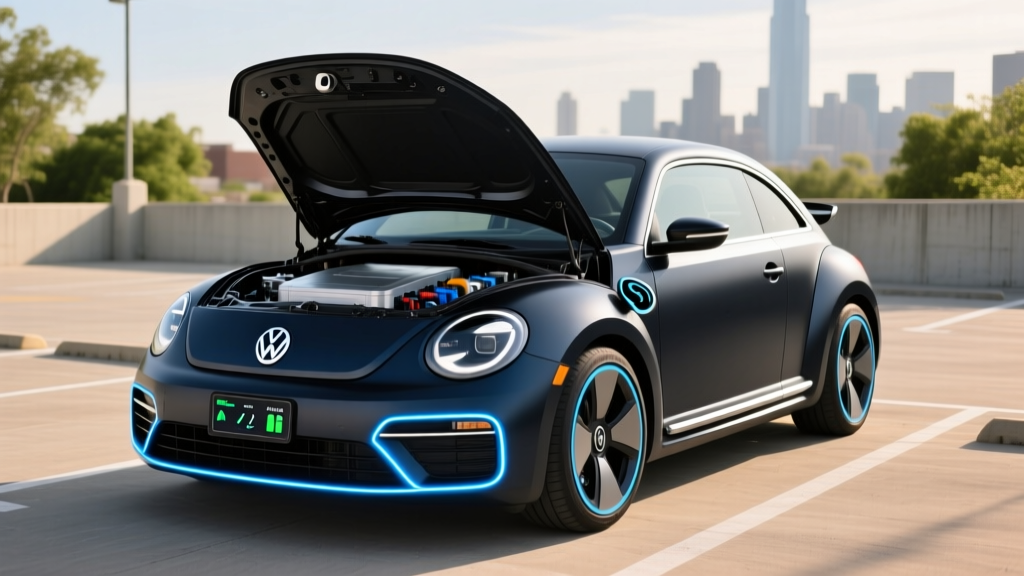
A VW Beetle EV conversion replaces the original air-cooled flat-four engine, fuel tank, and exhaust system with an electric motor, motor controller, and lithium-ion (or occasionally LFP) battery pack. For the classic Beetle — produced from 1938 through 2003 in various global markets — several specialty manufacturers produce bolt-in or semi-bolt-in kits designed specifically for the Type 1 chassis.
The most established conversion kit suppliers in 2026 include:
- EV West — Offers a VW-specific kit using a NetGain Hyper9 or similar AC motor, typically paired with Tesla-salvage or new lithium modules. Kit pricing starts around $14,000–$18,000 for the core drivetrain (motor, controller, charger, throttle, DC-DC converter).
- Zelectric Motors — A boutique converter that performs turnkey Beetle and Bus conversions. Full turnkey pricing generally falls between $35,000 and $55,000 including labor, donor car prep, and battery.
- Electric Classic Cars (UK-based) — Ships conversion components globally; their Beetle packages run £15,000–£25,000 (~$19,000–$32,000 USD).
- DIY/Custom Builds — Sourcing individual components (a used Nissan Leaf motor, a custom battery box, a Kelly or Sevcon controller) can bring parts cost down to $8,000–$12,000, but demands significant fabrication skill.
A typical kit includes: the electric motor, motor controller, onboard charger (usually 3.3 kW or 6.6 kW AC), DC-DC converter (to run your 12V lights and accessories from the high-voltage pack), throttle assembly, contactors, fuses, wiring harness, and often a basic battery management system (BMS). Batteries are sometimes sold separately because buyers choose capacity based on budget and range needs.
The Real Cost Breakdown: Conversion vs. New EV
Understanding the total spend requires looking beyond the kit sticker price. Here's what a typical 1967–1974 Beetle EV conversion actually costs when fully completed:
| Component | DIY Build | Professional Install |
|---|---|---|
| Donor Beetle (running, decent body) | $5,000–$10,000 | $5,000–$10,000 |
| EV conversion kit (motor, controller, charger, wiring) | $10,000–$15,000 | $12,000–$18,000 |
| Battery pack (20–50 kWh lithium modules + BMS) | $4,000–$12,000 | $6,000–$15,000 |
| Fabrication (motor mount, battery boxes, adapter plate) | $500–$2,000 (own labor) | $3,000–$8,000 |
| Electrical labor (high-voltage wiring, testing) | $0 (own labor) | $2,000–$5,000 |
| Body/paint/interior refresh (typical for a 50-year-old car) | $1,000–$5,000 | $3,000–$10,000 |
| Registration, inspection, title modification | $200–$800 | $200–$800 |
| Total Estimated Cost | $20,700–$44,800 | $31,200–$66,800 |
For context, a new 2026 Chevrolet Equinox EV starts around $33,000 before any incentives, offering an EPA-rated 319 miles of range, a full manufacturer warranty, DC fast charging at up to 150 kW, modern safety systems, and eligibility for up to $7,500 in federal tax credits (subject to IRS §30D income, MSRP, and battery-sourcing requirements). Even a used Tesla Model 3 or Chevy Bolt EV on the secondary market can be had for $15,000–$22,000 with 200+ miles of range.
The conversion, then, is not an economic optimization — it's a passion project. You're paying a premium for character, nostalgia, and the satisfaction of electrifying a classic.
Range, Charging & Performance: What to Expect
Range and charging are the most common questions from prospective converters, and the answers depend heavily on your battery budget.
Range Estimates by Battery Size
| Battery Capacity (usable) | Estimated EPA-Equivalent Range | Real-World Range (mixed driving) | Cold-Weather Range (~30°F) |
|---|---|---|---|
| 20 kWh | ~70 miles | 50–60 miles | 40–50 miles |
| 30 kWh | ~105 miles | 80–95 miles | 60–75 miles |
| 40 kWh | ~140 miles | 110–130 miles | 85–105 miles |
| 50 kWh | ~175 miles | 140–160 miles | 110–130 miles |
The Beetle's boxy aerodynamics (drag coefficient of roughly 0.48, compared to a modern EV at 0.23–0.28) and narrow, high-rolling-resistance tires mean it consumes more energy per mile than a purpose-built EV. Expect efficiency of around 3.5–4.5 miles per kWh (roughly 220–285 Wh/mile) in mixed driving. Highway speeds above 65 mph will push consumption higher.
Cold-weather note: Without the active thermal management systems found in production EVs (heat pumps, battery preconditioning, liquid cooling), a converted Beetle's battery will lose 25–35% of its range in freezing temperatures. If you live in the upper Midwest or Northeast, plan your battery budget accordingly.
Charging Speeds
Most Beetle conversions use a 3.3 kW or 6.6 kW onboard AC charger. This means:
- Level 1 (120V, 1.4 kW): Adds roughly 4–5 miles of range per hour. A full charge on a 30 kWh pack takes ~21 hours.
- Level 2 (240V, 6.6 kW): Adds roughly 20–25 miles per hour. A 30 kWh pack charges fully in ~4.5 hours.
- DC Fast Charging: Most conversion kits do not include DC fast-charging capability. Adding CCS or NACS DC charging requires additional hardware (typically $2,000–$4,000 extra) and battery chemistry that can handle high C-rates. Some high-end conversions include 50 kW DC charging, which can bring a 30 kWh pack from 10–80% in roughly 30 minutes.
Performance
A stock 1967 Beetle produced about 53 horsepower and did 0–60 mph in roughly 24 seconds. Most EV conversions use motors producing 80–150 horsepower with instant torque, transforming the car's acceleration dramatically. Expect 0–60 mph times of 8–14 seconds depending on motor choice and vehicle weight (batteries add 400–800 lbs). The driving experience is genuinely transformed — quiet, torquey, and far more responsive than the original.
However, the Beetle's drum brakes, swing-axle rear suspension (on pre-1967 models), and lack of modern crash structures remain unchanged. Many converters upgrade to front disc brakes and modern radial tires as part of the build.
EV Conversion vs. Buying a Production EV: Side-by-Side
| Factor | Beetle EV Conversion (30 kWh) | 2026 Chevy Equinox EV (3LT) | Used 2022 Tesla Model 3 SR+ |
|---|---|---|---|
| Total Purchase Cost | $25,000–$50,000+ | ~$33,000 (before credit) | $18,000–$22,000 |
| Federal Tax Credit (§30D) | $0 (not eligible) | Up to $7,500 (if eligible) | Up to $4,000 (used EV credit) |
| Real-World Range | 80–95 miles | ~290 miles (EPA 319) | ~240 miles (EPA 272) |
| Level 2 Charging (full) | ~4.5 hours (6.6 kW) | ~9.5 hours (11.5 kW) | ~7 hours (7.6 kW) |
| DC Fast Charging | Rarely included | 150 kW (10–80% ~30 min) | 170 kW (10–80% ~28 min) |
| Warranty | None (or shop warranty) | 3yr/36K bumper; 8yr/100K battery | Remaining factory or aftermarket |
| Safety Features | None beyond original chassis | AEB, lane keep, blind spot, etc. | Autopilot, AEB, lane keep |
| Annual Maintenance | $200–$500 (older car upkeep) | $100–$200 | $150–$300 |
| Insurance (annual est.) | $1,200–$2,500 (classic/specialty) | $1,400–$2,000 | $1,500–$2,400 |
| Character / Cool Factor | Extremely high | Moderate | Moderate |
The production EV wins on virtually every practical metric: range, charging speed, safety, warranty, tax incentives, and cost. The Beetle conversion wins on personality, uniqueness, and the emotional reward of driving a reimagined classic. These are fundamentally different purchases serving different goals.
Real-World Ownership Considerations
Before committing to a conversion, honestly evaluate your situation against these practical factors:
Home Charging Access
You will need a dedicated 240V Level 2 circuit (ideally 30–40 amps) to make daily use viable. A Level 2 home charger installation typically costs $500–$2,000 depending on your electrical panel capacity and the distance from panel to garage. If you live in an apartment or lack off-street parking, a conversion becomes significantly less practical — public Level 2 charging is available but slower and more expensive per kWh than home charging, and DC fast charging is rarely an option on converted Beetles.
Climate
If you regularly drive in temperatures below 40°F, your range will drop 25–35% without a battery heating system. Most conversion kits do not include active battery thermal management. If you're in Minnesota, upstate New York, or similar climates, either budget for a larger battery (40+ kWh) or accept that your 80-mile summer range becomes 55 miles in January.
Driving Patterns
A 30 kWh Beetle conversion with ~90 miles of real-world range works well for: commuting 15–20 miles each way, local errands, weekend car-show drives. It does not work well for: 60-mile one-way commutes, frequent highway trips over 50 miles, or anyone who needs a single vehicle for all use cases. Most conversion owners keep a second vehicle for longer trips.
Registration and Insurance
Most states require a special inspection process for converted vehicles, often through a state DMV or authorized inspection station. You'll need to re-title the vehicle (some states issue a "converted" or "electric" designation). Insurance for a converted classic typically requires a specialty or agreed-value policy from providers like Hagerty or Grundy, which can cost $1,200–$2,500/year depending on the agreed value and your driving record.
Common Misconceptions About EV Conversions
| Myth | Fact |
|---|---|
| "I'll get the $7,500 federal tax credit on my conversion." | False. The IRS §30D credit applies only to new, qualifying production EVs purchased from a manufacturer. Conversions, kit cars, and custom builds do not qualify. The used-EV credit (§25E, up to $4,000) also requires the vehicle to be sold by a licensed dealer and originally manufactured by an OEM. |
| "Converting saves money compared to buying a new EV." | Usually false. A full professional conversion often costs $35,000–$65,000, more than a new Equinox EV or used Model 3 after credits. Only bare-bones DIY builds with salvaged batteries can approach the cost of a used production EV, and they sacrifice range, charging speed, and warranty. |
| "The Beetle will charge at Tesla Superchargers." | False. Even if you install a NACS port, Supercharger communication protocols (handshake, billing) require OEM-level software integration that conversion kits do not provide. You'll be limited to J1772 Level 2 public chargers and, if equipped, CCS DC stations with appropriate adapters. |
| "EV conversions are maintenance-free." | Partially false. While you eliminate oil changes, spark plugs, and exhaust repairs, you still maintain a 50-year-old chassis: suspension bushings, brake components, rust prevention, weatherstripping, and 12V electrical gremlins. Budget $300–$600/year for classic-car upkeep on top of minimal EV drivetrain maintenance. |
| "Any mechanic can fix it if something goes wrong." | False. Most general mechanics will not touch a custom high-voltage system. You'll need either the original conversion shop, an EV-specialist technician, or your own diagnostic skills. Keep detailed build documentation and wiring diagrams. |
Decision Framework: Should You Convert Your Beetle?
Choose a VW Beetle EV Conversion If:
- You already own (or can acquire cheaply) a Beetle in good structural condition and have an emotional connection to the car.
- You have access to home Level 2 charging and a daily commute under 40 miles round-trip.
- You view this as a hobby/passion project with a realistic budget of $25,000–$50,000+.
- You have (or can develop) basic electrical and fabrication skills for a DIY build, or have identified a reputable conversion shop within driving distance.
- You already have a second vehicle for road trips, cold-weather days, and longer drives.
- You value uniqueness and driving experience over practicality, warranty, and per-dollar efficiency.
Buy a Production EV Instead If:
- Your primary goal is reducing fuel costs, lowering emissions, or minimizing total cost of ownership.
- You need 200+ miles of range, DC fast charging for road trips, and modern safety features.
- You want warranty coverage, tax-credit eligibility, and dealer-service support.
- You live in an apartment or lack reliable home charging access.
- Your total vehicle budget is under $25,000 — a used Chevy Bolt EV, Nissan Leaf, or Tesla Model 3 offers far more practicality at this price point.
- You need one vehicle to handle all driving scenarios including long trips, winter weather, and family hauling.
Running Costs: Conversion vs. Gas Beetle vs. Production EV
| Cost Category | Gas VW Beetle (stock, 25 MPG) | Beetle EV Conversion (30 kWh) | 2026 Chevy Equinox EV |
|---|---|---|---|
| Fuel / Electricity | $1,680 (gas at $3.50/gal) | $540 (home charging at $0.15/kWh) | $500 (home charging at $0.15/kWh) |
| Maintenance | $800–$1,200 | $300–$600 | $100–$200 |
| Insurance | $900–$1,400 | $1,200–$2,500 | $1,400–$2,000 |
| Annual Total (est.) | $3,380–$4,280 | $2,040–$3,640 | $2,000–$2,700 |
The conversion does save significantly on fuel versus the original gas Beetle — roughly $1,000–$1,100/year — but higher specialty insurance and classic-car maintenance eat into those savings. A modern production EV like the Equinox EV costs slightly less to operate annually while offering dramatically more range, safety, and convenience.
Frequently Asked Questions
How long does a VW Beetle EV conversion take?
A professional shop typically requires 3–6 months from drop-off to delivery, depending on parts availability, fabrication complexity, and the shop's backlog. A skilled DIY builder working weekends might complete a basic conversion in 4–8 months. Factor this timeline into your planning — you'll be without the car for a significant period.
What battery chemistry is best for a Beetle conversion?
Most conversions use either salvaged NMC (nickel manganese cobalt) modules from Tesla, Nissan Leaf, or Chevy Bolt packs, or new LFP (lithium iron phosphate) cells. LFP offers longer cycle life (3,000+ cycles vs. 1,500–2,000 for NMC), better thermal stability, and lower cost per kWh, but is heavier and has slightly lower energy density — a meaningful consideration in a weight-sensitive Beetle. NMC gives more range per pound but degrades faster if routinely charged to 100%.
Can I keep the original 4-speed manual transmission?
Yes, and many converters do. Keeping the stock transmission allows you to select a gear for different driving scenarios (typically leaving it in 2nd or 3rd for normal driving). However, it adds weight, complexity, and drivetrain loss. Some builders use a direct-drive setup (motor connected straight to the differential) with a single-speed reduction gear, which is simpler and more efficient but limits top-speed flexibility. Both approaches work; the choice depends on your motor's torque curve and your driving preferences.
Will converting my Beetle hurt its collector value?
This is nuanced. A poorly executed conversion with hacked wiring and non-reversible modifications will almost certainly reduce the value of a numbers-matching, collectible Beetle. However, a high-quality, well-documented, reversible conversion on a driver-quality (non-collectible) Beetle can actually increase its appeal to a niche market of EV-enthusiast buyers. If your Beetle is a rare, high-value collector car (e.g., a 1950s split-window or a low-mileage original), converting it is financially risky. If it's a common 1970s driver-quality car worth $5,000–$8,000, the conversion won't destroy significant collector value.
Where can I charge a converted Beetle on road trips?
You'll be limited to public J1772 Level 2 chargers (found at hotels, shopping centers, and some workplaces via networks like ChargePoint and EVgo). At 6.6 kW, expect to add roughly 20–25 miles of range per hour — meaning a meaningful road-trip charge stop takes 2–3 hours. DC fast charging is rarely available on conversions. Plan routes carefully using apps like PlugShare, and be realistic: a 90-mile-range Beetle is a local car, not a road-trip vehicle.
Is a converted Beetle safe to drive?
The Beetle's original chassis was designed in the 1930s and lacks crumple zones, airbags, anti-lock brakes, and electronic stability control. The EV conversion does not change this. While the electric drivetrain itself can be made very safe with proper high-voltage insulation, fusing, and contactors, the vehicle's crash safety remains that of a mid-century car. Drive accordingly — many conversion owners treat their Beetles as fair-weather, low-speed, secondary vehicles rather than daily highway commuters.
Bottom Line
A VW Beetle EV conversion kit is a rewarding project for enthusiasts who value character over convenience. Budget realistically ($25,000–$50,000+ for a well-executed build), expect 60–150 miles of real-world range, plan for home Level 2 charging, and understand that this is a passion purchase — not a financial optimization. If your goal is affordable, practical electric transportation, a used or new production EV will serve you better at lower cost. If your goal is to put a smile on your face every time you turn the key (or flip the switch) in a zero-emission classic, few projects deliver quite like an electrified Beetle.