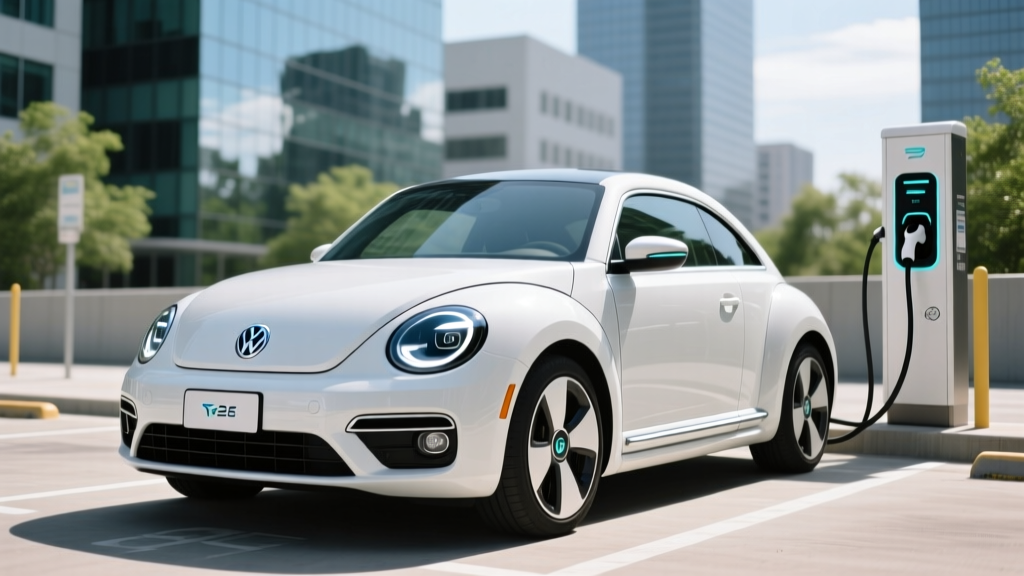
Quick Answer: As of 2026, Volkswagen has not released a production VW Beetle electric. VW confirmed in 2022 that the Beetle nameplate would not return as an EV in the near term, citing platform constraints and brand priorities. Buyers searching for a "VW Beetle electric" today are looking at either (1) aftermarket EV conversions of classic Beetles ($40,000–$90,000+), (2) used last-generation gas Beetles (discontinued in 2019), or (3) modern VW EVs like the ID.4 that deliver the retro-adjacent experience with real range and warranty coverage. This guide covers all three paths with exact numbers so you can make an informed decision.
The Truth About a VW Beetle Electric in 2026
The original VW Beetle is one of the most iconic cars ever built, and its retro successor (1998–2019) cultivated a loyal following. When VW pivoted hard to its ID. electric family, enthusiasts naturally asked: will the Beetle come back as an EV?
The short answer is no — not yet. VW Group CEO Herbert Diess stated in 2022 that the Beetle and Scirocco would not be revived as EVs, as the company prioritized volume sellers like the ID.4, ID.7, and the upcoming ID.2. The VW ID.4 remains the closest current-production VW electric vehicle for US buyers, starting around $39,735 for the 2026 model year with an EPA-estimated 291 miles of range on the Pro S trim.
However, the aftermarket and conversion scene has kept the Beetle electric dream alive — and it's worth understanding exactly what each option costs, delivers, and demands from an ownership perspective.
Three Paths to a VW Beetle Electric (With Real Numbers)
Path 1: Aftermarket EV Conversion of a Classic Beetle
Specialist shops like Zelectric Motors and EV West have been converting classic air-cooled Beetles to electric powertrains for over a decade. Here's what a 2026-spec conversion typically delivers:
| Spec | Typical Conversion |
|---|---|
| Battery Capacity | 24–40 kWh (NMC or LFP modules) |
| EPA-Equivalent Range | 80–140 miles (real-world: 60–110 miles) |
| Motor Output | 75–150 HP (rear-mounted) |
| 0–60 mph | 6.5–9.0 seconds |
| DC Fast Charging | Rarely included (Level 2 only, 3.3–7.2 kW) |
| Level 2 Charge Time (0–100%) | 5–10 hours |
| Total Conversion Cost | $40,000–$90,000+ (plus donor car) |
| Warranty | Shop-dependent, typically 1–3 years on drivetrain |
Real-world ownership note: These conversions lack modern thermal management. Expect 20–35% range loss in freezing temperatures and sustained highway speeds above 65 mph will drain the pack faster than the estimated range suggests. There is no DC fast charging, meaning road trips require overnight stops with Level 2 access.
Path 2: Used Gas Beetle (2012–2019) as a Placeholder
A clean 2018–2019 VW Beetle with the 2.0L turbo runs $16,000–$24,000 on the used market. It delivers 24 city / 33 highway / 27 combined MPG per fueleconomy.gov. This is a stopgap for enthusiasts waiting for VW to potentially revisit the nameplate — not an electrified solution.
Path 3: Modern VW EV (ID.4) as the Practical Alternative
If you want a new VW with an EV powertrain, full warranty, DC fast charging, and federal tax credit eligibility, the 2026 ID.4 is the realistic option.
| Spec | 2026 VW ID.4 Pro S (RWD) |
|---|---|
| Base MSRP | $44,235 (before incentives) |
| Battery | 82 kWh usable, NMC chemistry |
| EPA Range | 291 miles |
| Real-World Highway Range | ~240–260 miles (70–80 mph, moderate climate) |
| Cold-Weather Range (20°F) | ~200–220 miles |
| Peak DC Fast Charge | 175 kW (CCS) |
| 10–80% DC Charge Time | ~28 minutes |
| Level 2 Rate | 11 kW (approx. 37 miles/hour) |
| 0–60 mph | 7.7 seconds |
| Horsepower | 282 HP |
| Battery/Powertrain Warranty | 8 years / 100,000 miles |
| MPGe (Combined) | 107 MPGe |
Range Reality Check: The ID.4's 291-mile EPA estimate assumes mixed driving at moderate temperatures. On a 75-mph highway run in 35°F weather with the heat on, plan for roughly 200–220 miles before needing a charge. The 175 kW peak charge rate tapers significantly above 80% SoC — expect the 80–100% top-off to add another 20+ minutes.
Cost Breakdown: EV Conversion vs. New ID.4 vs. Gas Beetle
| Cost Factor | Classic Beetle EV Conversion | 2026 VW ID.4 Pro S | 2019 Gas Beetle (Used) |
|---|---|---|---|
| Purchase / Build Price | $55,000–$105,000 | $44,235 | $18,000–$24,000 |
| Federal Tax Credit (§30D) | $0 (not eligible) | Up to $7,500 (see eligibility below) | $0 |
| Fuel / Energy Cost per Mile | $0.04–$0.06 (home charging) | $0.04–$0.06 (home charging) | $0.12–$0.15 (gas at $3.40/gal) |
| Annual Maintenance | $500–$1,200 (specialist) | $300–$500 | $800–$1,200 |
| Insurance (Annual Est.) | $1,800–$3,500 (specialty) | $1,600–$2,400 | $1,100–$1,600 |
| 5-Year Total Cost (est.) | $70,000–$130,000 | $52,000–$60,000 | $32,000–$42,000 |
Federal Tax Credit Caveat: The §30D credit for the ID.4 is subject to IRS rules including buyer income caps ($150K single / $300K joint), MSRP caps ($55,000 for SUVs), and battery critical-mineral sourcing requirements. The credit can be transferred to the dealer at point of sale as of 2024. Always verify current eligibility with your tax professional before purchase.
EV vs. Gas: What a First-Time Buyer Must Understand
| Factor | EV (ID.4 Example) | Gas Car (Typical Compact SUV) |
|---|---|---|
| Energy Cost per Mile | $0.04–$0.06 (home L2) | $0.12–$0.16 |
| Public DC Fast Charge Cost | $0.10–$0.18/mile equivalent | N/A |
| Maintenance (5 yr) | ~$1,500–$2,500 | ~$4,000–$6,000 |
| Cold-Weather Impact | 20–35% range reduction | Minimal (slightly lower MPG) |
| Road Trip Refueling | 25–35 min per DC stop | 5 min per gas stop |
| Home Charging Install | $500–$2,500 (Level 2, 240V) | $0 |
| Depreciation (5 yr) | ~45–55% | ~35–45% |
EVs win on per-mile energy cost and maintenance but lose on upfront price, cold-weather flexibility, and road-trip convenience unless you have reliable DC fast charging along your routes. The ID.4's CCS connector works with Electrify America, EVgo, and ChargePoint networks — but reliability varies by region. PlugShare is essential for trip planning.
Common Misconceptions About a VW Beetle Electric
| Myth | Fact |
|---|---|
| "VW is releasing an electric Beetle in 2026." | No production e-Beetle has been announced. VW's EV roadmap focuses on ID.2, ID.4, ID.7, and ID. Buzz through 2027. |
| "An EV conversion keeps the classic Beetle feel perfectly." | Weight distribution changes significantly (battery mass low and central), and original Beetle brakes/suspension need upgrades for the added torque and weight. |
| "EV conversions qualify for the federal tax credit." | They do not. §30D applies only to new qualifying vehicles from OEMs meeting sourcing and MSRP requirements. |
| "I can fast-charge a converted Beetle on road trips." | Most conversions are Level 2 only (3.3–7.2 kW). A full charge takes 5–10 hours, making road trips impractical without multi-day planning. |
| "The ID.4 has nothing in common with a Beetle." | True mechanically — but the ID.4 offers VW's latest EV tech, a spacious cabin, and the VW warranty. It's the pragmatic path for VW-loyal EV buyers. |
Home Charging Reality: What You Actually Need
Whether you choose an EV conversion or a modern ID.4, home charging access determines your daily experience.
| Charging Level | Power | Miles Added per Hour | Typical Install Cost |
|---|---|---|---|
| Level 1 (120V outlet) | 1.4 kW | 3–5 miles | $0 (use existing outlet) |
| Level 2 (240V, 32A) | 7.7 kW | 25–30 miles | $500–$1,500 |
| Level 2 (240V, 48A) | 11.5 kW | 35–42 miles | $800–$2,500 |
Panel upgrade warning: If your home has a 100-amp electrical panel, adding a 48A Level 2 charger may require a panel upgrade to 200A — adding $1,500–$3,500 to your total install cost. Always get a licensed electrician's assessment before purchasing equipment.
For an EV conversion with a 30 kWh battery, Level 1 charging technically works but requires 20+ hours for a full charge — impractical for daily drivers covering more than 30 miles. A Level 2 installation is effectively mandatory.
Decision Framework: Which Path Is Right for You?
Choose an aftermarket Beetle EV conversion if:
- You already own or can source a classic Beetle donor car
- Your daily driving is under 60 miles round-trip
- You have Level 2 home charging and rarely take road trips over 100 miles
- You value uniqueness and are comfortable with specialist maintenance
- Budget allows $55,000+ with no expectation of tax credits
Choose the 2026 VW ID.4 if:
- You want a new VW with full factory warranty and modern safety tech
- You need 240+ real-world miles of range for commuting and road trips
- DC fast charging (175 kW) is important for your lifestyle
- You want potential §30D tax credit eligibility (up to $7,500 point-of-sale)
- You prefer predictable ownership costs and mainstream service networks
Choose a used gas Beetle (2018–2019) if:
- You want the Beetle aesthetic at the lowest cost ($16K–$24K)
- You lack home charging access and don't want to invest in infrastructure
- You're waiting to see if VW eventually greenlights a production e-Beetle
- You drive fewer than 10,000 miles/year, keeping fuel costs manageable
Frequently Asked Questions
Will VW ever make an official electric Beetle?
There is no announced production plan as of 2026. VW has indicated the Beetle nameplate is not in its near-term EV roadmap, which extends through 2028 with models like the ID.2, ID. Polo, and next-gen ID.4. If consumer demand shifts, a retro-styled EV on the MEB+ platform is technically possible but remains speculative.
How much does an EV conversion of a classic Beetle cost?
A quality conversion from a reputable shop runs $40,000–$90,000 on top of the donor vehicle cost ($5,000–$20,000 for a clean classic Beetle). Total all-in cost typically lands between $55,000 and $110,000 depending on battery size, motor spec, and finish quality.
Does the VW ID.4 qualify for the $7,500 federal tax credit?
The ID.4 has been eligible for partial or full §30D credit depending on model year and battery sourcing. For 2026, eligibility depends on critical-mineral and battery-component sourcing thresholds that tighten annually. Check the fueleconomy.gov tax credit tracker and consult a tax professional for your specific situation. Income caps ($150K single, $300K joint) and the $55,000 SUV MSRP cap also apply.
Can I daily-drive a converted electric Beetle?
Yes, with caveats. A 30–40 kWh conversion offers 80–140 miles of range — sufficient for most commutes. However, you'll lack DC fast charging, modern crash safety features, and the thermal management needed for extreme climates. Plan for significant range loss in winter and avoid relying on it for long highway trips.
What's the real-world range of the 2026 VW ID.4?
The EPA rates the ID.4 Pro S at 291 miles. In real-world highway driving at 70–75 mph in moderate temperatures, expect 240–260 miles. In cold weather (below 30°F) with cabin heat, plan for 200–220 miles. The heat pump (standard on Pro S trims) helps mitigate winter losses compared to resistive heating.
Is an EV conversion safe?
Professional conversions from established shops include proper battery enclosures, high-voltage safety disconnects, and upgraded braking systems. However, a classic Beetle's structure was never designed for modern crash standards. You will not have airbags, crumple zones, or ADAS features. For a daily driver in mixed traffic, a modern EV like the ID.4 offers dramatically better occupant protection.