The Short Answer: Is There a Beetle Electric Car in 2026?
No. Volkswagen does not sell a new electric Beetle in the United States as of the 2026 model year. The original Beetle ended US sales in 2019, and VW has not announced a production electric successor. Buyers searching for a "beetle electric car" have two realistic paths: (1) the VW ID. Buzz, VW's retro-styled electric van starting around $59,995 with an EPA-estimated 234 miles of range, or (2) an aftermarket EV conversion of a classic Beetle, which typically costs $25,000–$50,000+ beyond the donor vehicle and yields 80–150 miles of range depending on the battery pack.
Why VW Hasn't Built an Electric Beetle (And What They Offer Instead)
Volkswagen's EV strategy in the US centers on the ID.4 crossover, the ID. Buzz electric van, and the upcoming ID.7 sedan. Despite fan petitions and concept rumors, a Beetle EV has never moved past speculation. VW's design team has acknowledged the Beetle's heritage appeal, but the brand's engineering bandwidth is focused on high-volume segments: compact SUVs, three-row family haulers, and sedans competing directly with Tesla and Hyundai.
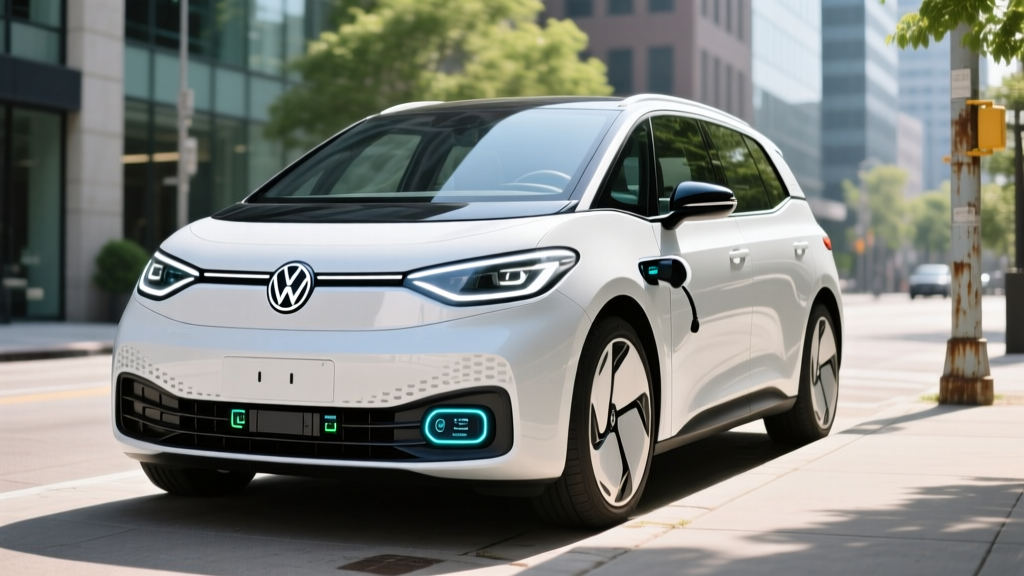
For buyers drawn to the Beetle's iconic, retro-modern aesthetic and compact footprint, the closest VW production option is the ID. Buzz, which channels VW's microbus heritage into a three-row electric people-mover. It's larger, more expensive, and fundamentally different from a Beetle — but it's the only VW with retro DNA and a charging port in 2026.
The VW ID. Buzz: Specs, Range, and Real-World Ownership
| Spec | 2025/2026 VW ID. Buzz (RWD) | 2025/2026 VW ID. Buzz (AWD) |
|---|---|---|
| EPA Range | 234 miles | 231 miles |
| Battery (usable) | 86 kWh (NMC) | 86 kWh (NMC) |
| Horsepower | 282 hp | 335 hp |
| 0–60 mph | ~7.9 sec | ~5.9 sec |
| Peak DC Fast Charge | 200 kW | 200 kW |
| 10–80% DC Charge | ~26 min | ~26 min |
| Level 2 Charge Rate | 11 kW (~7 hrs full) | 11 kW (~7 hrs full) |
| MPGe (combined) | 87 MPGe | 84 MPGe |
| Starting MSRP | $59,995 | $63,495 |
| Battery Warranty | 8 yr / 100,000 mi | 8 yr / 100,000 mi |
The ID. Buzz rides on VW's MEB platform — the same architecture underpinning the ID.4. That means proven 400-volt charging hardware, not the 800-volt systems found in Hyundai/Kia models. The 200 kW peak charge rate is respectable, but the charge curve tapers noticeably above 80%, adding 10–15 minutes if you need a full charge on a road trip. For daily driving, most owners will charge at home overnight and rarely use DC fast charging.
Classic Beetle EV Conversions: What It Actually Costs
If the real draw is the Beetle itself — its compact size, curved fenders, and cultural cachet — an aftermarket EV conversion is the only path. Several shops (including Zelectric Motors and EV West, now part of the broader EV conversion ecosystem) specialize in air-cooled VW electrification.
| Cost Factor | Beetle EV Conversion | VW ID. Buzz (RWD) |
|---|---|---|
| Vehicle / Donor Car | $8,000–$20,000 | $59,995 MSRP |
| Conversion Kit + Labor | $25,000–$45,000 | N/A |
| Total Build Cost | $33,000–$65,000 | $59,995+ |
| Typical Range | 80–150 miles | 234 miles (EPA) |
| DC Fast Charging | Rarely available | 200 kW standard |
| Level 2 Charging | 3.3–7.2 kW | 11 kW |
| Federal Tax Credit (§30D) | Not eligible (conversion) | Subject to eligibility* |
| Modern Safety Features | None (1960s–70s chassis) | Full ADAS suite |
| Warranty | Shop-dependent, limited | 4 yr / 50,000 mi + 8 yr battery |
*The IRS §30D tax credit has strict requirements: buyer income caps ($150K single / $300K joint), vehicle MSRP caps ($55K for cars, $80K for SUVs/vans), and battery critical-mineral and component sourcing rules. The ID. Buzz at ~$60K qualifies under the van/SUV MSRP cap, but sourcing requirements change frequently. Always verify current-year eligibility with a tax professional before purchasing.
Beetle EV Conversion vs. ID. Buzz vs. Gas Beetle: The Cost Breakdown
| Annual Cost (12,000 mi/yr) | Classic Beetle (Gas, 25 MPG) | Beetle EV Conversion | VW ID. Buzz |
|---|---|---|---|
| Fuel / Electricity | $1,680 (at $3.50/gal) | $540 (at $0.15/kWh) | $620 (at $0.15/kWh) |
| Maintenance | $800–$1,200 | $200–$400 | $300–$500 |
| Insurance (est.) | $900–$1,400 | $1,200–$2,000 (specialty) | $1,800–$2,400 |
| Annual Total | $3,380–$4,280 | $1,940–$2,940 | $2,720–$3,520 |
The conversion Beetle's low electricity cost is offset by specialty insurance and the fact that the investment never pays back against a $50K+ build cost for most owners. The ID. Buzz, while expensive upfront, offers modern reliability, safety, and warranty protection. A used 2019 gas Beetle (the final model year) can be had for $18,000–$25,000 and remains the most economical option if your priority is low total spend rather than electrification.
First-Time EV Buyer Considerations for Retro VW Shoppers
Decision Framework: Which Path Is Right for You?
- Choose the ID. Buzz if: You want a new VW with retro heritage, need 3 rows and 230+ miles of range, have access to Level 2 home charging, and can budget $60K–$70K.
- Choose a Beetle EV conversion if: You're an enthusiast who values the classic Beetle experience, drives under 80 miles daily, accepts no modern safety features, and has $40K–$65K for a passion project.
- Choose a used gas Beetle if: You want the Beetle look at the lowest total cost, drive under 10,000 miles/year, and don't want EV charging logistics.
- Look outside VW entirely if: You want a compact, stylish EV under $45K — consider the Hyundai Ioniq 5, MINI Cooper SE, or Fiat 500e (where available).
Before committing to any EV, honestly assess these practical factors:
- Home charging access: Can you install a Level 2 charger (240V, 30–50 amp circuit)? Expect $500–$2,500 for installation depending on panel capacity and run length. Without home charging, EV ownership becomes significantly less convenient.
- Daily driving distance: If your round-trip commute plus errands stays under 80 miles, even a conversion Beetle works. If you regularly exceed 150 miles, the ID. Buzz or a longer-range EV is essential.
- Climate: Cold-weather drivers (sustained below-freezing winters) should budget 20–30% range loss and prioritize EVs with heat pumps. The ID. Buzz includes a heat pump; most conversions do not.
- Road trips: The ID. Buzz can use Electrify America and other CCS networks (plus Tesla Superchargers via adapter in newer model years). A conversion Beetle will rely almost entirely on Level 2 destination charging, making long trips impractical.
Common Misconceptions About a Beetle Electric Car
| Myth | Fact |
|---|---|
| VW sells an electric Beetle in 2026 | No production Beetle EV exists. VW discontinued the Beetle in 2019 and has not announced a replacement. |
| An EV conversion is cheaper than buying a new EV | A quality Beetle conversion costs $33K–$65K total — comparable to or exceeding a new ID. Buzz — with far less range, no warranty, and no safety features. |
| EV conversions qualify for the $7,500 federal tax credit | They do not. The §30D credit applies only to new qualifying vehicles from licensed manufacturers meeting battery sourcing rules. |
| The ID. Buzz is basically an electric Beetle | It's a 3-row, ~5,000-lb electric van. It shares retro VW branding but is fundamentally a different vehicle class. |
| You can fast-charge a converted Beetle | Nearly all Beetle conversions use Level 2 (AC) charging only. DC fast charging requires expensive, complex hardware rarely fitted to classic conversions. |
The Compact Retro EV Alternatives Worth Considering
If your heart is set on a small, personality-rich EV that echoes the Beetle's spirit without the conversion hassle, several 2026 models deliver retro charm with modern capability:
- MINI Cooper SE (2025+ generation): ~150 miles EPA range, ~$32K starting, CCS charging up to 95 kW. Compact, fun, and genuinely city-friendly.
- Hyundai Ioniq 5: Retro-futuristic design, 800V architecture, up to 318 miles EPA, ~$43K starting. Not a Beetle, but hits the "standout design" note.
- Fiat 500e: ~150 miles range, ~$37K, ultra-compact. Italian flair rather than German heritage, but similar urban runabout energy.
None of these are Beetles. But they offer what most Beetle-curious EV shoppers actually need: compact dimensions, distinctive styling, real-world range above 140 miles, and new-car reliability with warranty coverage.
Frequently Asked Questions
Will VW ever make an electric Beetle?
VW has not announced any plans for an electric Beetle as of early 2026. The brand's EV roadmap focuses on the ID.2 (Europe only), ID.4, ID. Buzz, and ID.7. An electric Beetle remains a frequent fan request but is not in VW's published product plan.
How much does a Beetle EV conversion cost in 2026?
A professional conversion using a quality motor (NetGain Hyper9 or similar) and a 20–40 kWh battery pack typically runs $25,000–$45,000 for parts and labor, plus $8,000–$20,000 for a clean donor Beetle. Total project cost: $33,000–$65,000. DIY conversions can reduce labor costs but require significant electrical and fabrication expertise.
Does the VW ID. Buzz qualify for the federal EV tax credit?
Possibly, but eligibility depends on current-year IRS rules. The ID. Buzz falls under the $80,000 MSRP cap for vans/SUVs. However, the buyer must meet income limits ($150K single / $300K joint for 2026), and the vehicle must satisfy battery critical-mineral and component sourcing requirements that change periodically. Verify with a tax professional and check the fueleconomy.gov credit lookup tool before purchasing.
Can I daily-drive a converted electric Beetle?
Yes, if your daily round trip stays under 60–80 miles and you have reliable Level 2 home charging. Conversions lack modern safety features (no airbags, ABS, or crumple zones in most donor cars), so they're best suited for low-speed urban and suburban driving rather than highway commuting.
What's the cheapest way to get a Beetle-style EV experience?
The most cost-effective path is a used 2017–2019 gas Beetle ($18K–$25K) if electrification isn't a hard requirement. If you want electric, the MINI Cooper SE (~$32K new) offers the closest blend of compact size, retro character, and modern EV capability at a reasonable price.