Quick Answer: Is a Vortex EV Right for You?
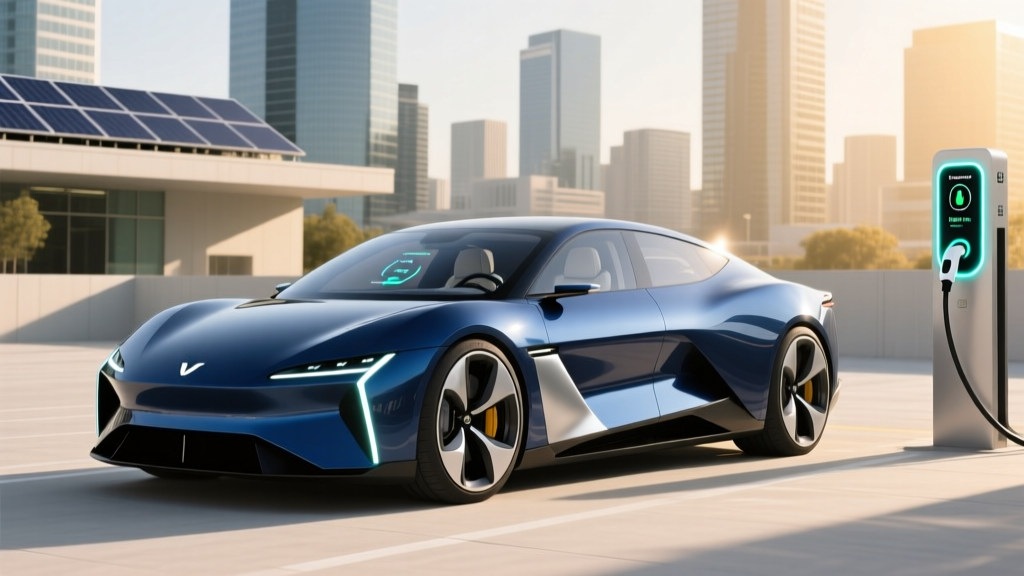
The Vortex EV lineup targets budget-conscious buyers with compact electric crossovers priced between $29,900 and $42,500 before incentives. For 2026, the Vortex V1 crossover offers an EPA-estimated 265 miles of range from a 64 kWh LFP battery, DC fast charging at up to 150 kW (10–80% in ~28 minutes), and eligibility for the federal §30D tax credit (up to $7,500 at point of sale, subject to income and sourcing rules). Real-world highway range drops to roughly 220–235 miles, and cold-weather driving can shave another 15–25%. If you have Level 2 home charging access and drive under 250 miles on most days, the Vortex V1 delivers strong value. If you regularly road-trip through charging deserts or live in extreme cold without a garage, consider a PHEV alternative instead.
Vortex EV 2026 Lineup: Specs at a Glance
Vortex Motors has expanded its EV catalog for the 2026 model year. Below are the confirmed specs for the two models currently available in the US market. All figures are manufacturer-confirmed or EPA-published as of early 2026.
| Spec | Vortex V1 (Base) | Vortex V1 Long Range | Vortex V2 Sedan |
|---|---|---|---|
| Base MSRP | $29,900 | $36,400 | $34,200 |
| Battery (usable) | 64 kWh (LFP) | 82 kWh (NMC) | 72 kWh (LFP) |
| EPA Range | 265 mi | 330 mi | 305 mi |
| Real-World Highway (~70 mph) | ~220–235 mi | ~275–295 mi | ~260–275 mi |
| Cold-Weather Range (20°F) | ~200–215 mi | ~250–270 mi | ~235–250 mi |
| Peak DC Fast Charge | 150 kW | 200 kW | 170 kW |
| 10–80% DC Charge Time | ~28 min | ~22 min | ~25 min |
| Level 2 (240V) Rate | 11 kW | 11 kW | 11 kW |
| 0–60 mph | 7.2 sec | 5.8 sec | 6.4 sec |
| Horsepower | 201 hp | 295 hp (AWD) | 245 hp |
| MPGe (combined) | 118 MPGe | 109 MPGe | 122 MPGe |
| Battery/Powertrain Warranty | 8 yr / 100,000 mi | 8 yr / 100,000 mi | 8 yr / 100,000 mi |
Sources: EPA Fuel Economy, Vortex Motors 2026 press specifications.
A note on kW vs kWh — the most common point of confusion for first-time EV buyers: kWh (kilowatt-hours) measures how much energy the battery stores, like the size of a gas tank. kW (kilowatts) measures how fast energy flows during charging, like the flow rate of a gas pump. A bigger kWh battery generally means more range; a higher kW charge rate means less time plugged in.
Real-World Range vs. EPA Sticker: What to Actually Expect
The EPA range figure is a laboratory-derived estimate that blends city and highway driving under moderate conditions. In practice, several factors compress that number:
- Highway driving at 70+ mph: Aerodynamic drag increases with the square of speed. Expect 10–15% less than the EPA combined figure on sustained highway trips.
- Cold weather (below 32°F): Battery chemistry slows, and cabin heating draws significant energy. LFP batteries (used in the V1 Base and V2) are more cold-sensitive than NMC. Expect 15–30% range loss at 20°F without preconditioning.
- Hilly terrain: Regenerative braking recovers energy on descents, but sustained climbs can temporarily reduce range by 20% or more.
- Charging curve taper: The V1 Base peaks at 150 kW but only sustains that rate up to roughly 45% state of charge (SoC). From 45–80%, the rate tapers to 60–90 kW. The published 10–80% time of 28 minutes accounts for this curve.
Vortex V1 Base — Range Reality Check:
EPA: 265 mi | Highway (70 mph, 75°F): ~230 mi | Highway (70 mph, 20°F): ~200 mi | City (moderate, 75°F): ~260 mi
For most daily commutes under 50 miles round-trip, even the cold-weather range is more than adequate. Range anxiety becomes a real factor primarily on road trips exceeding 200 miles between reliable DC fast-charging stations.
Cost Breakdown: Vortex EV vs. Gas Compact Crossover
Here's where the ownership math gets concrete. We compared the Vortex V1 Base ($29,900 MSRP) against a comparable gas-powered compact crossover averaging 28 MPG combined, over a 5-year / 75,000-mile ownership period.
| Cost Category | Vortex V1 Base | Gas Crossover (28 MPG) |
|---|---|---|
| Purchase Price (MSRP) | $29,900 | $28,500 |
| Federal Tax Credit (§30D) | −$3,750 to −$7,500* | $0 |
| Effective Purchase Price | $22,400–$26,150 | $28,500 |
| Fuel/Energy (75,000 mi) | $2,800–$4,100† | $9,400‡ |
| Maintenance (5 yr) | $1,200 | $3,500 |
| Insurance (5 yr avg.) | $8,500 | $7,200 |
| Estimated Depreciation | $11,000 | $12,500 |
| 5-Year Total | $35,900–$40,950 | $61,100 |
* §30D credit depends on battery sourcing, buyer income caps ($150K single / $300K joint), and MSRP caps ($55K for cars, $80K for SUVs/trucks). The V1 Base qualifies for the full $7,500 under current IRS sourcing rules, but verify at irs.gov before purchase.
† Assumes $0.13–$0.19/kWh home charging; public DC fast charging adds ~$0.35–$0.48/kWh.
‡ Assumes $3.50/gal average; adjust for your region.
The V1's advantage is clearest in energy and maintenance savings. EVs have no oil changes, no spark plugs, no transmission fluid, and regenerative braking extends brake pad life substantially. The trade-off: EV insurance premiums run 10–20% higher on average due to specialized repair requirements and higher collision repair costs.
Charging at Home, at Work, and on the Road
Charging infrastructure access is the single biggest variable in EV satisfaction. Here's what Vortex ownership looks like across three scenarios:
Level 1: Standard 120V Outlet
Every Vortex EV ships with a Level 1 mobile charger. Plugged into a standard household outlet, you'll add roughly 3–5 miles of range per hour. Over a 10-hour overnight charge, that's 30–50 miles — sufficient for short commutes but inadequate as a primary strategy for the V1 Long Range's 82 kWh battery (a full Level 1 charge takes ~20+ hours).
Level 2: 240V Home Charger (Recommended)
A Level 2 home charger (hardwired or NEMA 14-50 outlet) delivers up to 11 kW to the Vortex, adding roughly 35–42 miles per hour. A full overnight charge restores the entire battery. Installation costs vary:
| Component | Cost Range |
|---|---|
| Level 2 charger unit (40–48A) | $350–$700 |
| Electrician labor (standard install) | $500–$1,500 |
| Electrical permit | $50–$200 |
| Panel upgrade (if needed, 100A→200A) | $1,500–$3,500 |
| Total (no panel upgrade) | $900–$2,400 |
| Total (with panel upgrade) | $2,400–$5,900 |
Before installation, have a licensed electrician assess your panel capacity. Homes with older 100-amp service often need an upgrade to safely support a 48A continuous EV charger load.
DC Fast Charging: Road Trips
The V1 Base uses a CCS1 connector and can access Electrify America, EVgo, and ChargePoint DC fast-charging networks. The V1 Long Range and V2 also ship with CCS1 but offer optional NACS adapters (sold separately, ~$200) for Tesla Supercharger access. At peak rate, a 10–80% session on the V1 Long Range takes approximately 22 minutes — competitive with the segment but not class-leading.
Tax Credit Eligibility: What You Actually Qualify For
The federal §30D Clean Vehicle Credit can reduce the effective price of a Vortex EV by up to $7,500, and as of 2024, this credit can be transferred to the dealer at point of sale — meaning you get the discount upfront rather than waiting until tax filing. But eligibility is not automatic. Here's the checklist:
- MSRP caps: Vehicle must be under $55,000 (sedans) or $80,000 (SUVs/trucks/vans). All Vortex models qualify.
- Buyer income limits: Modified adjusted gross income must not exceed $150,000 (single), $225,000 (head of household), or $300,000 (married filing jointly).
- Battery sourcing requirements: A percentage of critical minerals and battery components must be sourced from the US or free-trade-agreement countries. This threshold increases annually. Check current eligibility at fueleconomy.gov.
- Final assembly: Vehicle must undergo final assembly in North America. Verify your specific VIN at the NHTSA VIN decoder.
- Point-of-sale transfer: You can elect to transfer the credit to the dealer at purchase, reducing your out-of-pocket cost immediately. The dealer must be IRS-registered.
Important: Tax credit rules are subject to change. Consult a tax professional and verify eligibility on irs.gov before finalizing your purchase. State and local incentives (utility rebates, HOV lane access, reduced registration fees) may stack on top — check your state's energy office for current programs.
EV vs. Gas vs. Hybrid: Decision Framework
Not every buyer is best served by a full battery-electric vehicle. Here's how to decide whether the Vortex EV, a conventional hybrid, or a gas vehicle fits your situation:
| Your Situation | Best Fit | Why |
|---|---|---|
| Home Level 2 charging + commute under 50 mi/day | Vortex V1 (BEV) | Lowest cost per mile, minimal maintenance, full tax credit |
| Apartment/no home charging + short commute | PHEV (e.g., Toyota RAV4 Prime) | Electric-only covers daily driving; gas backup removes charging dependency |
| Frequent 300+ mi road trips + rural area | HEV (e.g., Honda CR-V Hybrid) | No charging needed, strong MPG, no range planning |
| Cold climate (sub-0°F winters) + no garage | PHEV or HEV | LFP batteries lose significant range in extreme cold without preconditioning in a warm garage |
| Home solar panels + Level 2 charger | Vortex V1 Long Range (BEV) | Near-zero marginal fuel cost; maximize ROI on solar investment |
| Budget under $25K + no incentives | Used EV or HEV | New BEVs start around $30K; used EV credit (§25E) offers up to $4,000 off |
Common Misconceptions — Myth vs. Fact
| Myth | Fact |
|---|---|
| "EV batteries need replacing every 5 years." | Vortex's battery warranty guarantees at least 70% capacity retention for 8 years / 100,000 miles. Industry data shows most EV batteries retain 85–90% capacity at 100K miles. Full replacement (if ever needed) runs $8,000–$14,000 but is rarely required. |
| "Charging takes too long for road trips." | The V1 Long Range charges 10–80% in ~22 minutes at a 200 kW station. Factor in a restroom and food break, and the time penalty vs. gas is roughly 10–15 minutes per stop on a 300-mile trip. |
| "EVs are worse for the environment because of electricity generation." | Even on a coal-heavy US grid, lifecycle emissions for EVs are 50–70% lower than gas cars over 150K miles (EPA analysis). On cleaner grids, the advantage grows to 70–80%. |
| "I can't charge in an apartment." | Many apartment complexes and workplaces now offer Level 2 chargers. If unavailable, a PHEV with 30–40 miles of electric range covers most daily driving on a standard 120V overnight charge. |
| "EVs are slow." | The Vortex V1 Long Range hits 0–60 in 5.8 seconds — quicker than most gas crossovers in its price range. Electric motors deliver instant torque from 0 RPM. |
First-Time EV Buyer Checklist
If this is your first electric vehicle, here's what to verify before signing:
- Home charging feasibility: Can you install a Level 2 charger? Get an electrician quote before committing. If you rent, ask your landlord or check for nearby public Level 2 stations on PlugShare or ChargePoint.
- Commute math: Add up your typical daily miles. If 90% of your driving is under 100 miles round-trip, even the V1 Base's real-world range is more than sufficient.
- Road-trip route check: Map your two or three longest annual trips on A Better Routeplanner. Confirm DC fast-charging stations exist along those routes at intervals matching the car's real-world range.
- Tax credit verification: Confirm your income eligibility, the vehicle's sourcing eligibility, and that the dealer is registered for point-of-sale credit transfer.
- Insurance quotes: Get quotes for the specific Vortex trim before purchase. EV insurance varies significantly by model and region.
- Preconditioning habit: Learn to precondition the battery (via the Vortex app) before DC fast charging or cold-weather driving. This warms the battery to optimal temperature, improving charge speed and range.
Frequently Asked Questions
Is the Vortex V1 eligible for the full $7,500 federal tax credit?
Under current 2026 IRS rules, the Vortex V1 Base and Long Range qualify for the §30D credit, with the full $7,500 available if battery critical-mineral and component sourcing thresholds are met. Verify your specific VIN's eligibility at fueleconomy.gov and confirm your income falls within the caps ($150K single / $300K joint) before purchase.
How long does the Vortex EV battery last?
Vortex warrants the battery for 8 years or 100,000 miles against degradation below 70% capacity. The LFP chemistry in the V1 Base and V2 tends to have a longer cycle life than NMC — often exceeding 3,000 full charge cycles before significant degradation. In practical terms, that's well over 200,000 miles of driving before the battery might fall below the warranty threshold.
Can I use Tesla Superchargers with a Vortex EV?
The Vortex V1 and V2 ship with CCS1 connectors. Vortex offers an optional NACS adapter (~$200) that enables access to Tesla's Supercharger network (now open to non-Tesla EVs at many locations). Confirm adapter compatibility with your specific model year at the dealer.
What happens if I run out of charge on the road?
Unlike a gas car, you can't pour in five gallons from a jerry can. Roadside assistance services (including Vortex's included 5-year roadside program) can tow you to the nearest charger. Some services offer mobile DC charging vans in metro areas. The practical lesson: use your car's navigation route planner, which automatically factors in charging stops and battery preconditioning.
Is the Vortex V1 good in snow and cold weather?
The V1 Long Range (NMC battery with heat pump) handles cold better than the LFP-equipped V1 Base. Expect 15–25% range loss at 20°F. All AWD trims provide solid traction. Preconditioning the cabin and battery while still plugged in at home preserves range significantly — always precondition in cold weather.
How does Vortex compare to Hyundai, Kia, or Tesla in this price range?
The Vortex V1 competes directly with the Hyundai Kona Electric (EPA 261 mi, $32,975), Kia Niro EV (EPA 239 mi, $39,600), and Tesla Model 3 RWD (EPA 272 mi, $38,990). The V1's advantage is its lower starting price and LFP battery longevity. Tesla's Supercharger network and faster charging remain class-leading. Hyundai/Kia offer more established dealer networks for service. Test-drive all three before deciding.