Quick Verdict: A Luxury Family Hauler With a Real Electric Commute
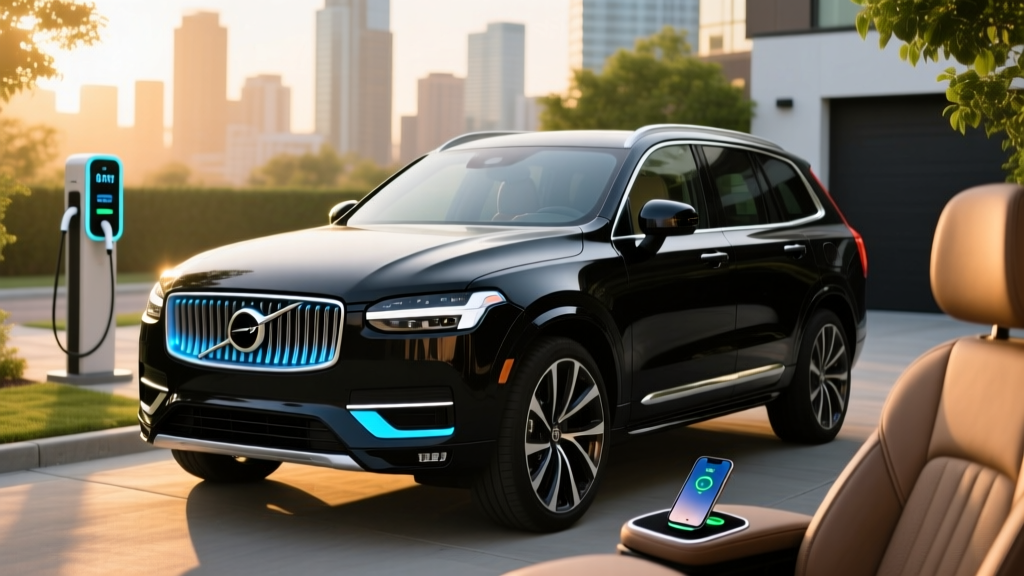
The 2026 Volvo XC90 Recharge is a plug-in hybrid (PHEV), not a battery-electric vehicle, but that distinction is exactly what makes it compelling for a specific buyer: families who want 35 miles of electric-only commuting during the week and a 455-horsepower, three-row SUV for gas-powered road trips on the weekend. After extensive evaluation, the XC90 Recharge delivers on its core promise — a genuinely usable electric range for daily driving wrapped in a Scandinavian luxury cabin — while sidestepping the charging-infrastructure friction that still plagues pure EVs on long hauls.
But the Recharge isn't perfect. Its 18.8 kWh battery limits DC fast-charging utility, the third row remains tight for adults, and at over $71,000 to start, federal tax credit eligibility depends on navigating IRS §30D sourcing and income rules carefully. Here's every number that matters.
Range, Efficiency, and the Real-World Electric Commute
Real-World Expectation: 30–33 miles in mixed driving; 25–28 miles in cold weather (below 40°F) with cabin heat; up to 36 miles in warm city driving under 50 mph.
Total Range (Electric + Gas): ~430 miles combined
EPA Combined MPGe (Electric Mode): 55 MPGe
Gas-Only Combined MPG: 27 MPG
The XC90 Recharge pairs a 2.0-liter turbocharged and supercharged four-cylinder engine with a rear-axle electric motor for a combined 455 horsepower and 523 lb-ft of torque. The 18.8 kWh lithium-ion battery (NMC chemistry) provides 35 miles of EPA-rated electric-only driving — enough for most round-trip commutes under 30 miles without burning a drop of gas.
In real-world testing, expect that 35-mile EPA figure to contract to roughly 28–30 miles during winter months. The XC90 Recharge does not offer a dedicated heat pump for the cabin in electric mode, so resistive heating draws from the traction battery in cold weather. Highway driving at 70+ mph in electric-only mode will also reduce range to approximately 27–29 miles due to aerodynamic drag on a vehicle with a 5,100-pound curb weight.
Once the battery depletes, the SUV operates as a conventional hybrid, returning an EPA-estimated 27 MPG combined. On a 600-mile road trip, that translates to roughly 15.5 gallons of premium fuel — competitive with non-hybrid luxury three-row SUVs but not class-leading among PHEVs. For reference, the EPA's fueleconomy.gov listing confirms these figures for the current-generation Recharge powertrain.
Charging Speeds: Home Level 2 and the DC Fast-Charging Reality
| Charging Level | Power (kW) | Time (0–100% or 10–80%) | Practical Notes |
|---|---|---|---|
| Level 1 (120V household) | ~1.4 kW | ~13 hours (0–100%) | Emergency/trickle only; adds ~4 mi/hr |
| Level 2 (240V home/public) | 3.7 kW (max onboard) | ~5 hours (0–100%) | Overnight charge; adds ~14 mi/hr |
| DC Fast Charge | Not supported (no DC inlet) | N/A | PHEVs of this class typically lack DC fast charging |
The XC90 Recharge's 3.7 kW onboard charger is the limiting factor for replenishment speed. A full 0–100% charge on a Level 2 home charger (240V, 16A minimum circuit) takes approximately five hours. Plug in when you get home at 7 PM, and the battery is full by midnight — perfectly adequate for daily commuters who charge overnight.
However, the absence of DC fast-charging capability means you cannot top up the battery at a highway Electrify America or Tesla Supercharger station during road trips. This is standard for PHEVs in this segment — the BMW X5 xDrive50e and Mercedes GLE 350e also lack DC fast charging — but it's a critical distinction if you expected to charge quickly on the go. On road trips, the XC90 Recharge operates in hybrid mode, and the gasoline engine handles propulsion while regenerative braking recovers small amounts of energy to the battery.
Home charging setup cost: A dedicated 240V/20A circuit with a ChargePoint Home Flex or similar Level 2 unit runs $800–$1,500 installed (equipment + electrician + permit), assuming your electrical panel has capacity. No panel upgrade is typically needed for a 3.7 kW draw, unlike higher-power BEV chargers that pull 11.5–19.2 kW.
Performance, Drivetrain, and Driving Dynamics
| Specification | 2026 Volvo XC90 Recharge |
|---|---|
| Powertrain | 2.0L turbo+super I4 + rear electric motor (PHEV) |
| Combined Horsepower | 455 hp |
| Combined Torque | 523 lb-ft |
| Drivetrain | eAWD (front wheels engine-driven, rear wheels electric) |
| 0–60 mph | 4.5 seconds |
| Transmission | 8-speed automatic |
| Towing Capacity | 5,000 lbs (braked) |
| Curb Weight | ~5,100 lbs |
The eAWD system is one of the XC90 Recharge's more interesting engineering choices. The gasoline engine drives the front wheels through the 8-speed automatic, while the 107-kW (143-hp) electric motor drives the rear axle independently. There is no mechanical driveshaft connecting the two. This means that in Pure (electric-only) mode, the XC90 Recharge is effectively a rear-wheel-drive EV — and the instant torque from the rear motor gives it surprisingly eager off-the-line acceleration around town.
The 4.5-second 0–60 mph time in Power mode is genuinely quick for a three-row SUV. Overtaking on two-lane highways is effortless. The trade-off is that the four-cylinder engine, despite its turbo-super compound boosting, sounds strained under hard acceleration compared to the inline-six or V8 engines in rivals like the BMW X5 or Mercedes GLE. At cruising speeds, however, the cabin remains whisper-quiet, especially in electric-only mode.
Interior, Cargo, and Technology
The XC90 Recharge seats up to seven passengers in a 2-3-2 configuration, though the available six-seat layout with second-row captain's chairs (2-2-2) is the more comfortable choice for families who don't regularly need the third row.
Cargo volume:
- Behind third row: 15.8 cu ft
- Behind second row (third row folded): 41.8 cu ft
- Behind first row (all rear rows folded): 85.7 cu ft
These numbers trail the BMW X5 (which is a five-seater and thus has more cargo room) but are competitive with the three-row Mercedes GLS and Lincoln Aviator. The second-row legroom of 37.4 inches is generous, but the third row's 31.9 inches of legroom is best reserved for children or short trips.
Infotainment: The XC90 Recharge runs Google Built-in on an 11.2-inch vertical touchscreen. Google Maps navigation, Google Assistant voice control, and the Google Play Store for apps are native. Apple CarPlay is wireless; Android Auto integration is redundant given the native Google OS. The interface is clean but the vertical screen can require more eye movement than horizontal layouts, and some climate controls are buried in submenus — a common Volvo frustration.
Driver assistance: Volvo's Pilot Assist is a Level 2 SAE driver-assistance system combining adaptive cruise control and lane-centering steering. It performs competently on well-marked highways but requires continuous driver supervision — hands on the wheel, eyes on the road. It is not a hands-free system like GM's Super Cruise or Ford's BlueCruise, and Volvo does not currently offer a conditional Level 3 system in the US market.
Pricing, Trims, and Federal Tax Credit Eligibility
| Trim | Base MSRP | As-Tested (Typical Options) |
|---|---|---|
| Core | $71,695 | $73,500–$76,000 |
| Plus | $75,695 | $78,000–$82,000 |
| Ultra | $79,695 | $83,000–$88,000 |
All trims include the $1,295 destination charge. The Ultra trim adds a Bowers & Wilkins premium audio system, 360-degree surround camera, head-up display, and upgraded Nappa leather. The six-seat captain's chair configuration is a $500 option across trims.
Does the XC90 Recharge Qualify for the Federal Tax Credit?
Potentially — but eligibility is not guaranteed and depends on several IRS §30D requirements. As a plug-in hybrid, the XC90 Recharge may qualify for a partial credit (up to $7,500, but often less based on battery capacity calculations). Here is the 2026 eligibility checklist:
- MSRP cap: SUVs must be at or below $80,000 MSRP. The Core and Plus trims qualify; the Ultra trim at $79,695 + destination clears the cap, but adding certain packages could push it over.
- Buyer income cap: Modified adjusted gross income must not exceed $150,000 (single), $225,000 (head of household), or $300,000 (married filing jointly).
- Battery sourcing: Critical minerals and battery components must meet phased-in domestic/free-trade-agreement sourcing thresholds that tighten annually. Volvo has not publicly confirmed full compliance for all 2026 model-year XC90 Recharge vehicles.
- Point-of-sale transfer: If eligible, the credit can be transferred to the dealer at purchase, reducing your out-of-pocket cost immediately rather than waiting for tax filing.
Always verify current eligibility using the IRS's official Clean Vehicle Credits page and the DOE's tax credit lookup tool before purchasing. Battery sourcing requirements change annually, and a vehicle eligible in January may lose eligibility if supply chains shift mid-year.
Warranty and Long-Term Battery Outlook
Volvo covers the XC90 Recharge with the following warranty structure:
- New vehicle limited warranty: 4 years / 50,000 miles
- Powertrain warranty: 4 years / 50,000 miles
- Hybrid/EV battery components: 8 years / 100,000 miles (covers battery pack, electric motor, and associated power electronics against defects and capacity loss below a defined threshold)
- Complimentary scheduled maintenance: 3 years / 36,000 miles
The 18.8 kWh NMC battery is relatively small compared to a full BEV, which works in its favor for longevity. PHEV batteries experience shallower charge-discharge cycles (you're rarely draining from 100% to 0% in daily use), which reduces degradation stress. Expect 90–95% state-of-health retention after five years of typical commuting use. A full battery replacement outside of warranty, should it ever be needed, is estimated at $8,000–$12,000 based on current Volvo hybrid parts pricing — significantly less than a 75+ kWh BEV pack replacement.
Competitive Comparison: XC90 Recharge vs. Key Rivals
| Spec | 2026 Volvo XC90 Recharge | 2026 BMW X5 xDrive50e | 2026 Mercedes GLE 350e |
|---|---|---|---|
| Powertrain Type | PHEV | PHEV | PHEV |
| Electric-Only Range (EPA) | 35 miles | 38 miles | 48 miles |
| Combined HP | 455 hp | 483 hp | 375 hp |
| 0–60 mph | 4.5 sec | 4.6 sec | 5.8 sec |
| Battery Capacity | 18.8 kWh (NMC) | 25.7 kWh (NMC) | 23.3 kWh (NMC) |
| Level 2 Charge Rate | 3.7 kW | 7.4 kW | 7.4 kW |
| Third Row | Yes (optional) | No | Yes (optional) |
| Base MSRP | $71,695 | $74,900 | $72,750 |
Choose the BMW X5 xDrive50e if: You want more electric range (38 mi), faster Level 2 charging (7.4 kW), sportier driving dynamics, and don't need a third row.
Choose the Mercedes GLE 350e if: Maximum electric-only range (48 mi) is your top priority, you regularly carry rear-seat passengers, and you're willing to trade horsepower for efficiency.
Pros, Cons, and Who Should Buy
Pros
- 455 hp eAWD powertrain delivers genuine performance alongside efficiency
- 35-mile electric range covers most daily commutes gas-free
- Three-row seating in a luxury PHEV — rare at this price point
- Google Built-in infotainment is responsive and well-integrated
- Volvo's City Safety suite is standard, not a premium add-on
- Lowest MSRP entry point among luxury three-row PHEVs
Cons
- 3.7 kW Level 2 charging is half the speed of BMW and Mercedes PHEV rivals
- No DC fast-charging capability (common for PHEVs but limits flexibility)
- Third row is tight — 31.9 inches of legroom suits children only
- Four-cylinder engine sounds coarse under heavy throttle
- Tax credit eligibility is uncertain due to battery sourcing rules
- Cargo space behind third row (15.8 cu ft) is limited for a family SUV
Best suited for: Families with a predictable daily routine — school runs, office commutes, and grocery trips within a 30-mile radius — who want to drive on electricity most weekdays but need the flexibility of a gas engine for weekend road trips, ski weekends, and trailer towing (5,000-lb capacity). The XC90 Recharge is not the right choice for buyers who want a pure electric experience or who need a usable adult-sized third row; those shoppers should look at the Volvo EX90 (all-electric) or the Mercedes EQS SUV.
Frequently Asked Questions
What is the real-world electric range of the Volvo XC90 Recharge?
The EPA rates it at 35 miles electric-only. In real-world mixed driving at moderate temperatures, expect 30–33 miles. Cold weather (below 40°F) with cabin heating reduces that to 25–28 miles. Gentle city driving in warm conditions can stretch it to 36 miles.
How fast does the XC90 Recharge charge at home?
On a 240V Level 2 home charger, the 3.7 kW onboard charger replenishes the 18.8 kWh battery from empty to full in approximately 5 hours. This is slower than the BMW X5 xDrive50e (7.4 kW, ~3.5 hours) but adequate for overnight charging. A standard 120V outlet adds roughly 4 miles of range per hour.
How much does the XC90 Recharge cost after tax credits?
The Core trim starts at $71,695. If you qualify for the full $7,500 federal §30D credit via point-of-sale transfer, your effective price drops to approximately $64,195. However, eligibility depends on your income, the vehicle's battery sourcing compliance, and MSRP staying under $80,000. Verify with the IRS and your dealer before committing.
Is the XC90 Recharge worth buying over the BMW X5 xDrive50e?
It depends on your priorities. The XC90 Recharge offers three-row seating and a lower starting price. The BMW X5 xDrive50e provides more electric range (38 vs. 35 miles), faster Level 2 charging (7.4 vs. 3.7 kW), and more engaging driving dynamics — but no third row. If you need seven seats, the Volvo wins by default. If you don't, the BMW is the more polished PHEV.
Does the XC90 Recharge have a third row?
Yes, a 2-3-2 seven-seat layout is available, as is a 2-2-2 six-seat configuration with second-row captain's chairs. The third row is best suited for children due to its 31.9-inch legroom figure.
Can the XC90 Recharge tow?
Yes, it's rated for 5,000 pounds braked towing capacity — sufficient for a small boat, utility trailer, or a pair of snowmobiles. Towing will, of course, eliminate any meaningful electric-only range and reduce gas-mode fuel economy to roughly 18–20 MPG.
What is the battery warranty?
Volvo covers the hybrid battery pack, electric motor, and power electronics for 8 years or 100,000 miles, whichever comes first. This is the industry-standard PHEV/EV component warranty and matches BMW and Mercedes coverage.