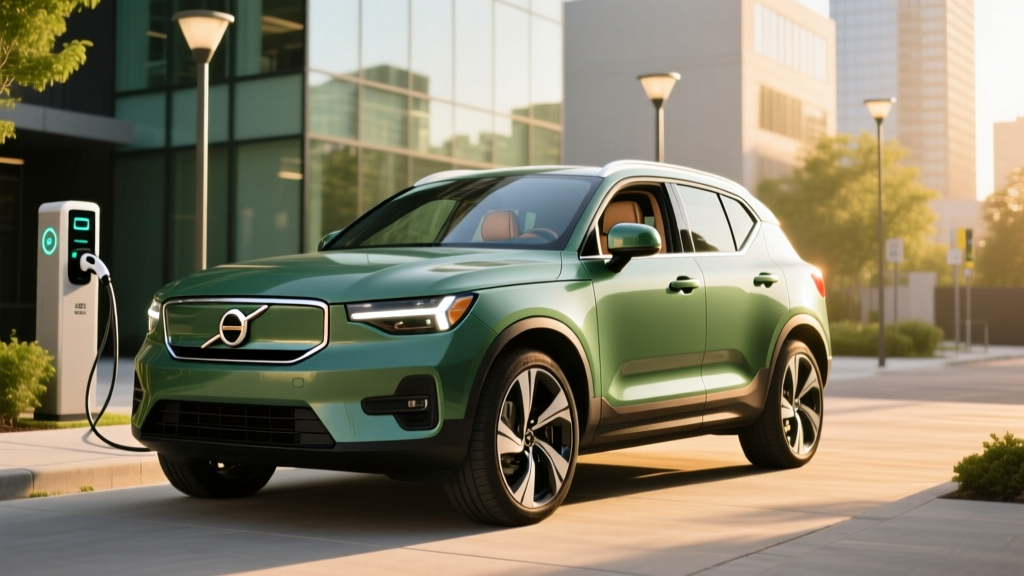
Is the 2026 Volvo XC40 Electric Worth Buying?
The 2026 Volvo XC40 Recharge (now officially the EX40 in some markets) delivers an EPA-estimated 293 miles of range on the Single Motor Extended Range trim, 200 kW DC fast charging (10–80% in ~28 minutes), and a starting MSRP around $53,550. It is a strong compact luxury EV for buyers who prioritize Scandinavian design, standard all-wheel drive availability, and a mature safety suite. However, its real-world highway range drops to roughly 240–260 miles, and it lacks access to the Tesla Supercharger network without an adapter. If you can charge at home and drive under 250 miles daily, the XC40 Electric is a compelling premium commuter; if you road-trip frequently in cold climates, consider the Hyundai Ioniq 5 or Tesla Model Y for faster charging and broader DC networks.
Volvo XC40 Electric 2026: Key Specs at a Glance
| Specification | Single Motor Extended Range | Twin Motor AWD |
|---|---|---|
| EPA Range | 293 miles | 254 miles |
| Battery (usable) | 82 kWh (NMC) | 82 kWh (NMC) |
| Horsepower | 295 hp | 402 hp |
| 0–60 mph | 7.0 sec | 4.5 sec |
| Max DC Charge Rate | 200 kW | 200 kW |
| 10–80% DC Fast Charge | ~28 min | ~28 min |
| Level 2 (240V) Charge Rate | 11 kW (~37 mi/hr) | 11 kW (~37 mi/hr) |
| EPA Efficiency | 95 MPGe (29 kWh/100mi) | 87 MPGe (32 kWh/100mi) |
| Cargo Volume | 57.6 cu ft (rear seats folded) | 57.6 cu ft (rear seats folded) |
| Base MSRP (2026 est.) | $53,550 | $58,050 |
| Battery/Powertrain Warranty | 8 yr / 100,000 mi | 8 yr / 100,000 mi |
Sources: fueleconomy.gov, Volvo Cars USA specifications.
Real-World Range: What the EPA Sticker Doesn't Tell You
EPA Estimate: 293 miles (Single Motor Extended Range)
Real-World Expectation: 240–260 miles highway at 70 mph; 200–220 miles in freezing weather with cabin heat.
The Volvo XC40 Electric's 82 kWh NMC battery is thermally managed via a liquid cooling and heat pump system, which helps preserve range in cold weather compared to older EVs without heat pumps. Still, physics dictates losses: at sustained 75 mph highway speeds, expect roughly 15% below the EPA combined figure. In sub-30°F winter conditions, plan for 25–30% range reduction unless you precondition the battery while plugged in.
For context, a 300-mile round trip in January from Denver to Vail (elevation gain included) would require a mid-route DC fast charge stop, even starting at 100% State of Charge. In contrast, the same trip in July at moderate speeds could be completed without stopping.
Charging the XC40 Recharge: Home, Public, and Cost
Understanding the difference between kW (power — how fast energy flows) and kWh (energy — battery capacity) is critical. The XC40's 82 kWh battery holds the energy; the 200 kW peak charge rate determines how quickly you replenish it.
| Level | Power | Miles Added per Hour | Typical Use Case |
|---|---|---|---|
| Level 1 (120V) | ~1.4 kW | ~4 mi/hr | Emergency top-up only |
| Level 2 (240V, 48A) | 11 kW | ~37 mi/hr | Overnight home charging (8–10 hrs for full charge) |
| DC Fast Charge | Up to 200 kW | N/A (10–80% in ~28 min) | Road trips, public stations |
Home Charging Setup Cost
Installing a Level 2 home charger (e.g., ChargePoint Home Flex or Wallbox Pulsar Plus) typically costs $800–$2,500 total, including:
- Charger hardware: $400–$700
- Electrician labor (240V/50A circuit): $300–$1,500
- Permit and inspection: $50–$300
- Panel upgrade (if needed, 200A service): $1,500–$4,000
If your home already has a 200-amp electrical panel with spare capacity, expect the lower end. Older homes with 100A service may need a panel upgrade — consult a licensed electrician before purchasing equipment.
Cost to Charge vs. Gas: 5-Year Breakdown
| Cost Factor | Volvo XC40 Electric (Single Motor) | Volvo XC40 Gas (B5 AWD, 26 MPG combined) |
|---|---|---|
| Purchase Price (MSRP) | $53,550 | $42,550 |
| Federal Tax Credit (§30D) | $0–$7,500 (see eligibility below) | $0 |
| Fuel/Energy (15,000 mi/yr × 5 yr) | $3,260 (home charging at $0.14/kWh) | $9,900 (gas at $3.30/gal) |
| Maintenance (5 yr) | ~$1,200 (no oil changes, fewer brake pads due to regen) | ~$3,500 (oil, filters, belts, brakes) |
| Insurance (5 yr avg.) | ~$9,500 (EVs cost ~15–20% more to insure) | ~$7,800 |
| 5-Year Total (est.) | $60,010–$67,510 | $63,750 |
Assumptions: 75% home charging at national avg. $0.14/kWh, 25% public DC at $0.40/kWh. Gas price based on EIA 2025 averages. Insurance premiums vary by state, driving record, and provider. Source: IRS §30D.
Federal Tax Credit Eligibility: Does the XC40 Qualify?
The Volvo XC40 Recharge is assembled in Ghent, Belgium — not in North America. Under current IRS §30D rules, the new-vehicle federal tax credit of up to $7,500 requires final assembly in North America. As of 2026, the XC40 Electric does not qualify for the new-vehicle §30D credit.
§30D Requirements the XC40 Electric Fails:
- ❌ Final assembly in North America (assembled in Belgium)
- ✅ MSRP under $80,000 (SUV cap) — meets this
- ✅ Buyer income under $300K MFJ / $150K single — buyer-dependent
- ⚠️ Battery critical minerals and component sourcing — moot due to assembly failure
Workaround: If you lease rather than buy, the §30D-equivalent commercial credit (§45W) may be passed through as a lease incentive, reducing monthly payments. Confirm with your Volvo dealer whether lease cash is currently offered.
Used XC40 Electric: The Used Clean Vehicle Credit (§25E) offers up to $4,000 (30% of sale price, max $4,000) for qualifying pre-owned EVs priced under $25,000. As of 2026, only early 2021–2022 models may meet the price cap on the used market.
Volvo XC40 Electric vs. Gas XC40: Which Should You Buy?
| Factor | XC40 Electric (EX40) | XC40 Gas (B5 AWD) |
|---|---|---|
| 0–60 mph | 7.0 sec (Single) / 4.5 sec (Twin) | 6.2 sec |
| Annual Fuel Cost | ~$650 (home charging) | ~$1,980 |
| Cargo Space | 57.6 cu ft + small frunk | 57.6 cu ft (no frunk) |
| Road Trip Convenience | 28-min DC stops every ~220 mi | 5-min gas stops every ~350 mi |
| Cold Weather Impact | 25–30% range loss in sub-30°F | Minimal (slight MPG drop) |
| Long-Term Maintenance | Minimal (no engine, regen saves brakes) | Moderate (oil, belts, spark plugs) |
Common Misconceptions About the XC40 Electric
| Myth | Fact |
|---|---|
| "The battery will need replacing in 5 years." | Volvo warranties the battery for 8 years / 100,000 miles at 70% capacity retention. NMC batteries typically degrade 10–15% over 150,000 miles based on Geotab fleet data. |
| "I can charge it at any Tesla Supercharger." | The XC40 uses a CCS1 connector. Tesla Superchargers require a NACS adapter (sold separately by Volvo or third-party) or use of non-Tesla CCS networks like Electrify America, EVgo, and ChargePoint. |
| "EVs are always cheaper to own." | Not always. Higher insurance premiums, no federal tax credit (for this model), and public charging costs can narrow the gap. Home charging is essential for maximum savings. |
| "Regenerative braking replaces all brake maintenance." | Regen reduces brake pad wear significantly, but brake fluid still needs flushing every 2–3 years, and rotors can corrode from disuse in humid climates. |
Decision Framework: Should You Buy the Volvo XC40 Electric?
Choose the XC40 Electric If:
- You have Level 2 home charging access (garage or driveway with 240V)
- Your daily commute is under 80 miles round-trip
- You value premium interior materials, standard Pilot Assist (SAE Level 2), and IIHS Top Safety Pick ratings
- You're open to leasing to capture potential tax-credit-equivalent incentives
- You primarily drive in moderate climates or can precondition in cold weather
Look Elsewhere If:
- You rely entirely on public charging (the XC40's 200 kW peak is decent but not class-leading vs. Hyundai Ioniq 5's 350 kW on 800V architecture)
- You frequently road-trip in sub-freezing temperatures and need maximum range certainty
- You require Supercharger network access without adapters (consider Tesla Model Y)
- The $7,500 federal tax credit is essential to your budget — look at the Tesla Model Y, Ford Mustang Mach-E, or VW ID.4 (all US-assembled)
Frequently Asked Questions
What is the real-world range of the 2026 Volvo XC40 Electric?
Expect 240–260 miles on the highway at 70 mph in moderate weather, and 200–220 miles in freezing temperatures. The EPA combined estimate of 293 miles (Single Motor) assumes mixed driving. Always precondition the battery via the Volvo Cars app while plugged in to minimize cold-weather losses.
How long does it take to charge the XC40 Recharge at home?
On a Level 2 (240V, 48A) home charger delivering 11 kW, a full 0–100% charge takes approximately 8 hours. Most owners plug in overnight and wake to a full battery daily. A standard 120V outlet adds only ~4 miles per hour — impractical for daily use.
Does the Volvo XC40 Electric qualify for any tax credits?
As a new vehicle, it does not qualify for the §30D federal credit due to Belgian assembly. However, leasing may allow the dealer to apply a commercial credit as a lease incentive. On the used market, 2021–2022 models priced under $25,000 may qualify for the §25E used EV credit (up to $4,000). State incentives vary — check AFDC's state incentive database.
Is the XC40 Electric's Pilot Assist actually self-driving?
No. Pilot Assist is an SAE Level 2 driver-assistance system combining adaptive cruise control and lane centering. You must keep your hands on the wheel and remain fully engaged. It does not navigate intersections, stoplights, or construction zones autonomously. Only Level 4 services like Waymo operate without a human driver.
How does insurance cost compare to the gas XC40?
EVs typically cost 15–25% more to insure due to higher repair costs (specialized body panels, battery protection, calibrated ADAS sensors). Budget approximately $1,800–$2,200/year for the XC40 Electric vs. $1,400–$1,700/year for the gas version, though rates vary by state, age, and driving record.
What happens if the battery degrades significantly?
Volvo's battery warranty covers capacity below 70% within 8 years or 100,000 miles. Out-of-warranty replacement for an 82 kWh NMC pack currently costs $15,000–$20,000 including labor, though prices are expected to decline as battery costs fall. Real-world data from Geotab's fleet study shows average NMC degradation of ~12% over 150,000 miles with proper charging habits (avoiding sustained 100% SoC and frequent DC fast charging).