Quick Answer: Is the Volvo VNR Electric Ready for Your Fleet?
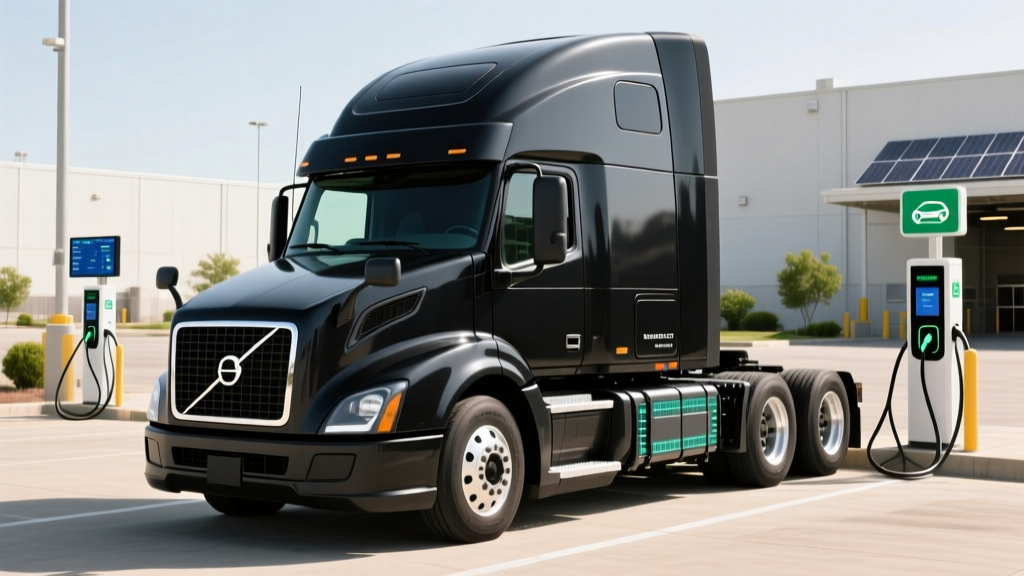
The Volvo VNR Electric is a Class 8 battery-electric day-cab tractor designed for regional haul, drayage, and distribution routes under 275 miles (EPA-estimated). For the 2026 model year, Volvo offers the VNR Electric with up to six battery packs totaling 565 kWh of usable capacity, a peak DC fast-charge rate of 250 kW (10–80% in approximately 60 minutes for the six-pack configuration), and a 455 hp electric drivetrain producing 4,051 lb-ft of torque at the wheels. Base pricing starts around $350,000–$400,000 before federal and state incentives — roughly 2.5× the cost of a comparable diesel VNR. The VNR Electric makes financial sense for fleets running predictable sub-200-mile daily routes with depot charging access and access to incentive programs like California's HVIP or the federal §30D clean vehicle credit (which applies to qualifying commercial EVs under §45W). If your routes exceed 250 miles, require sleeper-cab configurations, or lack depot charging infrastructure, the VNR Electric is not yet a viable replacement.
Volvo VNR Electric Specifications at a Glance
| Specification | VNR Electric (2026) | VNR Diesel (Comparable) |
|---|---|---|
| Class | Class 8 | Class 8 |
| Configuration | 4×2 or 6×2 Day Cab | 4×2 / 6×2 / 6×4 Day or Sleeper |
| Battery Capacity | Up to 565 kWh (6 packs, NMC) | N/A (diesel fuel tank) |
| EPA Est. Range (Max) | Up to 275 miles | 1,200+ miles (twin tanks) |
| Motor Output | 455 hp / 4,051 lb-ft (wheel torque) | 405–500 hp / 1,450–1,850 lb-ft |
| Peak DC Charge Rate | 250 kW (CCS1) | N/A |
| 10–80% Charge Time (6-pack) | ~60 minutes | ~15 min (diesel refuel) |
| Level 2 AC Charge | ~19 kW | N/A |
| GCWR (Max) | 82,000 lbs | 80,000+ lbs |
| Base Price (Approx.) | $350,000–$400,000 | $140,000–$180,000 |
| Warranty (Battery) | 5 years / 500,000 miles | N/A (engine warranty varies) |
Sources: Volvo Trucks USA VNR Electric, EPA SmartWay. Real-world range depends on payload, terrain, speed, and ambient temperature.
Real-World Range: What the EPA Sticker Doesn't Tell You
Volvo's published 275-mile maximum range assumes an optimized duty cycle — moderate payload, flat terrain, 55–60 mph cruise speeds, and temperate weather. In real-world fleet operations, expect meaningful variation:
VNR Electric Range Expectations by Scenario
- Urban drayage (stop-and-go, 50% payload, 70°F): ~220–250 miles — regenerative braking recovers significant energy in port/warehouse duty cycles.
- Regional highway (80,000 lbs GCW, 65 mph, 70°F): ~170–200 miles — aerodynamic drag at highway speed is the dominant energy consumer for Class 8 vehicles.
- Cold-weather operation (32°F or below, loaded): ~140–180 miles — battery internal resistance increases, and cab heating draws from the traction battery. Volvo's thermal management system mitigates but does not eliminate cold-weather loss.
- Mountainous terrain (loaded, elevation changes): ~130–170 miles — sustained grades consume energy rapidly, though regen on descents partially offsets losses.
For fleet planners, the practical rule is to size routes at no more than 70–75% of the EPA-rated range to account for payload variance, weather, traffic delays, and battery degradation over the vehicle's service life. A 275-mile EPA rating means planning for ~190–200 miles of reliable daily range in mixed conditions.
Charging Infrastructure: Depot vs. Public Fast Charging
The VNR Electric's viability hinges entirely on charging strategy. Unlike diesel trucks that refuel in 15 minutes at any truck stop, electric Class 8 trucks require planned energy delivery.
Charging Speeds and Timelines
| Charging Method | Power (kW) | Energy Added in 1 Hour | Full Charge Time (0–100%) | Use Case |
|---|---|---|---|---|
| Level 2 AC (Depot) | ~19 kW | ~19 kWh (~10 miles) | ~30 hours (6-pack) | Not practical for full recharge; maintenance/top-off only |
| DC Fast (150 kW) | 150 kW | ~150 kWh (~75 miles) | ~4 hours | Older public DC stations; adequate for opportunity charging |
| DC Fast (250 kW peak) | 250 kW | ~200 kWh (~100 miles)* | ~3 hours (0–100%) | Depot fast-chargers; modern public CCS1 stations |
*Charge rate tapers significantly above 80% State of Charge to protect NMC battery chemistry. The 10–80% window captures the most efficient charging segment; above 80%, expect charge power to drop to 50–80 kW.
Depot Charging: The Only Scalable Fleet Strategy
Most VNR Electric fleets rely on depot-based DC fast chargers (150–250 kW per stall). A typical installation requires:
- Utility service upgrade: 480V three-phase, potentially 1–2 MW total site capacity for a 10-truck fleet. Utility lead times can be 12–24 months.
- Charger hardware: $80,000–$150,000 per 250 kW DC dispenser (dual-cable CCS1 units available).
- Electrical contractor and permitting: $50,000–$200,000+ depending on trenching distance, switchgear, and local requirements.
- Software and load management: Fleet charging management platforms (e.g., ChargePoint Fleet, Ampup, Volvo's own platform) to schedule charging and avoid peak demand charges.
Total depot infrastructure investment for a 10-truck VNR Electric fleet typically runs $1.5M–$3M before incentives. Federal §30C Alternative Fuel Vehicle Refueling Property Credit covers up to 30% of qualifying charging equipment costs (capped at $100,000 per item) through 2032, and state programs like California's HVIP or New York's Charge Ready NY provide additional infrastructure grants.
Total Cost of Ownership: VNR Electric vs. Diesel VNR
The VNR Electric's purchase premium is substantial, but operating costs tell a different story over a 5–7 year fleet lifecycle. Here's a realistic 5-year TCO comparison for a single truck running 60,000 miles/year on a regional distribution route:
| Cost Category (5-Year) | VNR Electric | VNR Diesel | Notes |
|---|---|---|---|
| Purchase Price | $375,000 | $160,000 | Electric MSRP before incentives |
| Federal Tax Credit (§45W) | −$40,000 | $0 | Commercial clean vehicle credit; subject to IRS eligibility — confirm with tax professional |
| State Incentive (e.g., CA HVIP) | −$100,000 | $0 | Varies widely by state; some states offer $0 |
| Net Acquisition Cost | $235,000 | $160,000 | Gap narrows to ~$75K with incentives |
| Fuel / Energy (300,000 mi total) | $48,000 | $165,000 | Electric: ~$0.16/kWh avg depot rate; Diesel: ~$4.50/gal avg, 6.5 mpg |
| Maintenance | $18,000 | $55,000 | No oil changes, DEF, DPF, or transmission service on EV; brake wear reduced via regen |
| Insurance | $32,000 | $25,000 | EV premiums ~20–30% higher due to repair cost and battery replacement risk |
| Depot Charging (Amortized) | $35,000 | $0 | Infrastructure share per truck over 5 years |
| 5-Year Total | $368,000 | $405,000 | Electric saves ~$37K over 5 years with incentives |
Key takeaways from this model:
- Without incentives, the VNR Electric costs roughly $100K+ more over 5 years. Federal §45W credits and state HVIP-style programs are essential to TCO parity.
- Energy savings are massive: ~$117K less in fuel/energy over 300,000 miles — the single largest operating advantage.
- Maintenance savings are real but smaller: ~$37K over 5 years, driven by elimination of diesel powertrain service items.
- Insurance and infrastructure are EV cost adders that partially offset fuel/maintenance savings.
For fleets in states with strong incentive programs (CA, NY, NJ, CO, WA), the VNR Electric can reach TCO parity within 3–4 years. In states with no commercial EV incentives, payback extends to 7+ years or may not materialize.
Battery Longevity, Degradation, and Warranty
The VNR Electric uses NMC (nickel-manganese-cobalt) lithium-ion battery packs — chosen for high energy density in a space-constrained chassis. NMC chemistry delivers excellent range-per-pack but degrades faster than LFP (lithium iron phosphate) under high-temperature and high-charge-state conditions.
What to Expect from Battery Degradation
- Year 1–2: ~2–4% capacity loss — initial formation losses and early-cycle settling.
- Year 3–5: ~1–2% per year — steady-state degradation under normal use.
- Year 5–7: Cumulative loss of ~10–15% — range drops from 275 to ~235–250 miles (EPA basis).
- Warranty threshold: Volvo warrants the battery packs for 5 years / 500,000 miles with a capacity retention floor (typically 70–80% SoH, confirm exact threshold with your dealer). If a pack falls below the warrantied threshold, Volvo replaces or refurbishes at no cost.
Out-of-warranty battery pack replacement costs $30,000–$50,000 per pack depending on configuration and labor. A full six-pack replacement could exceed $200,000 — a critical factor in long-term fleet planning. Most fleets plan for battery end-of-life at 7–10 years and factor residual value accordingly.
Extending Battery Life
- Avoid sustained 100% SoC: Charge to 80–90% for daily operations; reserve 100% charges for maximum-range days.
- Precondition before fast charging: Volvo's thermal management system heats or cools the battery to optimize charge acceptance. Use scheduled departure features to precondition on grid power rather than battery.
- Minimize DC fast-charging frequency: Overnight AC depot charging (even at slower rates) is gentler on NMC cells than daily 250 kW DC sessions.
- Monitor State of Health (SoH): Volvo's telematics platform provides SoH data — track it quarterly to project end-of-life and plan replacements.
VNR Electric vs. Diesel VNR: Head-to-Head Comparison
| Factor | VNR Electric | VNR Diesel | Advantage |
|---|---|---|---|
| Upfront Cost | $350K–$400K | $140K–$180K | Diesel (by ~$200K) |
| Cost After Incentives | $235K–$300K | $140K–$180K | Diesel (gap narrows to ~$55K–$160K) |
| Energy Cost per Mile | ~$0.16–$0.22 | ~$0.55–$0.70 | Electric (by ~$0.40/mi) |
| Maintenance Cost per Mile | ~$0.06 | ~$0.18 | Electric (by ~$0.12/mi) |
| Range (Practical) | 170–250 miles | 1,000–1,400 miles | Diesel (by a wide margin) |
| Refuel / Recharge Time | 60 min (10–80% DC) | 15 min (diesel fill) | Diesel |
| Emissions (Tailpipe) | Zero | NOx, PM, CO₂ | Electric |
| Noise / Driver Comfort | Very quiet, smooth | High vibration, noise | Electric |
| Route Flexibility | Limited to charging-accessible corridors | Nationwide fueling network | Diesel |
| Cold-Weather Performance | Range loss 25–40% | Minimal impact | Diesel |
| Resale Value (Projected) | Uncertain — battery SoH dependent | Establishused market | Diesel (currently) |
Common Misconceptions About the VNR Electric
| Myth | Fact |
|---|---|
| "Electric trucks can't haul 80,000 lbs." | The VNR Electric is rated for 82,000 lbs GCWR — it handles full Class 8 loads. Battery weight (~8,000 lbs for 6-pack) is offset by the EV powertrain's instant torque, which actually improves low-speed pulling power vs. diesel. |
| "You can charge at any truck stop." | Public DC fast-charging for Class 8 trucks remains extremely limited. As of 2026, only select corridors (I-5 in California, portions of I-95, select logistics hubs) have CCS1 chargers rated for 250 kW+ with pull-through lanes for semis. Depot charging is the primary strategy. |
| "The $40,000 federal credit applies to everyone." | The commercial clean vehicle credit (§45W) has specific eligibility requirements including vehicle weight rating, battery sourcing, and business-use criteria. Consult a tax professional and review current IRS guidance before counting on the credit. |
| "Batteries need full replacement every 3 years." | NMC packs in commercial duty typically retain 70–85% capacity at 5 years / 500,000 miles. Volvo's warranty covers premature degradation. Full replacement is a 7–10 year event, not a 3-year event. |
| "Electric trucks are slower." | The VNR Electric's 4,051 lb-ft of wheel torque delivers stronger low-end acceleration than any diesel VNR. Merging and grade-climbing performance is a genuine operational advantage, not a compromise. |
Fleet Decision Framework: Should You Spec the VNR Electric?
Choose the Volvo VNR Electric If:
- Your daily routes are under 200 miles with predictable origin-destination pairs (regional distribution, port drayage, local delivery).
- You have depot space with access to 480V three-phase utility service, or your utility has confirmed upgrade feasibility within your timeline.
- Your fleet operates in a state with strong commercial EV incentives (California HVIP, New York Truck Voucher, New Jersey ZEV incentives, Colorado fleet credits).
- Your customers or contracts require zero-emission freight — increasingly common with major retailers, food distributors, and port authorities.
- You plan to hold trucks 5–7+ years to capture full TCO advantages from fuel and maintenance savings.
- Your drivers operate in urban environments where reduced noise, zero idle emissions, and one-pedal regenerative driving improve quality of life and reduce fatigue.
Stick with Diesel (or Wait) If:
- Your routes regularly exceed 250 miles or require sleeper-cab configurations for overnight hauls.
- You lack depot charging access and your utility cannot provide 480V service within a practical timeline or budget.
- You operate in a state with no commercial EV incentives — the TCO gap may not close within a reasonable payback period.
- Your fleet turns vehicles every 3–4 years — you won't capture the long-term fuel savings that justify the upfront premium.
- You run in extreme cold climates (sustained sub-20°F operation) where 35–40% range loss makes daily routes unfeasible without mid-day charging.
- Your routes go through charging deserts — rural corridors in the Mountain West, Great Plains, or Southeast where public Class 8 DC infrastructure does not yet exist.
What First-Time Electric Truck Buyers Must Know
Transitioning a fleet from diesel to electric is not a vehicle swap — it's an energy infrastructure project. First-time VNR Electric buyers should plan for:
- 12–24 month lead times for utility service upgrades and charger installation. Start the utility conversation before you order trucks.
- Driver training on regenerative braking, one-pedal driving, charge-state management, and route planning around SoC. Volvo provides fleet training programs.
- Telematics integration — Volvo's connected services platform provides real-time SoC, SoH, energy consumption, and charge scheduling. Your fleet management system needs to integrate with this data.
- Demand charge management — commercial electricity rates include demand charges based on peak kW draw. Unmanaged simultaneous charging of multiple trucks can spike demand charges dramatically. Smart charging software that staggers charge sessions is not optional — it's essential.
- Residual value uncertainty — the used electric Class 8 market is still forming. Battery SoH will be the dominant factor in resale value. Document and maintain SoH records from day one.
Frequently Asked Questions
What is the real-world range of the Volvo VNR Electric with a full load?
With a full 82,000-lb GCW load on flat highway at 65 mph in moderate temperatures, expect ~170–200 miles of practical range from the 565 kWh six-pack configuration. Urban drayage with regenerative braking can extend this to 220–250 miles. Cold weather (below freezing) reduces range by 25–40%.
How long does it take to charge a Volvo VNR Electric?
At a 250 kW DC fast charger, the six-pack VNR Electric charges from 10% to 80% in approximately 60 minutes. A full 0–100% charge takes roughly 3 hours due to charge-curve tapering above 80% SoC. Level 2 AC charging at 19 kW is impractical for full recharges (30+ hours) and is used only for maintenance and top-off.
Does the VNR Electric qualify for federal tax credits?
The VNR Electric may qualify for the §45W Commercial Clean Vehicle Credit, which provides up to $40,000 for qualifying vehicles over 14,000 lbs GVWR. Eligibility depends on battery component sourcing, critical mineral requirements, and business-use criteria. Rules change periodically — always verify current eligibility on irs.gov and consult a tax professional before finalizing purchase decisions.
Can the VNR Electric operate in cold weather?
Yes, but with significant range reduction. At 32°F, expect 20–30% range loss. Below 20°F, losses can reach 35–40%. Volvo's thermal management system includes battery preconditioning, which helps mitigate losses, but cold-weather fleet planning must account for reduced range. Fleets in northern climates should size routes conservatively or plan for mid-day opportunity charging.
What happens when the battery packs need replacement?
Volvo warrants the battery packs for 5 years / 500,000 miles against capacity loss below a defined State of Health threshold. After warranty, individual pack replacement costs approximately $30,000–$50,000 per pack. A full six-pack replacement can exceed $200,000. Most commercial fleets plan for battery end-of-life at 7–10 years and factor this into total lifecycle cost models. Some fleets explore battery refurbishment or second-life applications to offset replacement costs.
How does the VNR Electric compare to competing electric Class 8 trucks?
The VNR Electric competes primarily with the Freightliner eCascadia (up to 230-mile range, 470 kWh battery) and the Peterbilt 579EV (up to 150-mile range). The VNR Electric's six-pack 565 kWh configuration offers the longest published range in the Class 8 day-cab segment as of 2026. Tesla's Class 8 Semi (announced, limited production) targets 500-mile range but remains largely unavailable for fleet purchase. For regional haul under 200 miles, all three platforms are viable; for routes approaching 250+ miles, the VNR Electric currently has the range advantage.