Quick Answer: Is the Volvo VNR Electric Right for Your Fleet?
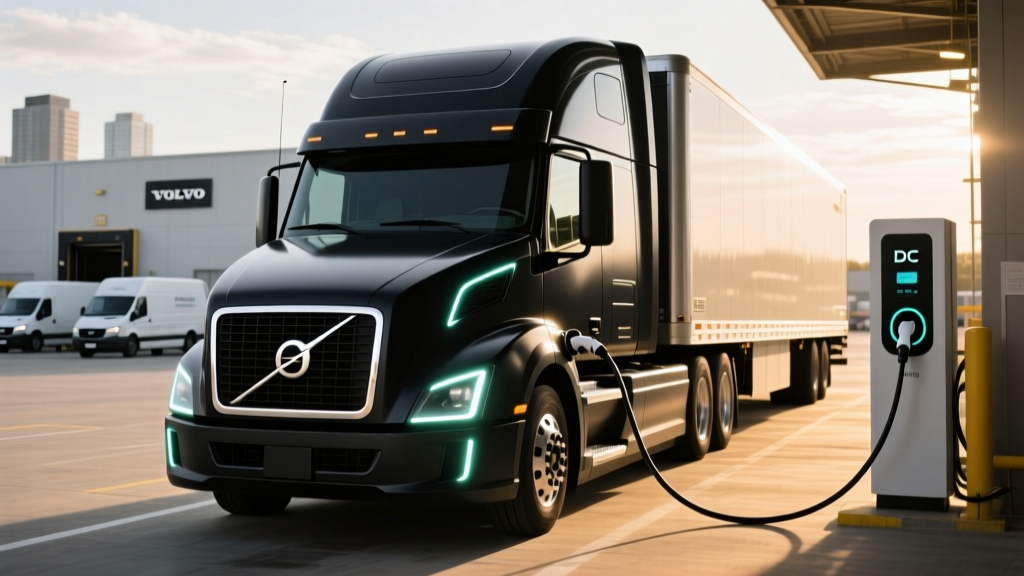
The Volvo VNR Electric is a Class 8 battery-electric semi designed for regional haul, drayage, and distribution routes. As of the 2026 model year, it offers up to 275 miles of EPA-estimated range with a 565 kWh battery pack, recharges from 10–80% in roughly 60–90 minutes on a 250 kW DC fast charger, and qualifies for substantial federal and state incentives that can offset its $350,000–$420,000 base price. It's best suited for fleets running predictable, depot-based routes under 250 miles round-trip with access to overnight Level 2 or DC depot charging. For long-haul OTR routes exceeding 300+ miles, diesel remains the practical choice in 2026.
Volvo VNR Electric: Core Specs and Configurations
Volvo Trucks North America introduced the VNR Electric as a production model in late 2020 and has iterated through multiple battery and powertrain updates. The current-generation (third-generation) VNR Electric, available for order in 2026, represents a significant step up in energy capacity and charging speed from earlier models that topped out at 264 kWh and 150 miles of range.
| Specification | Value |
|---|---|
| Vehicle Class | Class 8 (Heavy-Duty) |
| Battery Options | 4× (375 kWh) or 6× (565 kWh) NMC lithium-ion packs |
| EPA Range (max config) | Up to 275 miles (6-pack, 4×2 tractor, light payload) |
| Real-World Range (loaded, mixed) | ~175–225 miles depending on payload, terrain, climate |
| Electric Motor Output | Up to 455 hp (340 kW) / 4,051 lb-ft torque at wheels |
| Top Speed | Governed to ~68 mph (configurable) |
| GCWR (Gross Combination Weight Rating) | Up to 82,000 lbs |
| Max DC Fast Charge Rate | 250 kW (CCS1 connector) |
| 10–80% Charge Time (250 kW) | ~60 minutes (4-pack) / ~90 minutes (6-pack) |
| Level 2 Depot Charging (AC) | ~19.2 kW per vehicle; full charge in 10–14 hours |
| Regenerative Braking | Multi-stage regen with one-pedal-capable mode |
| Battery Warranty | 5 years / unlimited miles (performance guarantee to 80% SoH) |
| Base MSRP (approx.) | $350,000 (4×) – $420,000 (6×) before incentives |
Real-world range note: The 275-mile EPA figure assumes a 4×2 day cab configuration with a light box-trailer payload on a flat route. In real fleet operations—pulling a loaded 53-foot dry van at highway speeds through rolling terrain in 35°F weather—expect effective range closer to 175–200 miles on the 6-pack. Cold weather alone can reduce range by 20–30%, and high-speed highway driving (65+ mph) further erodes efficiency compared to 45 mph urban drayage cycles. This is physics, not a flaw: moving 80,000 lbs of combined weight requires enormous energy at highway speeds.
Total Cost of Ownership: Volvo VNR Electric vs. Diesel VNR
The upfront cost of the VNR Electric is roughly 2.5× to 3× that of a comparable diesel Volvo VNR (which starts around $140,000–$160,000). But fleet purchasing decisions hinge on total cost of ownership (TCO), not sticker price. Here's where the math gets interesting—and where incentives become essential.
| Cost Category | VNR Electric (6-Pack) | VNR Diesel (D13) |
|---|---|---|
| Purchase Price (before incentives) | $420,000 | $155,000 |
| Federal Tax Credit (§45W Commercial Clean Vehicle) | –$40,000 | $0 |
| State/Local Incentives (varies; e.g., CARB HVIP) | –$75,000 to –$120,000 | $0 |
| Net Effective Purchase | $260,000–$305,000 | $155,000 |
| Fuel/Energy (500K mi) | ~$62,000 (electricity @ $0.14/kWh avg) | ~$195,000 (diesel @ $4.20/gal, 6.5 mpg) |
| Maintenance (5 yr) | ~$18,000 | ~$42,000 |
| DEF / Emissions Equipment | $0 | ~$8,500 |
| Depot Charging Infrastructure (amortized per truck) | ~$25,000–$45,000 | $0 |
| Insurance (5 yr) | ~$52,000 | ~$45,000 |
| Estimated 5-Year TCO | $417,000–$482,000 | $445,500 |
Key takeaways:
- Fuel savings are massive: Electricity at $0.14/kWh yields roughly $0.12/mile in energy cost vs. $0.65/mile for diesel at $4.20/gal and 6.5 mpg. Over 500,000 miles, that's over $130,000 in fuel savings.
- Maintenance is roughly 50–60% lower: No oil changes, no diesel particulate filter replacements, no SCR/DEF system, no transmission fluid. Electric motors have far fewer wearable components than a D13 diesel and I-Shift automated manual transmission.
- Charging infrastructure is the hidden cost: Depot chargers (Level 2 AC at 19.2 kW or DC fast at 50–250 kW) require utility upgrades, trenching, switchgear, and permitting. Amortized per truck across a 10-vehicle depot, expect $25,000–$45,000 per tractor. A single 250 kW DC dispenser alone can cost $85,000–$150,000 installed.
- Incentives are not optional—they're mandatory for parity. Without the IRS §45W Commercial Clean Vehicle Credit (up to $40,000 for Class 8 vehicles) and state programs like California's HVIP vouchers, the TCO gap remains substantial. Always consult a tax professional regarding eligibility.
Charging Infrastructure: What Fleet Operators Actually Need
Charging a Class 8 electric semi is fundamentally different from charging a passenger EV. You're moving 565 kWh of battery capacity—not the 75–100 kWh in a Tesla Model Y or Ford F-150 Lightning. Here's what that means in practice:
| Charging Level | Power (kW) | Approx. Time (0–100%, 6-Pack) | Typical Use Case |
|---|---|---|---|
| Level 2 AC (Depot) | 19.2 kW | ~28–30 hours | Overnight/weekend top-off (partial cycles) |
| DC Fast (50 kW) | 50 kW | ~9–10 hours (10–80%) | Smaller depot installs; moderate daily use |
| DC Fast (150 kW) | 150 kW | ~2.5 hours (10–80%) | Mid-size fleet depots; opportunity charging |
| DC Fast (250 kW) | 250 kW | ~90 minutes (10–80%) | High-utilization fleets; en-route charging |
Charge curve reality: Like all lithium-ion batteries, the VNR Electric doesn't sustain peak 250 kW draw for the entire session. You'll see peak rates between roughly 10–40% state of charge (SoC), after which the battery management system tapers current to protect cell health. From 80–100%, charging slows dramatically. Fleet operators should plan operations around 10–80% cycles and avoid routinely charging to 100% unless needed for a specific long run—this extends battery longevity.
Depot charging infrastructure cost breakdown (per charger, 150 kW DC):
- DC charger hardware (single dispenser): $45,000–$70,000
- Electrical service upgrade (utility transformer + switchgear): $30,000–$80,000
- Trenching, conduit, and concrete work: $15,000–$35,000
- Permitting and engineering: $5,000–$15,000
- Network management software (annual): $1,500–$3,000/charger
- Total installed per 150 kW charger: ~$95,000–$200,000
Utility lead times are a real bottleneck. Many fleets report 12–18 month wait times for utility service upgrades, especially in areas requiring new transformers or medium-voltage line extensions. Start the utility interconnection process before you order trucks.
Who Should Buy the VNR Electric (and Who Shouldn't)
Fleet Decision Framework
Choose the Volvo VNR Electric if:
- Your routes are under 200 miles round-trip with predictable daily mileage
- You operate drayage, local delivery, food/beverage distribution, or port operations
- You have (or can build) depot charging at your home terminal
- You operate in a state with strong incentive programs (CA, NY, NJ, WA, OR, CO)
- You face regulatory mandates (e.g., CARB's Advanced Clean Fleets rule requiring ZEV adoption)
- Driver retention matters—electric trucks are quieter, smoother, and preferred by many operators
- You have ESG reporting requirements or customer sustainability mandates
Stick with diesel (or wait) if:
- Your routes regularly exceed 300+ miles one-way without reliable en-route charging
- You operate in extreme cold climates (–20°F and below) where range loss exceeds 35%
- You lack depot real estate for charging infrastructure or can't secure utility upgrades
- You run heavy-haul or specialized applications near the 82,000-lb GCWR limit in hilly terrain
- Your fleet size is under 5 units and incentive applications are cost-prohibitive to pursue
- You need truck availability now—lead times for the VNR Electric can stretch 6–12 months
Common Misconceptions About Electric Class 8 Semis
| Myth | Fact |
|---|---|
| "Electric semis can't pull full loads." | The VNR Electric is rated for 82,000 lbs GCWR and delivers 4,051 lb-ft of torque at the wheels—instant torque from zero RPM outperforms diesel off the line. Payload is fully legal; the trade-off is reduced range at max weight. |
| "Batteries won't last and replacement costs are catastrophic." | Volvo warrants the battery for 5 years with a performance guarantee to 80% State of Health (SoH). Real-world data from early fleet deployments shows degradation of roughly 2–3% per year under normal cycling. A full pack replacement in 2026 runs approximately $120,000–$160,000, but most fleets will replace or repower the tractor before needing a full swap. |
| "Charging takes too long for real logistics." | For depot-based operations with overnight charging, the truck charges while the driver sleeps—zero operational downtime. For multi-shift operations, a 90-minute DC fast charge during a driver's mandatory 30-minute break (extended slightly) keeps the truck rolling. It requires planning, not impossibility. |
| "The grid can't handle fleet charging." | Managed charging software (e.g., Volvo's partnership with charging management platforms) staggers charging across off-peak hours. A 20-truck depot at 150 kW per charger needs roughly a 3 MW service—comparable to a large grocery store. It's a significant but solvable engineering project, not a grid-breaking event. |
| "Federal tax credits only apply to passenger cars." | The IRS §45W Commercial Clean Vehicle Credit provides up to $40,000 for qualifying Class 8 trucks. Unlike the §30D consumer credit, §45W has no MSRP cap or buyer income limit, though it does require the vehicle be acquired for business use and meet domestic content sourcing requirements. |
Real-World Ownership: What First-Time Electric Fleet Buyers Must Know
Transitioning even a portion of your fleet from diesel to battery-electric is a systems project, not just a vehicle purchase. Here's what experienced fleet operators wish they'd known before their first VNR Electric order:
1. Start with Route Telematics
Before ordering a single truck, instrument your existing diesel fleet with GPS telematics (Geotab, Samsara, or Motive) for at least 30 days. Map every route's daily mileage, elevation profile, idle time, and ambient temperature range. You'll quickly identify which routes fit within the VNR Electric's 175–225 real-world mile envelope and which don't. Don't guess—measure.
2. Utility Engagement Is Step Zero
Contact your utility's commercial EV team before signing a truck purchase agreement. The interconnection study, service upgrade design, and construction can take 12–18 months. Some utilities offer make-ready programs that cover the cost of infrastructure from the transformer to the meter—this alone can save $50,000–$100,000 per site.
3. Driver Training Is Non-Negotiable
Regenerative braking behavior, route planning around SoC, and preconditioning protocols require dedicated training. Drivers who master regen can recapture 15–25% of energy on hilly routes. Drivers who don't may find themselves 30 miles short of the depot. Budget two full days of hands-on training per driver cohort.
4. Cold Weather Operations Require Preconditioning
The VNR Electric includes a battery thermal management system, but preconditioning the pack while still plugged in at the depot (before departure) is essential in sub-40°F weather. This warms the cells to optimal operating temperature using grid power rather than battery energy, preserving 10–15% of range that would otherwise be consumed by onboard heating.
5. Insurance Costs Are Higher (for Now)
Class 8 electric truck insurance premiums run 10–20% higher than comparable diesel tractors in 2026, driven by higher replacement values, specialized repair requirements, and limited actuarial data. Get quotes from commercial carriers with EV fleet experience (Progressive Commercial, Zurich, Liberty Mutual) before finalizing your TCO model.
Frequently Asked Questions
What is the real-world range of the Volvo VNR Electric with a full load?
With a loaded 53-foot trailer at approximately 72,000–78,000 lbs combined weight, expect 175–225 miles on the 6-pack (565 kWh) configuration in moderate temperatures (50–80°F) on mixed highway/urban routes. In cold weather (below 32°F) or sustained 65+ mph highway driving, plan for the lower end of that range or slightly below. The 4-pack (375 kWh) yields roughly 120–175 miles under similar loaded conditions.
How does the VNR Electric compare to the Tesla Semi and Freightliner eCascadia?
The Tesla Semi claims up to 500 miles of range (with the larger battery pack) but has very limited production volume and availability as of 2026, with only PepsiCo and a handful of early customers operating them at scale. The Freightliner eCascadia offers up to 230 miles of range with a 475 kWh battery and is the VNR Electric's closest competitor in terms of market availability and fleet deployment. The VNR Electric's advantage is Volvo's established dealer and service network and the broader Volvo Group parts ecosystem. The Tesla Semi's advantage is range—if you can get one.
Can I charge a VNR Electric at public truck stops?
Public DC fast charging for Class 8 trucks is still emerging in 2026. Networks like WattEV, Tiger Infrastructure, and the Greenlots/Shell Recharge commercial corridor projects are building truck-accessible charging along I-5, I-10, and other major freight corridors in California and the Southwest. However, availability remains limited compared to the diesel refueling network. Most VNR Electric fleets rely primarily on depot charging, using public infrastructure only for opportunity charging on longer runs.
What happens to the battery at end of life?
Volvo Group has partnerships with battery recycling firms (including Northvolt's Revolt program) for second-life and materials recovery applications. At end of vehicular life, VNR Electric battery packs retain 60–75% capacity and can serve in stationary energy storage roles for 5–10 additional years before being recycled for raw lithium, cobalt, nickel, and manganese recovery. Volvo has committed to closed-loop battery recycling for its commercial vehicle line.
Does the VNR Electric qualify for the federal EV tax credit?
Yes, but under a different provision than passenger vehicles. The IRS §45W Commercial Clean Vehicle Credit provides up to $40,000 for qualifying heavy-duty electric trucks (the credit equals 30% of the incremental cost over a comparable diesel vehicle, capped at $40,000 for vehicles over 14,000 lbs GVWR). There is no buyer income cap or MSRP cap under §45W, but the vehicle must be acquired for business use, placed in service in the United States, and meet battery component and critical mineral sourcing requirements. Always verify current-year eligibility with a tax professional and the IRS guidance.
Bottom Line: The VNR Electric Is a Depot-Charged Regional Workhorse
The 2026 Volvo VNR Electric is a mature, production-ready Class 8 battery-electric tractor that makes strong economic sense for the right application: depot-based regional routes under 200 miles, access to overnight and opportunity charging, and a favorable incentive landscape. Its fuel and maintenance savings over diesel are real and substantial—often $130,000+ over five years—but they don't erase the higher upfront cost without the $40,000 federal credit and state vouchers. Fleets that approach the VNR Electric as a systems integration project (vehicles + charging + utility + telematics + driver training) rather than a simple truck swap will find it delivers reliable, quiet, zero-tailpipe-emission freight movement at a competitive TCO. Fleets hoping to drop it into existing long-haul routes without infrastructure planning should wait for either battery density improvements or hydrogen fuel-cell alternatives currently in pilot programs.