Quick Verdict: The Performance Wagon That Commutes on Electricity
The 2026 Volvo V60 T8 Polestar Engineered occupies a rare niche: a plug-in hybrid wagon with genuine track-bred hardware, 455 horsepower, and enough electric-only range to cover most daily commutes without burning a drop of fuel. It is not a battery-electric vehicle, and buyers who expect BEV-style zero-emission road trips should look elsewhere. But for driving enthusiasts who need cargo space, all-weather capability, and the option to run electric most weekdays while keeping a gas engine for weekend hauls, the V60 T8 Polestar Engineered makes a compelling — if expensive — case.
This review covers the 2026 model year with updated Polestar Engineered chassis tuning, the latest Google Automotive infotainment, and revised pricing. We'll break down real-world range, charging behavior, tax credit eligibility under current IRS §30D rules, and how it stacks up against rivals like the BMW M340i xDrive and Audi S4 Avant.
| Spec | Value |
|---|---|
| Powertrain | 2.0L turbo + supercharged I4 + rear electric motor (eAWD) |
| Total System Output | 455 hp / 523 lb-ft torque |
| 0–60 mph | 4.3 seconds |
| Battery Capacity | 18.8 kWh usable (NMC lithium-ion) |
| EPA Electric-Only Range | 41 miles |
| EPA Combined MPGe (EV mode) | 74 MPGe |
| EPA Combined MPG (hybrid mode) | 31 MPG |
| Max Level 2 Charge Rate | ~3.7 kW (onboard charger limited) |
| Level 2 Charge Time (0–100%) | ~5 hours |
| DC Fast Charging | Not supported |
| Drivetrain | eAWD (front ICE, rear electric motor) |
| Cargo Volume (rear seats up) | 22.9 cu ft |
| Cargo Volume (rear seats folded) | 50.9 cu ft |
| Base MSRP | $76,850 |
| As-Tested Price | $79,400 (with Premium Plus package) |
| Battery / Powertrain Warranty | 8 years / 100,000 miles (hybrid battery & components) |
| Bumper-to-Bumper Warranty | 4 years / 50,000 miles |
Electric Range and Efficiency: Real-World Expectations
The EPA rates the 2026 V60 T8 Polestar Engineered at 41 miles of electric-only range on a full charge. That figure is derived from a mix of city and highway driving at moderate temperatures. In practice, your mileage will vary based on conditions — and as a PHEV owner, understanding those variables is critical to maximizing your electric driving.
- City commuting (55°F–75°F): 38–43 miles — regenerative braking in stop-and-go traffic helps extend range, and the rear electric motor handles low-speed driving efficiently.
- Highway cruising (70 mph, moderate climate): 30–35 miles — the V60's aerodynamic wagon profile helps, but sustained high speeds drain the 18.8 kWh battery faster than city driving.
- Cold weather (20°F–35°F): 25–32 miles — battery chemistry (NMC) loses efficiency in cold temperatures, and cabin heating draws from the pack unless the gas engine kicks in for waste heat.
- Hot weather with A/C (95°F+): 34–38 miles — climate control load is lower than winter heating, but still reduces range by roughly 10–15%.
The 18.8 kWh battery uses NMC (nickel manganese cobalt) chemistry, which offers higher energy density than LFP but is more sensitive to temperature extremes. Volvo's thermal management system helps mitigate extreme degradation, but owners in very cold climates should precondition the cabin while plugged in to preserve range.
In hybrid mode (battery depleted), the EPA rates the V60 T8 at 31 MPG combined. On a 300-mile highway road trip with no initial charge, expect roughly 28–30 MPG at 75 mph — respectable for a 4,600-lb performance wagon, but not class-leading. The 74 MPGe combined rating in EV mode is useful for comparing electricity costs to gasoline, but remember: MPGe is an energy-equivalency metric, not actual miles per gallon. Per fueleconomy.gov, 33.7 kWh of electricity equals one gallon of gasoline for this calculation.
Charging: Home Level 2 Only — No DC Fast Charging
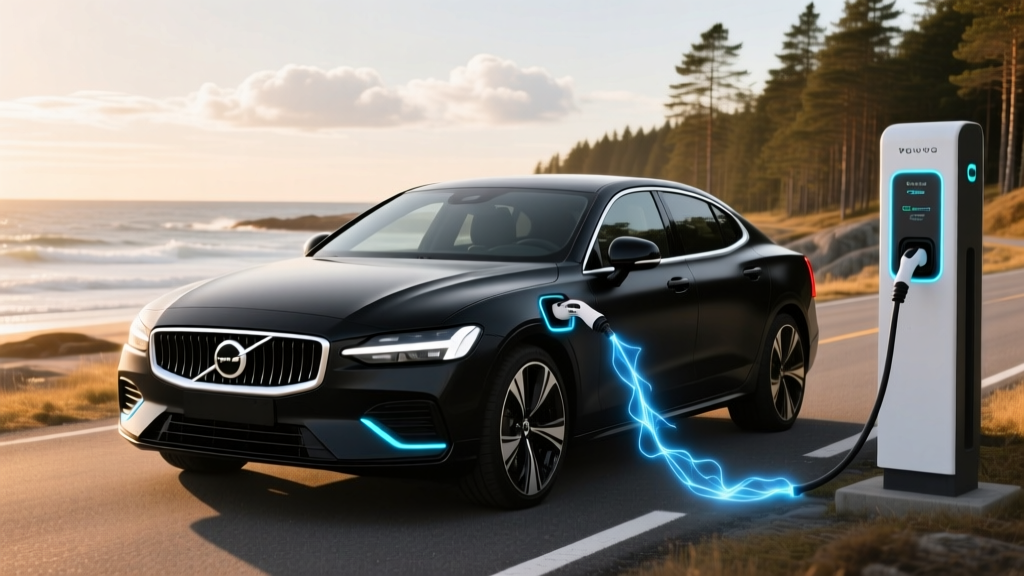
This is where PHEV ownership diverges sharply from full BEV ownership. The V60 T8 Polestar Engineered does not support DC fast charging. There is no CCS or NACS port for 50 kW+ public fast chargers. All charging happens via the J1772 Level 1/Level 2 port on the driver's side front fender.
The onboard charger is rated at approximately 3.7 kW, which is a bottleneck worth understanding. Even if you install a 48-amp (11.5 kW) Level 2 home charger, the car will only accept 3.7 kW. That translates to roughly 14–16 miles of range added per hour of charging.
| Charging Level | Power | 0–100% Time | Miles Added per Hour |
|---|---|---|---|
| Level 1 (120V household) | ~1.4 kW | ~13–14 hours | ~5–6 miles |
| Level 2 (240V, 16A) | ~3.7 kW (car-limited) | ~5 hours | ~14–16 miles |
| Level 2 (240V, 48A) | ~3.7 kW (car-limited) | ~5 hours | ~14–16 miles |
| DC Fast Charge | Not supported | N/A | N/A |
Practical implication: Overnight charging on a standard Level 2 home station easily replenishes the full battery. Most PHEV owners plug in every night and wake up with a full 41-mile electric budget. If you can install a 240V outlet in your garage, the 5-hour charge time means even an evening top-up after work is feasible. However, on road trips, you cannot rapidly recharge the battery at public DC fast chargers — the gas engine handles long-distance driving exclusively.
Home Level 2 installation typically costs between $500 and $2,000 depending on your electrical panel capacity and run length. If your panel needs an upgrade to 200A, add $1,500–$3,000. Consult a licensed electrician for your specific situation.
Performance: 455 HP and Öhlins Dampers Make This No Ordinary Wagon
The Polestar Engineered badge is not just an appearance package. Under the skin, this V60 features:
- Öhlins dual-flow valve dampers with manually adjustable compression/rebound (22-position)
- Brembo 6-piston front calipers with 400mm rotors
- Strut bar and chassis bracing for increased torsional rigidity
- Polestar Engineered drive modes with unique throttle mapping, steering weight, and regen profiles
- 20-inch forged alloy wheels with Continental SportContact 7 tires
The powertrain pairs a 2.0-liter four-cylinder engine (turbocharged and supercharged) with an 8-speed automatic transmission driving the front wheels, plus a rear-axle electric motor producing 143 hp independently. Combined output is 455 hp and 523 lb-ft of torque. The 0–60 mph sprint takes 4.3 seconds, which puts it in the territory of a Porsche Cayenne S or BMW M340i.
The eAWD system is rear-biased in electric-only mode, giving the wagon a subtly different character around town versus a conventional FWD-biased Volvo. When the gas engine and electric motor work in tandem, torque distribution is seamless — the transition from EV to hybrid mode is nearly imperceptible unless you're watching the power-flow display on the instrument cluster.
Interior, Tech, and Cargo: Practical Luxury with Google Built In
The V60's interior follows Volvo's minimalist Scandinavian design language, but the Polestar Engineered trim adds sport-specific elements: Nappa leather with contrast stitching, aluminum gear selector, Polestar Engineered seat bolsters, and gold-colored seatbelts (a Polestar signature).
Infotainment: The 12.3-inch digital instrument cluster and 9-inch portrait-oriented center touchscreen run Google Automotive OS with built-in Google Maps, Google Assistant, and Google Play Store. Navigation routing accounts for battery charge level and suggests when to switch to hybrid mode for longer segments. Wireless Apple CarPlay is supported; Android Auto is redundant given the native Google integration.
Driver Assistance: The V60 T8 comes standard with Volvo's Pilot Assist — a SAE Level 2 driver-assistance system combining adaptive cruise control and lane-centering. It works well on divided highways but requires hands-on-wheel supervision at all times. This is not autonomous driving. The system also includes:
- Run-off-road protection and mitigation
- Oncoming lane mitigation
- Intersection auto-brake
- 360-degree camera with top-down view
- Blind-spot intervention with steering assist
Cargo and passenger space:
| Dimension | Measurement |
|---|---|
| Rear cargo (seats up) | 22.9 cu ft |
| Rear cargo (seats folded) | 50.9 cu ft |
| Front headroom | 38.0 in |
| Front legroom | 42.3 in |
| Rear headroom | 37.2 in |
| Rear legroom | 35.2 in |
The wagon body style pays dividends in cargo utility. With 22.9 cubic feet behind the rear seats and 50.9 with them folded, the V60 swallows luggage, strollers, and camping gear more easily than any sedan competitor. The load floor is flat, and the tailgate opens wide. Rear-seat legroom at 35.2 inches is adequate for adults on shorter trips but tighter than a long-wheelbase sedan.
Pricing, Trims, and Federal Tax Credit Eligibility
The 2026 Volvo V60 T8 Polestar Engineered is offered as a single, well-equipped trim. There is no lower-tier option — the Polestar Engineered sits at the top of the V60 range.
| Item | Amount |
|---|---|
| Base MSRP | $76,850 |
| Premium Plus Package (Harman Kardon, HUD, heated rear seats) | $2,550 |
| Destination charge | $1,095 |
| As-Tested Price | $80,495 |
| Federal §30D Tax Credit (if eligible) | Up to $7,500 |
| Effective Price After Max Credit | ~$72,995 |
Federal tax credit eligibility (§30D): The V60 T8 PHEV may qualify for up to $7,500 under the IRS §30D Clean Vehicle Credit, but eligibility depends on several conditions that change periodically and vary by buyer. As of the 2026 tax year, key requirements include:
- MSRP cap: The vehicle must have an MSRP at or below $80,000 for wagons/SUVs/vans, or $55,000 for sedans. The V60 wagon qualifies under the $80,000 cap, but a fully optioned example could approach the limit.
- Buyer income cap: Modified adjusted gross income must not exceed $150,000 (single), $225,000 (head of household), or $300,000 (joint filers).
- Battery sourcing requirements: A percentage of critical minerals and battery components must be sourced from the U.S. or free-trade-agreement countries. These percentages increase annually. Volvo's supply chain compliance varies by model year and production batch.
- Point-of-sale transfer: Eligible buyers can transfer the credit to the dealer at purchase, reducing the purchase price directly rather than waiting for a tax refund.
Always verify current eligibility on IRS.gov or consult a tax professional before relying on the credit in your purchase decision. Rules and qualifying vehicle lists are updated regularly.
Ownership Costs and Warranty Coverage
Volvo provides solid warranty coverage for the hybrid powertrain:
- Hybrid battery and components: 8 years / 100,000 miles (whichever comes first), covering capacity loss below a specified threshold
- Powertrain (engine, transmission, electric motor): 8 years / 100,000 miles
- Bumper-to-bumper: 4 years / 50,000 miles
- Complimentary maintenance: 3 years / 36,000 miles (Volvo's factory-scheduled service program)
The 18.8 kWh NMC battery is far smaller and less stressed than a BEV pack, so degradation concerns are lower. PHEV batteries typically see shallower charge cycles (you're rarely draining from 100% to 0%), which extends longevity. Most Volvo T8 owners report minimal capacity loss over 5+ years based on owner-forum data.
Fuel and electricity costs: If you charge nightly and drive under 40 miles daily, your gasoline consumption drops dramatically. At a national average of $0.16/kWh and $3.50/gallon for premium fuel, a commuter driving 35 miles round-trip could spend roughly $1.30/day on electricity versus $4.50/day on gasoline in a comparable 28 MPG gas wagon. Over a year of weekday commuting, that's approximately $750 in savings — meaningful, but not enough to offset the V60 T8's premium price quickly.
Pros, Cons, and Who Should Buy the V60 T8 Polestar Engineered
- 455 hp and Öhlins suspension deliver genuine sports-sedan dynamics in a wagon body
- 41-mile EV range covers most daily commutes on electricity alone
- 50.9 cu ft cargo space with seats folded — more utility than any sedan rival
- Standard eAWD provides confident all-weather traction
- Google Automotive OS with native Google Maps is fast and intuitive
- Comprehensive safety suite standard (Pilot Assist, intersection auto-brake)
- 8-year/100,000-mile hybrid battery warranty
- $76,850+ starting price is steep for a four-cylinder wagon
- No DC fast charging — road-trip battery recharging relies on the gas engine only
- 3.7 kW onboard charger is slow compared to newer PHEVs offering 7–11 kW
- Rear legroom (35.2 in) is tight for tall passengers on long trips
- Fuel economy in hybrid mode (31 MPG combined) trails non-performance PHEVs
- Polestar Engineered trim is the only option — no lower-priced entry point
- Tax credit eligibility is uncertain due to battery-sourcing rules
- Performance-oriented commuters who want a wagon that can do school runs on electricity and canyon roads on weekends
- Home-charging-capable buyers with a garage or driveway where nightly Level 2 charging is practical
- All-weather drivers in snow-belt states who value eAWD and the safety reputation of Volvo
- Wagon loyalists who refuse to buy an SUV but need more cargo room than a sedan offers
- Pure EV seekers — if you want zero tailpipe emissions and DC fast charging, look at the BMW i4, Polestar 2, or Tesla Model 3
- Budget-conscious buyers — the Toyota RAV4 Prime or Volvo XC60 T8 offer PHEV utility at lower prices
- Long-distance road trippers who regularly drive 400+ miles and want to minimize fuel stops — the small battery and 31 MPG hybrid mode mean frequent gas stops
How It Compares to Key Rivals
| Spec | Volvo V60 T8 PE | BMW M340i xDrive | Audi S4 Avant (PHEV) |
|---|---|---|---|
| Powertrain | PHEV eAWD | Gas AWD | PHEV AWD |
| Horsepower | 455 hp | 382 hp | ~442 hp |
| 0–60 mph | 4.3 sec | 4.1 sec | ~4.5 sec |
| EV-Only Range | 41 mi | 0 mi (gas only) | ~28 mi |
| Combined MPG / MPGe | 31 MPG / 74 MPGe | 26 MPG | ~30 MPG / ~65 MPGe |
| Cargo (seats up) | 22.9 cu ft | 13.0 cu ft (sedan trunk) | ~17.0 cu ft |
| Base MSRP | $76,850 | $62,400 | ~$68,000 |
| Federal Tax Credit | Up to $7,500* | None | Up to $7,500* |
*Tax credit eligibility depends on MSRP caps, buyer income, and battery-sourcing rules. Verify at IRS.gov.
The BMW M340i is faster and cheaper but burns gasoline exclusively and offers sedan-only cargo. The Audi S4 Avant PHEV is the closest rival but offers less electric range, less cargo space, and similar pricing. The V60 T8 Polestar Engineered wins on electric-only commuting range, cargo versatility, and standard safety equipment — but pays for it with a higher base price and slower onboard charging.
Frequently Asked Questions
What is the real-world range of the Volvo V60 T8 Polestar Engineered?
The EPA rates it at 41 miles electric-only. In real-world city commuting at moderate temperatures, expect 38–43 miles. Highway driving at 70 mph drops that to 30–35 miles, and cold weather (below 35°F) can reduce it to 25–32 miles. Once the battery is depleted, the gas engine delivers approximately 28–31 MPG combined depending on driving style.
How fast does the V60 T8 charge at home?
The onboard charger is limited to approximately 3.7 kW, meaning a full 0–100% charge on a Level 2 (240V) home station takes about 5 hours. There is no DC fast-charging capability. A standard 120V outlet (Level 1) will take 13–14 hours for a full charge. Most owners charge overnight and wake up to a full battery every morning.
Does the 2026 Volvo V60 T8 qualify for the $7,500 federal EV tax credit?
It may qualify for up to $7,500 under IRS §30D, but eligibility depends on the buyer's income (must be below $150K single / $300K joint), the vehicle's MSRP (must be at or below $80,000 for wagons), and battery component/critical mineral sourcing requirements that change annually. The point-of-sale transfer option allows eligible buyers to apply the credit at purchase. Always check IRS.gov for the current qualifying vehicle list before purchasing.
Is the V60 T8 Polestar Engineered worth buying over a full EV?
It depends on your use case. If you have home charging, a commute under 40 miles, and regularly take road trips over 300 miles where DC fast-charging infrastructure is sparse, the PHEV eliminates range anxiety while still providing electric daily driving. If you primarily drive in urban areas with reliable charging access and rarely take long trips, a full EV like the Polestar 2 or BMW i4 will offer lower running costs and zero tailpipe emissions.
What are the biggest drawbacks of the V60 T8 Polestar Engineered?
The three main limitations are: (1) no DC fast charging, which means road-trip battery replenishment relies entirely on the gas engine; (2) the 3.7 kW onboard charger is slow for a vehicle in this price range — competitors offer 7+ kW; and (3) the $76,850+ price tag is steep, especially given that the four-cylinder powertrain, while potent, doesn't carry the prestige of a six-cylinder rival.
How long will the hybrid battery last?
Volvo warranties the hybrid battery for 8 years or 100,000 miles against capacity loss below a specified threshold. The 18.8 kWh NMC pack experiences relatively shallow charge cycles in normal PHEV use, which reduces degradation stress. Based on long-term owner reports from earlier T8 models, significant capacity loss is uncommon within the warranty period. Replacement cost, if needed out of warranty, typically ranges from $4,000 to $7,000 depending on labor.