Quick Answer: Should You Buy the 2026 Volvo Electric Wagon?
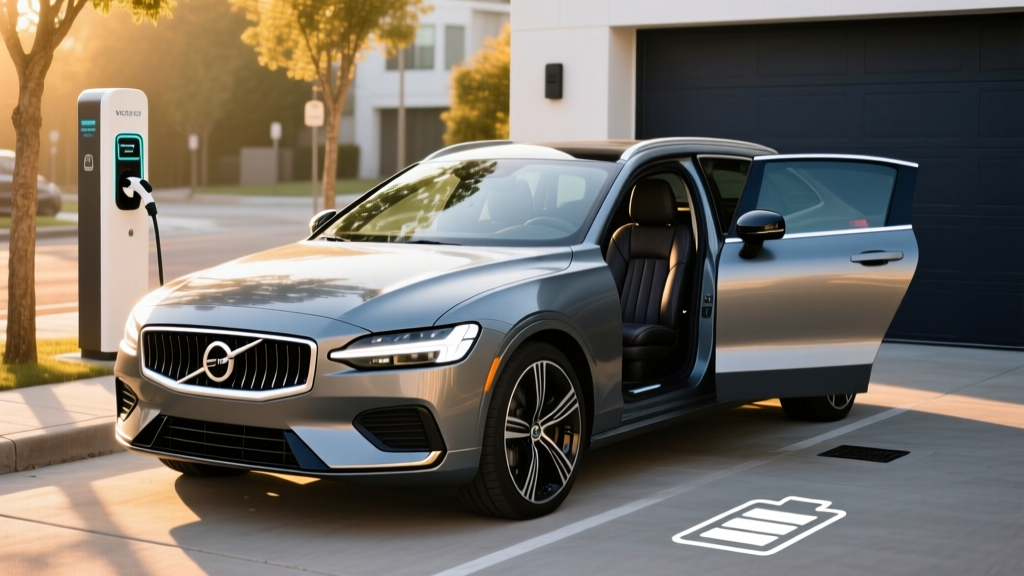
The 2026 Volvo V60 Recharge plug-in hybrid wagon delivers 41 miles of electric-only range and 74 MPGe combined, starting at $50,450 MSRP. It's a compelling choice for drivers who want EV-style daily commuting with gas-engine flexibility for road trips. However, it's a PHEV — not a fully electric BEV — meaning you'll still buy gas for longer drives and must install a Level 2 home charger to maximize its value. If you're seeking a pure battery-electric Volvo wagon, Volvo does not currently sell one in the US for the 2026 model year. The V60 Recharge PHEV is the closest electrified wagon Volvo offers, and it's a strong pick for the right buyer.
What Exactly Is the Volvo Electric Wagon in 2026?
When buyers search for a "Volvo electric wagon," they typically encounter the Volvo V60 Recharge — a plug-in hybrid electric vehicle (PHEV) that pairs a 2.0-liter turbocharged and supercharged four-cylinder engine with an electric motor and an 18.8 kWh (gross) lithium-ion battery pack. This is not a battery-electric vehicle (BEV) like the Tesla Model 3 or Hyundai Ioniq 5. It's a bridge vehicle: you plug it in, drive roughly 41 miles on electricity alone, and then the gas engine takes over seamlessly.
For 2026, Volvo continues the V60 Recharge in the US market with updated standard features and revised pricing. The wagon body style remains a niche but loyal segment, competing against the Audi A4 Allroad (gas-only), the BMW 3 Series Touring (not sold in the US as a PHEV), and crossovers like the Volvo XC60 Recharge.
Volvo has committed to becoming a fully electric brand by 2030, and the EX30, EX90, and upcoming EX60 are part of that transition. But as of the 2026 model year, no pure BEV Volvo wagon exists. If Volvo announces an electric V60 successor, we'll update this guide immediately.
2026 Volvo V60 Recharge: Full Spec Breakdown
| Specification | 2026 Volvo V60 Recharge |
|---|---|
| Powertrain | 2.0L Turbo/Supercharged I-4 + Electric Motor (PHEV) |
| Combined Horsepower | 455 hp |
| Combined Torque | 523 lb-ft |
| Battery Capacity (gross) | 18.8 kWh (NMC chemistry) |
| EPA Electric-Only Range | 41 miles |
| EPA MPGe (combined) | 74 MPGe |
| EPA MPG (gas-only, combined) | 31 MPG |
| 0–60 mph | 4.3 seconds |
| Level 1 Charging (120V) | ~1.4 kW — full charge in ~12 hours |
| Level 2 Charging (240V) | ~3.7 kW — full charge in ~5 hours |
| DC Fast Charging | Not supported |
| Drivetrain | eAWD (electric rear axle) |
| Cargo Volume (behind rear seats) | 23.0 cu ft |
| Cargo Volume (seats folded) | 50.9 cu ft |
| Battery/Powertrain Warranty | 8 years / 100,000 miles (hybrid components) |
| Base MSRP (Core trim) | $50,450 |
| Top Trim MSRP (Ultra) | ~$58,000 |
Real-World Range Expectations
EPA Electric-Only: 41 miles
Real-World Expectation: Expect 35–40 miles in mild weather on mixed driving. Highway-only driving at 70+ mph may drop this to 30–33 miles. In freezing temperatures (below 32°F), expect a 20–30% reduction, yielding roughly 28–33 electric miles.
Gas-Only Range: With a ~15.9-gallon tank and 31 MPG combined, total gas range is approximately 490 miles. Combined electric + gas range exceeds 530 miles.
V60 Recharge vs. Gas Wagon vs. Electric Crossover: The Numbers
Wagon buyers cross-shop everything from gas wagons to electric crossovers. Here's how the V60 Recharge stacks up on the metrics that matter:
| Metric | 2026 Volvo V60 Recharge (PHEV) | Audi A4 Allroad (Gas) | Tesla Model Y LR (BEV) |
|---|---|---|---|
| Starting MSRP | $50,450 | $47,200 | $44,990 |
| EPA Range / MPGe | 41 mi electric / 74 MPGe / 31 MPG gas | 26 MPG combined | 320 mi / 123 MPGe |
| 0–60 mph | 4.3 sec | 5.8 sec | 4.8 sec |
| Cargo (max) | 50.9 cu ft | 53.1 cu ft | 72.1 cu ft |
| Annual Fuel Cost* | ~$650 (if charging daily) | ~$2,100 | ~$600 |
| Federal Tax Credit | Not eligible (§30D EV-only) | Not eligible | Up to $7,500 (eligibility varies) |
| Home Charging Needed? | Yes, to maximize value | No | Yes, strongly recommended |
*Annual fuel cost estimates based on 12,000 miles/year, $3.50/gallon gas, and $0.16/kWh electricity. Source: fueleconomy.gov.
Real Ownership Costs: 5-Year Breakdown
Purchase price is only half the equation. Here's what owning a V60 Recharge actually costs over five years compared to the gas-only Audi A4 Allroad:
| Cost Category | Volvo V60 Recharge (5 yr) | Audi A4 Allroad (5 yr) |
|---|---|---|
| Purchase Price (base) | $50,450 | $47,200 |
| Federal Tax Credit | $0 (PHEV ineligible under §30D) | $0 |
| Fuel/Energy (5 yr, 12k mi/yr) | ~$3,250 | ~$10,500 |
| Maintenance (5 yr) | ~$2,800 | ~$3,600 |
| Insurance (5 yr avg) | ~$11,500 | ~$10,200 |
| Level 2 Charger Install | ~$1,200 (one-time) | $0 |
| Estimated 5-Year Total | ~$69,200 | ~$71,500 |
Key takeaway: The V60 Recharge's higher sticker price is largely offset by dramatically lower fuel costs. If you charge nightly at home and drive under 41 miles daily, your "fuel" cost drops to pennies per mile. However, insurance premiums for electrified Volvos tend to run 10–15% higher than comparable gas models — get quotes before committing.
Home charging installation is a real cost. A Level 2 (240V) charger installation typically runs $800–$2,000 depending on your electrical panel's capacity. If your panel needs an upgrade from 100A to 200A, add $1,500–$3,000. The V60 Recharge's onboard charger maxes at 3.7 kW, so even a basic 16A Level 2 circuit will fully charge it overnight. Consult a licensed electrician for your specific situation.
Federal Tax Credit Reality for the V60 Recharge
Here's a common misconception that trips up buyers: the Volvo V60 Recharge PHEV does not qualify for the §30D federal clean vehicle tax credit. Under current IRS rules, the §30D credit of up to $7,500 is reserved for battery electric vehicles (BEVs) and fuel cell vehicles — not plug-in hybrids. The IRS §30D guidelines are explicit on this.
§30D Federal Tax Credit Checklist (2026)
- ✅ Vehicle must be a BEV or fuel cell vehicle (PHEVs excluded)
- ✅ MSRP cap: $55,000 for sedans/wagons; $80,000 for SUVs/trucks/vans
- ✅ Buyer income cap: $150K single / $300K joint / $225K head of household
- ✅ Battery critical minerals and component sourcing requirements
- ✅ Point-of-sale transfer available at participating dealers
- ❌ V60 Recharge PHEV does not qualify
However, some state and utility incentives still apply to PHEVs. Check your state's clean vehicle rebate program and your local utility — many offer $500–$1,500 rebates for PHEV purchases or Level 2 charger installations. These vary by jurisdiction, so verify with official state and utility sources.
Common Misconceptions About the Volvo Electric Wagon
| Myth | Fact |
|---|---|
| "The V60 Recharge is a fully electric car." | It's a PHEV — it has a gas engine and requires gasoline for longer trips. Electric-only range is 41 miles. |
| "I don't need to charge it at home." | You can skip charging, but then you're just driving a heavy 31-MPG gas wagon. The economic and environmental value comes from daily plugging in. |
| "PHEVs qualify for the $7,500 federal tax credit." | Under current §30D rules, only BEVs and fuel cell vehicles qualify. PHEVs were eligible under the pre-2023 credit structure but no longer. |
| "The battery will need expensive replacement soon." | Volvo covers hybrid components for 8 years/100,000 miles. PHEV batteries experience less stress than BEV packs due to smaller capacity and shallower cycling. Real-world data shows most PHEV batteries outlast their warranty period. |
| "I can DC fast charge it on road trips." | The V60 Recharge has no DC fast charging capability. Level 2 at 3.7 kW is the maximum charge rate. Plan accordingly on trips. |
Who Should Buy the Volvo V60 Recharge — And Who Shouldn't
Decision Framework: Is the V60 Recharge Right for You?
Choose the V60 Recharge if:
- Your daily commute is under 40 miles round-trip and you can charge at home nightly
- You want a wagon body style (low roofline, car-like handling) rather than a crossover SUV
- You take 2–4 long road trips per year and don't want to plan around DC fast-charging stops
- You value Scandinavian interior design, standard Pilot Assist (Level 2 ADAS), and Google built-in infotainment
- You live in a cold climate where BEV range loss is a genuine concern — the gas engine eliminates that worry on long winter drives
Look elsewhere if:
- You want zero gas station visits — consider the Tesla Model Y, Hyundai Ioniq 5, or wait for a BEV Volvo wagon
- You don't have access to home or workplace charging — without plugging in, you're wasting the PHEV's value proposition
- You need maximum cargo space — the Model Y offers 72 cu ft vs. the V60's 50.9 cu ft
- Federal tax credit eligibility is a dealbreaker — the V60 Recharge doesn't qualify under §30D
- You want DC fast charging for frequent road trips — the V60 Recharge lacks this capability entirely
What First-Time PHEV Buyers Must Know
If the V60 Recharge is your first electrified vehicle, here are the ownership realities no brochure will tell you:
1. The charge curve and daily routine. The V60 Recharge's 18.8 kWh battery charges at a maximum of 3.7 kW on Level 2. That's slow by BEV standards but perfectly adequate for overnight charging — you'll wake up to a full battery every morning. On a standard 120V outlet (Level 1), a full charge takes roughly 12 hours, which still works if you plug in when you get home.
2. The "charge-sustaining" mode reality. Once the battery depletes its 41 electric miles, the V60 Recharge operates as a conventional hybrid, achieving about 31 MPG combined. That's respectable but not class-leading — a Toyota Prius Prime delivers 44 miles electric and 48 MPG in gas mode. You're paying for the Volvo's performance, design, and wagon form factor, not maximum efficiency.
3. Winter changes everything. In sub-freezing temperatures, expect 20–30% less electric range (roughly 28–33 miles). The V60 Recharge uses engine heat to warm the cabin in cold weather, which can actually help preserve electric range by not drawing from the battery for heating — a PHEV advantage over BEVs in extreme cold.
4. Regenerative braking is mild. Unlike many BEVs with aggressive one-pedal driving modes, the V60 Recharge's regen is relatively subtle. You'll still use the brake pedal regularly. This is intentional — it mimics the feel of a conventional gas car, which eases the transition for first-time electrified vehicle owners.
5. Maintenance shifts, not disappears. You'll still need oil changes (less frequently, since the engine runs less), brake fluid checks, and tire rotations. But brake pad life extends significantly thanks to regenerative braking, and you'll visit gas stations far less often.
Charging Setup: What You Actually Need at Home
| Charging Level | Power | Miles Added per Hour | Full Charge Time | Equipment Needed |
|---|---|---|---|---|
| Level 1 (120V) | ~1.4 kW | ~5–7 mi/hr | ~12 hours | Standard outlet (included cord) |
| Level 2 (240V, 16A) | ~3.7 kW | ~14–18 mi/hr | ~5 hours | Level 2 EVSE + 240V circuit |
| DC Fast Charge | N/A | N/A | N/A | Not supported on V60 Recharge |
Because the V60 Recharge's onboard charger is limited to 3.7 kW, there's no benefit to installing a high-amperage (48A or 80A) Level 2 charger specifically for this vehicle. A basic 16A or 24A Level 2 unit — typically $300–$600 for the hardware — will deliver its maximum charge rate. Popular options include the ChargePoint Home Flex and the Emporia Vue, both of which offer smart scheduling and energy monitoring.
Installation costs vary widely. A straightforward install on an existing 240V circuit near your parking spot might cost $400–$800 in labor. Running a new 240V circuit from your panel typically costs $800–$2,000. If your home's electrical panel is maxed out or needs upgrading from 100A to 200A service, budget $1,500–$3,000 additional. Always hire a licensed electrician and pull required permits.
Frequently Asked Questions
Does Volvo make a fully electric wagon in 2026?
No. As of the 2026 model year, Volvo does not sell a battery-electric wagon in the United States. The V60 Recharge is a plug-in hybrid (PHEV) with 41 miles of electric-only range and a gas engine for extended driving. Volvo's electric lineup includes the EX30 (compact crossover), EX40 (compact SUV), and EX90 (three-row SUV). If a BEV wagon is essential to you, the closest alternatives are the Tesla Model Y or the Porsche Taycan Cross Turismo.
How much does it cost to charge the V60 Recharge at home?
The V60 Recharge's usable battery capacity is approximately 14.9 kWh (the gross 18.8 kWh includes a buffer to protect battery longevity). At the US average electricity rate of $0.16/kWh, a full charge costs roughly $2.38. That's about $0.06 per electric mile — compared to roughly $0.14 per mile for a 26-MPG gas car at $3.50/gallon. Over a year of daily 35-mile electric commutes, you'd spend about $300 on electricity vs. roughly $900 on gasoline.
Is the V60 Recharge eligible for any tax credits?
The V60 Recharge does not qualify for the federal §30D clean vehicle credit, which is limited to BEVs and fuel cell vehicles under current IRS rules. However, you may qualify for state-level PHEV rebates, utility charger installation incentives, or HOV lane access depending on your state. Check your state's energy office and local utility for current programs. Consult a tax professional for personalized guidance.
How long will the V60 Recharge battery last?
Volvo warranties the hybrid battery and powertrain components for 8 years or 100,000 miles, covering capacity loss below a defined threshold. PHEV batteries generally experience less degradation than BEV batteries because they cycle through a smaller portion of their total capacity and benefit from active thermal management. Industry data from similar Volvo PHEVs (XC60, XC90 Recharge) shows most batteries retain 85–90% capacity after 100,000 miles. Out-of-warranty replacement, if needed, typically costs $6,000–$10,000 including labor.
Can I tow with the V60 Recharge?
The 2026 V60 Recharge has a maximum towing capacity of 2,000 pounds when properly equipped. That's sufficient for a small utility trailer or a pair of dirt bikes but not for larger boat or camper trailers. Towing will significantly reduce electric-only range and overall fuel economy.
How does the V60 Recharge handle in snow and ice?
The eAWD system, which uses the electric motor to power the rear axle, provides confident all-weather traction. Combined with Volvo's standard winter driving mode and the wagon's relatively low center of gravity, the V60 Recharge performs well in snow. The PHEV system also means you won't face cold-weather range anxiety on long winter road trips — the gas engine eliminates that concern entirely.
Sources: fueleconomy.gov (EPA range and efficiency data), IRS §30D Clean Vehicle Credits, Volvo Cars of North America official specifications. All pricing and specifications reflect 2026 model year data available at time of publication and are subject to change. Verify tax credit eligibility with a qualified tax professional.