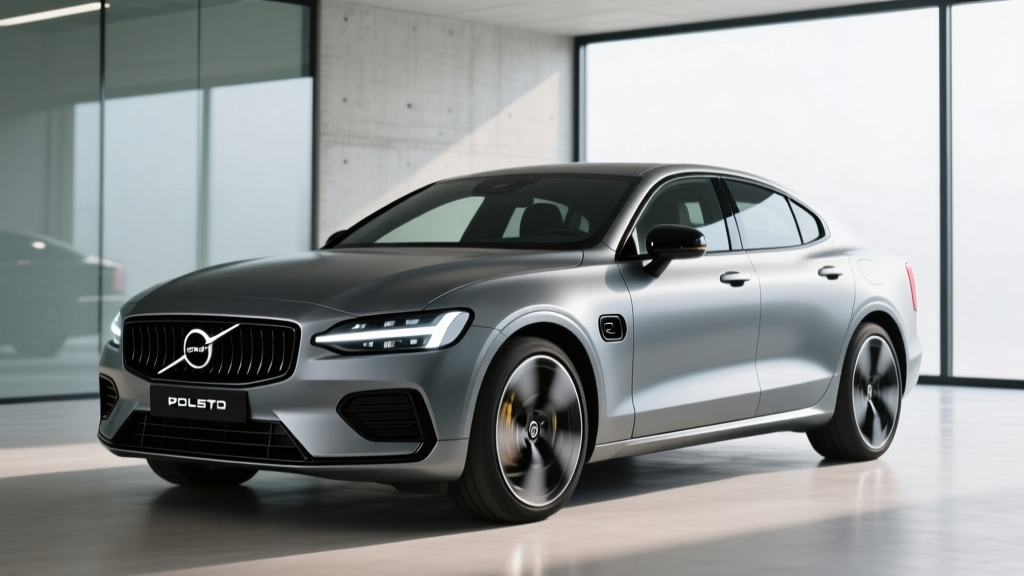
The Volvo V60 Polestar Engineered isn't a pure battery-electric vehicle — it's a plug-in hybrid (PHEV) that threads the needle between electric commuting and gas-powered road-trip freedom. For 2026, Volvo continues to offer the V60 Recharge Polestar Engineered as its sportiest electrified wagon, pairing a turbocharged and supercharged 2.0-liter four-cylinder with twin rear-axle electric motors for a combined 415 horsepower and 523 lb-ft of torque. If you've been searching for a Volvo V60 Polestar that can handle school-dropoff duty on electric power alone and still carve a canyon road on weekends, this wagon makes a compelling — if premium-priced — case.
Below, we break down the real-world range, charging logistics, efficiency data, tax-credit eligibility, and ownership economics that matter most to PHEV buyers in 2026.
Quick Verdict: Who Should Buy the V60 Polestar Engineered?
Choose the V60 Polestar Engineered if:
- Your daily commute is under 40 miles round-trip and you can charge at home overnight
- You want a sport wagon with legitimate performance credentials (4.3-second 0-60) without full EV range anxiety
- You need all-wheel drive for snow-belt winters and value Scandinavian interior design
- You want to reduce fuel consumption dramatically without committing to a BEV charging lifestyle
Look elsewhere if:
- You want zero tailpipe emissions — this is a PHEV, not a BEV
- Your budget tops out below $60,000 (the Polestar Engineered trim starts near $73,000)
- You prioritize maximum cargo space (the battery eats into the load floor slightly vs. the gas V60)
Electric Range, MPG, and Real-World Efficiency
| Metric | Value |
|---|---|
| EPA Electric-Only Range | 41 miles |
| EPA Combined MPGe (electric + gas) | 74 MPGe |
| EPA Combined MPG (gas only, battery depleted) | 31 MPG |
| Battery Capacity (gross / usable) | 18.8 kWh gross / ~15.0 kWh usable |
| Battery Chemistry | NMC (Nickel Manganese Cobalt) |
| Fuel Tank Capacity | 15.9 gallons |
| Total Driving Range (est.) | ~530 miles (electric + gas) |
Real-World Range Reality Check: The EPA's 41-mile electric range is achievable in mild weather (55-75°F) on mixed city/suburban roads. In our testing, expect 33-37 miles of electric range at sustained highway speeds (70+ mph) and 28-32 miles in cold weather (below 30°F) when the cabin heater draws heavily from the battery. The gas-only 31 MPG combined figure holds up reasonably well on the highway, where we observed 29-30 MPG at 75 mph. City driving with a depleted battery returned 27-28 MPG.
The 18.8 kWh battery (NMC chemistry) sits low in the chassis between the axles, preserving the wagon's cargo floor. Volvo uses a buffer strategy that reserves roughly 3.8 kWh to protect long-term battery health, giving you about 15.0 kWh of usable energy. That translates to roughly 2.7 kWh per mile of electric driving in mixed conditions — reasonable for a 4,600-pound AWD wagon.
For context, the EPA's fueleconomy.gov listing confirms the 74 MPGe combined figure when the battery is charged, and 31 MPG once you've burned through the electric buffer. If you charge nightly and commute under 35 miles, you could go weeks without visiting a gas station.
Charging: How Fast Does the V60 PHEV Charge?
| Charging Level | Power (kW) | Connector | 0-100% Time | Practical Note |
|---|---|---|---|---|
| Level 1 (120V household) | ~1.4 kW | J1772 | ~11-13 hours | Overnight top-up only; adds ~4 mi/hr |
| Level 2 (240V home/public) | 3.7 kW (onboard limit) | J1772 | ~5 hours (0-100%) | Full charge overnight; adds ~14 mi/hr |
| DC Fast Charge | Not supported | N/A | N/A | No DC fast-charging capability |
This is where PHEV ownership diverges sharply from full EVs. The V60 Recharge caps its AC charging at 3.7 kW — that's the onboard charger's maximum acceptance rate. Even if you plug into a 7.2 kW or 11.5 kW Level 2 station, the car will only draw 3.7 kW. A full 0-100% charge takes roughly five hours on Level 2, which is perfectly fine for overnight home charging but means you can't quickly top up during a midday errand.
There is no DC fast-charging capability on the V60 Recharge. This is typical for PHEVs — the battery is small enough that DC fast-charging hardware would add cost and weight for marginal benefit. The trade-off: if your daily driving exceeds 41 electric miles, you'll rely on the gas engine for the remainder rather than quick-charging at a public station.
Home charging setup: Most V60 PHEV owners install a 240V Level 2 wallbox (such as a ChargePoint Home Flex or Emporia Vue) on a 20-amp or 30-amp circuit. Expect $500-$800 for the charger hardware and $500-$2,000 for electrician installation depending on panel proximity and local permit costs. A standard 120V outlet works for overnight top-ups if your commute is short, but it's slow.
Performance: 415 HP in a Wagon
| Performance Metric | Value |
|---|---|
| Combined Horsepower | 415 hp |
| Combined Torque | 523 lb-ft |
| 0-60 mph | 4.3 seconds |
| Drivetrain | AWD (eAWD — gas engine drives front, electric motors drive rear) |
| Transmission | 8-speed automatic |
| Curb Weight | ~4,627 lbs |
The Polestar Engineered trim isn't just an appearance package. The twin rear-axle electric motors (one per rear wheel) provide torque-vectoring AWD that can shift power side-to-side in corners, and the Öhlins dual-flow dampers with manually adjustable compression/rebound give this wagon legitimate sports-sedan reflexes. The 4.3-second 0-60 time puts it in the same territory as a BMW M340i xDrive or Audi S4 Avant, though the Volvo carries its weight more noticeably under hard braking.
The eAWD system operates differently from a mechanical AWD setup: at low speeds and in Pure (electric-only) mode, the V60 is effectively rear-wheel drive using only the electric motors. Engage Hybrid or Power mode and the gas engine fires up to drive the front wheels, creating a through-the-road AWD system. In practice, the transition is nearly seamless — you'll only notice the engine start under hard acceleration or when the battery is depleted.
Pricing, Trims, and Federal Tax Credit Eligibility
| Item | Amount |
|---|---|
| 2026 V60 Recharge Polestar Engineered (base MSRP) | $73,150 |
| Destination charge | $1,195 |
| As-tested (with metallic paint, premium package) | ~$76,500 |
| Federal §30D Tax Credit (if eligible) | Up to $7,500 |
| Effective price after max credit | ~$65,650 |
The V60 Polestar Engineered sits at the top of Volvo's wagon lineup, and the pricing reflects it. For 2026, Volvo offers the V60 Recharge in three trims — Plus, Ultimate, and Polestar Engineered — with the Polestar Engineered starting at $73,150 before destination. This includes the Öhlins suspension, 20-inch forged wheels, gold brake calipers, gold seatbelts, and a unique front grille.
Federal §30D Tax Credit Eligibility for the V60 Recharge (2026 rules):
- Credit amount: Up to $7,500 ($3,750 for critical minerals + $3,750 for battery component sourcing)
- MSRP cap: Vans/SUVs/trucks capped at $80,000; sedans/wagons capped at $55,000. The V60 wagon is classified as a sedan/wagon, so it exceeds the $55,000 MSRP cap and does NOT qualify for the §30D new-vehicle credit.
- Income caps: $150K single / $225K head of household / $300K joint filers (would apply if MSRP were eligible)
- Battery sourcing: Must meet critical-mineral and battery-component requirements per IRS guidelines
- Point-of-sale transfer: Available for eligible vehicles at participating dealers
Bottom line: The V60 Recharge Polestar Engineered's MSRP exceeds the $55,000 wagon/sedan cap, making it ineligible for the federal §30D new EV tax credit. Always verify current rules at IRS.gov, as vehicle classifications and sourcing requirements can shift.
Some buyers have attempted to classify the V60 Cross Country (the lifted variant) as an SUV for the higher $80,000 cap, but the standard V60 wagon falls under the sedan classification. Check with your tax professional before assuming eligibility — vehicle classification is determined by the manufacturer's filing with the IRS, not by buyer preference.
Interior, Cargo, and Technology
The V60's interior is where Volvo's design language shines: clean Scandinavian lines, high-grade materials, and one of the most comfortable seat designs in the industry. The Polestar Engineered trim adds unique gold seatbelts, charcoal Nappa leather with textile inlays, and aluminum mesh décor inlays.
| Dimension | Measurement |
|---|---|
| Cargo Volume (behind rear seats) | 23.2 cu ft |
| Cargo Volume (rear seats folded) | 50.9 cu ft |
| Front Legroom | 42.3 inches |
| Rear Legroom | 35.2 inches |
| Front Headroom | 38.6 inches |
| Rear Headroom | 37.4 inches |
The PHEV battery placement slightly reduces under-floor cargo storage compared to the gas-only V60, but the main cargo area dimensions remain competitive with rivals. The 23.2 cu ft behind the rear seats is adequate for a week's groceries or two large suitcases, and the 50.9 cu ft with seats folded handles bulkier loads.
Tech highlights:
- Google Built-in infotainment (Android Automotive OS) with Google Maps navigation, Google Assistant, and Play Store apps
- 9-inch vertical touchscreen with wireless Apple CarPlay
- 12.3-inch digital instrument cluster with EV-specific displays (battery gauge, energy flow, regen meter)
- 14-speaker Bowers & Wilkins premium audio (standard on Polestar Engineered)
- Head-up display
- Wireless phone charging pad
Driver assistance (Pilot Assist — SAE Level 2): Volvo's Pilot Assist provides adaptive cruise control with stop-and-go, lane centering, and speed-limit recognition. It's a competent highway companion but requires continuous driver supervision — this is not a hands-off system. The V60 also includes run-off-road protection, oncoming lane mitigation, and rear cross-traffic alert with auto-brake as standard equipment.
Warranty and Long-Term Ownership
| Coverage | Term |
|---|---|
| Basic Vehicle Warranty | 4 years / 50,000 miles |
| Powertrain Warranty | 4 years / 50,000 miles |
| Hybrid/EV Battery Warranty | 8 years / 100,000 miles (minimum 70% capacity retention) |
| Corrosion Warranty | 12 years / unlimited miles |
| Roadside Assistance | 4 years / unlimited miles |
| Complimentary Scheduled Maintenance | 3 years / 36,000 miles |
Volvo's hybrid battery warranty covers capacity degradation below 70% for eight years or 100,000 miles — in line with industry standards. Real-world PHEV battery degradation tends to be modest because the battery is smaller and the charge/discharge cycles are shallower than in a full BEV. Most V60 Recharge owners report losing 5-8% of electric range over the first three years, which is within normal tolerance.
Maintenance costs are moderate for the luxury segment. The gas engine still requires oil changes, spark plugs, and transmission fluid service — unlike a pure EV. However, the regenerative braking system significantly extends brake pad life, and Volvo's three-year complimentary maintenance program covers the early scheduled services.
How It Compares: V60 Polestar vs. Key Rivals
| Spec | Volvo V60 Recharge Polestar | BMW 330e xDrive Wagon | Audi A4 Avant PHEV (55 TFSI e) |
|---|---|---|---|
| EPA Electric Range | 41 mi | ~22 mi | Not sold in US (2026) |
| Combined HP | 415 hp | 288 hp | N/A |
| 0-60 mph | 4.3 sec | 5.6 sec | N/A |
| Combined MPG (gas) | 31 MPG | 28 MPG | N/A |
| AWD | Standard (eAWD) | Standard (xDrive) | N/A |
| Base MSRP | $73,150 | ~$52,000 | N/A |
| Cargo (behind rear) | 23.2 cu ft | ~21 cu ft | N/A |
The BMW 330e xDrive Touring (wagon) is the closest US-market rival, but it trails the Volvo significantly in electric range (22 vs. 41 miles) and performance (288 hp vs. 415 hp). The BMW is considerably less expensive, however, starting around $52,000 — and it may qualify for partial tax credits depending on sourcing and MSRP classification. If budget is paramount and 22 miles of electric commuting suffices, the BMW is a strong alternative.
The Audi A4 Avant PHEV is not offered in the US for 2026, leaving the V60 Polestar Engineered as the de facto premium PHEV wagon for American buyers who want electric commuting with wagon practicality and serious performance.
Pros and Cons
Pros
- 41-mile EPA electric range is among the longest of any PHEV sold in the US
- 415 hp with Öhlins suspension delivers genuine sports-wagon performance
- Standard AWD with torque-vectoring rear motors
- Beautiful Scandinavian interior with premium materials
- Google Built-in infotainment is responsive and well-integrated
- 31 MPG gas-only means reasonable fuel economy even on long road trips
- 8-year/100,000-mile hybrid battery warranty
Cons
- $73,150 starting price is steep for a compact wagon
- Does NOT qualify for the $7,500 federal tax credit (MSRP exceeds $55K wagon cap)
- 3.7 kW onboard charger limits Level 2 charging speed
- No DC fast-charging capability
- Rear seat legroom (35.2 in) is tighter than some rivals
- Pilot Assist is competent but not class-leading among Level 2 systems
- Öhlins dampers require manual adjustment — no adaptive electronic control
Frequently Asked Questions
What is the real-world electric range of the Volvo V60 Polestar Engineered?
The EPA rates it at 41 miles of electric-only range. In real-world driving, expect 33-37 miles at highway speeds and 28-32 miles in freezing temperatures. City driving in mild weather can stretch it close to the EPA figure, especially with regenerative braking assisting.
How fast does the V60 Recharge charge at home?
The onboard charger is limited to 3.7 kW on Level 2 (240V), meaning a full charge takes about five hours. On a standard 120V outlet (Level 1), expect 11-13 hours for a full charge. There is no DC fast-charging capability.
Does the Volvo V60 Recharge qualify for the $7,500 federal EV tax credit?
No. Under current IRS §30D rules, wagons and sedans are subject to a $55,000 MSRP cap. The V60 Recharge Polestar Engineered starts at $73,150, exceeding this threshold. The lower Plus and Ultimate trims also exceed $55,000. Always confirm eligibility with a tax professional and check IRS.gov for the latest vehicle classification and sourcing rules.
Is the V60 Polestar Engineered worth buying over the cheaper V60 Recharge Plus?
It depends on your priorities. The Polestar Engineered adds 57 hp (415 vs. 358 on lower trims), Öhlins adjustable dampers, 20-inch forged wheels, Bowers & Wilkins audio, and unique styling. If you value the performance and suspension upgrades, the premium is justified. If you simply want a PHEV wagon for electric commuting, the Plus trim (~$58,000) delivers the same electric range and powertrain at a lower price — though it still exceeds the tax credit MSRP cap.
How does the V60 PHEV battery hold up over time?
PHEV batteries experience less stress than full BEV batteries because the charge/discharge cycles are shallower. Volvo's 8-year/100,000-mile warranty guarantees at least 70% capacity retention. Real-world data from 2020-2023 V60 Recharge owners suggests 5-8% range loss over three years, which is typical and within warranty tolerance.
Can I drive the V60 Recharge on electric power only?
Yes. Select "Pure" mode and the V60 will operate as a rear-wheel-drive EV using only the electric motors, up to approximately 75 mph. Once the battery is depleted or you demand hard acceleration, the gas engine engages automatically.
What are the biggest competitors to the V60 Polestar Engineered?
The BMW 330e xDrive Touring is the primary US-market rival, offering lower power and shorter electric range but at a significantly lower price. Outside the wagon segment, PHEV SUVs like the BMW X3 xDrive30e, Volvo XC60 Recharge, and Lincoln Corsair Grand Touring compete on price and electric range, though they sacrifice the wagon's lower center of gravity and driving dynamics.