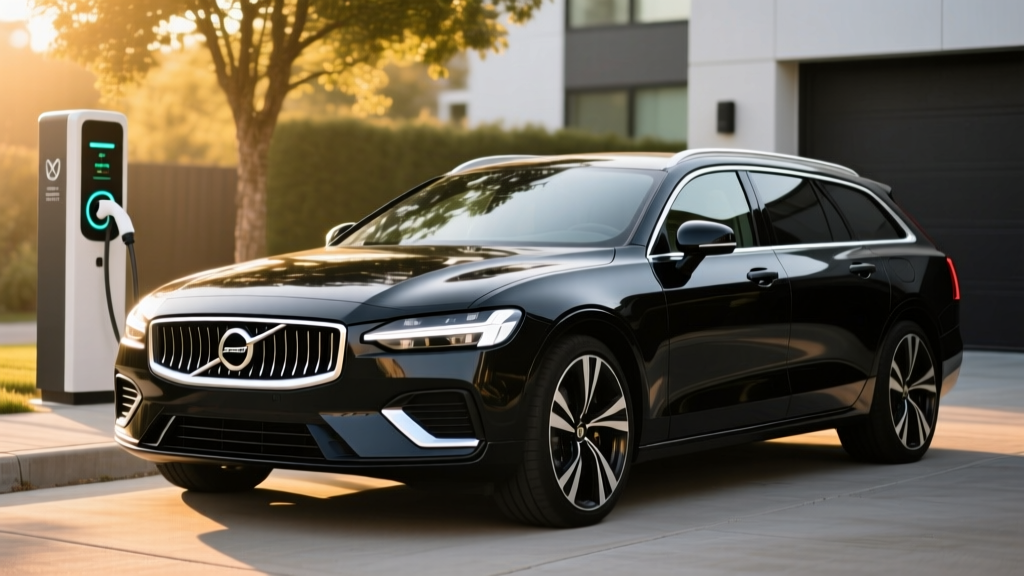
The estate car has always been Volvo's signature silhouette, and the electric era is no exception. The Polestar 4 Long Range, positioned as the brand's performance-oriented shooting-brake wagon, arrives for the 2026 model year with a compelling mix of Scandinavian design, serious straight-line speed, and a battery pack sized for genuine road trips. But does the Volvo Polestar wagon deliver where it counts for daily EV ownership — range predictability, charging speed, and total cost? We've analyzed the specs, cross-referenced EPA data, and mapped out the real-world ownership picture so you can decide.
Quick Verdict: Who Is the Polestar 4 Wagon For?
The Polestar 4 Long Range Dual Motor targets buyers who want a sporty, design-forward electric wagon with legitimate 300-plus-mile range and sub-4-second acceleration — without stepping up to a full-size luxury SUV. It competes directly with the Audi A6 e-tron Avant (where available), the BMW i5 Touring, and the Tesla Model Y Performance, but carves its own niche with a more distinctive fastback-wagon profile and a Google-based infotainment stack. If you prioritize cargo versatility and all-weather confidence over outright track performance, this is the trim to spec.
Range, Battery & Real-World Efficiency
The 2026 Polestar 4 Long Range Dual Motor packs a 100 kWh (usable) lithium-ion battery using NMC (nickel manganese cobalt) chemistry — chosen for its higher energy density compared to LFP, which matters in a sleek wagon form factor where packaging space is at a premium.
Real-World Expectation: Plan for approximately 265–285 miles on sustained highway driving at 70+ mph. In cold weather (below 32°F), expect a 15–25% reduction, bringing effective range to roughly 235–265 miles. City driving with regenerative braking can push results closer to or slightly above the EPA sticker.
The EPA rates the Polestar 4 Long Range Dual Motor at approximately 98 MPGe combined, translating to roughly 34 kWh per 100 miles. That's competitive with the BMW i5 xDrive40 Touring but trails the more aerodynamically optimized Tesla Model Y Long Range, which achieves around 119 MPGe. The wagon's blunt rear end and wider tires extract an efficiency penalty compared to sleeker sedans, but the 100 kWh pack compensates with sheer capacity.
| Spec | Value |
|---|---|
| EPA Range | 315 miles |
| Battery (usable) | 100 kWh, NMC chemistry |
| Efficiency | 98 MPGe / ~34 kWh/100 mi |
| Max DC Fast Charge | 205 kW (peak) |
| 10–80% DC Charge Time | ~27 minutes |
| Level 2 Home Charge Rate | 11 kW (AC) |
| Drivetrain | Dual-motor AWD |
| Horsepower | 544 hp |
| 0–60 mph | 3.8 seconds |
| Cargo Volume (rear seats up) | 18.6 cu ft |
| Cargo Volume (rear seats folded) | 52.4 cu ft |
| Rear Legroom | 37.8 inches |
| Battery Warranty | 8 years / 100,000 miles |
| Base MSRP | $62,900 |
Charging Speed: DC Fast, Level 2 & Home Setup
Charging capability is where the Polestar 4 wagon holds its own against German rivals. The 205 kW peak DC fast-charge rate means you'll add roughly 150–170 miles of range in a 15-minute stop at a compatible 350 kW station — provided you arrive at a low state of charge and the battery is preconditioned.
| Charging Level | Power / Rate | Speed (approx.) |
|---|---|---|
| Level 1 (120V household) | ~1.4 kW | ~4 miles per hour |
| Level 2 (240V home/public) | 11 kW | ~32 miles per hour |
| DC Fast Charge (peak) | 205 kW | 10–80% in ~27 min |
Charging curve reality check: Like most NMC packs, the Polestar 4 sustains its peak 205 kW rate only between roughly 10–35% state of charge. From 35–60%, expect approximately 150 kW; above 80%, the rate tapers sharply to protect battery longevity, dropping below 50 kW. If you're road-tripping, plan your stops to charge from 10–80% rather than topping off to 100%, which adds disproportionately long wait times.
For home Level 2 charging, the 11 kW onboard charger means a full 0–100% recharge takes about 10 hours on a 48-amp hardwired station. Most owners will plug in overnight and wake up fully charged. If your home has a 200-amp electrical panel with spare capacity, installation of a quality Level 2 station (such as a ChargePoint Home Flex or Emporia Vue) typically runs $800–$2,000 including electrician labor and permitting. Homes needing a panel upgrade to 200A should budget an additional $1,500–$3,500.
Performance & Driving Dynamics
With 544 horsepower and dual-motor all-wheel drive, the Polestar 4 Long Range Dual Motor dispatches 0–60 mph in 3.8 seconds — firmly in sports-sedan territory, not typical wagon behavior. The AWD system is rear-biased under normal conditions, lending a more engaging character than the front-heavy feel of some competitors. Torque vectoring on the rear axle sharpens cornering, and the low center of gravity from the floor-mounted battery keeps body roll well-controlled for a vehicle of this mass (roughly 5,100 lbs curb weight).
The steering is precise if slightly numb on center — a common trait in electric Volvos and Polestars — and the regenerative braking offers selectable levels including a one-pedal driving mode. A heat pump comes standard, which is critical for preserving range in cold climates; it reduces the energy penalty of cabin heating by roughly 30–40% compared to resistive heating.
Interior, Tech & Cargo Practicality
Inside, the Polestar 4 uses a portrait-oriented 15.4-inch touchscreen running Google built-in (Google Maps navigation, Google Assistant, and access to the Play Store for streaming apps). A 10.2-inch digital driver display handles speed and range information. Wireless Apple CarPlay is supported; Android Auto is redundant given the native Google integration. A 14-speaker Harman Kardon audio system is standard on the Long Range Dual Motor.
Driver-assistance technology includes Polestar's Pilot Pack with adaptive cruise control, lane-centering assist, blind-spot monitoring, and a 360-degree camera system. This is an SAE Level 2 driver-assist system — you must keep your hands on the wheel and eyes on the road at all times. It is not autonomous driving.
Cargo space is the wagon's raison d'être. With rear seats upright, you get 18.6 cubic feet — adequate for a week's groceries or two large suitcases. Fold the 60/40 split rear bench and capacity expands to 52.4 cubic feet, enough for furniture-store runs or full camping gear. The sloping roofline does cut into vertical space for tall items compared to a boxier SUV, so measure before buying if you regularly haul dog crates or tall boxes. Rear legroom at 37.8 inches is generous for two adults, though a middle passenger will find the floor tunnel hump intrusive.
Pricing, Trims & Federal Tax Credit Eligibility
The 2026 Polestar 4 lineup is structured around two powertrain configurations:
| Trim | MSRP | Est. After §30D Credit* |
|---|---|---|
| Long Range Single Motor | $56,900 | $49,400 |
| Long Range Dual Motor | $62,900 | $55,400 |
| Long Range Dual Motor w/ Plus & Pilot Packs | $69,500 | $62,000 |
*Federal tax credit estimates assume buyer eligibility. Actual credit depends on IRS §30D requirements.
The Polestar 4 qualifies for the IRS §30D federal clean vehicle credit of up to $7,500, provided you meet all current requirements. The credit can now be transferred to the dealer at the point of sale, effectively reducing your purchase price upfront rather than waiting for a tax refund. However, eligibility is not automatic — you must satisfy the following:
- Income caps: Modified adjusted gross income (MAGI) must not exceed $150,000 (single), $225,000 (head of household), or $300,000 (joint filers).
- MSRP cap: The vehicle's MSRP must not exceed $55,000 for sedans/wagons. Note: Polestar classifies the 4 as an SUV for tax purposes, which carries an $80,000 MSRP cap — all trims qualify.
- Battery sourcing: A percentage of critical minerals and battery components must be sourced from the U.S. or free-trade-agreement countries. These thresholds increase annually. Verify current-year compliance on fueleconomy.gov before purchasing.
- Assembly: Final assembly must occur in North America. The Polestar 4 for the U.S. market is assembled in China, which may disqualify certain trims from the full credit — confirm VIN eligibility at the IRS's official tool before signing.
Important: Tax credit rules are subject to legislative change. Always confirm your specific eligibility with a tax professional and verify the vehicle's VIN on the IRS portal before relying on the credit in your purchase decision.
Ownership Costs & Warranty
Polestar covers the 4's battery and drive unit with an 8-year / 100,000-mile warranty, guaranteeing a minimum of 70% battery capacity retention over that period. The broader vehicle warranty is 4 years / 50,000 miles, with 4 years of included scheduled maintenance and roadside assistance.
Electricity costs to charge a 100 kWh battery from empty to full average roughly $13–$16 on residential rates (national average ~$0.14/kWh), translating to about $0.04–$0.05 per mile. Compare that to a gasoline wagon averaging 28 MPG at $3.50/gallon ($0.125/mile), and the per-mile fuel savings are substantial — roughly $1,200–$1,500 per year for a 15,000-mile driver. Insurance premiums for the Polestar 4 run higher than average for the segment (expect $2,200–$2,800 annually depending on your profile), so factor that into your total cost calculation.
Pros, Cons & Competition
Pros
- 315-mile EPA range with a usable 100 kWh pack provides genuine road-trip capability
- 205 kW DC fast charging keeps stops under 30 minutes on major corridors
- 544 hp dual-motor AWD delivers sports-car acceleration in a practical wagon
- Distinctive shooting-brake design stands out in a sea of crossover SUVs
- Google built-in infotainment is responsive and well-integrated
- Heat pump standard — critical for cold-climate range preservation
Cons
- China assembly may complicate federal tax credit eligibility — verify by VIN
- Cargo height limited by sloping roofline vs. boxier SUV rivals
- Efficiency (98 MPGe) trails Tesla Model Y and Hyundai Ioniq 5
- Steering lacks feedback for a performance-oriented wagon
- Dealer and service network still expanding in rural areas
- Base price above $62K pushes it into premium territory
Compared to the Tesla Model Y Performance ($52,490, 303 mi EPA, 117 MPGe), the Polestar 4 offers more distinctive styling and a more premium interior but sacrifices some efficiency and access to the Supercharger network (though NACS adapter compatibility is included for 2026). Versus the BMW i5 Touring (where available in the U.S., ~$72,000 estimated), the Polestar undercuts on price while matching cargo versatility. The Audi A6 e-tron Avant remains limited in U.S. availability, giving the Polestar 4 a practical monopoly on the electric luxury wagon segment for now.
Frequently Asked Questions
What is the real-world range of the Volvo Polestar wagon?
The EPA rates the 2026 Polestar 4 Long Range Dual Motor at 315 miles. In real-world highway driving at 70+ mph, expect 265–285 miles. Cold weather (below freezing) can reduce that to 235–265 miles. City driving with regenerative braking often matches or slightly exceeds the EPA figure.
How fast does the Polestar 4 wagon charge?
On a DC fast charger, the Polestar 4 peaks at 205 kW and charges from 10–80% in approximately 27 minutes. At home on a Level 2 (240V) station, the 11 kW onboard charger adds roughly 32 miles per hour, fully recharging overnight in about 10 hours.
Does the Polestar 4 qualify for the $7,500 federal EV tax credit?
It can, but eligibility depends on IRS §30D rules including buyer income caps, battery critical-mineral sourcing thresholds, and North American final assembly requirements. Because the Polestar 4 is assembled in China, some buyers may not qualify for the full credit. Always verify your specific VIN on the IRS portal and consult a tax professional before purchase.
Is the Polestar 4 wagon worth buying over the Tesla Model Y?
If you value distinctive Scandinavian design, a more premium interior, and wagon driving dynamics over maximum efficiency and Supercharger convenience, the Polestar 4 is a strong choice. The Model Y wins on efficiency (117 vs 98 MPGe), price, and charging infrastructure access, but the Polestar offers a more unique ownership experience.
How much cargo space does the Polestar 4 wagon have?
With rear seats up, the Polestar 4 offers 18.6 cubic feet of cargo space. With the 60/40 split rear bench folded, that expands to 52.4 cubic feet. The sloping roofline limits vertical space for tall items compared to a traditional SUV.