Quick Verdict: A Tech-Forward Family Hauler With Real Charging Speed
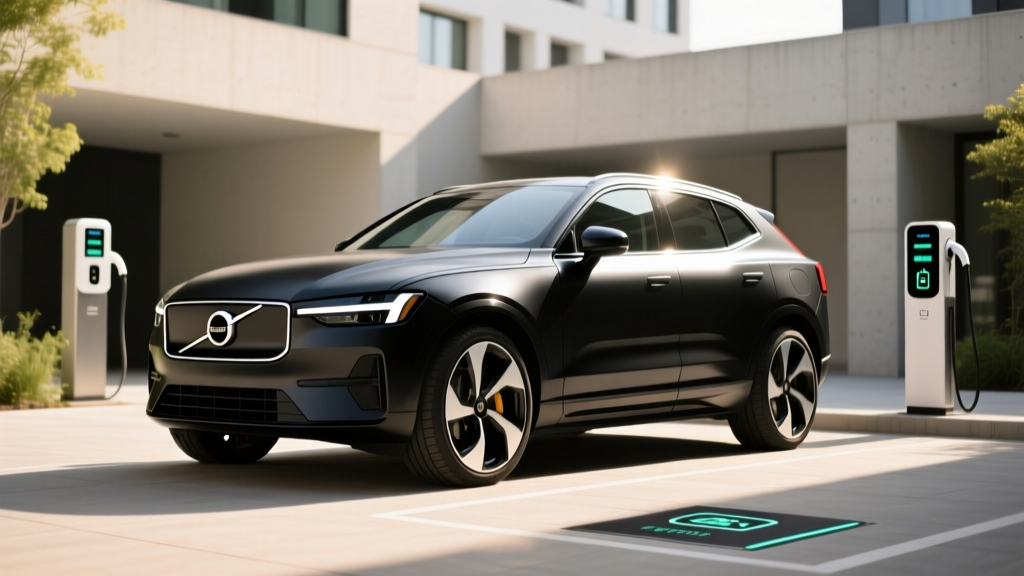
The Volvo EX90 is the Swedish automaker's flagship three-row electric SUV, and after spending time with one, it's clear this is Volvo's most ambitious vehicle to date. Built on the same SEA2 platform as the Polestar 3 and next-gen XC90, the EX90 pairs a 111 kWh battery pack with dual-motor all-wheel drive and a LiDAR-first approach to driver assistance. It's a serious luxury EV contender aimed squarely at families who want Scandinavian design, top-tier safety, and legitimate road-trip charging capability.
But with a starting MSRP above $81,000 and some software-related growing pains during its launch window, the EX90 isn't for everyone. Here's everything you need to know before you put down a deposit.
| Spec | Value |
|---|---|
| EPA Range | 310 miles (Twin Motor Performance) |
| Battery (usable) | 111 kWh, NMC lithium-ion |
| Drivetrain | Dual-motor AWD |
| Horsepower | 496 hp (Performance) / 402 hp (Twin Motor) |
| 0–60 mph | 4.7 sec (Performance) / 5.5 sec (Twin Motor) |
| Max DC Fast Charge | 250 kW |
| 10–80% DC Charge Time | ~30 minutes |
| Level 2 Home Charging | 11 kW (~30 mi/hr) |
| MPGe (combined) | 78 MPGe / 43 kWh/100mi |
| Towing Capacity | 5,000 lbs |
| Base MSRP | $81,290 (Twin Motor Plus) |
| Battery Warranty | 8 years / 100,000 miles |
Range and Efficiency: EPA vs. the Real World
EPA Estimated Range: 310 miles (Twin Motor Performance, 22" wheels)
Real-World Expectation: Expect 260–285 miles in mixed highway driving at 70+ mph. In cold weather (below 30°F), plan for 220–250 miles depending on cabin heating use and whether you precondition the battery.
The EX90's 111 kWh usable battery capacity (NMC chemistry) is among the largest in the luxury SUV segment. That big pack is necessary — this is a heavy vehicle at roughly 6,200 pounds, and moving that mass requires serious energy.
Volvo publishes a 78 MPGe combined rating, which translates to 43 kWh per 100 miles. In our experience, that figure is achievable in city and suburban driving with moderate regen use. On the highway at sustained speeds above 70 mph, efficiency drops to roughly 47–50 kWh/100mi, which is where the real-world range gap opens up.
Cold weather is the bigger variable. NMC batteries lose efficiency in freezing temperatures, and while the EX90's heat pump system helps mitigate cabin energy draw, you'll still see a 15–25% range reduction in sub-30°F conditions. If you're in a cold climate and commute more than 100 miles round-trip, factor this into your planning. Preconditioning the battery while plugged in at home is essential — it warms the pack for better efficiency and faster DC charging when you hit the road.
Charging Speed: DC Fast, Level 2, and Home Setup
| Charge Level | Power | Speed (approx.) | Use Case |
|---|---|---|---|
| Level 1 (120V) | 1.4 kW | ~4 mi/hr | Emergency / trickle top-off |
| Level 2 (240V, 48A) | 11 kW | ~30 mi/hr | Overnight home charging |
| DC Fast Charge | Peak 250 kW | 10–80% in ~30 min | Road trips, public stations |
The EX90 uses the NACS (Tesla-style) connector for both Level 2 AC and DC fast charging on 2026 models, giving you native access to the Tesla Supercharger network — over 25,000 stalls in North America. This is a significant advantage over vehicles still reliant on CCS-only networks.
DC fast charging reality check: The 250 kW peak rate is impressive, but like all EVs, the EX90 doesn't sustain peak speed across the entire session. The charge curve is strong from 10–50% SoC, where you'll see rates near 200–250 kW. Above 60%, the rate tapers progressively, and above 80% it drops sharply to protect battery longevity. The 10–80% time of roughly 30 minutes is competitive with the BMW iX and slightly behind the Hyundai Ioniq 9's 800V architecture, which can do the same in about 24 minutes.
Home charging: At 11 kW on a 48-amp Level 2 circuit, the EX90 adds about 30 miles of range per hour. A full charge from 10% to 100% takes roughly 11 hours, which is fine for overnight charging. You'll need a NEMA 14-50 outlet or a hardwired wall connector installed on a 60-amp breaker. Installation typically runs $800–$2,000 depending on your electrical panel's capacity and the distance from the panel to your garage. If your home has a 100-amp main panel, a panel upgrade to 200 amps could add $1,500–$3,000 to the project.
Performance and Drivetrain
The EX90 comes in two powertrain configurations, both dual-motor AWD:
- Twin Motor: 402 hp, 568 lb-ft torque, 0–60 mph in 5.5 seconds
- Twin Motor Performance: 496 hp, 669 lb-ft torque, 0–60 mph in 4.7 seconds
For a 6,200-pound SUV, both are genuinely quick. The Performance variant delivers the kind of effortless highway merging and passing power that makes large EVs feel deceptively light. The standard Twin Motor is more than adequate for daily driving and is the efficiency sweet spot — you'll pick up a few extra miles of range by sacrificing some peak output.
The air suspension (standard on Ultra trims, optional on Plus) provides a composed ride quality that isolates occupants from road imperfections. It's not sporty in the way a Porsche Cayenne E-Hybrid tries to be, but that's not the mission. The EX90 is a cruiser, and it excels at that role. The 5,000-pound towing capacity is adequate for a small boat or utility trailer, though heavy trailer towing will cut range by 30–40%.
Interior, Cargo, and Passenger Space
The EX90 seats up to seven in a 2-3-2 configuration, though a six-seat layout with second-row captain's chairs is available. Interior materials are premium but distinctly Scandinavian — wool-blend upholstery, open-pore wood, and recycled aluminum accents rather than traditional leather-and-chrome luxury.
| Measurement | Value |
|---|---|
| Front legroom | 41.3 in |
| Second-row legroom | 38.5 in |
| Third-row legroom | 31.4 in |
| Cargo (behind 3rd row) | 11.4 cu ft |
| Cargo (behind 2nd row) | 36.8 cu ft |
| Cargo (behind 1st row, max) | 74.2 cu ft |
| Front trunk (frunk) | 1.3 cu ft (small — fits charging cable bag) |
The third row is best suited for children or short trips — adults over 5'8" will find it tight on longer drives. Cargo space behind the third row is modest at 11.4 cubic feet; you'll need to fold the third row for meaningful grocery or luggage hauling. With all rear seats folded, the 74.2 cubic feet is competitive with the BMW iX and slightly less than the Rivian R1S.
The 14.5-inch vertical touchscreen runs Google Built-In (Google Maps, Google Assistant, Google Play Store) and handles climate, media, and navigation well. The digital driver display is a slim 8-inch unit that focuses on speed, range, and navigation prompts rather than information overload. A 25-speaker Bowers & Wilkins audio system is available on Ultra trims and is one of the best in any vehicle at any price.
Safety and Driver Assistance: LiDAR Standard
This is where the EX90 differentiates itself most clearly. Every EX90 comes equipped with a roof-mounted LiDAR sensor (supplied by Luminar) as standard equipment — not an optional package, not a trim-level upgrade. Volvo's philosophy is that LiDAR-enabled safety systems should be baseline, not a luxury upsell.
SAE Automation Level: Level 2
The EX90's Pilot Assist with LiDAR enhancement is a Level 2 driver-assistance system. The driver must remain attentive, keep hands on the wheel, and be prepared to take over at any moment. This is not self-driving. Volvo has indicated future over-the-air updates may enable supervised hands-free driving on mapped highways, but as of the 2026 model year, active driver supervision is required at all times.
The sensor suite includes 5 radars, 8 cameras, and the LiDAR unit, creating what Volvo calls an "invisible safety shield" — a 360-degree environmental model that extends up to 250 meters ahead even in darkness or heavy rain where cameras struggle. In practice, the system is smooth and confidence-inspiring on highways, with well-calibrated lane centering and adaptive cruise that doesn't over-brake or hunt in traffic.
What Pilot Assist Does NOT Do:
- It does not navigate on its own — the driver selects lanes and confirms merges
- It does not handle construction zones, unmapped roads, or severe weather autonomously
- It does not replace an attentive driver — hands-on-wheel detection is enforced
- It is not equivalent to Waymo or Cruise Level 4 robotaxi capability
The EX90 also introduces an interior driver-monitoring system with dual cameras that track eye gaze and attention. If the system detects prolonged inattention, it escalates warnings and can bring the vehicle to a controlled stop with hazard lights activated — a feature Volvo calls "Safe Stop."
Pricing, Trims, and Federal Tax Credit
| Trim | MSRP | Key Features |
|---|---|---|
| Twin Motor Plus | $81,290 | AWD, 402 hp, 111 kWh, LiDAR, Google Built-In, air suspension delete |
| Twin Motor Ultra | $86,790 | Adds air suspension, panoramic roof, 25-speaker B&W audio, head-up display |
| Twin Motor Performance Ultra | $91,290 | 496 hp, all Ultra features, 22" wheels |
Destination charges add approximately $1,195. As-tested pricing on a well-equipped Performance Ultra with metallic paint and 22-inch wheels lands near $94,000.
IRS §30D Federal EV Tax Credit — Eligibility Checklist:
- MSRP Cap: SUVs must be at or below $80,000. The EX90 Twin Motor Plus starts at $81,290 — above the cap. As currently priced, no EX90 trim qualifies for the §30D new-vehicle credit based on MSRP alone.
- Buyer Income Cap: AGI must not exceed $300,000 (joint), $225,000 (head of household), or $150,000 (individual).
- Battery Sourcing: Critical minerals and battery components must meet phased-in domestic/free-trade-partner sourcing thresholds.
- Point-of-Sale Transfer: If eligible, the credit can be applied at purchase rather than waiting for tax filing.
Source: IRS §30D Clean Vehicle Credit. Rules are subject to change. Consult a tax professional for your specific eligibility.
This is a critical point for buyers: the EX90's base price exceeds the $80,000 SUV cap for the §30D credit. Unless Volvo adjusts pricing or introduces a lower-cost trim, federal tax credit eligibility is unlikely. Some state-level incentives (California's CVRP, Colorado's state credit) may still apply — check your local program rules.
Warranty and Ownership Costs
| Coverage | Term |
|---|---|
| Basic (bumper-to-bumper) | 4 years / 50,000 miles |
| Battery & Powertrain | 8 years / 100,000 miles |
| Battery Capacity Retention | 70% minimum over 8 yr / 100k mi |
| Corrosion | 12 years, unlimited miles |
| Roadside Assistance | 4 years / unlimited miles |
The 70% battery capacity retention threshold over 8 years is industry-standard, matching BMW, Mercedes, and Hyundai/Kia. Real-world degradation data for the EX90 specifically is still limited given its recent launch, but NMC packs of this size from CATL typically retain 88–92% capacity at the 4-year mark under normal use patterns (daily charging to 80%, occasional DC fast charging, avoiding prolonged storage at 100% SoC).
Insurance costs are a factor. Early data suggests EX90 premiums run 15–25% higher than comparable ICE Volvo XC90 policies, driven by the vehicle's MSRP, LiDAR replacement cost, and limited collision-repair data. Get a quote before purchasing — in some states, annual premiums can exceed $3,000.
Pros
- Standard LiDAR on every trim — best-in-class safety sensor suite
- NACS connector native — no adapter needed for Supercharger access
- 250 kW DC fast charging is competitive for the segment
- Quiet, composed ride quality with excellent sound isolation
- Google Built-In infotainment is intuitive and responsive
- Strong 5,000-lb towing capacity for an electric SUV
Cons
- Base price exceeds $80K — ineligible for §30D federal tax credit
- Third-row space is tight for adults on longer trips
- Frunk is essentially useless (1.3 cu ft)
- Software launch had early bugs; OTA updates still maturing
- Real-world highway range falls 10–15% below EPA in testing
- Insurance premiums notably higher than ICE equivalents
How the EX90 Stacks Up Against Key Competitors
| Attribute | Volvo EX90 | BMW iX xDrive50 | Rivian R1S (Dual) | Kia EV9 GT-Line |
|---|---|---|---|---|
| EPA Range | 310 mi | 324 mi | 321 mi | 270 mi |
| Battery | 111 kWh NMC | 111.5 kWh NMC | 128.9 kWh NMC | 100 kWh NMC |
| DC Fast Charge | 250 kW | 200 kW | 200 kW | 236 kW |
| 10–80% Time | ~30 min | ~35 min | ~34 min | ~24 min (800V) |
| 0–60 mph | 4.7 sec (Perf) | 4.4 sec | 5.0 sec | 5.0 sec |
| Starting MSRP | $81,290 | $87,250 | $79,900 | $73,900 |
| §30D Credit Eligible? | No (MSRP cap) | No (MSRP cap) | Yes (select trims) | Yes (select trims) |
| Third Row | Yes | No (2-row only) | Yes | Yes |
The EX90 occupies a unique position: it's more safety-focused than the Rivian R1S, more refined inside than the Kia EV9, but priced higher than both and without tax credit eligibility. The BMW iX doesn't offer a third row, which eliminates it for larger families. If three rows and LiDAR-based safety are non-negotiable, the EX90 has no direct rival. If budget and tax credit eligibility matter more, the Rivian R1S or Kia EV9 deserve serious consideration.
Who Should Buy the Volvo EX90?
Choose the Volvo EX90 if:
- You need a three-row electric SUV and prioritize safety technology above all else
- You want native Supercharger (NACS) access without adapters
- You value Scandinavian minimalist design and premium audio
- Your budget accommodates $85K–$95K without relying on the federal tax credit
- You do moderate road trips and need 250 kW charging for reasonable stop times
Look elsewhere if:
- Federal tax credit eligibility is essential to your purchase math
- You regularly carry adults in the third row (Rivian R1S is roomier back there)
- You want the fastest possible DC charging (Kia EV9's 800V architecture is quicker)
- You need maximum cargo volume — the EX90's 74.2 cu ft is average for the class
Frequently Asked Questions
What is the real-world range of the Volvo EX90?
The EPA rates the EX90 Twin Motor Performance at 310 miles. In real-world highway driving at 70–75 mph, expect 260–285 miles. In cold weather below 30°F, range drops to approximately 220–250 miles. Preconditioning the battery while plugged in helps recover some of this loss.
How fast does the EX90 charge at home and on the road?
On a 48-amp Level 2 home charger (11 kW), the EX90 adds about 30 miles of range per hour, with a full 10–100% charge taking roughly 11 hours. On DC fast chargers, it peaks at 250 kW and charges from 10–80% in approximately 30 minutes. The NACS connector gives native Tesla Supercharger access.
Does the Volvo EX90 qualify for the federal EV tax credit?
As currently priced, no. The §30D credit caps SUV MSRP at $80,000, and the least expensive EX90 trim starts at $81,290. State incentives may still apply depending on where you live. Always verify current rules on IRS.gov and consult a tax professional.
Is the Volvo EX90 worth buying over the Rivian R1S or Kia EV9?
It depends on priorities. The EX90 wins on safety technology (standard LiDAR), interior refinement, and Supercharger network access. The Rivian R1S offers more third-row space, off-road capability, and tax credit eligibility. The Kia EV9 is significantly less expensive and charges faster (800V architecture) but has less range and a less premium interior.
What battery chemistry does the EX90 use and how long will it last?
The EX90 uses NMC (nickel manganese cobalt) lithium-ion chemistry in a 111 kWh usable pack. Volvo warrants the battery for 8 years or 100,000 miles with a minimum 70% capacity retention threshold. Based on NMC degradation patterns from similar packs, expect 88–92% capacity at the 4-year mark with normal charging habits.
Can the EX90 tow, and how much range do I lose?
The EX90 is rated to tow 5,000 pounds. When towing near maximum capacity, expect a 30–40% range reduction, bringing effective range down to roughly 185–215 miles. Plan charging stops accordingly if you're towing on road trips.
Does the EX90 have a frunk?
Technically yes, but at just 1.3 cubic feet, it's only practical for storing the charging cable bag. Don't expect to fit groceries or a carry-on bag up front.