The Quick Answer: Is the Volvo Electric XC40 Worth It in 2026?
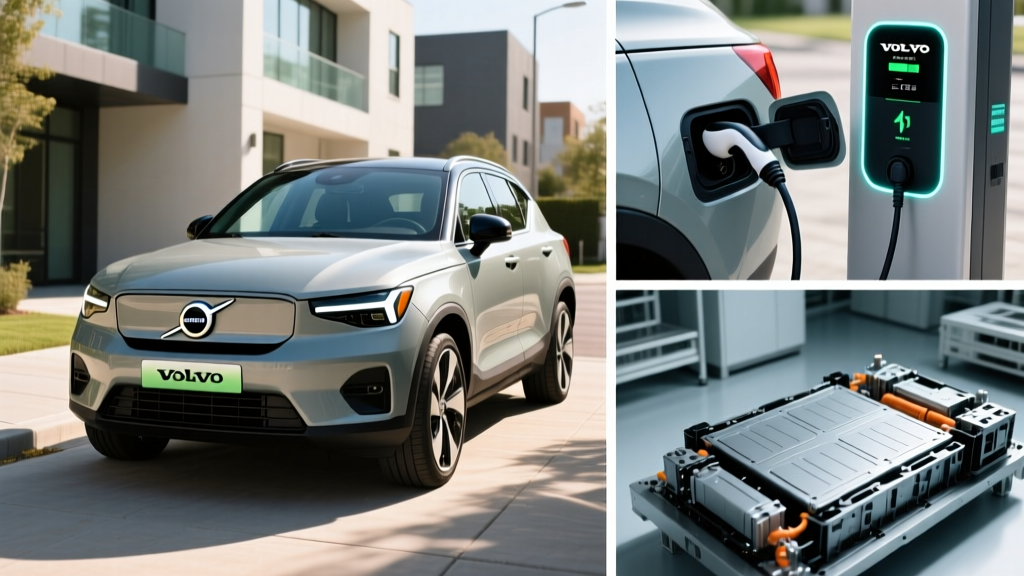
If you're searching for a Volvo electric XC40—now officially sold as the Volvo EX40—you're looking at a premium compact electric SUV with an EPA-estimated 293 miles of range (Single Motor Extended Range), a starting MSRP around $53,550, and peak DC fast charging up to 200 kW. It's a strong pick if you want Scandinavian design, standard all-wheel-drive availability, and a usable real-world range of roughly 240–260 miles on highway trips. It's a weaker fit if you need sub-$40K pricing, ultra-fast 350 kW charging, or live in an apartment without home-charging access. The EX40 does not currently qualify for the full $7,500 federal §30D tax credit due to battery-sourcing requirements, which materially affects its value proposition versus rivals like the Hyundai Ioniq 5 or Tesla Model Y.
Volvo EX40 (XC40 Electric) Key Specs at a Glance
Volvo renamed the XC40 Recharge Pure Electric to the EX40 for the 2025 model year, and the 2026 carryover continues with the updated powertrain introduced in late 2023. Here are the numbers that matter before you sign anything.
| Spec | Single Motor Extended Range | Twin Motor AWD |
|---|---|---|
| EPA Range | 293 miles | 285 miles |
| Battery (usable) | 82 kWh (NMC) | 82 kWh (NMC) |
| Horsepower | 292 hp (rear-wheel drive) | 402 hp (AWD) |
| 0–60 mph | 7.0 sec (est.) | 4.5 sec |
| Peak DC Fast Charge | 200 kW | 200 kW |
| 10–80% DC Charge Time | ~28 min | ~28 min |
| Level 2 (240V / 48A) | ~8 hours (0–100%) | ~8 hours (0–100%) |
| MPGe (combined) | 98 MPGe | 92 MPGe |
| Cargo (behind rear seats) | 15.4 cu ft + 1.1 cu ft frunk | 15.4 cu ft + 1.1 cu ft frunk |
| Base MSRP (2026 est.) | $53,550 | $56,050 |
| Battery/Powertrain Warranty | 8 years / 100,000 miles | |
Sources: fueleconomy.gov, Volvo Cars USA specifications.
Real-World Range: What the EPA Sticker Doesn't Tell You
The EPA rates the EX40 Single Motor Extended Range at 293 miles. That number is a useful baseline, but real-world range varies significantly based on speed, temperature, and terrain.
Real-World Range Expectations (EX40 Single Motor ER)
- Mild weather, city/suburban mix (55–65 mph): 270–290 miles — close to EPA.
- Highway road trip (75 mph sustained): 235–255 miles — aerodynamic drag cuts efficiency by ~15%.
- Cold weather (below 32°F) highway: 195–225 miles — battery heating and cabin demand reduce range 25–35%.
- Cold weather, city driving with preconditioning: 230–260 miles — heat pump (standard) helps significantly in stop-and-go.
The EX40's standard heat pump is a genuine advantage over competitors that charge extra for this feature. It recovers waste heat from the drivetrain to warm the cabin, reducing the energy penalty of winter driving. If you live in the Upper Midwest or Northeast, this matters for 4–5 months of the year.
Charging-curve reality check: The 200 kW peak charge rate is only sustained between roughly 10–30% state of charge. Above 50%, the curve tapers to ~100 kW, and above 80% it drops below 50 kW. That 10–80% time of ~28 minutes is accurate at a functioning 200+ kW station, but expect 35–40 minutes if the charger is limited to 150 kW or the battery is cold.
EV vs Gas: How Does the EX40 Compare to the Gas XC40?
The gas-powered Volvo XC40 (B5 AWD mild-hybrid) is the most direct comparison. Here's how they stack up on the metrics that affect your wallet.
| Metric | EX40 Twin Motor (EV) | XC40 B5 AWD (Gas) |
|---|---|---|
| Base MSRP | $56,050 | $42,550 |
| Federal Tax Credit (§30D) | $0–$3,750* | $0 |
| Effective Starting Price | ~$52,300–$56,050 | $42,550 |
| EPA Efficiency | 92 MPGe | 26 MPG combined |
| Energy Cost per Mile (nat'l avg) | $0.045 (home) / $0.13 (DC fast) | $0.13 (gas at $3.40/gal) |
| Annual Fuel/Energy (12,000 mi) | $540 (home) / $1,560 (public DC) | $1,560 |
| Annual Maintenance (est.) | ~$300 | ~$650 |
| 5-Year Energy + Maintenance | $4,200 (home) / $11,100 (public) | $11,000 |
*The EX40's §30D eligibility depends on battery-component and critical-mineral sourcing rules that change annually. As of 2026, many Volvo EVs do not meet full sourcing requirements. Verify current eligibility at IRS.gov qualified vehicles list before purchasing.
The numbers reveal a clear pattern: the EX40 costs roughly $10,000–$13,000 more upfront, but saves $5,000–$7,000 over five years in fuel and maintenance if you charge primarily at home. The break-even point arrives around year 7–8 for home chargers, or never if you rely exclusively on public DC fast charging at current rates. This is the core economic tension of EV ownership in 2026.
Total Cost of Ownership: The Full Picture
Purchase price and fuel are only part of the equation. Here's a realistic five-year cost projection for the EX40 Twin Motor versus the gas XC40 B5, assuming 12,000 miles/year and 85% home charging.
| Cost Category (5 Years) | EX40 Twin Motor | XC40 B5 Gas |
|---|---|---|
| Purchase Price (after credit) | $54,550 | $42,550 |
| State Registration / Taxes (avg) | $2,800 | $2,200 |
| Insurance (avg $2,100/yr EV) | $10,500 | $8,400 |
| Energy / Fuel | $3,900 | $7,800 |
| Maintenance | $1,500 | $3,250 |
| Estimated Depreciation | $22,000 | $17,500 |
| Total 5-Year Cost | $95,250 | $81,700 |
| Cost per Mile | $1.59 | $1.36 |
Key takeaways:
- Insurance runs 15–25% higher on the EX40 than the gas XC40. EV repair costs, parts pricing, and total-loss battery replacement drive premiums up. Get a quote before committing.
- Depreciation is steeper on EVs in the current market, partly due to Tesla-initiated price cuts rippling through used values and partly due to battery-health uncertainty for second owners.
- Maintenance savings are real: no oil changes, no spark plugs, reduced brake wear from regenerative braking. Expect to replace cabin air filters, wiper blades, brake fluid, and tires. (EV tires wear ~20% faster due to weight and instant torque.)
- Home Level 2 charger installation adds $800–$2,200 one-time (equipment + electrician), but is the single biggest factor in making EV ownership economical.
First-Time EV Buyer Checklist: What to Know Before You Buy the EX40
If this is your first electric vehicle, the EX40 is a refined entry point—but you need to audit your situation honestly before signing.
Home Charging Access
This is the single most important variable. If you have a garage or driveway with access to a 240V circuit (or can install one), the EX40's 11 kW onboard charger will replenish the 82 kWh battery in about 8 hours—perfect for overnight charging. Budget $1,200–$2,000 for a quality Level 2 station (ChargePoint Home Flex, Emporia Level 2, or Volvo's own Wallbox) plus licensed electrician installation. If your electrical panel is maxed out or you need a 200-amp service upgrade, add $1,500–$3,500.
If you live in an apartment or condo without charging access, you'll rely on public infrastructure. This is feasible but more expensive ($0.30–$0.48/kWh at DC fast stations vs. $0.12–$0.16/kWh residential average) and less convenient. Check the Alternative Fuels Data Center for charger density near your home and workplace.
Climate Considerations
The EX40's heat pump and battery thermal management system handle cold well, but physics is physics. If you regularly drive in sub-freezing temperatures, plan for 25–35% range reduction. Preconditioning the battery while plugged in (via the Volvo Cars app) mitigates this by warming the pack using grid power rather than battery energy.
Driving Patterns
The EX40's 285–293 mile EPA range covers most daily commutes and suburban errands with days of buffer. For road trips exceeding 250 miles one-way, you'll need at least one DC fast-charge stop. The EX40 uses the CCS1 connector (not NACS), so you'll primarily use Electrify America, EVgo, and ChargePoint DC stations. Volvo has announced NACS adapter compatibility, but CCS remains the native port.
Common Misconceptions About the Volvo EX40
| Myth | Fact |
|---|---|
| "The EX40 gets the full $7,500 tax credit." | As of 2026, most Volvo EVs do not meet §30D critical-mineral and battery-component sourcing thresholds for the full credit. Some trims may qualify for $3,750 (critical minerals only). Always verify on the IRS qualified vehicles list before purchase. |
| "200 kW charging means it charges at 200 kW the whole time." | 200 kW is the peak rate, sustained only between ~10–30% SoC. The average rate over a 10–80% session is closer to 120–130 kW. Expect ~28 minutes at a 200+ kW station, not the 20 minutes you'd calculate from peak rate alone. |
| "The battery will need expensive replacement in a few years." | Volvo warranties the 82 kWh NMC pack for 8 years/100,000 miles with a 70% capacity-retention threshold. Industry data from Recurrent Auto shows modern NMC packs typically retain 85–90% capacity at 100,000 miles. A full replacement (if needed out of warranty) runs $15,000–$20,000, but this is rare before 150,000+ miles. |
| "I can't take road trips because charging takes too long." | A 10–80% charge takes ~28 minutes. On a 500-mile trip, you'll stop once or twice for 25–30 minutes each—comparable to meal and rest breaks. Planning with apps like PlugShare or A Better Route Planner removes the guesswork. |
| "AWD Twin Motor is the only good version." | The Single Motor Extended Range actually delivers better range (293 vs 285 mi), better efficiency (98 vs 92 MPGe), and a lower price. Unless you need AWD for snow/ice or want the 4.5-second 0–60 time, the single-motor variant is the smarter buy for most owners. |
Decision Framework: Should You Buy the Volvo EX40?
Buy the EX40 If:
- You have home Level 2 charging (or can install it). This is non-negotiable for economical EV ownership.
- You value build quality and interior materials over maximum range-per-dollar. The EX40's cabin, Google-built infotainment, and standard Pilot Assist are genuinely premium.
- Your daily driving is under 80 miles and road trips are occasional, not weekly.
- You want a compact luxury EV SUV and cross-shopped the BMW iX1, Audi Q4 e-tron, and Mercedes EQB—the EX40's range and heat pump give it a practical edge in cold climates.
- You can access a state or utility rebate that stacks on top of any partial federal credit, narrowing the price gap with the gas XC40.
Look Elsewhere If:
- You can't charge at home or work. Public-only charging erases the fuel savings and adds weekly inconvenience.
- You need maximum range per dollar. The Hyundai Ioniq 5 (310+ mi, ~$44K, potentially full $7,500 credit) or Tesla Model Y (320+ mi, ~$45K) deliver more range at a lower effective price.
- You regularly tow. The EX40 is rated for 3,500 lbs towing (Twin Motor), but towing cuts range by 40–50%. For frequent towing, consider a PHEV like the Volvo XC60 Recharge instead.
- You need NACS native charging for seamless Tesla Supercharger access without an adapter.
- Budget is under $45K. Even with incentives, the EX40's effective price stays above $50K in most scenarios.
Frequently Asked Questions
Does the Volvo electric XC40 (EX40) qualify for the $7,500 federal tax credit?
As of 2026, the EX40 typically does not qualify for the full $7,500 §30D credit due to battery-component and critical-mineral sourcing requirements. It may qualify for $3,750 (the critical-minerals half). Eligibility changes as supply chains shift, so check the IRS qualified clean vehicles list for the specific model year and trim before purchasing. You must also meet income caps ($150K single / $300K joint) and the MSRP cap ($80K for SUVs, which the EX40 clears). The credit can be transferred to the dealer at point of sale as an instant discount.
How long does it take to charge the Volvo EX40 at home?
On a Level 2 home charger (240V, 48 amps / 11.5 kW), a full 0–100% charge takes approximately 8 hours. A typical overnight session from 20% to 80% takes about 4.5 hours. On a standard 120V household outlet (Level 1), expect roughly 3–4 miles of range per hour of charging—a full charge would take 3+ days, making Level 1 impractical as a primary strategy.
Is the Volvo EX40 good in snow and cold weather?
Yes, with caveats. The Twin Motor AWD version provides excellent traction, and the standard heat pump preserves range better than resistive heating. Expect 25–35% range loss in sustained sub-freezing highway driving. Preconditioning while plugged in significantly reduces this penalty. The EX40 is one of the better cold-climate EVs in its class.
What connector does the EX40 use? Can I charge at Tesla Superchargers?
The EX40 uses the CCS1 connector for DC fast charging and J1772 for Level 2 AC. Volvo has confirmed NACS adapter compatibility, allowing access to Tesla's Supercharger network with an adapter (sold separately or included depending on model year). However, native CCS remains the primary standard, and Electrify America and EVgo stations are widely available in most metro areas.
How does the EX40 compare to the Volvo C40 (EC40)?
The EC40 (formerly C40 Recharge) is the coupe-styled variant of the same platform. It shares the 82 kWh battery, powertrain options, and tech. The EX40 offers slightly more cargo space (15.4 cu ft vs 14.8 cu ft) and marginally better rear headroom. The EC40 has a slightly lower EPA range due to its roofline aerodynamics. Pricing is within $500 across equivalent trims. Choose based on styling preference and cargo needs.
What's the battery replacement cost for the EX40?
Out-of-warranty replacement of the 82 kWh NMC battery pack is estimated at $15,000–$20,000 including labor. However, this is uncommon. Volvo's battery warranty covers 8 years/100,000 miles with a 70% capacity-retention guarantee, and industry degradation data suggests most packs retain 85%+ at 100K miles. Battery technology costs continue to decline, so a replacement in the 2030s would likely cost significantly less.