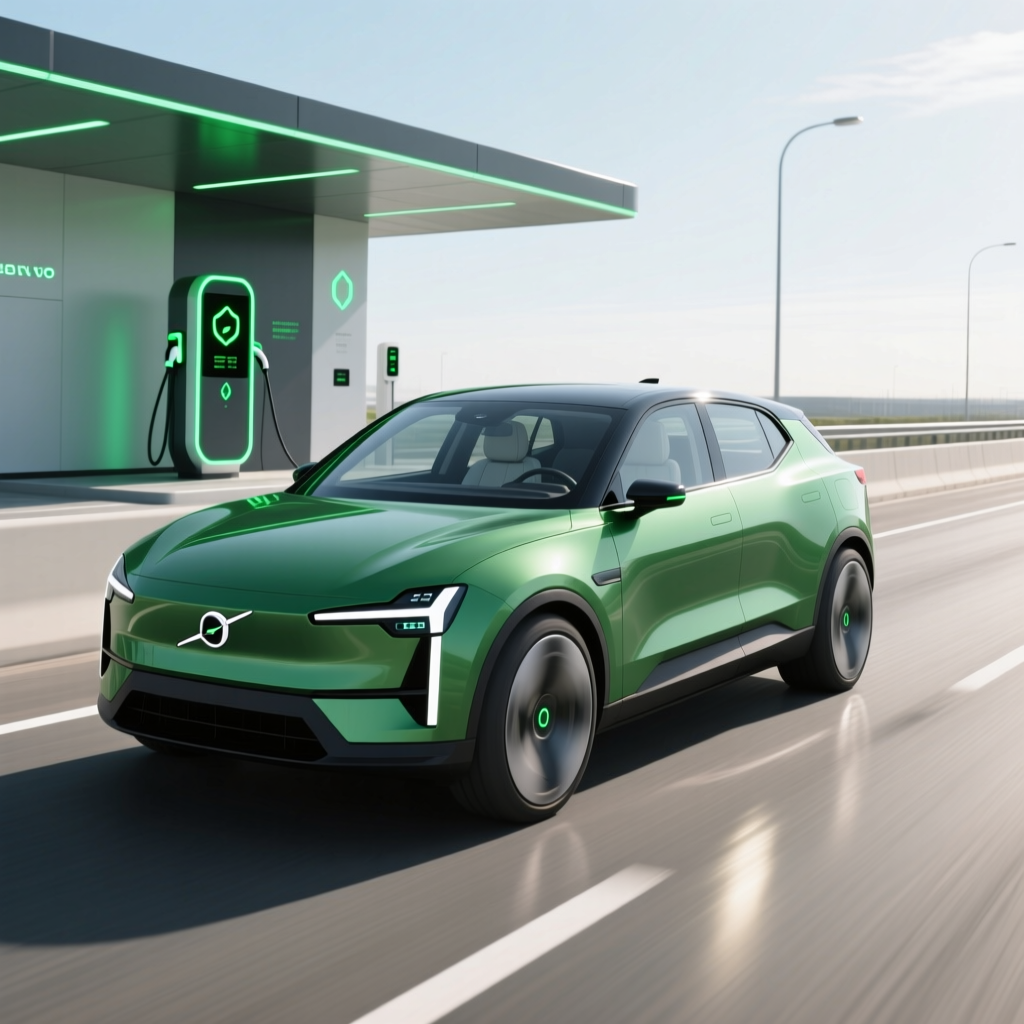
The Volvo EX30 represents a bold new chapter for the Swedish automaker. As Volvo's smallest and most affordable electric vehicle, the EX30 targets urban drivers and young professionals who want premium Scandinavian design without the premium price tag typically associated with the brand. Built on Geely's Sustainable Experience Architecture (SEA), the same platform underpinning the Smart #1 and Zeekr X, the EX30 delivers a compelling blend of style, technology, and practicality in a compact electric SUV package.
In this comprehensive review, we examine everything you need to know about the Volvo EX30 — from its real-world range and charging capabilities to interior technology, driving dynamics, and long-term ownership costs. Whether you are cross-shopping subcompact electric SUVs or simply curious about Volvo's entry-level EV offering, this guide covers it all. For more options in this segment, check out our roundup of the best compact electric SUVs available today.
Vehicle Overview: What Is the Volvo EX30?
The Volvo EX30 is a subcompact luxury electric SUV that slots below the XC40 Recharge and the larger EX90 in Volvo's electric lineup. Despite its diminutive footprint, the EX30 carries the full weight of Volvo's design philosophy — clean lines, minimalist aesthetics, and an unwavering focus on safety. The vehicle is offered in several configurations, including a Single Motor Extended Range variant and a Twin Motor Performance model with all-wheel drive.
The Single Motor version uses a 69 kWh lithium-ion battery pack paired with a rear-mounted electric motor producing 272 horsepower and 254 lb-ft of torque. The Twin Motor Performance model adds a front motor for a combined output of 422 horsepower and 402 lb-ft of torque, making it the quickest Volvo ever produced with a 0–60 mph time of approximately 3.4 seconds according to Volvo's official specifications.
Starting at a price point that undercuts many competitors in the luxury subcompact SUV segment, the EX30 is positioned against rivals like the Hyundai Kona Electric, the Mini Countryman SE, and the upcoming entries from premium brands exploring smaller EV formats. Its combination of accessible pricing, strong performance credentials, and Volvo's safety reputation makes it a standout option for buyers entering the electric vehicle market.
Real-World Range and Efficiency
Range is often the first question prospective EV buyers ask, and the Volvo EX30 delivers respectable numbers for its class. The Single Motor Extended Range variant carries an EPA-estimated range of approximately 265 miles on a full charge. The Twin Motor Performance model, with its additional front motor and higher power output, sees that figure drop to roughly 230 miles according to EPA ratings.
In real-world driving conditions, range varies significantly based on factors such as ambient temperature, driving style, terrain, and use of climate control. Independent testing by organizations like Edmunds has shown that the EX30 Single Motor Extended Range can achieve between 220 and 250 miles in mixed driving conditions that include city commuting, highway cruising, and moderate climate control usage. Cold weather driving can reduce range by 15–30 percent, a common trait among lithium-ion battery electric vehicles.
Efficiency ratings for the Single Motor model hover around 3.5 to 3.8 miles per kWh, which places the EX30 in competitive territory with similarly sized electric SUVs. The aerodynamic profile, relatively light curb weight for an EV, and Volvo's heat pump system (standard on most trims) all contribute to maximizing energy efficiency. Drivers who primarily commute in urban environments with frequent regenerative braking opportunities may find their real-world range closely mirrors or even exceeds EPA estimates.
For a deeper look at how the EX30 stacks up against rivals in range, explore our EV range comparison guide covering the full compact SUV segment.
Charging Speed and Infrastructure
The Volvo EX30 supports DC fast charging at rates up to 153 kW for the Single Motor Extended Range model and up to 153 kW for the Twin Motor variant. At peak charging speed, Volvo claims the battery can go from 10 to 80 percent state of charge in approximately 25 minutes when connected to a compatible fast charger. This is competitive within the segment, though it does not match the ultra-fast 800-volt architectures found in vehicles like the Hyundai Ioniq 5 or Kia EV6.
For Level 2 AC charging at home or at public stations, the EX30 supports up to 11 kW (single-phase) or up to 22 kW (three-phase, where available). On a standard 240-volt home charger delivering around 11 kW, a full charge from empty takes roughly seven hours — easily manageable for overnight charging. Most owners will find that plugging in at home each evening eliminates any range anxiety for daily driving needs.
Volvo provides access to a broad charging network through its Volvo Cars app, which integrates routing and charger availability from multiple networks. The EX30 also supports plug-and-charge functionality at compatible stations, streamlining the public charging experience by eliminating the need to fumble with payment apps or RFID cards. As public charging infrastructure continues to expand across major highways and urban centers, the EX30's charging capabilities ensure it remains practical for both daily commuting and occasional road trips.
If charging logistics are a concern, our guide to setting up a home EV charger covers everything from electrical requirements to recommended hardware.
Interior Design, Technology, and Comfort
Step inside the Volvo EX30 and you are greeted by one of the most minimalist interiors in the automotive industry — for better or worse. Volvo has embraced a radical reductionist approach, eliminating nearly every physical button and consolidating virtually all vehicle controls into a single 12.3-inch central touchscreen running a Google-built infotainment operating system. There is no traditional instrument cluster behind the steering wheel; instead, critical driving information appears on a slim display bar integrated into the top of the dashboard.
The Google-based infotainment system includes built-in Google Maps navigation, Google Assistant voice control, and access to the Google Play Store for downloading apps. Wireless Apple CarPlay is supported, and the system responds to touch and voice inputs with generally good speed and accuracy. Over-the-air software updates ensure the system continues to improve after purchase, a feature Volvo has committed to supporting throughout the vehicle's lifecycle.
Material choices reflect Volvo's sustainability commitments. The EX30 offers several interior themes using recycled and bio-based materials, including denim-like textiles created from recycled jeans, wool-blend upholstery, and Nordico — a bio-based alternative to leather made from recycled cork and pine oil. While some buyers may miss the option of traditional leather, the sustainable materials feel premium and distinctive, setting the EX30 apart from competitors still relying on conventional synthetic leather options.
Space is where the EX30's compact dimensions become most apparent. Front-seat occupants enjoy adequate headroom and legroom, with supportive seats that feature Volvo's trademark ergonomic design. Rear-seat space is tighter than in many compact SUVs, with limited legroom for taller passengers. Cargo capacity behind the rear seats measures approximately 11.2 cubic feet, expanding with the rear seats folded. A small front trunk (frunk) adds modest additional storage. Buyers who regularly carry rear passengers or large cargo loads should consider whether the EX30's footprint meets their needs or whether a larger option from our best electric SUVs for families list would be more appropriate.
Driving Dynamics and Performance
The Volvo EX30 delivers a driving experience that punches well above its weight class. The Single Motor Extended Range model, with its 272 horsepower rear-mounted motor, provides brisk acceleration and a 0–60 mph time in the mid-five-second range. Power delivery is linear and immediate, as expected from an electric drivetrain, and the rear-wheel-drive layout gives the EX30 a sporty character that distinguishes it from front-wheel-drive competitors.
The Twin Motor Performance variant transforms the EX30 into a genuinely quick vehicle. With 422 horsepower and standard all-wheel drive, it rockets to 60 mph in approximately 3.4 seconds — a figure that would have seemed absurd for a subcompact Volvo just a decade ago. The all-wheel-drive system provides excellent traction in inclement weather, and the additional front motor enables torque vectoring that enhances cornering confidence.
Ride quality strikes a reasonable balance between comfort and sportiness. The suspension tuning is firm enough to control body motions during spirited driving but compliant enough to absorb most road imperfections without jarring occupants. The low center of gravity inherent to the battery-electric platform minimizes body roll through corners, and the steering — while light and somewhat numb — provides adequate precision for urban maneuvering. The EX30's compact dimensions and tight turning radius make it exceptionally easy to park and navigate through congested city streets.
Regenerative braking offers multiple levels of intensity, though Volvo has opted for a relatively mild default setting compared to some competitors. Drivers seeking true one-pedal driving may find they need to adjust settings through the touchscreen, and even at maximum regeneration, the EX30 does not come to a complete stop without brake pedal input. Noise isolation is impressive for the segment, with minimal wind and road noise at highway speeds, contributing to a refined cruising experience.
Volvo's Pilot Assist driver assistance system provides adaptive cruise control with lane centering, functioning well on highways but lacking the advanced capabilities of more sophisticated semi-autonomous systems. Standard safety features include automatic emergency braking, blind-spot monitoring, rear cross-traffic alert, and Volvo's renowned suite of passive and active safety technologies. For a broader look at EVs with standout performance credentials, see our fastest electric SUVs comparison.
Ownership Costs and Value
The Volvo EX30's starting price positions it as one of the most affordable vehicles in Volvo's lineup and a compelling option in the subcompact luxury electric SUV segment. Pricing varies by trim and configuration, but the Single Motor Extended Range model typically starts in the mid-$30,000 range before any applicable federal, state, or local incentives. The Twin Motor Performance variant commands a premium, starting in the low-to-mid $40,000 range.
Federal tax credit eligibility is an important consideration for US buyers. Depending on current regulations and the vehicle's manufacturing location, the EX30 may or may not qualify for the full $7,500 federal EV tax credit. Buyers should verify eligibility through the official Fuel Economy website and consult with a tax professional before making purchasing decisions based on incentive assumptions. Many states and municipalities offer additional rebates or tax credits that can further reduce the effective purchase price.
Operating costs for the EX30 are significantly lower than comparable gasoline-powered vehicles. Electricity costs vary by region and charging method, but home charging typically costs the equivalent of $1.00 to $1.50 per gallon of gasoline. Maintenance expenses are minimal — there are no oil changes, spark plugs, or transmission fluid replacements to worry about. Brake pad wear is reduced thanks to regenerative braking, and Volvo's recommended service intervals are generally limited to cabin air filter replacements and routine inspections.
Insurance costs for the EX30 tend to be moderate for the luxury EV segment. Volvo's strong safety ratings and the vehicle's modest repair complexity relative to larger, more expensive EVs help keep premiums reasonable. Volvo includes a competitive warranty package with bumper-to-bumper coverage and an extended battery warranty that provides peace of mind for long-term ownership. Depreciation projections for the EX30 remain uncertain given its relatively recent market entry, but Volvo's brand equity and growing consumer acceptance of electric vehicles suggest reasonable residual values.
To understand total cost of ownership across different EVs, our EV total cost of ownership calculator lets you compare models side by side with your local electricity rates and driving habits.
Specification Comparison Table
| Specification | EX30 Single Motor Extended Range | EX30 Twin Motor Performance | Hyundai Kona Electric (Long Range) | Mini Countryman SE ALL4 |
|---|---|---|---|---|
| Drivetrain | Rear-Wheel Drive | All-Wheel Drive | Front-Wheel Drive | All-Wheel Drive |
| Horsepower | 272 hp | 422 hp | 201 hp | 313 hp |
| Torque | 254 lb-ft | 402 lb-ft | 188 lb-ft | 364 lb-ft |
| Battery Capacity | 69 kWh | 69 kWh | 65.4 kWh | 66.5 kWh |
| EPA Est. Range | ~265 miles | ~230 miles | ~261 miles | ~213 miles |
| DC Fast Charge (Peak) | 153 kW | 153 kW | 100 kW | 130 kW |
| 10–80% Charge Time | ~25 min | ~25 min | ~43 min | ~30 min |
| 0–60 mph | ~5.3 sec | ~3.4 sec | ~7.3 sec | ~5.4 sec |
| Cargo Volume | 11.2 cu ft | 11.2 cu ft | 25.5 cu ft | 16.0 cu ft |
| Starting Price (MSRP) | Mid-$30,000s | Low-$40,000s | Mid-$30,000s | Low-$40,000s |
Pros and Cons
Pros
- Compelling price point — One of the most affordable luxury-branded electric SUVs on the market, making premium EV ownership accessible to a wider audience.
- Strong performance — The Twin Motor variant delivers supercar-rivaling acceleration, while even the Single Motor model offers brisk, confident power delivery.
- Distinctive Scandinavian design — Both exterior and interior aesthetics stand out in a segment filled with conventional designs, with sustainable materials adding a unique premium feel.
- Google-based infotainment — Built-in Google Maps, Google Assistant, and over-the-air updates provide a modern, connected user experience.
- Compact and easy to drive — Tight turning radius, excellent visibility, and manageable dimensions make the EX30 ideal for urban environments.
- Volvo safety reputation — Comprehensive standard safety features and Volvo's longstanding commitment to occupant and pedestrian protection.
- Low operating costs — Minimal maintenance requirements and low fueling costs compared to gasoline alternatives.
Cons
- Limited rear-seat space — Legroom and headroom in the back are tight, making the EX30 less suitable for families or frequent rear passengers.
- Small cargo area — At just over 11 cubic feet, cargo capacity trails most competitors, and the frunk adds only modest additional storage.
- Over-reliance on touchscreen — The near-total elimination of physical buttons can be frustrating for simple adjustments like climate control or volume.
- No traditional instrument cluster — The slim info bar takes getting used to and provides less information at a glance than a conventional gauge display.
- Moderate fast-charging speeds — Peak charging rates of 153 kW are adequate but fall short of the 200+ kW capabilities found in some rivals.
- Firm ride quality — The sporty suspension tuning may feel too stiff for buyers prioritizing plush comfort over handling precision.
Frequently Asked Questions
Is the Volvo EX30 eligible for the federal EV tax credit?
Eligibility for the $7,500 federal EV tax credit depends on several factors, including where the vehicle is manufactured and the buyer's tax liability. The Volvo EX30 is produced in China, which may affect its eligibility under current US regulations. Buyers should check the latest information on the Fuel Economy website and consult a tax advisor, as rules and interpretations can change. State and local incentives may still apply regardless of federal credit eligibility.
How does the Volvo EX30 compare to the XC40 Recharge?
The EX30 is smaller, lighter, and more affordable than the XC40 Recharge, making it better suited for urban drivers and those who do not need the additional passenger and cargo space. The XC40 Recharge offers more rear-seat room, greater cargo capacity, and available all-wheel drive across more trims, but at a significantly higher price point. The EX30's newer platform also provides updated technology and a more modern infotainment experience. For a detailed side-by-side breakdown, see our Volvo EV lineup comparison.
What is the real-world range of the Volvo EX30 in cold weather?
In cold weather conditions (below freezing), the EX30's range can decrease by 15 to 30 percent depending on severity and driving habits. The standard heat pump helps mitigate some of this loss by efficiently warming the cabin without excessively draining the battery. Preconditioning the battery and cabin while the vehicle is still plugged in can significantly reduce cold-weather range loss. Drivers in cold climates should realistically expect 180 to 220 miles from the Single Motor Extended Range model during winter months.
Does the Volvo EX30 support one-pedal driving?
The EX30 offers adjustable regenerative braking, but even at its strongest setting, it does not bring the vehicle to a complete stop without brake pedal input. This differs from some competitors that offer true one-pedal driving functionality. Drivers transitioning from other EVs with aggressive one-pedal modes may need an adjustment period. The moderate regeneration approach reflects Volvo's philosophy of providing a smooth, predictable driving experience rather than the abrupt deceleration some one-pedal systems produce.
Is the Volvo EX30 good for road trips?
The EX30 is capable of road trips, though its moderate cargo space and compact rear seat mean packing light and traveling with no more than two passengers is ideal for longer journeys. The 265-mile EPA range of the Single Motor model and 153 kW fast-charging capability allow for reasonable highway driving between charging stops. Route planning through the built-in Google Maps or third-party apps like A Better Routeplanner helps identify fast-charging stations along your route. For those who road-trip frequently, exploring our list of the best EVs for road trips may reveal options with greater range and cargo flexibility.
Final Verdict
The Volvo EX30 is a compelling entry in the compact electric SUV segment that successfully delivers premium design, strong performance, and modern technology at an accessible price point. Its Scandinavian aesthetic, sustainable interior materials, and Google-powered infotainment system give it a distinctive character that sets it apart from more conventional competitors. The Twin Motor Performance variant, in particular, offers exhilarating acceleration that belies the vehicle's practical intentions.
However, the EX30 is not without compromises. Its tight rear seats, limited cargo space, and heavy reliance on touchscreen controls will not suit every buyer. Those who regularly transport passengers or need generous cargo room should consider larger alternatives. Additionally, buyers in regions with extreme cold should factor in range reduction when evaluating whether the EX30's battery capacity meets their needs.
For urban dwellers, young professionals, and downsizers seeking a stylish, well-built electric SUV with strong safety credentials and low running costs, the Volvo EX30 deserves serious consideration. It represents an important step in making premium electric mobility accessible to a broader audience, and it sets a high bar for what buyers should expect from a compact luxury EV. Browse our complete electric vehicle reviews section for more in-depth analysis of the latest EVs on the market.