The Short Answer
Volvo EV tariffs—primarily the US Section 301 tariffs on Chinese-built vehicles and EU countervailing duties on Chinese-made EVs—have forced Volvo to restructure its supply chain, absorb margin compression of an estimated 8–15% on affected models, and shift pricing strategies for 2026. For US buyers, the EX30 (built in China) saw its starting MSRP climb from an originally announced ~$34,950 to approximately $37,990+ for the 2026 model year, narrowing the price advantage Volvo hoped to leverage against competitors like the Hyundai Ioniq 5 and Tesla Model Y. Volvo's operating margin on EVs sold in tariff-affected markets has contracted, pushing the company to accelerate localized production (Ghent, Belgium for EU; Ridgeville, South Carolina for US-bound models) while absorbing some tariff costs to remain competitive.
Why Volvo EV Tariffs Matter Right Now
The global tariff landscape for electric vehicles shifted dramatically between 2024 and 2026. The United States raised Section 301 tariffs on Chinese-manufactured EVs to 100% in late 2024, effectively blocking direct imports of China-built EVs into the US market. The European Union imposed countervailing duties ranging from roughly 7.8% to 35.3% on Chinese-made EVs depending on the manufacturer, with Volvo's China-built EX30 facing additional duties on top of the standard 10% EU import tariff.
For Volvo—a brand owned by China's Geely Holding Group but headquartered in Gothenburg, Sweden—this created a uniquely complex problem. The EX30, designed as Volvo's entry-level electric crossover and manufactured at Geely's Luqiao plant in China, suddenly faced tariff walls in its two most important Western markets. The result: a direct squeeze on per-unit profit margins and forced pricing recalibrations that ripple through Volvo's entire EV lineup.
According to Volvo Cars' financial disclosures, the company's gross margin on battery-electric vehicles was already under pressure relative to its internal-combustion models. Tariff exposure on the EX30 and early EX90 variants further compressed those margins before localized production could come online.
The Numbers: How Tariffs Affect Volvo's EV Pricing and Margins
To understand the profit impact, we need to look at what tariffs do to the cost structure of a China-built Volvo EV destined for Western markets.
| Cost Factor | Pre-Tariff (Est.) | Post-Tariff EU (2026) | US Market (Blocked) |
|---|---|---|---|
| Factory cost (China) | ~$24,000 | ~$24,000 | N/A — not imported |
| Shipping & logistics | ~$1,800 | ~$1,800 | N/A |
| EU base import duty (10%) | $2,580 | $2,580 | N/A |
| EU countervailing duty (~19.3% est.) | $0 | ~$4,980 | N/A |
| US Section 301 tariff (100%) | N/A | N/A | Prohibitive — blocked |
| Total landed cost | ~$28,380 | ~$33,360 | N/A |
| MSRP (base) | ~$34,950 (original) | ~$36,500–€38,000 | ~$37,990 (2026) |
| Estimated dealer margin | ~$6,570 | ~$3,140–$4,640 | Reduced / reallocated |
These figures are estimates based on publicly reported tariff rates and industry-standard margin assumptions. Volvo does not disclose per-model factory costs. However, the pattern is clear: the EU countervailing duty alone adds roughly $4,000–$5,000 per vehicle to the EX30's landed cost in Europe, and Volvo must either pass that to consumers (risking demand loss) or absorb it (crushing margins).
In the US market, the 100% Section 301 tariff made importing the China-built EX30 economically impossible. Volvo pivoted by sourcing US-market EX30 units from alternative production capacity and adjusting pricing upward to approximately $37,990 for the 2026 model year—still competitive against the Tesla Model Y (~$44,990 base) but no longer the segment-undercutting price Volvo originally planned.
Volvo's EV Lineup: Tariff Exposure by Model
Not every Volvo EV faces the same tariff risk. Here is how the current 2026 lineup breaks down by production origin and tariff exposure:
| Model | Production Site | US Tariff Exposure | EU Tariff Exposure | 2026 US Base MSRP |
|---|---|---|---|---|
| EX30 (Single Motor) | Luqiao, China → Ghent, Belgium (transitioning) | High (if China-built); mitigated by Ghent shift | ~29.3% combined duty (China-built) | ~$37,990 |
| EX30 (Twin Motor) | Same as above | Same | Same | ~$44,990 |
| EX90 | Ridgeville, South Carolina, USA | Minimal (US-built) | N/A for EU-bound (Sweden/China varies) | ~$76,695 |
| XC40 Recharge (2026) | Ghent, Belgium | None (EU-built, imported under standard 2.5% US auto tariff) | None (EU-built) | ~$55,050 |
| C40 Recharge (2026) | Ghent, Belgium | None | None | ~$55,050 |
The EX90 is largely insulated from US tariffs because Volvo invested in tooling at its Ridgeville, South Carolina plant to build it domestically. This was a strategic decision made years before tariffs escalated, but it proved prescient. The XC40 and C40 Recharge models, built in Belgium, face no China-specific tariff risk in either market.
The EX30 remains the tariff-exposed problem child. Volvo's Ghent plant is retooling to produce EX30 units for European and potentially other markets, but the transition takes time and capital expenditure—costs that further weigh on near-term profitability.
How Volvo EV Ownership Costs Compare to Gas and Hybrid Alternatives
Even with tariff-inflated pricing, Volvo's EVs can deliver lower total cost of ownership (TCO) than comparable gas vehicles. But the margin of savings depends heavily on your driving patterns, electricity costs, and whether you qualify for federal incentives.
| Cost Category | 2026 Volvo EX30 Twin Motor | Gas Compact SUV (AWD, ~28 MPG combined) |
|---|---|---|
| Purchase price (MSRP) | $44,990 | $33,500 |
| Federal tax credit (§30D, if eligible) | −$0 to $7,500* | $0 |
| Net purchase (after credit) | $37,490–$44,990 | $33,500 |
| Fuel/energy (60,000 mi) | $2,700–$4,200** | $7,500–$9,000 |
| Maintenance (5 yr) | ~$1,200 | ~$3,500 |
| Insurance (5 yr avg) | ~$11,500 | ~$8,500 |
| Estimated 5-yr total | $52,890–$62,190 | $53,000–$54,500 |
*Federal §30D tax credit eligibility depends on MSRP caps ($55,000 for SUVs), buyer income limits ($150K single / $300K joint), and battery component/critical mineral sourcing requirements per IRS guidelines. The EX30's credit status has been uncertain due to China-sourced battery components — always verify current eligibility before purchasing.
**Energy cost assumes $0.14–$0.22/kWh (national range for residential charging) and 3.0–3.5 mi/kWh efficiency. Public DC fast charging costs significantly more ($0.35–$0.55/kWh).
The EX30's EPA-estimated range sits at approximately 265 miles for the Single Motor Extended Range variant and roughly 245 miles for the Twin Motor, per fueleconomy.gov. In real-world highway driving at 70+ mph, expect roughly 210–235 miles from the Twin Motor, and potentially 15–25% less in sub-freezing temperatures due to battery thermal demands and cabin heating.
The 69 kWh usable battery (NMC chemistry) supports peak DC fast charging at approximately 153 kW, with a 10–80% charge time of roughly 26–28 minutes. The charging curve tapers noticeably above 80% SoC—a common characteristic of NMC cells prioritizing longevity over peak charge rate. Level 2 home charging at 11 kW adds roughly 30–35 miles of range per hour.
Profit Impact: What Volvo's Financials Reveal
Volvo Cars' reported operating margins tell the tariff story in aggregate. The company has targeted a long-term operating margin above 8%, but EV-specific margins have trailed that figure—particularly on tariff-exposed models. Key dynamics include:
- Margin compression on EX30: The additional ~$4,000–$5,000 in EU duties per China-built unit directly reduces gross profit unless fully passed to consumers. Volvo has split the difference—raising prices modestly while absorbing some cost to protect launch volume.
- Supply chain restructuring costs: Accelerating Ghent retooling for EX30 production and expanding Ridgeville for future models requires significant capex, pulling down near-term free cash flow.
- Volume vs. margin tradeoff: The EX30 was designed to be a volume car—Volvo's entry point to attract new, younger buyers. Tariff-driven price increases risk suppressing demand, which in turn reduces the economies of scale needed to improve margins.
- Geely ownership complexity: As a Geely subsidiary, Volvo navigates political scrutiny in both the US and EU regarding Chinese ownership of a European automaker. This doesn't directly affect tariffs but influences consumer perception and regulatory posture.
Volvo's CEO Jim Rowan has publicly acknowledged that tariffs create "headwinds" for the company's electrification timeline, though Volvo remains committed to full electrification by 2030. The practical effect is a slower margin recovery on EVs than Volvo's investor presentations originally projected.
Common Misconceptions About Volvo EV Tariffs
| Myth | Fact |
|---|---|
| "Volvo is a Swedish brand, so tariffs on Chinese EVs don't apply." | Volvo is owned by Geely (China). Tariffs are based on manufacturing origin, not brand headquarters. China-built Volvos face the same duties as China-built BYDs in the EU. |
| "The EX30 is still $34,950 in the US." | The original announcement price predated full tariff implementation. 2026 US-market pricing starts closer to $37,990, reflecting the cost of alternative sourcing and tariff mitigation. |
| "Tariffs make Volvo EVs uncompetitive." | Even at higher prices, the EX30 undercuts many rivals. A Tesla Model Y starts around $44,990; the EX30 Twin Motor at ~$44,990 offers competitive range and Volvo's safety reputation. |
| "All Volvo EVs face tariff risk." | Only China-manufactured models are affected. The EX90 (US-built) and XC40/C40 Recharge (Belgium-built) face no China-specific tariff exposure. |
| "Volvo will just move production and prices will drop." | Retooling takes 18–36 months and hundreds of millions in investment. Near-term prices reflect the transition cost, not just the final-state cost. |
Decision Framework: Should You Buy a Volvo EV Now or Wait?
If-Then Buying Guide
IF you want the lowest possible price on an EX30 and can wait 12–18 months: WAIT. Once Ghent production ramps fully and US sourcing stabilizes, Volvo may recalibrate pricing downward as tariff-related cost premiums diminish and competitive pressure from models like the Chevrolet Equinox EV and Hyundai Ioniq 5 intensifies.
IF you want a Volvo EV now and tariff exposure worries you: BUY THE XC40 RECHARGE OR C40 RECHARGE. Built in Belgium, these models face no China-specific tariff risk. Pricing is stable, and the XC40 Recharge offers approximately 254 miles of EPA range, 402 hp (Twin Motor), and peak DC charging at ~200 kW with a 10–80% time of roughly 27 minutes.
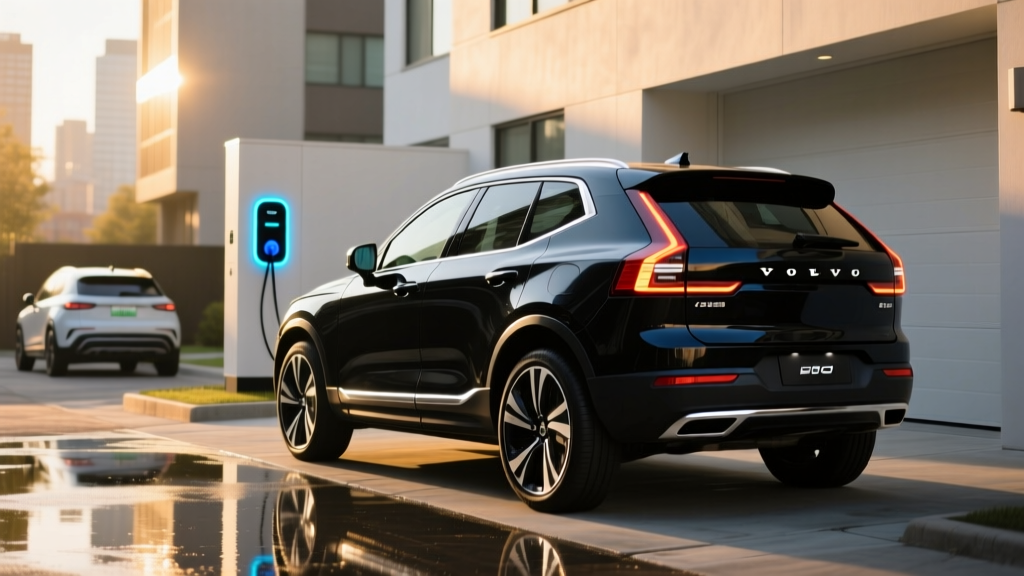
IF you need a three-row electric SUV: THE EX90 IS YOUR PICK. Built in South Carolina, it avoids import tariffs entirely. With an EPA-estimated range of approximately 300+ miles (depending on trim), a ~111 kWh usable battery, and peak DC charging around 250 kW (10–80% in ~20 minutes), it's Volvo's most tariff-resilient and technically capable EV. Starting at ~$76,695, it's premium-priced but not tariff-inflated.
IF you live in an apartment without home charging access: RECONSIDER ANY EV unless you have reliable access to workplace or public Level 2/DC fast chargers. The EX30's 153 kW peak charge rate is adequate but not class-leading—frequent reliance on public charging will cost more per mile and add time to your routine. A PHEV like the Volvo XC60 Recharge (35 miles electric-only, then hybrid) may better suit your situation.
IF you live in a cold climate (sub-30°F winters): PLAN FOR 20–25% RANGE LOSS on any Volvo EV. The EX30 Twin Motor's real-world winter highway range could dip to ~170–185 miles. The EX90's larger battery provides more buffer. All current Volvo EVs use heat pumps (standard), which mitigate but don't eliminate cold-weather efficiency loss.
What First-Time Volvo EV Buyers Should Know
Beyond the tariff conversation, there are practical ownership realities that determine whether a Volvo EV works for you:
- Home charging is the economic linchpin. At $0.14/kWh (national average residential rate), charging the EX30's 69 kWh battery from 10–80% costs roughly $6.70 at home. The same charge at a public DC fast charger ($0.48/kWh average) costs ~$23. Over 60,000 miles, home-charging dominance saves $3,000–$5,000 versus public-only charging.
- Level 2 home charger installation typically costs $800–$2,500 for a 48-amp hardwired unit (including electrician labor and permit), assuming your electrical panel has capacity. A panel upgrade to 200A can add $1,500–$4,000.
- Insurance premiums are higher for Volvo EVs—typically 20–35% above equivalent gas models due to repair costs, parts pricing, and battery replacement exposure. Get quotes before committing.
- Battery warranty: Volvo covers its EV batteries for 8 years / 100,000 miles, with a capacity retention threshold of 70%. This is industry-standard but verify the specific terms for your model year.
- Depreciation uncertainty: EV resale values have been volatile. The tariff-driven pricing adjustments may affect long-term residual values—leasing can transfer that risk to Volvo Financial.
Frequently Asked Questions
Will Volvo EV prices drop if tariffs are reduced or removed?
Possibly, but not immediately. Automakers rarely cut MSRPs quickly after tariff relief because dealer margins, marketing positioning, and competitive dynamics all factor in. If EU countervailing duties were reduced, Volvo would likely reinvest some savings into marketing and incentives rather than slashing sticker prices outright.
Does the Volvo EX30 qualify for the US federal $7,500 tax credit?
Eligibility under IRS §30D rules depends on battery component sourcing, critical mineral origin, MSRP caps, and buyer income limits. The EX30's China-linked supply chain has made §30D qualification uncertain. Always check the latest IRS eligible vehicle list and consult a tax professional before relying on the credit in your purchase decision. The credit can now be transferred to the dealer at point of sale if eligible.
Is Volvo moving EX30 production out of China?
Yes. Volvo's Ghent, Belgium plant is being prepared to produce the EX30 for European and potentially other markets. US-market supply is being managed through alternative arrangements. Full production transition takes 18–36 months from announcement to volume output.
How does the EX30's charging speed compare to competitors?
The EX30's peak DC rate of ~153 kW trails the Hyundai Ioniq 5 (peak ~240 kW, 10–80% in ~18 minutes) and the Tesla Model Y (peak ~250 kW on V3 Superchargers). For road-trippers who frequently use DC fast chargers, this means the EX30 will add roughly 150–180 miles in a 25-minute session, versus 200+ miles for the Ioniq 5 in the same timeframe.
Should I lease instead of buy given tariff-related pricing uncertainty?
Leasing transfers depreciation risk to Volvo Financial and may offer access to promotional rates or lease cash that effectively offsets tariff-related price inflation. If you're uncertain about long-term EV residual values—especially with tariff dynamics in flux—a 36-month lease is a reasonable way to drive a Volvo EV without committing to ownership through an unpredictable market.