Quick Answer: Is a Volvo EV Right for You?
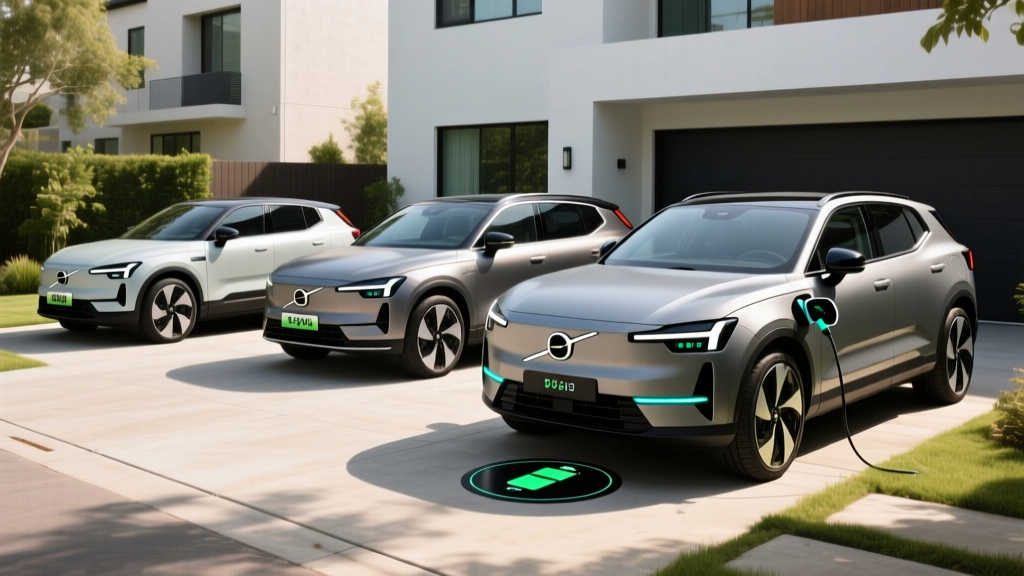
Volvo's 2026 all-electric lineup spans three models: the compact EX30 (starting ~$36,445, up to 265 miles EPA range), the midsize EX40 (starting ~$53,550, up to 300 miles EPA), and the flagship three-row EX90 (starting ~$77,995, up to 310 miles EPA). All three use NMC lithium-ion batteries and support DC fast charging between 134 kW and 250 kW depending on model. The EX30 and EX40 may qualify for partial or full §30D federal tax credits depending on battery sourcing and your income; the EX90 currently does not qualify due to its MSRP exceeding the $80,000 SUV cap on higher trims. If you prioritize Scandinavian design, strong safety tech, and Google-based infotainment, Volvo EVs are compelling — but expect real-world highway range to run 10–15% below EPA stickers, and note that Volvo's charging network relies entirely on third-party providers like Electrify America and Tesla Superchargers (via NACS adapter).
The 2026 Volvo EV Lineup at a Glance
Volvo has fully committed to electrification, and its 2026 model year reflects that pivot. The brand offers three dedicated battery-electric vehicles (BEVs), each targeting a different buyer segment. Here's how the specs stack up across the lineup:
| Spec | EX30 (Single Motor Extended) | EX40 (Twin Motor) | EX90 (Twin Motor) |
|---|---|---|---|
| Base MSRP | $36,445 | $53,550 | $77,995 |
| EPA Range | 265 mi | 300 mi | 310 mi |
| Battery (usable) | 69 kWh (NMC) | 82 kWh (NMC) | 111 kWh (NMC) |
| Peak DC Fast Charge | 153 kW | 200 kW | 250 kW |
| 10–80% DC Charge Time | ~26 min | ~28 min | ~30 min |
| Level 2 Charge Rate | 11 kW | 11 kW | 11 kW |
| Horsepower | 272 hp | 402 hp | 496 hp |
| 0–60 mph | 5.1 sec | 4.5 sec | 4.7 sec |
| Drivetrain | RWD | AWD | AWD |
| Battery Warranty | 8 yr / 100,000 mi | 8 yr / 100,000 mi | 8 yr / 100,000 mi |
| §30D Tax Credit Eligibility | Up to $3,750* | Up to $7,500* | Varies by trim* |
*Tax credit eligibility depends on battery component and critical-mineral sourcing requirements, buyer income caps ($150K single / $300K joint), and MSRP caps ($55K cars / $80K SUVs). Verify current rules at IRS.gov §30D. Point-of-sale transfer is available at participating dealers.
Real-World Range vs. EPA Estimates
EPA range stickers assume a mix of city and highway driving at moderate temperatures. In practice, your mileage will vary based on speed, climate, and terrain — and Volvo EVs are no exception.
What to Actually Expect
- EX30: EPA 265 mi → expect ~220–240 mi on highway road trips at 70–75 mph; ~180–200 mi in sub-30°F winter conditions.
- EX40: EPA 300 mi → expect ~255–275 mi highway; ~210–235 mi in cold weather.
- EX90: EPA 310 mi → expect ~265–285 mi highway; ~215–240 mi in cold weather. The EX90's larger frontal area and 5,800+ lb curb weight penalize highway efficiency more than the smaller models.
All three models feature a heat pump (standard), which reduces cold-weather range loss compared to resistive heating systems. Expect roughly 20–30% range reduction in sustained sub-freezing temperatures, consistent with industry averages for NMC packs with active thermal management. Data from fueleconomy.gov confirms that cold weather impacts all EVs; Volvo's heat pump helps but doesn't eliminate the physics.
Charging Speed and Infrastructure
Volvo does not operate its own charging network. All three models use the NACS (Tesla) connector as standard for 2026, granting access to Tesla Superchargers via native compatibility, plus CCS networks like Electrify America and EVgo through the NACS standard's industry adoption.
| Charging Level | Power | Connector | Miles of Range per Hour | Best For |
|---|---|---|---|---|
| Level 1 (120V) | ~1.4 kW | NACS / J1772 adapter | ~3–5 mi/hr | Overnight trickle, PHEV-style top-offs |
| Level 2 (240V) | 11 kW | NACS / J1772 adapter | ~30–40 mi/hr | Home daily charging, full overnight fill |
| DC Fast (EX30) | 153 kW peak | NACS / CCS adapter | ~150 mi in 15 min | Road trips |
| DC Fast (EX40) | 200 kW peak | NACS / CCS adapter | ~180 mi in 15 min | Road trips |
| DC Fast (EX90) | 250 kW peak | NACS / CCS adapter | ~200 mi in 15 min | Road trips |
Charging curve reality: Peak kW is not sustained kW. The EX90, for example, peaks near 250 kW only between roughly 10–35% state of charge (SoC), then tapers progressively. From 80–100%, charging slows dramatically to protect battery health — expect the final 20% to take as long as the 10–80% session. This is standard behavior for NMC chemistry with active thermal management, not a Volvo-specific limitation.
Home charging setup: All three models accept 11 kW on Level 2, which requires a 48-amp dedicated circuit (60-amp breaker). A typical home Level 2 installation runs $800–$2,500 total (charger + electrician + permit), assuming your electrical panel has capacity. A 200-amp panel is usually sufficient; older homes with 100-amp service may need a $1,500–$3,000 panel upgrade.
Volvo EV vs. Gas and Hybrid Alternatives
How do Volvo's EVs compare to their gasoline and plug-in hybrid counterparts — or to rival EVs? Let's look at the numbers.
| Metric | EX40 (BEV) | XC40 (Gas, AWD) | XC60 PHEV (T8) |
|---|---|---|---|
| Base MSRP | $53,550 | $41,650 | $58,950 |
| Fuel/Energy Cost per Year* | ~$650 | ~$2,100 | ~$1,100 |
| EPA Efficiency | 95 MPGe combined | 26 MPG combined | 63 MPGe / 28 MPG |
| Electric-Only Range | 300 mi | N/A | 35 mi |
| Annual Maintenance | ~$300 | ~$650 | ~$550 |
| 5-Year Fuel/Energy Cost | ~$3,250 | ~$10,500 | ~$5,500 |
*Based on 15,000 miles/year, $0.16/kWh national average electricity rate, $3.50/gallon gasoline. Your costs depend on local utility rates and gas prices. Source: fueleconomy.gov estimates.
The EX40 costs roughly $12,000 more upfront than a gas XC40, but saves approximately $7,250 in fuel over five years. Factor in the potential $7,500 federal tax credit (via point-of-sale reduction), and the EX40 reaches cost parity within roughly 2–3 years for most owners. The XC60 PHEV is a strong middle ground if you lack reliable home charging — you can commute 35 miles on electricity and rely on gas for longer trips.
Total Cost of Ownership: 5-Year Breakdown
| Cost Category | EX30 (Core) | EX40 (Plus) | EX90 (Ultra) |
|---|---|---|---|
| Purchase Price (MSRP) | $36,445 | $56,050 | $83,495 |
| Est. Federal Tax Credit | –$3,750 | –$7,500 | $0 (over MSRP cap) |
| Effective Purchase Price | $32,695 | $$48,550 | $83,495 |
| Home Charger Install | $1,500 | $1,500 | $1,500 |
| 5-Year Energy Cost | $2,900 | $3,250 | $4,100 |
| 5-Year Maintenance | $1,500 | $1,500 | $1,800 |
| 5-Year Insurance (est.) | $8,500 | $9,800 | $13,500 |
| Estimated Depreciation | $12,000 | $18,000 | $30,000 |
| 5-Year Total Cost | ~$59,095 | ~$82,600 | ~$134,395 |
Insurance note: EV insurance premiums run 15–25% higher than equivalent gas vehicles, driven by higher repair costs (specialized body shops, battery safety protocols, ADAS recalibration). Get quotes before purchasing — the EX90 in particular can exceed $250/month depending on your profile and state.
Tax Credit Eligibility: What You Actually Qualify For
The federal §30D clean vehicle credit offers up to $7,500, but eligibility is a moving target governed by battery sourcing rules, income caps, and MSRP limits. Here's the current framework:
- MSRP Cap: SUVs (EX40, EX90) must be under $80,000; cars (EX30 classified as SUV by EPA despite compact size) must be under $55,000. Higher EX90 trims exceed the cap.
- Income Cap: Adjusted gross income must not exceed $150,000 (single), $225,000 (head of household), or $300,000 (joint filing).
- Battery Sourcing: The credit splits into two halves — $3,750 for battery components manufactured in North America, and $3,750 for critical minerals sourced from the U.S. or free-trade-agreement partners. Volvo's sourcing compliance varies by model and production batch; confirm with your dealer at point of sale.
- Point-of-Sale Transfer: You can transfer the credit to the dealer at purchase, reducing your out-of-pocket cost immediately rather than waiting for a tax refund.
- Commercial Vehicle Loophole: Leasing an EV through a commercial entity (including some lease arrangements) may qualify for the §45W commercial clean vehicle credit, bypassing sourcing and MSRP limits. Consult a tax professional.
Always verify current eligibility on IRS.gov before committing to a purchase. Rules have shifted multiple times since 2023.
Common Volvo EV Misconceptions
| Myth | Fact |
|---|---|
| "Volvo EVs are fully self-driving." | Volvo's Pilot Assist is an SAE Level 2 driver-assistance system. It handles adaptive cruise and lane centering but requires your hands on the wheel and eyes on the road at all times. The EX90 includes LiDAR hardware for future capability, but no current software enables unsupervised driving. |
| "The battery will need replacing in 5 years." | Volvo warranties the high-voltage battery for 8 years / 100,000 miles against degradation below 70% capacity. Real-world NMC degradation data from similar platforms shows ~10–12% capacity loss at 100,000 miles when following recommended charging practices (avoiding sustained 100% SoC, using DC fast charging moderately). |
| "I can't take a Volvo EV on road trips." | With 250+ miles of real-world range and 10–80% DC charging in ~26–30 minutes, road trips require a 25-minute stop every 2.5–3 hours of driving. Apps like A Better Routeplanner and the Volvo companion app plan charging stops automatically. The main limitation is in rural charging deserts (parts of the Great Plains, rural Southwest). |
| "Volvo EVs are made entirely in China." | The EX30 is manufactured in Zhangjiakou, China, which affects its tax-credit eligibility. The EX40 and EX90 are assembled in Ghent, Belgium, and Ridgeville, South Carolina, respectively. Battery cell sourcing varies — always check the specific vehicle's Monroney label and IRS compliance data. |
| "Level 2 charging is too slow for daily use." | At 11 kW, Level 2 adds ~35 miles of range per hour. An overnight session (8–10 hours) fully replenishes any Volvo EV. For drivers covering under 60 miles daily, Level 2 is the primary and most convenient charging method — faster than you need. |
Decision Framework: Which Volvo EV Fits Your Life?
Choose the EX30 if:
- You're a solo driver or couple without kids needing daily rear-seat access
- Your commute is under 50 miles round-trip
- You want the lowest entry price and lowest operating cost in the Volvo lineup
- You have home Level 2 charging and rarely drive more than 200 miles in a single day
- Cargo space is secondary (15.1 cu ft behind rear seats)
Choose the EX40 if:
- You need a practical daily driver with room for a family of four
- You want AWD and strong passing power (402 hp) for mountain or highway driving
- You road-trip 3–5 times per year and want 300-mile EPA range for fewer charging stops
- You value the Google Built-in infotainment system with native Google Maps EV routing
- You want the best balance of price, range, and tax-credit eligibility in the lineup
Choose the EX90 if:
- You need three rows of seating for 6–7 passengers
- You're replacing a large luxury SUV (XC90, BMW X7, Mercedes GLS) and want to electrify
- LiDAR-equipped safety hardware and Volvo's most advanced ADAS suite are priorities
- Your budget accommodates $80,000+ and you accept that higher trims won't qualify for the federal credit
- You have a garage with a 48-amp Level 2 circuit to replenish the 111 kWh battery overnight
Consider a Volvo PHEV (XC60 Recharge, XC90 Recharge) instead if:
- You lack reliable home or workplace charging
- You frequently drive 400+ miles in rural areas with sparse DC fast-charging infrastructure
- You want electric commuting (35 miles EV range) without range anxiety on long trips
- You're not ready to commit to full EV ownership logistics
What First-Time Volvo EV Buyers Should Know
If you're transitioning from a gas Volvo or any ICE vehicle, here's what changes in your daily routine:
- Install Level 2 before delivery day. Schedule your electrician 3–4 weeks before your vehicle arrives. A 48-amp hardwired charger on a 60-amp breaker is optimal for Volvo's 11 kW onboard charger. Budget $1,200–$2,500 including permit.
- Set a daily charge limit of 80%. NMC batteries last longest when not held at 100% SoC for extended periods. Use the Volvo app to set a charge limit and schedule charging during off-peak utility hours (typically 10 PM – 6 AM) for the lowest electricity rates.
- Precondition before DC fast charging. The Volvo navigation system automatically begins battery preconditioning when you route to a DC fast charger. This warms the battery to optimal temperature, enabling the advertised peak kW charge rate. Without preconditioning (e.g., pulling into a charger without using navigation), you may see significantly slower charging speeds — especially in cold weather.
- Plan road trips with charging apps. A Better Routeplanner, PlugShare, and the in-car Google Maps EV routing all factor in charger availability, elevation, temperature, and your driving style to recommend stops. Tesla Supercharger access (via NACS) dramatically expands your network.
- Budget for higher insurance. Get three quotes before signing. EV-specific insurers and some mainstream carriers now offer competitive rates, but premiums are structurally higher due to repair complexity.
- Understand regenerative braking. Volvo EVs offer adjustable regen but not true one-pedal driving in all conditions. The one-pedal mode is strong enough for city driving but may not bring the car to a complete stop at highway speeds. Expect a brief adaptation period.
Frequently Asked Questions
Does Volvo make any fully electric SUVs in 2026?
Yes. Volvo offers three all-electric SUVs: the subcompact EX30, the compact EX40, and the full-size three-row EX90. All are currently on sale in the U.S. Volvo also offers plug-in hybrid (Recharge) versions of the XC60 and XC90 for buyers not ready to go fully electric.
How much does it cost to charge a Volvo EV at home?
At the U.S. national average of $0.16/kWh, fully charging an EX40's 82 kWh battery costs approximately $13.12. For the EX90's 111 kWh pack, expect ~$17.76. Most drivers don't charge from 0–100% — a typical daily top-up from 30% to 80% costs $4–$8 depending on the model. This compares to $45–$65 for a tank of gas in a comparable Volvo gas SUV.
Is the Volvo EX90's LiDAR actually useful?
The EX90's roof-mounted LiDAR (by Luminar) provides high-resolution 3D mapping of the environment up to 250 meters ahead. Currently, it enhances the Pilot Assist Level 2 system's object detection — particularly for small or partially obscured obstacles. Volvo has stated the hardware supports future over-the-air software upgrades for more advanced driver-assistance features, but no Level 3 or Level 4 capability is available or announced with a firm timeline as of early 2026.
What happens if the battery degrades significantly?
Volvo's battery warranty guarantees that the high-voltage pack will retain at least 70% of its original capacity for 8 years or 100,000 miles, whichever comes first. If capacity drops below that threshold, Volvo will repair or replace the battery at no cost. Out-of-warranty replacement costs are estimated at $12,000–$20,000 depending on the model, though prices are expected to decline as battery manufacturing scales. Real-world data from similar NMC platforms suggests most packs retain 85–90% capacity at 100,000 miles with normal use.
Can I use Tesla Superchargers with a Volvo EV?
Yes. For the 2026 model year, all Volvo EVs sold in North America come equipped with the NACS (North American Charging Standard) connector, which is the Tesla Supercharger connector. This provides native access to the Supercharger network — currently the largest and most reliable DC fast-charging network in the U.S. — without an adapter.
How does Volvo's warranty compare to competitors?
Volvo provides a 4-year/50,000-mile limited vehicle warranty and an 8-year/100,000-mile battery and powertrain warranty. This is competitive with BMW and Mercedes but falls short of Hyundai/Kia (5-year/60,000-mile vehicle, 10-year/100,000-mile battery) and Tesla (4-year/50,000-mile vehicle, 8-year/100,000–120,000-mile battery depending on model). Volvo's 70% capacity retention threshold is standard for the luxury segment.