Quick Answer: Does Volvo Make an Electric Truck?
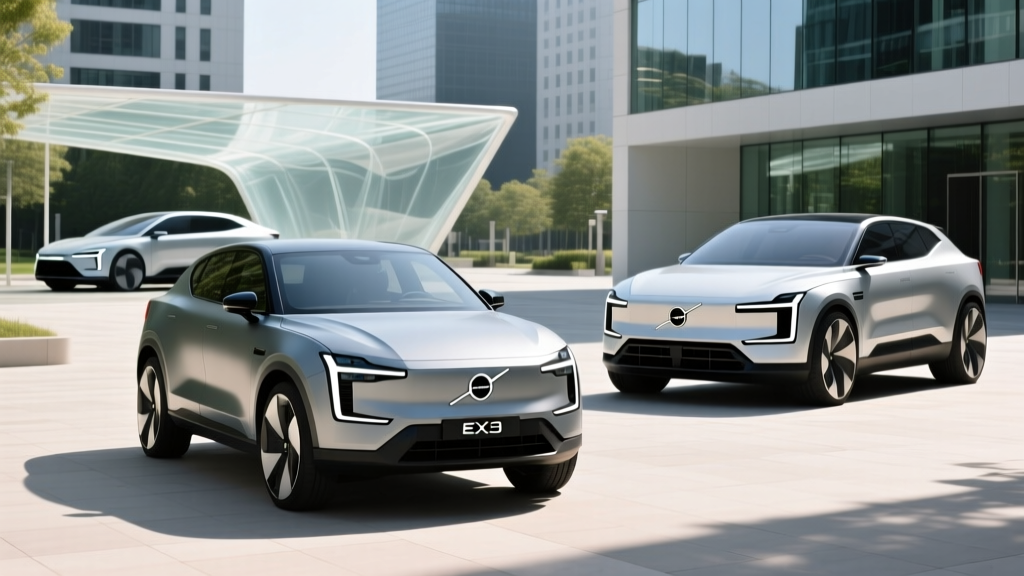
Volvo does not currently sell a traditional body-on-frame electric pickup truck in the United States. What Volvo does sell are electric SUVs that many buyers loosely call "trucks" due to their size and utility: the compact Volvo EX30 (starting around $36,445 for 2025–2026) and the flagship three-row Volvo EX90 (starting near $79,900). Both are unibody battery-electric vehicles (BEVs), not body-on-frame trucks like the Ford F-150 Lightning or Rivian R1T. If you need a true electric pickup with a cargo bed and 5,000+ lb towing, Volvo doesn't offer one yet. If you want Volvo's safety tech, Scandinavian design, and electric powertrain in an SUV form factor, the EX30 and EX90 are the current options.
Volvo's 2026 Electric Lineup: EX30 and EX90 at a Glance
Volvo has committed to full electrification, and the US market currently centers on two models. Here are the exact numbers that matter for buyers:
| Spec | Volvo EX30 (Single Motor) | Volvo EX30 (Twin Motor) | Volvo EX90 (Twin Motor) | Volvo EX90 (Performance) |
|---|---|---|---|---|
| EPA Range | ~275 mi | ~265 mi | ~310 mi | ~300 mi |
| Battery (usable, kWh) | ~66 kWh (NMC) | ~66 kWh (NMC) | ~107 kWh (NMC) | ~107 kWh (NMC) |
| Horsepower | 272 hp | 422 hp | 408 hp | 496 hp |
| 0–60 mph | ~7.4 sec | ~3.4 sec | ~5.7 sec | ~4.7 sec |
| Peak DC Fast Charge | 153 kW | 153 kW | 250 kW | 250 kW |
| 10–80% DCFC Time | ~26 min | ~26 min | ~20 min | ~20 min |
| Level 2 Charge Rate | 11 kW | 11 kW | 11 kW | 11 kW |
| Connector | CCS1 (NACS adapter avail.) | CCS1 (NACS adapter avail.) | CCS1 (NACS adapter avail.) | CCS1 (NACS adapter avail.) |
| Starting MSRP | ~$36,445 | ~$44,995 | ~$79,900 | ~$86,345 |
| Federal Tax Credit (§30D) | Up to $3,750* | Up to $3,750* | Up to $7,500* | Up to $7,500* |
| Battery/Powertrain Warranty | 8 yr / 100,000 mi | 8 yr / 100,000 mi | 8 yr / 100,000 mi | 8 yr / 100,000 mi |
*§30D credit eligibility depends on MSRP caps (SUVs capped at $80,000), buyer income limits, and battery critical-mineral sourcing. The EX30's battery sourcing has historically qualified for only the $3,750 half-credit. Confirm current-year rules at IRS.gov before purchasing.
Real-World Range vs. EPA Sticker: What to Actually Expect
EX30 Single Motor: EPA 275 mi → Expect ~220–240 mi on sustained highway driving at 70+ mph; ~180–200 mi in freezing temperatures (below 32°F).
EX90 Twin Motor: EPA 310 mi → Expect ~250–270 mi highway; ~210–230 mi in freezing conditions.
The EPA test cycle includes low-speed and city driving where regenerative braking recovers energy. On a 300-mile road trip at 75 mph, the EX90's 107 kWh battery (NMC chemistry) will deliver roughly 2.0–2.2 kWh/mi, translating to about 250 miles before you'd want to stop at 15–20% SoC. The EX30, lighter at roughly 4,000 lbs, is more efficient at ~2.5–2.8 kWh/mi but has a smaller battery, so highway range compresses more noticeably.
Cold-weather reality: Volvo includes a heat pump on both models, which helps, but any BEV loses 15–30% of range in sub-freezing weather due to cabin heating demands and reduced battery chemistry efficiency. Preconditioning the battery while plugged in at home mitigates this loss substantially.
Charging Speed and the Charge Curve Reality
Volvo lists peak DC fast-charge rates, but sustained rates tell the real road-trip story:
| Level | Power | EX30 Miles/Hr | EX90 Miles/Hr |
|---|---|---|---|
| Level 1 (120V) | 1.4 kW | ~5 mi/hr | ~3 mi/hr |
| Level 2 (240V home) | 11 kW | ~38 mi/hr | ~30 mi/hr |
| DC Fast (peak) | 153 kW (EX30) / 250 kW (EX90) | — | — |
| DC 10–80% time | — | ~26 min | ~20 min |
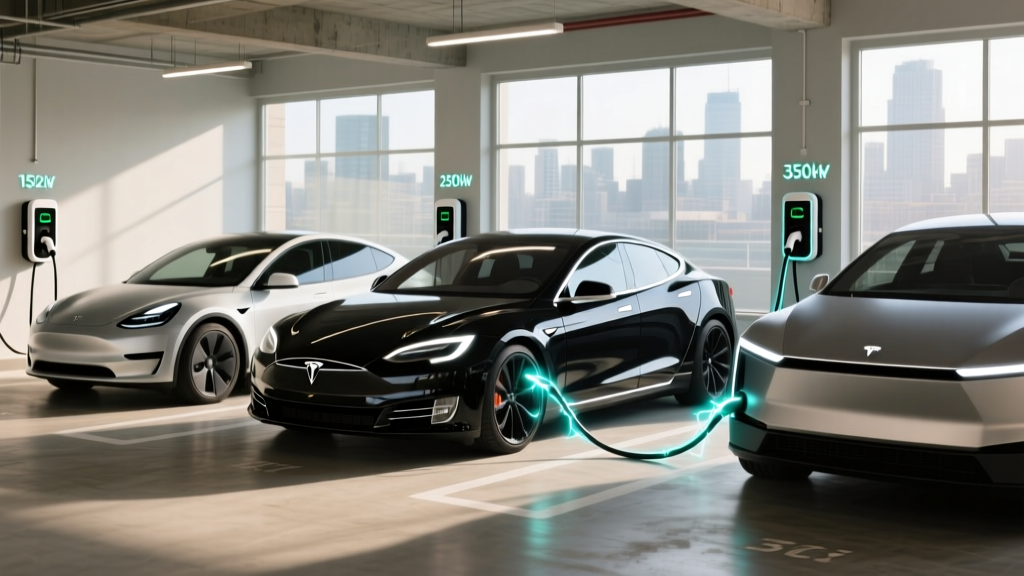
The charge curve matters: Both Volvos will hit their peak kW only between roughly 10–40% state of charge. Above 60%, charging tapers significantly — this is physics, not a flaw. The EX90 at 250 kW peak will average closer to 150–170 kW across a full 10–80% session. On a 350 kW Electrify America or Tesla Supercharger (via NACS adapter), you won't exceed the vehicle's onboard limit. Don't pay for charger capacity the car can't use.
Home charging setup: Both models accept 11 kW on Level 2, meaning a full charge on the EX90's 107 kWh battery takes roughly 10–11 hours. A 48-amp Level 2 home charger on a 60-amp circuit is the practical standard. Expect installation costs of $800–$2,500 depending on panel proximity and whether your home needs a 200-amp service upgrade (typically $1,500–$3,500 additional).
Volvo Electric SUV vs. Gas and Competitors: The Cost Comparison
| Cost Factor | Volvo EX90 (Electric) | Volvo XC90 (Gas AWD) | Ford F-150 Lightning (Electric Pickup) |
|---|---|---|---|
| Starting MSRP | ~$79,900 | ~$58,600 | ~$54,995 |
| Federal Tax Credit | Up to $7,500 | $0 | Up to $7,500 |
| Effective Starting Price | ~$72,400 | ~$58,600 | ~$47,495 |
| Fuel/Energy Cost (5 yr / 75,000 mi) | ~$3,400 (home charging @ $0.14/kWh) | ~$11,200 (@ $3.50/gal, 22 MPG) | ~$3,800 |
| Maintenance (5 yr) | ~$1,200 | ~$4,500 | ~$1,400 |
| Estimated Insurance (annual avg) | ~$2,800 | ~$2,100 | ~$2,400 |
| 5-Year Total Cost (est.) | ~$88,400 | ~$84,850 | ~$64,595 |
The EX90's energy savings are real — roughly $7,800 less than the gas XC90 over five years in fuel and maintenance. However, the higher purchase price and insurance premiums narrow the gap. If you charge primarily at home on off-peak utility rates ($0.10–$0.14/kWh), savings widen. If you rely on public DC fast charging at $0.40–$0.60/kWh, your "fuel" cost roughly triples.
Source: Efficiency and range data cross-referenced with fueleconomy.gov (EPA). Insurance estimates are averages — obtain quotes for your ZIP code and driving record.
What First-Time EV Buyers Need to Know About Volvo's Electric SUVs
If you're coming from a gas vehicle, Volvo's electric lineup introduces several ownership differences worth understanding before signing:
Home Charging Access Is Non-Negotiable for Most Owners
Public DC fast charging works for road trips, but daily EV ownership is built on overnight Level 2 home charging. If you live in an apartment without charging access or street-park only, a Volvo EV (or any EV) will add friction to your routine. Confirm your home's electrical panel capacity before purchasing — a licensed electrician can assess this for $150–$300.
The Connector Situation: CCS1 Today, NACS Tomorrow
Volvo's US models currently ship with the CCS1 (Combined Charging System) connector. Volvo has committed to adopting the North American Charging Standard (NACS) on future models and offers a NACS adapter for Tesla Supercharger access. This matters because the Tesla Supercharger network is the most reliable DC fast-charging network in the US. Verify adapter availability and compatibility at time of purchase.
Battery Degradation Is Slower Than Most Buyers Fear
Volvo uses NMC (nickel manganese cobalt) chemistry in both the EX30 and EX90. NMC offers higher energy density than LFP (lithium iron phosphate), which is why these vehicles achieve their EPA ranges in relatively compact battery packages. Typical NMC degradation runs 2–3% in the first year, then slows to roughly 1% annually. After 8 years, expect 88–92% state of health. Volvo's warranty covers the battery if capacity drops below 70% within 8 years or 100,000 miles — a reasonable threshold, though some competitors warrant to 70% for 10 years.
Insurance Costs Run Higher for EVs
EV insurance premiums average 15–25% higher than comparable gas vehicles, driven by higher repair costs (specialized labor, battery-pack caution protocols, and aluminum-intensive structures). Shop insurance quotes before finalizing your purchase — it can swing your total cost of ownership by $300–$600 per year.
Common Misconceptions About Volvo's Electric Lineup
| Myth | Fact |
|---|---|
| "Volvo makes an electric pickup truck." | Volvo's US electric vehicles are unibody SUVs (EX30, EX90), not body-on-frame pickups. Volvo Group (commercial) makes electric semi-trucks (VNR Electric), but those are Class 8 commercial vehicles, not consumer trucks. |
| "The $7,500 tax credit applies to every Volvo EV." | The §30D credit depends on battery critical-mineral sourcing, buyer income (≤$150K single / $300K joint), and MSRP caps ($80,000 for SUVs). The EX30 has historically qualified for only $3,750 due to sourcing rules. Verify at IRS.gov. |
| "EPA range is what I'll actually get." | EPA range is a laboratory estimate. Highway driving at 75 mph, cold weather, and elevation changes reduce real-world range by 10–30%. Plan road trips around 80% of the EPA sticker for safety margin. |
| "DC fast charging damages the battery." | Occasional DC fast charging causes negligible additional degradation. Volvo's thermal management system actively cools the battery during high-power sessions. Daily Level 2 home charging is ideal, but frequent DCFC won't destroy your battery. |
| "I can tow as much as a gas truck." | The EX90 is rated for approximately 5,000 lbs of towing — adequate for a small boat or utility trailer, but far less than an F-150 Lightning (up to 10,000 lbs). Towing also cuts EV range by 30–50%. |
Decision Framework: Should You Buy a Volvo Electric SUV?
Choose the Volvo EX30 if:
- You want a premium compact electric SUV under $45,000 (before credits)
- Your daily commute is under 80 miles round-trip
- You have home Level 2 charging or reliable workplace charging
- You prioritize design and safety tech over maximum cargo space
- You don't need to tow more than 2,000 lbs
Choose the Volvo EX90 if:
- You need three rows of seating and ~310 miles of EPA range
- You want Volvo's latest Pilot Assist ADAS with LiDAR (SAE Level 2 — driver supervision required at all times)
- Your household income qualifies for the full §30D credit, bringing the effective price closer to $72,000
- You value 250 kW DC fast charging for road-trip practicality
Look elsewhere if:
- You need a true electric pickup truck with a cargo bed (see Ford F-150 Lightning, Rivian R1T, or Chevrolet Silverado EV)
- You lack home or workplace charging and live in a DCFC desert
- You regularly tow over 5,000 lbs or drive 300+ miles in sub-zero conditions
- Your budget is under $35,000 (consider a used EV or a PHEV like the Volvo XC60 Recharge instead)
Frequently Asked Questions
Will Volvo ever make an electric pickup truck for the US?
Volvo has not announced a consumer electric pickup truck as of 2026. The Volvo Group (the commercial truck division, separate from Volvo Cars) produces the VNR Electric Class 8 semi-truck for freight hauling. For a consumer electric pickup, Volvo's parent company Geely owns Polestar and Lotus, neither of which currently sells a pickup. If Volvo enters the segment, it would likely not arrive before 2028.
Can I charge a Volvo EX30 or EX90 at a Tesla Supercharger?
Yes, with a NACS adapter. Volvo has confirmed adapter compatibility for Tesla Supercharger access. Check with your dealer on adapter availability and whether it's included or sold separately (typically $200–$250 if purchased aftermarket). Volvo is transitioning to native NACS ports on future model years.
What does the Volvo battery warranty actually cover?
Volvo's high-voltage battery warranty covers defects and capacity loss below 70% of original capacity for 8 years or 100,000 miles, whichever comes first. This applies to both the EX30 and EX90. A full battery replacement outside warranty, if ever needed, is estimated at $12,000–$20,000 depending on the model, though industry data shows most EV batteries outlast their vehicles without requiring replacement.
How does Volvo's Pilot Assist compare to Tesla Autopilot or Ford BlueCruise?
Volvo's Pilot Assist (and the EX90's enhanced system with LiDAR) is an SAE Level 2 driver-assistance system. It provides adaptive cruise control and lane centering but requires the driver to remain fully engaged with hands on or near the wheel. Unlike Ford BlueCruise or GM Super Cruise, Volvo does not currently offer hands-free driving on pre-mapped highways. The LiDAR sensor on the EX90 adds redundancy for obstacle detection but does not elevate the system to autonomous (Level 4) capability. You are always the driver.
Is the Volvo EX30 made in the USA, and does that affect the tax credit?
The EX30 is manufactured in Ghent, Belgium (with additional production in China for other markets). US-assembled EVs often have an advantage in §30D tax-credit qualification because domestic assembly and battery sourcing are easier to satisfy. The EX30's imported status and battery sourcing have limited its credit to $3,750 in recent tax years. The EX90 is assembled in Ridgeville, South Carolina, which helps its credit eligibility. Always confirm current-year sourcing data on fueleconomy.gov before purchase.