The Quick Answer: Which Volvo Electric Car Fits You?
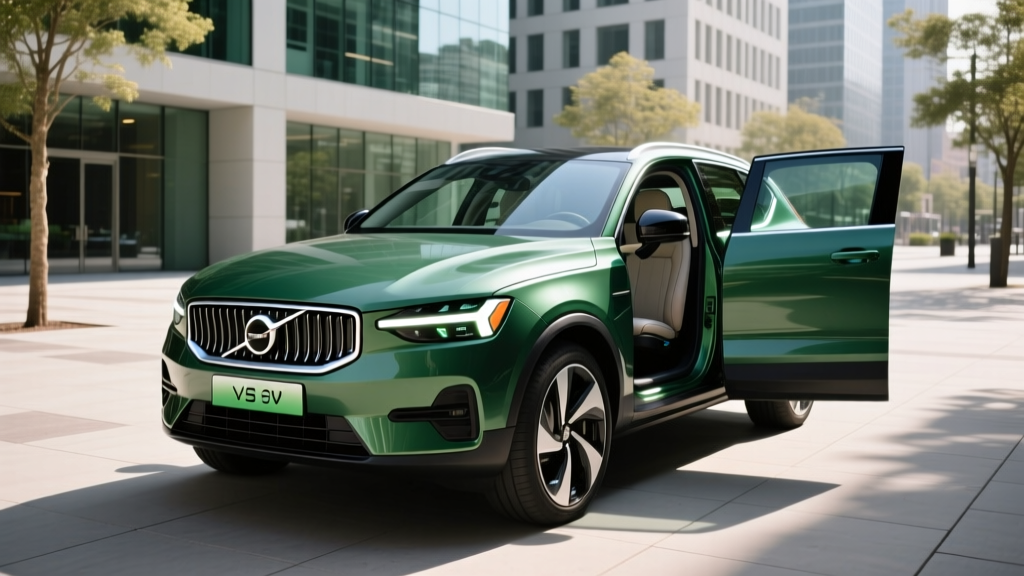
Volvo currently sells four fully electric models in the U.S. for the 2026 model year: the compact EX30 (EPA 265 mi, starting ~$36,345), the subcompact EX40 (formerly XC40 Recharge, EPA 293 mi, ~$41,345), the coupe-styled EC40 (formerly C40 Recharge, EPA 293 mi, ~$41,345), and the flagship three-row EX90 (EPA 300+ mi, ~$79,995). All use NMC battery chemistry and support DC fast charging up to 200 kW (EX40/EC40/EX90) or 153 kW (EX30). If you have reliable home Level 2 charging, drive under 250 miles daily, and live in a moderate climate, any of these models is a strong daily driver. If you frequently road-trip in winter or lack home charging, pay close attention to the real-world range and public charging sections below before committing.
Volvo's 2026 Electric Lineup: Specs at a Glance
Volvo has streamlined its EV naming convention. The XC40 Recharge is now the EX40, the C40 Recharge is the EC40, and the newer EX30 and EX90 round out the portfolio. Here's how they stack up on paper and in practice.
| Spec | EX30 (Single Motor Plus) | EX40 (Twin Motor Ultra) | EC40 (Twin Motor Ultra) | EX90 (Twin Motor Ultra) |
|---|---|---|---|---|
| EPA Range | 265 mi | 293 mi | 293 mi | 300 mi (est.) |
| Battery (usable kWh) | 64 kWh (LFP) | 78 kWh (NMC) | 78 kWh (NMC) | 107 kWh (NMC) |
| Horsepower | 272 hp | 402 hp | 402 hp | 496 hp |
| 0–60 mph | 5.1 sec | 4.5 sec | 4.5 sec | 4.7 sec |
| Peak DC Fast Charge | 153 kW | 200 kW | 200 kW | 250 kW |
| 10–80% DCFC Time | ~26.5 min | ~28 min | ~28 min | ~30 min |
| Level 2 (AC) Charge Rate | 11 kW | 11 kW | 11 kW | 11 kW |
| MPGe (combined) | 104 MPGe | 92 MPGe | 95 MPGe | ~80 MPGe (est.) |
| Cargo (cu ft, rear seats up) | 11.2 + 2.3 frunk | 16.0 + 1.5 frunk | 14.6 + 1.5 frunk | 12.0 + 1.0 frunk (3-row) |
| Base MSRP | $36,345 | $41,345 | $41,345 | $79,995 |
| Battery/Powertrain Warranty | 8 yr / 100,000 mi | 8 yr / 100,000 mi | 8 yr / 100,000 mi | 8 yr / 100,000 mi |
Sources: fueleconomy.gov, Volvo Cars USA. EX90 figures reflect latest available EPA data and may vary by trim. Always verify current model-year specs before purchase.
Real-World Range: What the EPA Sticker Doesn't Tell You
EPA range estimates assume a mix of city and highway driving at moderate temperatures. In real-world ownership:
- Highway-only at 75 mph: Expect roughly 10–15% less than EPA. An EX40 rated at 293 miles may deliver 250–265 miles on a flat interstate run.
- Cold weather (below 30°F): NMC and LFP batteries lose 20–35% of range in freezing temps without preconditioning. The EX40 could drop to 190–220 miles. The EX90's larger 107 kWh pack and standard heat pump help mitigate this, but expect a 15–25% hit.
- City/regenerative driving: You may exceed EPA numbers in stop-and-go traffic thanks to regen braking recapturing energy.
The EX30's LFP battery is notable: LFP chemistry tolerates regular 100% charging better than NMC, so Volvo recommends charging it to full daily. The trade-off is slightly lower energy density (hence the smaller 64 kWh pack in a compact footprint) and somewhat slower DC charging.
Charging a Volvo EV: Home, Public, and What It Costs
Every Volvo EV uses the CCS1 connector for DC fast charging (as of the 2026 model year) and the J1772 connector for Level 2 AC charging. Volvo has not yet transitioned to the NACS (Tesla-style) connector on current models, though adapters may become available as the industry shifts.
| Charging Level | Power | Typical Miles Added per Hour | Where You'll Use It |
|---|---|---|---|
| Level 1 (120V household) | ~1.4 kW | ~4–5 mi/hr | Emergency/top-up overnight |
| Level 2 (240V home/public) | 7.7–11 kW | ~25–37 mi/hr | Daily home charging, workplace, shopping |
| DC Fast Charging | 153–250 kW (peak) | ~150–250 mi in 15 min (varies) | Road trips, highway corridors |
Home Charging Setup: What to Budget
A Level 2 home charger is practically essential for Volvo EV ownership. Here's a realistic cost breakdown:
| Component | Low Estimate | High Estimate |
|---|---|---|
| Level 2 Charger (hardware, e.g., ChargePoint Home Flex, Emporia Vue) | $350 | $700 |
| Electrician labor (240V/50A circuit run) | $500 | $2,000 |
| Permit & inspection | $50 | $300 |
| Electrical panel upgrade (if needed, 200A service) | $1,500 | $3,500 |
| Total (no panel upgrade) | $900 | $3,000 |
| Total (with panel upgrade) | $2,400 | $6,500 |
Important: If your home has a 100-amp panel, an upgrade to 200A is likely required to support a 40–48A EV charger alongside existing loads. Get a quote from a licensed electrician before purchasing your charger. The federal Alternative Fuel Vehicle Refueling Property Credit may cover up to 30% of home charging equipment and installation costs (capped at $1,000), subject to income and census-tract eligibility.
Cost to Charge vs. Gasoline: The Numbers
| Scenario | Volvo EX40 (EV) | Volvo XC60 (Gas, AWD, 25 MPG combined) |
|---|---|---|
| Energy cost per mile (home charging @ $0.16/kWh) | $0.050/mi | — |
| Energy cost per mile (gas @ $3.50/gal) | — | $0.140/mi |
| Annual fuel/energy cost (12,000 mi/yr) | $600 | $1,680 |
| Annual savings (EV vs. gas) | $1,080/year | |
| 5-year fuel savings | $5,400 | |
Savings widen significantly if you charge primarily at home on a time-of-use plan (off-peak rates as low as $0.08–$0.10/kWh) or if local gas prices exceed $4/gallon. Conversely, heavy reliance on DC fast charging at $0.35–$0.50/kWh can push EV per-mile costs close to or above gasoline. Home charging access is the single biggest cost variable.
Federal Tax Credit: Does a Volvo EV Qualify?
The federal EV tax credit under IRS §30D is complex and model-specific. As of 2026, the maximum credit is $7,500, but eligibility depends on multiple factors:
- MSRP caps: SUVs/pickups must be under $80,000; sedans/other under $55,000. The EX30 and EX40/EC40 qualify on price. The EX90 (starting ~$79,995) sits right at the SUV cap — higher trims may exceed it.
- Buyer income limits: AGI must not exceed $150,000 (single), $225,000 (head of household), or $300,000 (joint).
- Battery sourcing requirements: The credit splits into two halves — $3,750 for critical-mineral sourcing and $3,750 for battery-component manufacturing. Volvo's supply chain has been evolving; as of early 2026, the EX30 (built in China) faces significant sourcing restrictions that may reduce or eliminate its eligibility. The EX40/EC40 (built in Belgium) and EX90 (built in South Carolina) have different sourcing profiles.
- Point-of-sale transfer: You can now transfer the credit to the dealer at purchase, reducing your out-of-pocket cost immediately — rather than waiting to claim it on your tax return.
Always verify current eligibility on fueleconomy.gov and consult a tax professional before relying on the credit. Rules shift as manufacturers adjust supply chains.
Volvo EV vs. Gas and Hybrid: Which Saves You More?
Volvo also sells mild-hybrid and plug-in hybrid (PHEV) Recharge models. Here's how the ownership math compares over five years:
| Factor | EX40 (BEV) | XC40 Recharge PHEV | XC40 Mild Hybrid (Gas) |
|---|---|---|---|
| Base MSRP | $41,345 | $45,550 | $38,250 |
| Est. Federal Tax Credit | Up to $7,500* | Up to $3,750* | $0 |
| Effective Purchase Price | ~$33,845* | ~$41,800* | $38,250 |
| Annual Fuel/Energy (12k mi) | $600 | $900 (mix) | $1,680 |
| 5-Year Fuel Cost | $3,000 | $4,500 | $8,400 |
| 5-Year Maintenance (est.) | $1,200 | $2,800 | $3,200 |
| 5-Year Total (purchase + fuel + maint.) | $38,045* | $49,100* | $49,850 |
*Tax credit amounts are estimates subject to IRS eligibility. Verify at purchase.
The BEV wins on total cost when the full $7,500 credit applies and you charge at home. The PHEV makes sense if you lack reliable home charging but want some electric-only range (typically 18–25 miles) for short commutes. The mild hybrid is the lowest-risk option for apartment dwellers or those in areas with sparse public charging.
Common Misconceptions About Volvo Electric Cars
| Myth | Fact |
|---|---|
| "The battery will need replacing in 5 years." | Volvo warranties the battery for 8 years/100,000 miles with a 70% capacity retention threshold. Real-world degradation data from similar NMC packs shows ~8–12% loss over 100,000 miles. Full replacements are rare and covered under warranty if capacity drops below threshold. |
| "You can't road-trip in an EV." | With 200–250 kW DC fast charging, the EX40 adds ~150 miles in 15 minutes. Apps like A Better Routeplanner (ABRP) can plan multi-stop trips with charging. However, DC charging in rural areas remains spotty — plan routes carefully. |
| "EVs are more expensive to insure." | Partially true. EV insurance premiums run 10–20% higher on average due to higher repair costs. Budget an extra $150–$300/year. Shop quotes from multiple insurers — some offer EV-specific discounts. |
| "Level 1 charging is fine for daily use." | Level 1 adds only ~4–5 miles per hour. If you drive 40+ miles daily, you'll slowly deplete the battery over the week. A Level 2 home charger is strongly recommended for any Volvo EV owner. |
| "The EX90 is available now." | The EX90 began limited deliveries in late 2024 and has been ramping production through 2025–2026. Availability varies by region and trim. Check with your local dealer for current inventory and wait times. |
Real-World Ownership: What First-Time Volvo EV Buyers Should Know
Charging Access Is Your #1 Decision Factor
If you can install a Level 2 charger at home (garage, carport, or driveway with electrical access), a Volvo EV is a seamless daily experience — plug in at night, wake up to a full battery every morning, and visit a gas station never. If you live in an apartment without charging, rely on workplace charging, or must depend on public DC fast chargers, the ownership experience becomes significantly more complex and expensive. Public DCFC costs 3–6× more per kWh than home electricity.
Climate Matters More Than You Think
The EX30's LFP battery is more sensitive to cold-weather range loss than the NMC packs in the EX40/EC40/EX90. If you live in the northern U.S. with sustained sub-freezing winters, the EX40 (with a heat pump on Twin Motor trims) or the EX90 (standard heat pump, massive 107 kWh buffer) will serve you better. Preconditioning — warming the battery while still plugged in before departure — recovers significant range and enables faster DC charging on cold mornings.
Volvo's Software and Infotainment
All 2026 Volvo EVs run Google built-in (Google Maps, Google Assistant, Play Store on the center display). This is excellent for route planning with live charging-station data, but it means the car is always connected. Some owners report occasional software glitches and slow OTA update rollouts. The EX90 debuts Volvo's new core-compute architecture, which should improve responsiveness, but early-adopter risk is real.
Maintenance Is Minimal — But Not Zero
EVs eliminate oil changes, spark plugs, and transmission fluid. You'll still need:
- Cabin air filter replacement (~every 20,000 mi, ~$80–$150)
- Brake fluid check (~every 2 years)
- Tire rotation and replacement (EVs are heavier and deliver instant torque; expect tire wear 15–25% faster than on gas cars)
- Windshield washer fluid and wiper blades
Decision Framework: Which Volvo Electric Car Should You Choose?
Choose the EX30 if: You want the most affordable entry into Volvo's EV lineup, drive under 200 miles daily, mostly charge at home, and don't need back-seat space for adults. It's an ideal urban commuter and second car. LFP battery means you can charge to 100% daily without degradation anxiety.
Choose the EX40 if: You want the best balance of range, performance, and practicality. The 293-mile EPA range handles most road trips with one charging stop, the Twin Motor AWD delivers confident all-weather traction, and the cargo area is generous for the compact SUV class. This is the best all-around Volvo EV for most buyers.
Choose the EC40 if: You prefer the sleek coupe-SUV styling and don't mind sacrificing ~1.4 cu ft of cargo space vs. the EX40. The mechanical specs and pricing are nearly identical — it comes down to aesthetics.
Choose the EX90 if: You need three rows of seating, want maximum range and battery buffer for long road trips or cold climates, and are comfortable with the $80,000+ price point. The EX90 also features Volvo's most advanced sensor suite (lidar-equipped), though its driver-assistance system remains SAE Level 2 — you must stay engaged at all times.
Consider a Volvo PHEV instead if: You cannot install a home charger, regularly drive in areas with poor public-charging infrastructure, or frequently tow (Volvo EVs have modest towing ratings of 2,000–3,500 lbs, while PHEVs can handle similar loads without range penalty).
Frequently Asked Questions
Does Volvo use Tesla's NACS charging connector?
Not as of the 2026 model year. Volvo EVs currently use CCS1 for DC fast charging and J1772 for Level 2 AC. Volvo has indicated future adoption of NACS, but current buyers should plan around the CCS ecosystem (Electrify America, EVgo, ChargePoint). CCS-to-NACS adapters may become available as the market transitions.
How long does it take to charge a Volvo EV at home?
With an 11 kW Level 2 charger on a 240V/50A circuit, the EX40's 78 kWh battery charges from 0–100% in approximately 8 hours — ideal for overnight charging. The EX90's 107 kWh pack takes roughly 10–11 hours. The EX30's smaller 64 kWh LFP battery charges in about 6–7 hours.
What happens if the battery degrades significantly?
Volvo's high-voltage battery warranty guarantees at least 70% capacity retention for 8 years or 100,000 miles. If your battery falls below this threshold, Volvo will repair or replace modules to restore capacity above 70%. Complete battery replacement out of warranty would cost an estimated $12,000–$20,000 depending on the model, but industry data suggests most EV batteries retain 85–92% capacity at 100,000 miles under normal use.
Can I tow with a Volvo electric car?
The EX40/EC40 are rated to tow up to 2,000 lbs. The EX90 is rated for up to 5,000 lbs (when properly equipped). The EX30 is not rated for towing. Keep in mind that towing dramatically reduces range — expect a 30–50% reduction depending on trailer weight and aerodynamics.
Is Volvo's Pilot Assist system self-driving?
No. Volvo's Pilot Assist is an SAE Level 2 driver-assistance system. It provides adaptive cruise control and lane-centering, but you must keep your hands on the wheel and eyes on the road at all times. It does not handle complex urban intersections, construction zones, or unexpected obstacles autonomously. No consumer Volvo currently offers Level 3 or higher automation.
How does Volvo's EV reliability compare to competitors?
Volvo's EV reliability has been mixed according to owner surveys. The XC40 Recharge (now EX40) scored average to slightly below average in early model-year reliability, with most complaints centering on software glitches, charging-system communication errors, and infotainment freezes — not powertrain or battery failures. The newer EX30 and EX90 are too new for long-term data. The IIHS has awarded top safety ratings to Volvo's EV lineup, which is the brand's traditional strength.
Editor's note: EV pricing, tax-credit eligibility, and model availability change frequently. Always confirm current figures with Volvo Cars USA, fueleconomy.gov, and irs.gov before making a purchase decision.