Quick Verdict: The C40 Recharge as a Leasing Candidate
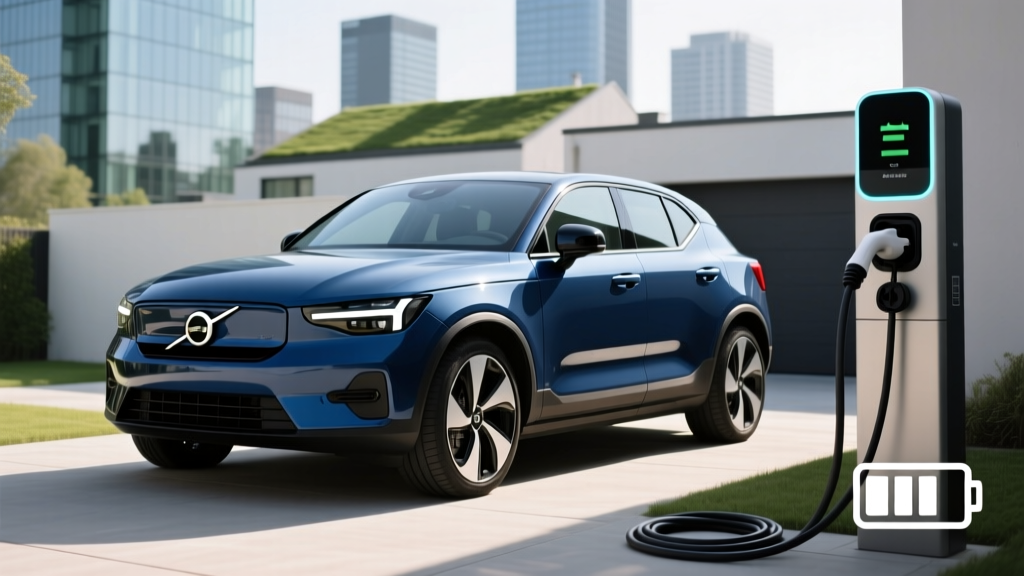
The Volvo C40 Recharge (rebadged as the Volvo EC40 for the 2025-2026 model years) occupies a specific niche in the premium compact electric crossover segment: Scandinavian design, strong dual-motor performance, and one of the most transparent leasing programs in the luxury EV space. For European buyers, Volvo C40 privatleasing has become a popular entry point into electric mobility, bundling insurance, maintenance, and depreciation into a single monthly payment. For US buyers considering a lease or outright purchase, the EC40/C40 delivers 293 miles of EPA range (single-motor), competitive DC fast-charging, and a well-appointed cabin — though it trails rivals in cargo space and infotainment learning curve.
This review covers the latest model-year specifications, real-world range expectations, charging behavior, total ownership costs, and whether privatleasing or buying makes more financial sense in 2026.
Range, Efficiency, and Real-World Expectations
EPA Estimated Range: 293 miles (Single Motor Extended Range) | 257 miles (Twin Motor AWD)
Real-World Expectation: Plan for ~240-265 miles on mixed highway driving in the single-motor variant. In sustained cold weather (below 32°F / 0°C), expect a 15-25% reduction, bringing usable range to roughly 200-225 miles without preconditioning. City driving with regenerative braking recovers range closer to the EPA sticker.
| Specification | Single Motor Extended Range | Twin Motor AWD |
|---|---|---|
| EPA Range | 293 miles | 257 miles |
| Battery (Usable) | 79 kWh (NMC) | 79 kWh (NMC) |
| MPGe (City/Hwy/Combined) | 123 / 105 / 114 MPGe | 105 / 91 / 98 MPGe |
| Energy Consumption | 29 kWh/100 mi | 34 kWh/100 mi |
| Horsepower | 248 hp | 402 hp |
| Torque | 361 lb-ft | 494 lb-ft |
| 0-60 mph | 6.9 sec | 4.5 sec |
| Drivetrain | RWD | AWD (Dual Motor) |
| Max DC Fast Charge | 200 kW | 200 kW |
| 10-80% DC Time | ~28 minutes | ~28 minutes |
| Level 2 Charge Rate | 11 kW (~37 mi/hr) | 11 kW (~37 mi/hr) |
| Base MSRP | $54,950 | $59,950 |
The 79 kWh usable battery uses NMC (Nickel Manganese Cobalt) chemistry, which prioritizes energy density over the longer cycle life of LFP cells. This means Volvo recommends keeping daily state of charge at 80% to minimize long-term degradation — a common practice for NMC packs. The thermal management system actively conditions the battery during fast charging and cold-weather operation.
Charging Performance: Home, Public, and the Curve
Charging speed is where the C40/EC40 shows both its strengths and limitations relative to 800V rivals like the Hyundai Ioniq 5 or Kia EV6.
| Charging Level | Power / Rate | Miles Added per Hour | Typical Use Case |
|---|---|---|---|
| Level 1 (120V household) | 1.4 kW | ~4 mi/hr | Overnight trickle; emergency top-up |
| Level 2 (240V home/work) | 11 kW | ~37 mi/hr | Daily home charging; full charge in ~8.5 hrs |
| DC Fast Charge | Up to 200 kW peak | ~150 mi in 15 min | Road trips; 10-80% in ~28 min |
The 200 kW peak DC charge rate is respectable, but the charge curve tapers noticeably above 60% state of charge. In real-world testing at a 150+ kW charger, the C40 sustains roughly 170-190 kW between 10-40%, then gradually steps down to ~100 kW by 65%, and below 50 kW past 80%. This means the advertised 10-80% time of ~28 minutes is achievable under ideal conditions (preconditioned battery, warm ambient temperature, uncongested charger), but add 5-10 minutes in cold weather or if you skip battery preconditioning.
Preconditioning tip: Always set a navigation destination to your DC fast charger in the Volvo infotainment system. This activates battery thermal conditioning ~15-20 minutes before arrival, which can shave 5-8 minutes off your charge session and reduce long-term battery stress.
For home Level 2 charging, the 11 kW onboard charger means a full 0-100% charge takes approximately 8.5 hours — easily accomplished overnight on a 48-amp Level 2 wallbox connected to a 60-amp circuit. Installation costs for a home Level 2 setup typically range from $800 to $2,500 depending on panel capacity and run length (source: U.S. Department of Energy).
Performance and Driving Dynamics
The Twin Motor AWD variant's 4.5-second 0-60 mph time puts it in hot-hatch territory, with instant torque delivery that makes highway merging and passing effortless. The Single Motor's 6.9 seconds is adequate for most drivers and rewards you with 36 additional miles of EPA range.
Ride quality leans toward firm but compliant — Volvo tuned the suspension for European roads, which translates to confident highway stability but noticeable impact on rough pavement. The steering is precise but light, and one-pedal driving with strong regenerative braking is available in all trims. The low center of gravity from the floor-mounted battery pack minimizes body roll in corners.
Interior, Cargo, and Technology
Volvo's cabin quality remains a segment highlight. The C40/EC40 features a minimalist Scandinavian interior with recycled materials, a 9-inch vertical touchscreen running Google built-in (Google Maps, Google Assistant, Google Play Store), and a 12-inch digital instrument cluster. The sloping roofline gives the C40 its coupe-SUV silhouette but compromises rear headroom and cargo space.
| Measurement | Volvo EC40 (C40) | Competitor: Tesla Model Y |
|---|---|---|
| Cargo (behind rear seats) | 14.6 cu ft | 30.2 cu ft |
| Cargo (rear seats folded) | 48.8 cu ft | 72.1 cu ft |
| Frunk (front trunk) | 1.1 cu ft | 4.1 cu ft |
| Rear legroom | 36.1 in | 41.6 in |
| Rear headroom | 36.7 in | 39.4 in |
The 14.6 cu ft cargo area behind the rear seats is tight for a vehicle in this price class — enough for groceries and a couple of carry-ons, but a family stroller requires folding a seat. If cargo volume is a priority, the Volvo EX40 (formerly XC40 Recharge) offers a boxier profile and more usable space on the same platform.
Driver Assistance: The C40 includes Volvo's Pilot Assist (SAE Level 2) as standard — adaptive cruise control with lane centering. It performs reliably on well-marked highways but requires hands-on-wheel engagement and does not support hands-free driving like GM's Super Cruise or Ford's BlueCruise. The optional Pilot Assist with Pilot Pilot feature adds automatic lane change assist, but the driver must confirm each lane change.
Pricing, Trims, and Volvo C40 Privatleasing Economics
| Trim | Base MSRP | Federal §30D Credit | Effective Price |
|---|---|---|---|
| Core (Single Motor) | $54,950 | Up to $7,500* | ~$47,450 |
| Plus (Single Motor) | $58,450 | Up to $7,500* | ~$50,950 |
| Ultimate (Twin Motor AWD) | $63,450 | Up to $7,500* | ~$55,950 |
*Federal tax credit eligibility under IRS §30D requires: buyer AGI below $150,000 (single) / $300,000 (joint); vehicle MSRP under $80,000 (SUVs); battery critical-mineral and component sourcing thresholds met. The credit can now be transferred to the dealer at point of sale as an immediate price reduction. Verify current-year eligibility with your dealer and a tax professional before purchase.
Privatleasing vs. Purchase: Which Makes Sense?
Volvo's privatleasing programs (primarily available in European markets like Germany, Sweden, and the Netherlands) bundle the vehicle, insurance, maintenance, and sometimes home-charging equipment into a flat monthly fee — typically €599-€799/month for 36 months / 10,000 km per year. In the US, Volvo's equivalent lease offers run approximately $599-$749/month for 36 months with $4,500-$5,500 due at signing, depending on trim and market incentives.
Lease if: you want to avoid battery-depreciation risk, plan to drive under 12,000 miles/year, and prefer a predictable monthly cost with maintenance included. Lease deals sometimes include the $7,500 federal credit as a capitalized cost reduction (the leasing company claims the credit and passes savings to you), making monthly payments more attractive than financing.
Buy if: you drive high annual miles (leasing penalties add up fast), want to keep the vehicle 5+ years, or plan to install a home charger and benefit from cheap overnight electricity. Ownership also lets you capture the full $7,500 credit at point of sale and avoid lease-disposition fees.
Pros
- Premium interior with sustainable materials and excellent build quality
- Strong 293-mile EPA range (single motor) covers most commutes with margin
- Google built-in infotainment is responsive and navigation-integrated
- Standard Pilot Assist (Level 2) is reliable for highway driving
- Competitive 200 kW DC fast-charging for road trips
- Comprehensive 8-year/100,000-mile battery warranty
Cons
- Small cargo area (14.6 cu ft) vs. rivals like Model Y or Ioniq 5
- Sloping roofline reduces rear headroom for taller passengers
- Google-based infotainment has a learning curve and no Apple CarPlay at launch
- 200 kW peak charge rate trails 800V competitors (Ioniq 5 at 240 kW+)
- Higher starting MSRP than non-luxury compact EV crossovers
- Firm ride on rough pavement
Battery Warranty and Long-Term Ownership
Volvo covers the EC40/C40's high-voltage battery with an 8-year / 100,000-mile warranty that guarantees at least 70% capacity retention. This is competitive with the industry standard (BMW, Audi, Mercedes offer similar terms; Tesla offers 8 years / 120,000 miles for Model Y). Based on NMC degradation data from similar Volvo/Polestar platforms, owners can expect approximately 8-12% capacity loss over the first 100,000 miles under normal use, well within the warranty threshold.
For long-term ownership beyond the warranty period, battery replacement costs for an ~80 kWh NMC pack currently range from $12,000 to $18,000 at dealer rates, though module-level repair is often possible for less. This is a factor worth considering if you plan to keep the vehicle 10+ years.
Who Should Consider the Volvo C40 / EC40?
Choose the Volvo C40/EC40 if:
- You prioritize interior quality, design, and brand cachet over maximum cargo space
- Your daily commute is under 80 miles round-trip and you have home charging access
- You want a premium compact EV with strong safety credentials and a comprehensive ADAS suite
- You're considering a lease (privatleasing) to avoid long-term depreciation risk
Look elsewhere if:
- You need family-hauling cargo capacity (consider the Volvo EX40, Tesla Model Y, or Hyundai Ioniq 5)
- You want the fastest possible DC charging for frequent long road trips (consider 800V platforms)
- Apple CarPlay is a must-have (verify current availability for the model year)
- You're budget-constrained and need maximum range per dollar (consider the Chevy Equinox EV or Hyundai Kona Electric)
Frequently Asked Questions
What is the real-world range of the Volvo C40 / EC40?
The single-motor Extended Range variant achieves an EPA-estimated 293 miles. In real-world mixed highway driving at 70 mph, expect approximately 240-265 miles. In cold weather below freezing, range can drop to 200-225 miles without preconditioning. The twin-motor AWD version's EPA rating is 257 miles, with real-world highway range closer to 215-235 miles.
How fast does the Volvo C40 charge at home and on the road?
At home on a Level 2 (240V, 48-amp) charger, the C40 adds approximately 37 miles of range per hour, fully charging in about 8.5 hours. On a DC fast charger, it peaks at 200 kW and charges from 10-80% in roughly 28 minutes under ideal conditions. Cold weather and lack of battery preconditioning can extend this to 35-40 minutes.
Does the Volvo C40 qualify for the $7,500 federal EV tax credit?
Eligibility depends on current-year IRS §30D rules. The C40/EC40's MSRP falls under the $80,000 SUV cap, and Volvo has worked to meet critical-mineral and battery-component sourcing requirements. However, buyer income caps ($150K single / $300K joint AGI) and annual sourcing-rule changes mean eligibility is not guaranteed. Always confirm with your dealer and consult a tax professional. The credit can be transferred at point of sale as an immediate price reduction.
Is Volvo C40 privatleasing a better deal than buying?
Privatleasing (or US lease equivalents) can be advantageous if you drive under 12,000 miles/year, want maintenance included, and prefer to avoid battery depreciation risk. Lease deals sometimes pass the $7,500 federal credit through as a cap-cost reduction. However, buying makes more sense for high-mileage drivers, long-term keepers, and those who want to capture the full credit and build equity. Compare the total 36-month cost of both options including mileage penalties and disposition fees.
How does the C40 compare to the Tesla Model Y and Hyundai Ioniq 5?
The C40 offers superior interior material quality and standard driver assists compared to the Model Y, but gives up significant cargo space (14.6 vs 30.2 cu ft) and has a smaller Supercharger-equivalent network advantage. Against the Ioniq 5, the C40 is more premium inside but charges slower (200 kW peak vs 240+ kW on 800V) and costs considerably more. The C40 suits buyers who value design, brand, and cabin quality above pure spec-sheet dominance.
What warranty covers the Volvo C40 battery?
Volvo provides an 8-year / 100,000-mile battery warranty that guarantees at least 70% capacity retention. The basic vehicle warranty is 4 years / 50,000 miles, and roadside assistance is included for 4 years. This is competitive within the luxury EV segment.