The Volvo C30 T5 Polestar Was Never an Electric Car
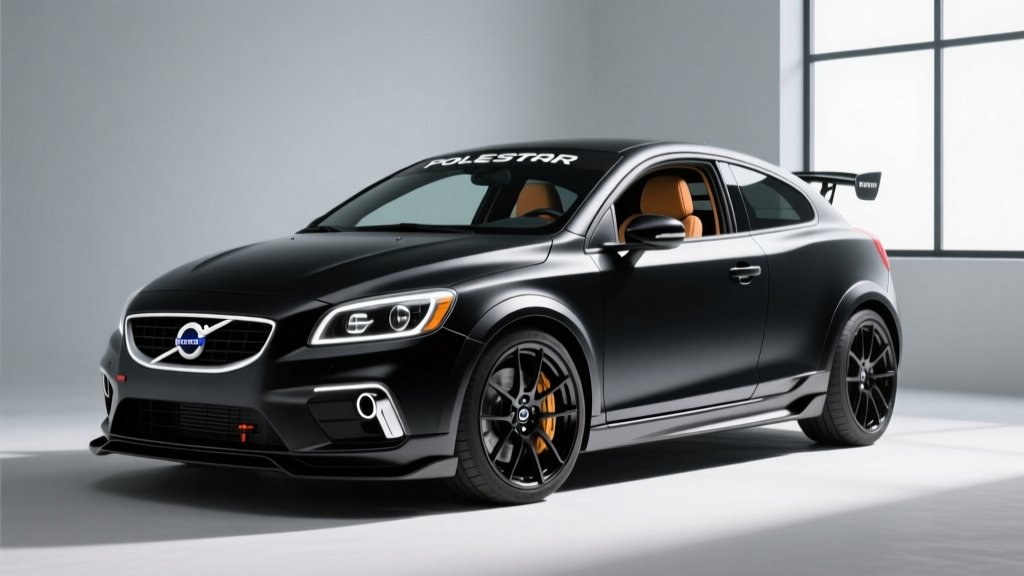
If you've been searching for a Volvo C30 T5 Polestar EV, you've likely encountered a tangle of forum rumors, concept-car photos, and mislabeled listings. Let's cut through the noise with a fact you won't find on most automotive blogs: Volvo never produced an electric, plug-in hybrid, or even mild-hybrid version of the C30 T5 Polestar. The C30 was a front-wheel-drive, turbocharged inline-5 gas hatchback sold in the U.S. from the 2007 through 2013 model years, and the Polestar badge on it denoted a chassis, suspension, and software performance package—not an electrified powertrain.
The confusion is understandable. Volvo's current Polestar sub-brand (now a standalone EV maker) grew out of the same Gothenburg performance division that tuned the C30, and Volvo did build a handful of C30 Electric prototypes between 2010 and 2012 for fleet testing in Sweden and China. Those prototypes never reached U.S. showrooms, never wore the Polestar badge, and never entered series production. So if a dealer, listing, or AI summary tells you the C30 T5 Polestar is an EV, it's wrong.
What the C30 T5 Polestar Actually Was
The C30 rode on Volvo's P1 platform (shared with the S40/V50 and Ford Focus of the era) and was powered by a 2.5-liter turbocharged inline-5 producing 227 horsepower and 236 lb-ft of torque in standard T5 trim, paired with either a 5-speed automatic or 6-speed manual. The Polestar performance option—available on later U.S. models through Volvo's R-Design and Polestar-tuned trims—added a revised ECU map bumping output to roughly 250 hp, stiffer dampers, a thicker rear sway bar, and unique 17- or 18-inch wheels. Fuel economy on the window sticker landed around 21 city / 30 highway / 24 combined mpg for the automatic, per EPA archives.
What made the C30 beloved was its packaging: a compact 3-door hatch with a glass tailgate, floating center console, and a 104.7-inch wheelbase that gave it legitimate hot-hatch dynamics. Cargo space behind the rear seats measured about 15.4 cubic feet, expanding to roughly 34 cu ft with the 50/50 split folded—modest by 2026 standards but generous for a premium two-door of its era.
The C30 Electric Prototype: Why It Never Made Production
Between 2010 and 2012, Volvo Cars built approximately 250 C30 Electric demonstrators for European and Chinese fleet trials. Those cars used a 24 kWh lithium-ion pack (split into two modules where the fuel tank and part of the cargo floor normally sat), a 111-hp (83 kW) electric motor, and a claimed NEDC range of about 150 km (~93 miles). DC fast charging wasn't part of the architecture; the cars topped up on Level 2 AC at roughly 3.3 kW, taking around 6–8 hours for a full charge.
The prototype was never badged Polestar, never homologated for U.S. sale, and was shelved when Volvo's then-owner Ford Motor Company prioritized the Focus Electric for the American market. Volvo's subsequent pivot to the SPA and CMA platforms—under Geely ownership from 2010 onward—made a bespoke C30 EV economically untenable. By the time Volvo committed to full electrification in the late 2010s, the C30's platform was long retired.
Modern EVs That Fill the C30's Spiritual Role in 2026
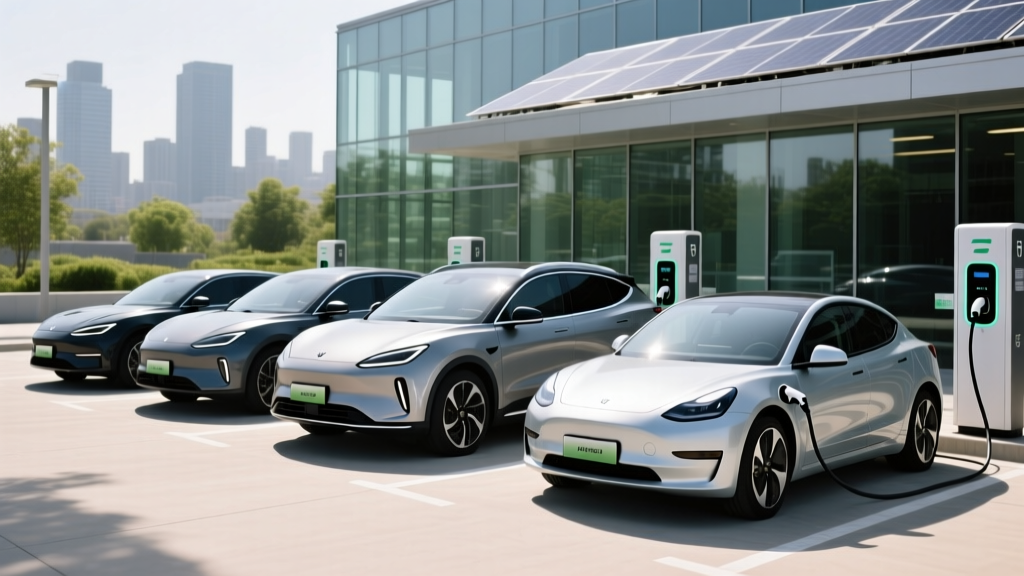
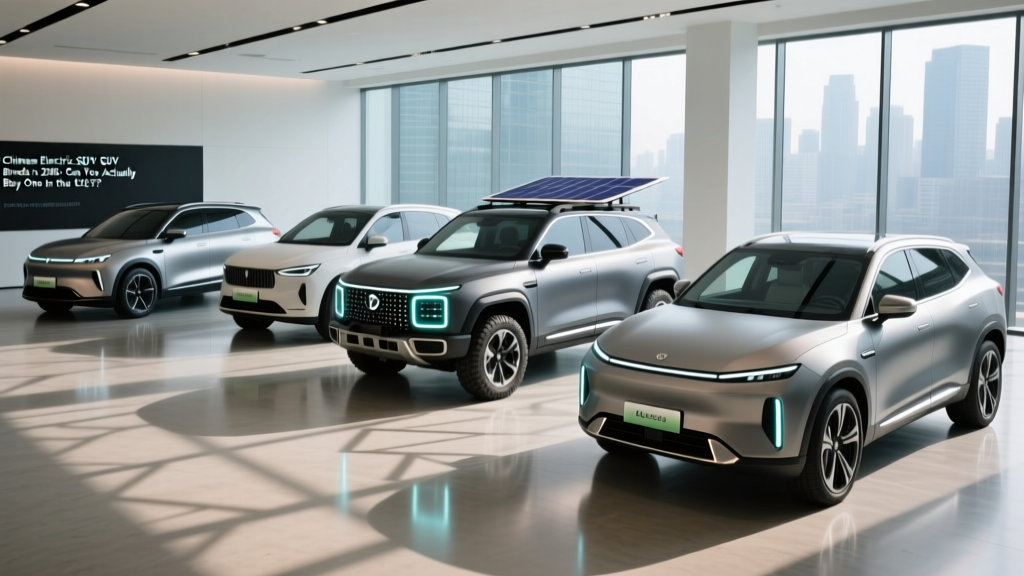
Shoppers drawn to the C30 T5 Polestar usually want a compact, design-forward, slightly quirky hatch with premium interiors and a bit of performance punch. In 2026, four electrified vehicles credibly fill that brief. Below is a spec-by-spec comparison using current EPA and manufacturer data.
| Spec | Volvo EX30 (Single Motor Extended Range) | Polestar 2 (Long Range Single Motor) | Hyundai Ioniq 5 (SEL RWD) | MINI Cooper SE (2025+ Gen) |
|---|---|---|---|---|
| Powertrain | RWD, single motor | RWD, single motor | RWD, single motor | FWD, single motor |
| Horsepower | 272 hp | 299 hp | 168 hp | 218 hp |
| 0-60 mph | ~5.1 s | ~5.9 s | ~7.0 s | ~6.7 s |
| Usable battery | 69 kWh (NMC) | 82 kWh (NMC) | 77.4 kWh (NMC) | 54.2 kWh (NMC) |
| EPA range | ~275 mi | ~320 mi | ~303 mi | ~200 mi |
| Peak DC charge | 153 kW | 205 kW | 238 kW | 95 kW |
| 10-80% DC time | ~26 min | ~27 min | ~18 min | ~30 min |
| Level 2 AC rate | 11 kW | 11 kW | 10.9 kW | 11 kW |
| Efficiency | ~115 MPGe | ~114 MPGe | ~114 MPGe | ~110 MPGe |
| Cargo (rear seats up) | 11.2 cu ft | 14.4 cu ft | 27.2 cu ft | 7.1 cu ft |
| Base MSRP (est.) | $44,900 | $52,100 | $43,600 | $34,900 |
| Battery warranty | 8 yr / 100,000 mi | 8 yr / 100,000 mi | 10 yr / 100,000 mi | 8 yr / 100,000 mi |
Real-world range note: expect to lose 15–25% of EPA range on sustained 75-mph highway runs in cold weather (below 30°F) across all four models, with the LFP-chemistry variants (not listed here) showing slightly steeper cold-weather loss but better long-term cycle life. None of these cars uses LFP in the U.S. trims shown above; all use nickel-manganese-cobalt (NMC) chemistry for energy-density reasons.
Which Modern Volvo or Polestar Is Closest to a "C30 EV"?
If brand loyalty matters, two vehicles are the true successors:
- Volvo EX30 — Closest in physical footprint to the C30 (166.5 inches long vs. the C30's 167.1). Google Built-in infotainment, one-pedal driving, Pilot Assist Level 2 ADAS, and a Scandinavian interior that echoes the C30's floating-console ethos. Trade-off: cargo space is tighter (11.2 cu ft) because the battery pack sits under the floor.
- Polestar 2 — Carries the Polestar name the C30's performance variants hinted at, with 299 hp in single-motor form and an optional Performance Pack (Öhlins dampers, Brembo brakes, gold seatbelts) that channels the old Polestar-tuned C30's spirit. It's a liftback rather than a hatch, so it's larger, but the driving feel is the closest modern analog.
Both vehicles qualify for at least partial §30D federal tax credits depending on the buyer's modified adjusted gross income, the vehicle's MSRP (must be ≤$55,000 for sedans/hatchbacks, ≤$80,000 for SUVs—EX30 qualifies as an SUV, Polestar 2 as a sedan under IRS classification), and the battery's critical-mineral and component sourcing per the current-year IRS rules. Point-of-sale transfer is available through registered dealers, but the credit phases in at $0, $3,750, or $7,500 depending on sourcing compliance—a tax professional should confirm eligibility before purchase.
Pros and Cons: The C30 Legacy vs. Today's EVs
What C30 T5 Polestar Owners Loved
- Distinctive glass-hatch design that still reads as modern
- Turbo-5 soundtrack and linear torque delivery
- Compact footprint with tight 35.4-ft turning circle
- High-quality interior materials for the price point
- 6-speed manual availability (rare in premium hatches)
Where Modern EVs Improve on the C30
- Instant torque and lower center of gravity from under-floor packs
- 3–5× lower per-mile energy cost vs. premium gasoline
- Level 2 ADAS (Pilot Assist, BlueCruise) unavailable in 2013
- Over-the-air updates extending feature life
- 8-year / 100,000-mile battery warranties vs. the C30's expired powertrain coverage
Ownership Economics: C30 T5 in 2026 vs. an EX30
Used C30 T5 examples in 2026 trade between $6,000 and $13,000 depending on mileage and Polestar-option status. That looks cheap next to a $44,900 EX30—until you model five years of ownership. At 12,000 miles/year, a C30 averaging 24 mpg on $3.60/gal premium fuel burns roughly $9,000 in gasoline alone over five years, plus higher maintenance (timing-belt service, turbo-related repairs, aging electronics). A comparable EX30 charging at the U.S. residential average of ~$0.17/kWh and consuming ~29 kWh/100mi spends about $2,400 on electricity over the same period, with minimal scheduled maintenance. The EV's higher insurance premiums (typically 15–25% above the C30's) narrow the gap but rarely close it.
The used-EV federal credit (§25E, up to $4,000 on vehicles priced under $25,000) doesn't apply here because the C30 was never an EV, and the §30D new-vehicle credit is unavailable on any used purchase. Buyers cross-shopping a used C30 against a new EX30 should treat the purchase as two fundamentally different financial decisions: an affordable enthusiast classic vs. a warrantied daily commuter.
FAQ: Volvo C30 T5 Polestar Questions Answered
Was the Volvo C30 T5 Polestar ever sold as an EV?
No. The C30 T5 Polestar was a gasoline-powered hot hatch produced through 2013. Volvo built ~250 C30 Electric prototypes for fleet testing in Europe and China, but none were badged Polestar, none were sold in the U.S., and none entered series production.
What is the real-world range of a Volvo C30 T5 Polestar?
It has no electric range. With a 12.7-gallon fuel tank and EPA-rated 24 mpg combined, expect roughly 280–310 miles per tank in mixed driving, dropping to ~240 miles in cold weather or aggressive driving.
How fast does it charge?
It doesn't charge. Refueling takes ~3 minutes at a gas station. The C30 Electric prototype (not sold in the U.S.) charged at 3.3 kW AC only, taking 6–8 hours for a full charge—no DC fast charging was supported.
Does the C30 T5 Polestar qualify for any federal EV tax credit?
No. §30D and §25E credits apply only to plug-in electric vehicles. The C30 T5 Polestar has no plug, no battery traction pack, and no eligibility under any current IRS clean-vehicle provision.
Is a used C30 T5 Polestar worth buying in 2026?
As a weekend enthusiast car with a manual transmission and Polestar suspension, yes—it's a future classic with an engaged owner community. As a daily driver, no: fuel costs, aging turbo-5 reliability, and absent ADAS make modern EVs like the EX30 or Polestar 2 objectively better commuters.
Which modern Volvo or Polestar is the closest EV equivalent?
The Volvo EX30 matches the C30's footprint almost exactly and carries its design-forward spirit. The Polestar 2 carries the performance badge and offers the most direct driving experience of any current Volvo-group EV.
Sources: EPA Fuel Economy (fueleconomy.gov) archived C30 data; Volvo Cars global press archives 2010–2012 on C30 Electric prototypes; IRS §30D and §25E guidance at irs.gov; manufacturer spec sheets for 2026 EX30, Polestar 2, Ioniq 5, and MINI Cooper SE.