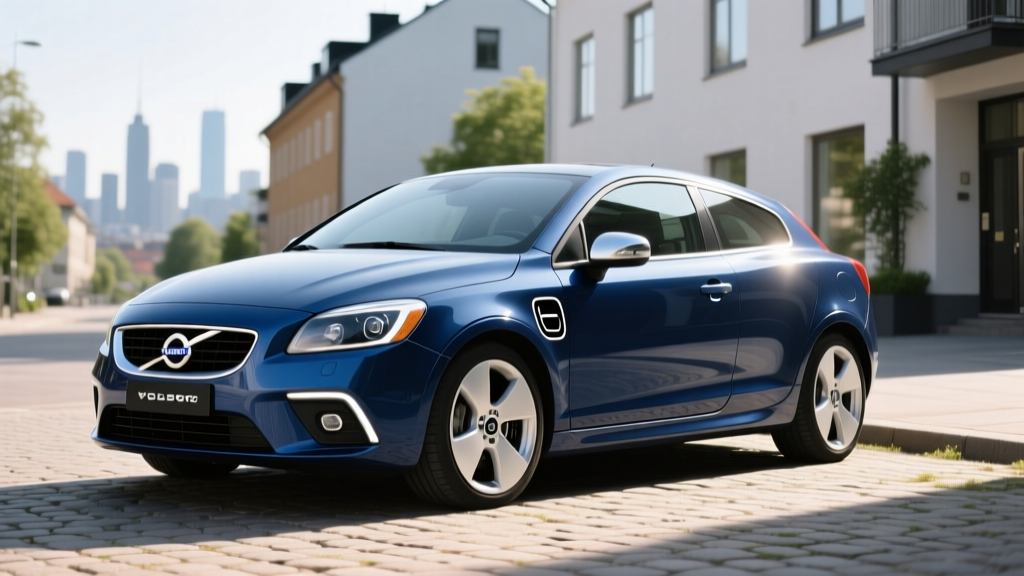
The Volvo C30 Electric—sometimes searched as the C30 Polestar due to Polestar's performance tuning heritage within Volvo—was never a mass-market vehicle. Built between 2011 and 2013 as a limited compliance and demonstration project, roughly 250 units reached U.S. lessees in California and Oregon. Today, it occupies a unique space: part collector curiosity, part proof-of-concept that shaped every Polestar and Volvo EV that followed. If you've landed here researching a C30 Polestar, this review covers the real specs, ownership realities, and how it stacks up against the EVs Polestar actually sells in 2026.
Quick Verdict: A Milestone, Not a Daily Driver
The C30 Electric is historically significant but practically limited by 2026 standards. With an original EPA-estimated range of roughly 83 miles, a 24 kWh battery, and DC fast-charge capability rare for its era, it was ahead of its time—but far behind today's 250+ mile EVs. It's best suited for collectors, EV historians, or ultra-short urban commuters with reliable home charging. Anyone needing a practical daily EV should look at the current Polestar 2 or Polestar 4 lineup instead.
| Spec | Value |
|---|---|
| Motor | Single front-mounted, 89 kW (119 hp) |
| Drivetrain | FWD |
| 0–60 mph | ~9.9 seconds |
| Battery (gross / usable) | 24 kWh / ~22.7 kWh |
| Battery chemistry | NMC (lithium-ion, pouch cells by LG Chem) |
| EPA-estimated range | 83 miles (2012 sticker) |
| Efficiency | 105 MPGe combined (29 kWh/100 mi) |
| DC fast charge (CHAdeMO) | Up to 50 kW, 0–80% in ~30 min |
| Level 2 (240V, 32A) | ~6.6 kW, ~20 miles of range per hour |
| Level 1 (120V, 12A) | ~1.4 kW, ~4 miles per hour |
| Cargo volume | 13.4 cu ft (rear seats up) |
| Original MSRP (lease only) | $1,100/month lease, no purchase option |
| Battery warranty (original) | 8 years / 100,000 miles |
Range & Efficiency: EPA vs. Real-World Reality
Real-world expectation (2026, aged pack): 55–75 miles in mild weather; 40–55 miles in freezing temps or sustained highway driving above 65 mph.
The C30 Electric's 24 kWh pack was competitive in 2012 (the Nissan Leaf launched with the same capacity), but calendar aging degrades NMC chemistry regardless of mileage. A 13-year-old pack that hasn't been replaced will have lost 20–35% of its original capacity depending on storage conditions, charge habits, and thermal history. The C30 lacked active liquid battery thermal management—relying on passive air cooling—which accelerates degradation in hot climates and limits cold-weather range more severely than modern heat-pump-equipped EVs.
Efficiency of 29 kWh/100 miles (105 MPGe combined, per fueleconomy.gov) was respectable for its era, but the car's heavy curb weight (~3,700 lbs for a compact hatch) and pre-2015 power electronics limit it compared to today's 24–26 kWh/100 mi benchmarks.
Charging: CHAdeMO Legacy and Home Setup
| Level | Power | Connector | 0–80% Time / Rate |
|---|---|---|---|
| Level 1 (120V) | ~1.4 kW | J1772 | ~16 hours full; ~4 mi/hr |
| Level 2 (240V) | ~6.6 kW | J1772 | ~4 hours full; ~20 mi/hr |
| DC Fast | Up to 50 kW | CHAdeMO | 0–80% in ~30 min |
The C30 Electric was one of the first production EVs to offer CHAdeMO DC fast charging as standard—a major advantage over the 2011–2012 Leaf, which offered it only as a costly add-on. However, CHAdeMO infrastructure has nearly vanished in the U.S. as of 2026, replaced overwhelmingly by CCS1 and the Tesla NACS standard (now adopted by Ford, GM, Rivian, Volvo, and Polestar). Finding a functioning public CHAdeMO station in 2026 is difficult outside parts of the Pacific Northwest and select legacy networks. This is a significant practical limitation for any buyer considering a C30 today.
Level 2 home charging at 6.6 kW remains viable with any J1772 wallbox (ChargePoint Home Flex, Emporia Level 2, Grizzl-E). Expect a full charge in roughly 4 hours—adequate for overnight replenishment.
Performance and Drivetrain
The C30's front-mounted 89 kW (119 hp) motor delivered adequate urban acceleration but nothing resembling Polestar's modern performance identity. The 0–60 mph time of ~9.9 seconds and top speed electronically limited to 81 mph (130 km/h) reflect its 2011 engineering priorities: efficiency and reliability demonstration, not performance. There was no dual-motor AWD variant, no performance software upgrade, and no Polestar Engineered badge on the EV version—though the car wore Polestar-branded wheels and cosmetic trim on select press vehicles, fueling the "C30 Polestar" search term.
For context, the 2026 Polestar 2 Long Range Dual Motor produces 421 hp and hits 60 mph in 4.1 seconds—illustrating how far the brand has come.
Interior, Tech, and Practicality
The C30 Electric retained the standard C30's distinctive four-seat layout with individual rear bucket seats and the iconic glass hatch. Cargo space measured 13.4 cu ft with rear seats up—modest even for 2012. The interior featured Volvo's familiar floating center stack, a basic trip computer showing kWh consumption and range, and a charge timer for off-peak scheduling.
Notable for its era: a bio-ethanol cabin heater supplement that preserved battery range in cold weather by burning a small ethanol tank rather than drawing from the traction battery. This was innovative but added a consumable fluid owners had to maintain—a complexity modern heat pumps have eliminated.
Drawbacks by 2026 standards: no DC fast-charge curve optimization (flat 50 kW taper), no preconditioning via app, no OTA updates, no advanced driver assist beyond basic ABS/ESC, no Apple CarPlay/Android Auto, and CHAdeMO-only DC charging.
Pricing, Tax Credits, and Ownership in 2026
The C30 Electric was never sold—only leased at $1,100/month for 36 months with no purchase option. Volvo reclaimed most units for study; a small number eventually entered private hands via salvage, auction, or special arrangement. Today, surviving examples trade on enthusiast forums and collector-car auctions for $8,000–$18,000 depending on battery health and mileage.
Battery Health, Warranty, and Replacement Reality
Original battery warranty was 8 years / 100,000 miles—long expired for every C30 Electric in 2026. Volvo never established a consumer battery-replacement program for the C30 since it was a lease-only compliance car. A replacement 24 kWh NMC pack sourced from an EV salvage specialist or custom rebuilder would likely cost $6,000–$11,000 installed, which frequently exceeds the vehicle's market value.
Any prospective buyer should demand a battery State of Health (SoH) report. OBD-II tools like Leaf Spy (which also reads C30 battery data via compatible CAN protocols) can pull remaining capacity percentage. Anything below 75% SoH means real-world range under 60 miles and a near-term replacement decision.
Who Should (and Shouldn't) Buy a C30 Electric Today
This EV suits: Volvo/Polestar collectors, EV history enthusiasts, ultra-short urban commuters (under 30 miles round-trip) with Level 2 home charging, and buyers who value rarity over practicality.
Skip it if: you need reliable daily range above 80 miles, access to public DC fast charging (CHAdeMO scarcity), modern driver assist, over-the-air updates, or any expectation of manufacturer support.
Verdict: Buy a C30 or Look at Modern Polestar?
Pros
|
Cons
|
If you're researching the C30 Polestar because you want a Polestar EV, the 2026 Polestar 2 (EPA range up to 320 miles, NACS charging, $49,900 base, eligible for up to $7,500 §30D credit for qualifying buyers) or the Polestar 4 SUV coupe are dramatically more practical choices. The C30 Electric is a museum piece that happens to drive—not a rational daily-transportation purchase in 2026.
FAQ
What is the real-world range of the C30 Electric in 2026?
Expect 55–75 miles in mild conditions with a healthy pack; 40–55 miles in cold weather or at sustained highway speeds. Original EPA was 83 miles, but 13 years of NMC calendar aging reduces usable capacity significantly.
How fast does the C30 Electric charge?
DC fast charging via CHAdeMO peaks at 50 kW, reaching 80% in about 30 minutes. Level 2 home charging at 6.6 kW (J1772) adds roughly 20 miles of range per hour; a full charge takes ~4 hours.
Does the C30 Electric qualify for the federal EV tax credit?
No, not in practice. The §30D new-vehicle credit is irrelevant for a 2012 car, and the §25E used-EV credit requires dealer sale plus modern battery-sourcing compliance that the C30's 2012 LG Chem pack does not meet. Always consult a tax professional and review current IRS guidance.
Is the C30 Electric worth buying vs. a modern Polestar 2?
Only as a collector item. The 2026 Polestar 2 offers 4x the range, CCS/NACS fast charging, modern safety tech, OTA updates, full warranty, and tax-credit eligibility. The C30 is a conversation piece; the Polestar 2 is transportation.
Why do people call it the "C30 Polestar"?
Polestar served as Volvo's performance division and branded certain C30 T5 R-Design models, but the Electric variant never carried an official Polestar badge. The search term persists because of Polestar's close association with Volvo performance variants of that era.
Can I still find CHAdeMO chargers for the C30?
Very few. Electrify America, Tesla Superchargers, and most new networks use CCS1 or NACS. Legacy CHAdeMO stations remain in parts of the Pacific Northwest and on older EVgo hardware, but the connector is effectively deprecated for new U.S. infrastructure.