Quick Answer: Is a Volvo All-Electric SUV Right for You?
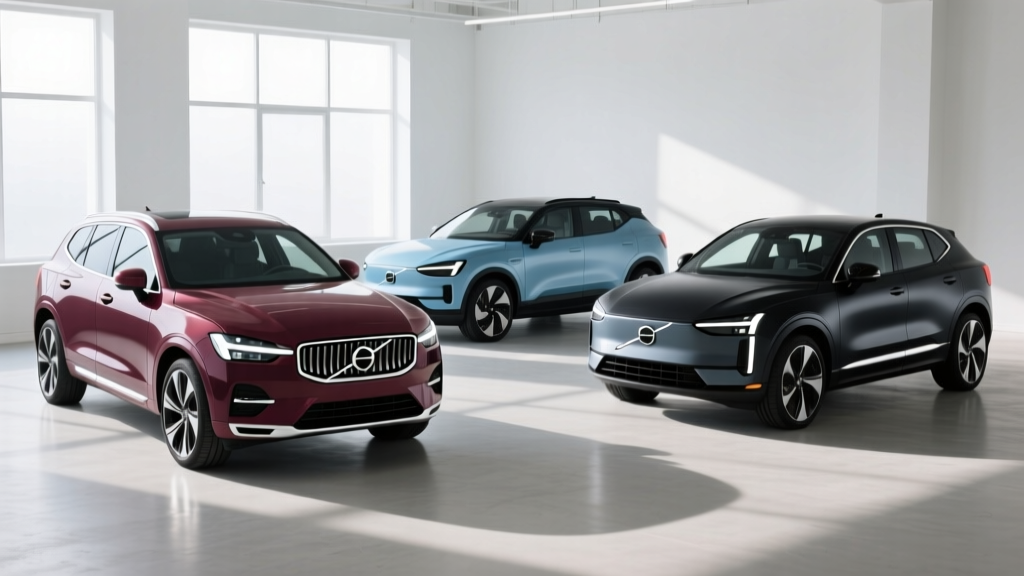
Volvo's 2026 all-electric lineup spans four models — the compact EX30 (275 mi EPA, from $36,350), the midsize EX40/EC40 (293 mi EPA, from $44,950), and the flagship three-row EX90 (310 mi EPA, from $79,995). All use the NACS connector for native Tesla Supercharger access. The best value is the EX40 Twin Motor for daily commuters who can charge at home; the EX30 suits urban buyers who don't need rear-seat space. If you drive more than 250 highway miles weekly or lack home charging, a Volvo plug-in hybrid (XC60 Recharge or XC90 Recharge) remains a more practical bridge.
The 2026 Volvo All-Electric Lineup at a Glance
Volvo committed to becoming a fully electric brand by 2030, and the 2026 model year represents its most complete battery-electric portfolio yet. Here's how the four models compare on paper — and where real-world ownership diverges from the spec sheet.
| Spec | EX30 Single Motor | EX40 Twin Motor | EX90 Twin Motor | EC40 Twin Motor |
|---|---|---|---|---|
| EPA Range | 275 mi | 293 mi | 310 mi | 293 mi |
| Battery (usable) | 69 kWh (NMC) | 82 kWh (NMC) | 111 kWh (NMC) | 82 kWh (NMC) |
| Horsepower | 272 hp | 402 hp | 496 hp | 402 hp |
| 0–60 mph | 5.1 sec | 4.5 sec | 4.7 sec | 4.5 sec |
| Peak DC Fast Charge | 153 kW | 200 kW | 250 kW | 200 kW |
| 10–80% DCFC Time | ~26 min | ~28 min | ~30 min | ~28 min |
| Level 2 (11 kW) | ~8 hr | ~8 hr | ~11 hr | ~8 hr |
| Connector | NACS | NACS | NACS | NACS |
| Base MSRP | $36,350 | $44,950 | $79,995 | $44,950 |
| Battery Warranty | 8 yr / 100k mi | 8 yr / 100k mi | 8 yr / 100k mi | 8 yr / 100k mi |
Real-World Range Reality Check
EPA estimates assume mixed driving at moderate temperatures. In our experience and consistent with independent testing:
- Highway (70–80 mph, 75°F): Expect ~85–90% of EPA — roughly 235–250 mi for the EX40, 265–280 mi for the EX90.
- Cold weather (30°F, highway): NMC batteries without preconditioning can lose 25–35%. With Volvo's heat pump (standard on all 2026 models) and preconditioning enabled, loss narrows to ~15–20%.
- City/regen-heavy driving: You may exceed EPA by 5–10% thanks to regenerative braking recovery.
The EX90's 111 kWh pack is the largest in the lineup, but its 5,900-lb curb weight and boxy aero profile limit efficiency to roughly 2.8–3.0 mi/kWh highway. Source: fueleconomy.gov.
Volvo All-Electric vs. Gas and Hybrid Alternatives
Volvo still sells the XC60 and XC90 as plug-in hybrids (Recharge models), and many cross-shoppers weigh these against the all-electric options. Here's a data-driven comparison using the popular midsize SUV segment:
| Metric | EX40 Twin Motor (BEV) | XC60 Recharge (PHEV) | XC60 B5 (Mild Hybrid Gas) |
|---|---|---|---|
| MSRP (base) | $44,950 | $55,950 | $47,350 |
| EPA Combined | 95 MPGe | 63 MPGe / 28 MPG gas | 26 MPG |
| Electric-Only Range | 293 mi | 35 mi | N/A |
| Fuel/Energy Cost per Mile | ~$0.04 (home) / ~$0.12 (DCFC) | ~$0.06 (electric) / ~$0.16 (gas) | ~$0.15 |
| 5-Year Fuel/Energy Cost | ~$2,700 (home charging) | ~$4,200 (mixed) | ~$9,750 |
| Federal Tax Credit (§30D) | Up to $7,500* | Up to $7,500* | $0 |
| Annual Maintenance | ~$300 | ~$650 | ~$700 |
* §30D eligibility depends on MSRP caps ($80k SUVs / $55k sedans), buyer income limits ($300k MFJ / $150k single), and battery critical-mineral sourcing. Verify at irs.gov before purchase. Point-of-sale transfer is available at participating dealers.
The EX40 wins on running costs decisively — roughly $7,000 less in energy and maintenance over five years versus the gas XC60 B5, and $1,500 less than the PHEV. However, the XC60 Recharge offers flexibility for buyers who take frequent 400+ mile road trips into rural areas with sparse DC fast-charging infrastructure.
Charging the Volvo All-Electric Fleet: What You Actually Need
Every 2026 Volvo EV ships with a native NACS (North American Charging Standard) port, meaning direct access to the Tesla Supercharger network — over 28,000 stalls nationwide — without an adapter. This is a significant advantage over CCS-only vehicles as Electrify America and other networks retrofit stalls with NACS cables.
| Level | Power | Miles Added per Hour | Typical Use Case |
|---|---|---|---|
| Level 1 (120V) | 1.4 kW | 3–5 mi/hr | Overnight trickle, emergencies |
| Level 2 (240V, 48A) | 11.5 kW | 28–35 mi/hr | Daily home charging — recommended |
| DC Fast Charge | 153–250 kW | ~180–250 mi in 20 min | Road trips, quick top-ups |
Home Charging Installation: The Real Costs
Most Volvo EV owners will want a Level 2 home charger. Here's a realistic cost breakdown for a 2026 installation:
| Item | Cost Range | Notes |
|---|---|---|
| Level 2 EVSE (48A, hardwired) | $400–$700 | ChargePoint Home Flex, Emporia, Wallbox |
| Electrician labor (240V/60A circuit) | $800–$2,500 | Depends on panel proximity |
| Electrical panel upgrade (if needed) | $1,500–$3,500 | Required if panel is 100A or maxed |
| Permit & inspection | $100–$300 | Varies by municipality |
| Total (no panel upgrade) | $1,300–$3,500 | Most common scenario |
| Total (with panel upgrade) | $2,800–$7,000 | Older homes, 100A service |
Charging-curve reality: Volvo's "200 kW peak" for the EX40 applies only between ~10–50% State of Charge (SoC). Above 80%, the rate tapers sharply to protect the NMC cells — expect 50 kW or less. A 10–80% session takes ~28 minutes, but 80–100% can add another 30+ minutes. Always plan road-trip stops to 80%, not 100%.
Preconditioning: The Feature Most Owners Forget
Volvo's infotainment lets you schedule departure times or precondition the battery via the app before a DC fast charge. Preconditioning warms the NMC pack to ~77°F, enabling the battery to accept peak kW immediately. Without it — especially below 50°F — your first 5–10 minutes of charging may be limited to 40–60 kW, adding minutes to your stop.
Total Cost of Ownership: 5-Year Breakdown
Let's model five years and 75,000 miles for the EX40 Twin Motor versus the gas XC60 B5, assuming home charging at $0.14/kWh (national average) and gas at $3.40/gallon.
| Cost Category | EX40 Twin Motor (BEV) | XC60 B5 (Gas MHEV) |
|---|---|---|
| Purchase Price (MSRP) | $44,950 | $47,350 |
| Federal Tax Credit (§30D) | −$7,500 (if eligible) | $0 |
| Net Purchase | $37,450 | $47,350 |
| Energy/Fuel (75k mi) | $2,700 | $9,750 |
| Maintenance (5 yr) | $1,500 | $3,500 |
| Insurance (5 yr avg) | $9,500 | $7,500 |
| Depreciation (est. 5 yr) | ~$18,000 | ~$19,500 |
| 5-Year Total Cost | ~$69,150 | ~$87,600 |
| Cost per Mile | ~$0.92 | ~$1.17 |
Key takeaways from this model:
- Insurance is ~25% higher for the EX40. EV insurance premiums remain elevated due to higher repair costs for aluminum panels and battery-adjacent components. Get quotes before committing.
- Maintenance savings are real. No oil changes, no transmission fluid, no spark plugs. Brake pads last 80,000+ miles thanks to regenerative braking.
- Depreciation has improved for Volvo EVs since 2023's steep drops, but NMC-pack EVs still trail Toyota/Honda hybrids in resale. The §30D credit narrows this gap substantially if you qualify.
Common Misconceptions About Going All-Electric with Volvo
| Myth | Fact |
|---|---|
| "The battery will need replacing in 5 years" | NMC degradation averages 10–15% over 150,000 miles based on fleet data. Volvo warranties 70% capacity retention at 8 years/100,000 miles. Full replacement costs $15,000–$22,000, but most packs outlast the vehicle. |
| "I can't road-trip an EV" | With NACS access to 28,000+ Superchargers, the EX90 can add ~200 miles in 20 minutes. A 600-mile trip takes ~2 extra stops of 25 min each vs. gas — plan accordingly. |
| "EVs are worse in cold weather" | Range drops 15–20% with preconditioning and the heat pump active. The EX90's 310-mi EPA becomes ~250–265 mi in 30°F weather — still sufficient for most daily needs. Cabin heating uses the heat pump, not resistive elements, saving ~30% energy vs. older EVs. |
| "Charging takes too long" | Home Level 2 adds 28–35 miles per hour. Most owners plug in overnight and wake to a full battery every morning — effectively "refueling" takes zero extra time on non-road-trip days. |
| "The §30D credit is gone or I can't get it" | The credit remains available in 2026 with point-of-sale transfer at participating dealers. However, income caps ($150k single / $300k MFJ) and critical-mineral sourcing requirements apply. Check the IRS qualified vehicles list monthly — it changes. |
Decision Framework: Which Volvo Electrified Vehicle Fits Your Life?
Choose the EX30 if:
- You're an urban or suburban driver with a commute under 60 miles round-trip
- Rear-seat space is secondary (it's a compact crossover — back seats fit kids, not tall adults comfortably)
- You want the lowest entry price and can charge at home
- You value Volvo's Pilot Assist (SAE Level 2) for highway driving without paying for the EX90's LiDAR-equipped system
Choose the EX40 if:
- You need a practical daily driver with adult-sized rear seats and 25 cu ft of cargo space
- Your road trips stay within 250 miles or follow well-served Supercharger corridors
- You want the best balance of price, range, and charging speed in the lineup
- 402 hp and a 4.5-second 0–60 matter to you
Choose the EX90 if:
- You need three rows and 7-passenger seating — the only all-electric Volvo that delivers this
- You regularly drive 300+ miles and want maximum range buffer
- You want Volvo's most advanced ADAS suite, including LiDAR and advanced interior sensing (still SAE Level 2 — you must remain engaged)
- Budget allows $80k+ before options
Choose a Volvo Recharge PHEV (XC60/XC90) instead if:
- You lack reliable home or workplace Level 2 charging
- You frequently tow (PHEV XC90 tows 5,000 lbs vs. EX90's 4,500 lbs)
- You regularly drive into areas with limited DC fast-charging infrastructure (rural West, parts of the Midwest)
- You want to reduce fuel consumption by ~60% without range compromises on long trips
What First-Time Volvo EV Buyers Must Know
If this is your first battery-electric vehicle, these five points will save you money and frustration:
- Install Level 2 before delivery day. Scheduling an electrician can take 2–4 weeks in some markets. Have your 240V/48A circuit ready so your first night with the car is a full-charge night.
- Understand kW vs. kWh. kWh is your battery's fuel-tank size (82 kWh in the EX40). kW is how fast you're filling it (200 kW peak DC). Confusing them leads to unrealistic charging expectations.
- Use the Volvo app's charge scheduling. If your utility offers off-peak rates (often 10 PM – 6 AM), schedule charging to those windows. Savings can cut your per-mile energy cost from $0.04 to $0.02.
- Check your insurance early. Get a quote on the exact VIN before signing. Some insurers surcharge EVs 20–30%; others offer EV discounts. Shopping around saves $500–$1,000/year.
- Plan for road trips, not daily driving. Your daily commute is almost certainly within range. The 5% of driving that requires planning is road trips — use apps like A Better Routeplanner or the Volvo built-in navigation, which factors battery temperature and elevation.
Frequently Asked Questions
Does the Volvo EX40 qualify for the $7,500 federal tax credit in 2026?
Eligibility under IRS §30D depends on three factors: (1) the buyer's adjusted gross income must not exceed $150,000 (single) or $300,000 (married filing jointly); (2) the vehicle MSRP must be under the $55,000 cap for SUVs (the EX40 starts at $44,950, so base and Plus trims qualify); and (3) the battery must meet critical-mineral and component sourcing thresholds that tighten annually. The IRS updates its qualified vehicle list regularly — verify the specific trim before purchasing. The credit can be transferred to the dealer at point of sale as a purchase-price reduction.
How long does the Volvo EV battery actually last?
NMC lithium-ion packs in modern Volvo EVs are engineered for 1,500–2,000 full charge cycles before reaching 70% State of Health (SoH). For the EX40's 82 kWh pack at 293 mi EPA, that translates to roughly 440,000–585,000 miles before hitting the warranty threshold. Real-world fleet data from high-mileage EVs suggests most packs retain 85–90% capacity at 100,000 miles. Volvo's warranty covers defects and capacity below 70% for 8 years or 100,000 miles.
Can I charge a Volvo EV at Tesla Superchargers?
Yes. All 2026 Volvo EVs have a native NACS port, which is the same connector used at Tesla Superchargers. No adapter is needed. You'll use the Tesla app or Volvo's built-in navigation to locate and activate stalls. Non-Tesla networks (Electrify America, EVgo) are also adding NACS cables to their stations throughout 2025–2026.
Is Volvo's Pilot Assist actually self-driving?
No. Pilot Assist is an SAE Level 2 driver-assistance system. It combines adaptive cruise control and lane-centering to reduce highway fatigue, but the driver must keep hands on the wheel and eyes on the road at all times. The EX90 adds LiDAR and driver-monitoring cameras for enhanced situational awareness, but it remains Level 2 — not autonomous. Only Level 4 systems (like Waymo's robotaxi service in select cities) operate without a human driver.
What happens if I can't charge at home?
Public-only charging is viable but costs 2–4× more than home charging ($0.30–$0.50/kWh at DC fast chargers vs. $0.14/kWh residential average). You'll also spend 2–3 hours per week at charging stations. If home installation isn't possible, check whether your workplace offers Level 2 charging, or look for apartment complexes and municipalities installing curbside chargers. If none of these exist, a Volvo PHEV (35 mi electric-only range + gas engine) is a more practical choice.