What Is the Volte System for Tesla?
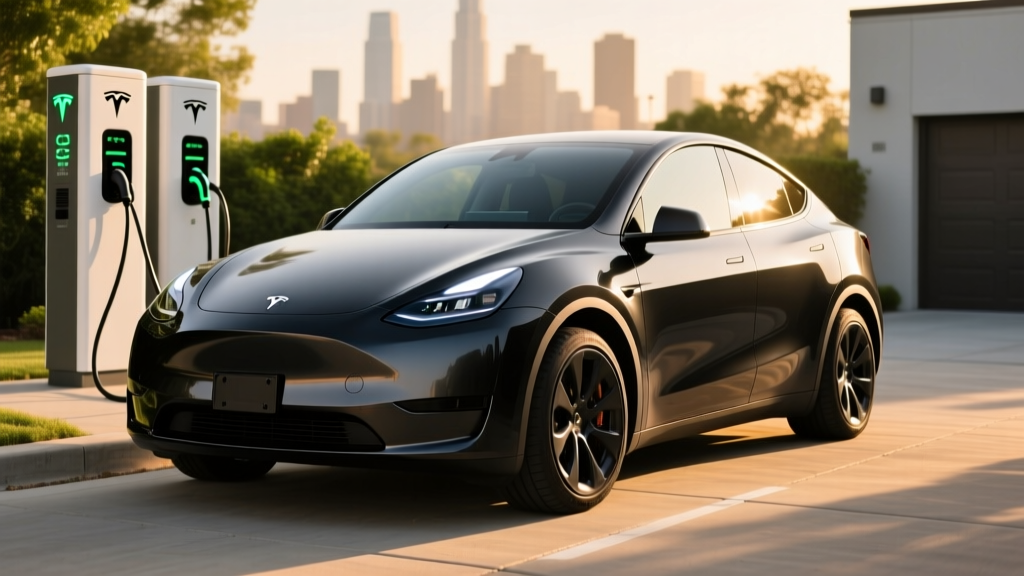
If you've been searching for alternatives to Tesla's Supercharger network, you may have encountered mentions of the Volte system for Tesla. Volte is an emerging third-party DC fast-charging hardware and software platform designed to interface with Tesla vehicles via the NACS (North American Charging Standard) connector. Unlike Tesla's proprietary Supercharger stalls, Volte stations are typically deployed by independent site hosts — shopping centers, fleet depots, and workplace parking structures — using modular charging cabinets that can scale from 60 kW single-dispenser units up to 350 kW liquid-cooled dual-dispenser configurations.
As of early 2026, Volte has not achieved the scale of Electrify America or the Tesla Supercharger network, but its footprint is growing in select metro areas and along secondary highway corridors where Tesla's own infrastructure remains thin. For Tesla owners, the practical question is whether Volte stations deliver comparable charge speeds, reliability, and billing transparency.
Volte System Compatibility With Tesla Vehicles
All Tesla vehicles built from late 2024 onward ship with a native NACS charge port, eliminating the need for the CCS-to-NACS adapter that early adopters relied on. Volte stations equipped with NACS connectors plug directly into any current-production Model 3, Model Y, Model S, or Model X. Older Teslas (pre-2025 NACS transition) can use Volte stations only if the site host provides a CCS1 adapter or if the owner has Tesla's official NACS retrofit adapter (available through Tesla Service for approximately $175).
Volte's software layer supports Tesla's vehicle handshake protocol, meaning the car's battery management system (BMS) communicates state of charge (SoC), thermal state, and maximum accepted charge rate to the dispenser — enabling the same preconditioning workflow Tesla owners use at Superchargers. You set the Volte station as your navigation destination, and the car begins warming the battery en route.
Charging Speeds: Volte vs. Tesla Supercharger
| Metric | Volte 350 kW Cabinet | Volte 150 kW Cabinet | Tesla Supercharger V4 | Tesla Supercharger V3 |
|---|---|---|---|---|
| Peak Power | 350 kW | 150 kW | 350 kW (shared) | 250 kW |
| Model 3 LR 10–80% (min) | ~20 | ~32 | ~18 | ~25 |
| Model Y LR 10–80% (min) | ~22 | ~35 | ~20 | ~28 |
| Connector | NACS (native) | NACS (native) | NACS (native) | NACS (native) |
| Preconditioning Support | Yes | Yes | Yes | Yes |
| Cable Length | ~12 ft | ~12 ft | ~13 ft | ~11 ft |
The Volte 350 kW cabinet delivers competitive peak power, but real-world charge sessions depend heavily on the vehicle's charge curve. Tesla's Model 3 and Model Y Long Range variants (equipped with NMC lithium-ion packs ranging from 75–82 kWh usable) typically accept peak rates only between 10–30% SoC, tapering significantly above 60%. A 350 kW Volte stall will not sustain 350 kW to a Tesla — the car's BMS limits peak acceptance to roughly 250 kW for current-generation packs. The advantage of a 350 kW cabinet is that it can serve two vehicles simultaneously at ~175 kW each without severe throttling, whereas a 150 kW Volte unit is single-dispenser and capped at its rated output.
Real-World Charging Experience
Volte's billing system operates through its own mobile app or an RFID card. Unlike Tesla Superchargers — which bill automatically through your Tesla account — Volte requires a separate account setup. Pricing varies by site host but typically ranges from $0.35–$0.55 per kWh, which is broadly comparable to Supercharger rates in most U.S. markets. Some Volte locations offer idle fees ($1.00/minute after session completion), so monitor your session via the app.
Who Should Use the Volte System?
The Volte system for Tesla owners makes the most sense in three scenarios:
- Supercharger deserts: If your regular route passes through areas where Tesla's own stalls are sparse or frequently congested, a Volte station can serve as a reliable backup.
- Destination charging: Volte is increasingly deployed at retail centers and workplaces where you're parked for 30–90 minutes — enough time for a meaningful charge at 150 kW.
- Fleet and multi-brand households: Because Volte stations serve any NACS-equipped vehicle (not just Teslas), they're practical for households with a mix of Tesla, Ford, Rivian, or Hyundai/Kia EVs.
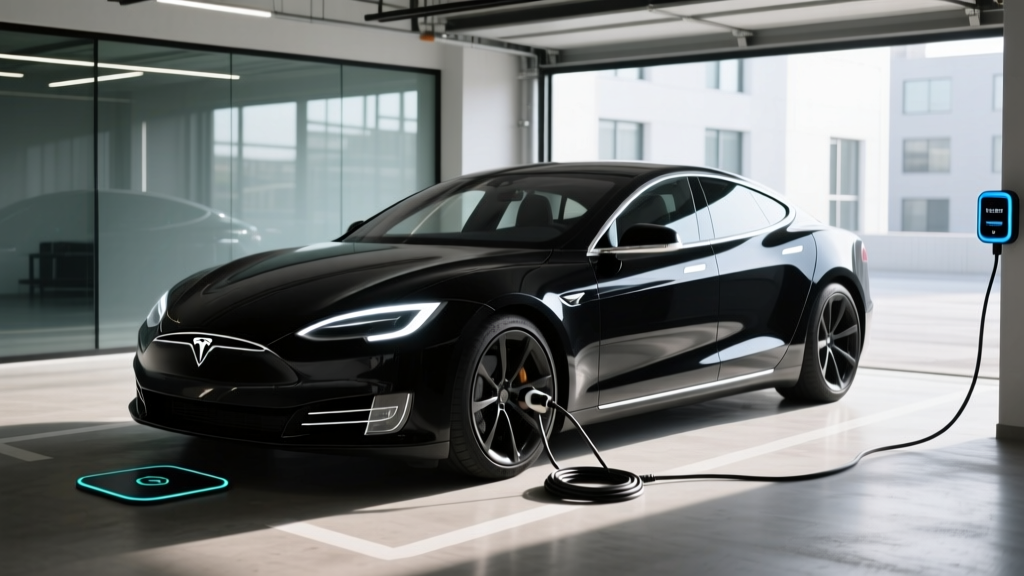
For daily charging, home Level 2 remains the gold standard. A Tesla Wall Connector on a 48-amp circuit delivers up to 11.5 kW (roughly 44 miles of range per hour for a Model Y), which covers most daily driving needs overnight without any public charging dependency.
Pricing and Access Considerations
Volte does not manufacture or sell vehicles, so there's no MSRP to evaluate. However, access costs matter:
| Cost Factor | Typical Range | Notes |
|---|---|---|
| Per-kWh Rate | $0.35–$0.55 | Varies by site host and local utility rates |
| Session Fee | $0–$1.50 | Some hosts charge a flat connection fee |
| Idle Fee | $1.00/min | Applied after charge completes; grace period 5 min |
| Membership Discount | 10–15% off | Available via Volte app subscription ($4.99/mo) |
| NACS Adapter (pre-2025 Teslas) | ~$175 | One-time purchase from Tesla Service |
For context, charging a Model Y Long Range (82 kWh battery) from 10–80% at a Volte station charging $0.45/kWh costs approximately $25.70 — adding roughly 230 miles of range. The equivalent gasoline cost for a comparably sized crossover averaging 26 MPG at $3.40/gallon would be about $30.09 for the same distance. The savings are modest on a per-session basis but compound over thousands of miles.
Reliability and Network Maturity
This is where Volte faces its steepest challenge. Tesla's Supercharger network consistently posts uptime rates above 97%, according to Tesla's own impact reports. Volte, as a younger network, does not yet publish comparable uptime statistics, and early user reports on platforms like PlugShare and Reddit indicate intermittent issues with payment processing and connector latch failures at some sites.
Volte's modular cabinet design theoretically simplifies maintenance — a failed power module can be swapped without taking the entire dispenser offline — but real-world service response times depend on the site host's maintenance contract. For road trips through unfamiliar territory, we still recommend routing through Superchargers as your primary backbone and treating Volte (and other third-party networks) as supplementary options.
Tax Credits, Incentives, and the Broader Charging Picture
The Volte system itself does not qualify for the federal §30D EV tax credit — that credit applies to vehicle purchases, not charging equipment. However, if you're installing a home Level 2 charger to complement public charging, the Alternative Fuel Vehicle Refueling Property Credit (IRS Form 8911) can cover up to 30% of home charger equipment and installation costs, capped at $1,000, provided you live in an eligible census tract. Consult a tax professional for current-year eligibility.
For Tesla vehicle buyers evaluating whether the Volte network affects their purchase decision: the availability of third-party NACS charging actually strengthens the Tesla ownership proposition, because it means you're no longer locked into a single network. The 2026 Model 3 Long Range starts at $42,380 MSRP (before any credits), and the Model Y Long Range at $46,630. Both may qualify for the §30D credit of up to $7,500, subject to IRS income caps ($150K single / $300K joint), MSRP caps ($55K sedans / $80K SUVs), and battery critical-mineral sourcing requirements that continue to tighten through 2026.
Pros and Cons of the Volte System for Tesla Owners
Pros
- Native NACS compatibility — no adapter needed for 2025+ Teslas
- Preconditioning handshake supported
- Competitive 350 kW peak power on newer cabinets
- Expands charging options beyond Supercharger network
- Useful in metro areas and retail destinations
Cons
- Smaller network footprint — not viable as sole road-trip backbone
- Separate app/account required (no Tesla account integration)
- Uptime and reliability data not yet publicly reported
- Pricing inconsistent across site hosts
- Cold-weather performance depends on preconditioning discipline
Frequently Asked Questions
Does the Volte system work with all Tesla models?
Yes, provided the Tesla has a NACS charge port (all 2025+ models) or the owner has a NACS adapter. Model S and Model X built before the NACS transition may require the adapter, and charge speeds will be limited by the vehicle's onboard acceptance rate (typically 250 kW peak for S/X on newer architectures).
Is Volte cheaper than Tesla Supercharging?
It depends on the site host. Some Volte locations undercut Supercharger pricing, especially those subsidized by retail hosts seeking to attract EV-driving customers. Others charge a premium. Always check the per-kWh rate in the Volte app before initiating a session.
Can I use Volte stations for overnight or long-park charging?
Volte stations are DC fast chargers, not intended for extended parking. Most sites enforce idle fees after a 5-minute grace period post-charge. For overnight charging, a home Level 2 setup or a Tesla Destination Charger (Level 2) is far more appropriate and cost-effective.
How does Volte compare to Electrify America or EVgo for Tesla owners?
Electrify America and EVgo have larger national footprints but historically relied on CCS connectors. Both are adding NACS cables in 2025–2026. Volte's advantage is NACS-native deployment from the start, but its station count is a fraction of EA's or EVgo's. For cross-country trips, EA and EVgo (with NACS) currently offer broader coverage.
Will using Volte void my Tesla battery warranty?
No. Tesla's battery and drive unit warranty (8 years / 120,000 miles for Model 3/Y Long Range, 8 years / 150,000 miles for Model S/X) covers defects and capacity degradation below 70% regardless of which DC fast-charging network you use. Using third-party NACS chargers does not affect warranty coverage, provided the connector is undamaged.