The Quick Answer: Is a Volkswagen Electric SUV Right for You?
Bottom line: The 2026 Volkswagen ID.4 is the brand's primary electric SUV offering in the US, with an EPA-estimated range of up to 291 miles (Pro S trim, RWD), starting at $39,735. It qualifies for partial or full federal tax credits under §30D depending on your income, the vehicle's MSRP, and battery sourcing requirements. For buyers with home Level 2 charging access and daily commutes under 100 miles, it delivers meaningful fuel and maintenance savings. If you lack home charging or regularly drive in sub-freezing climates, the real-world range drops and public charging costs narrow the gap with gas SUVs significantly.
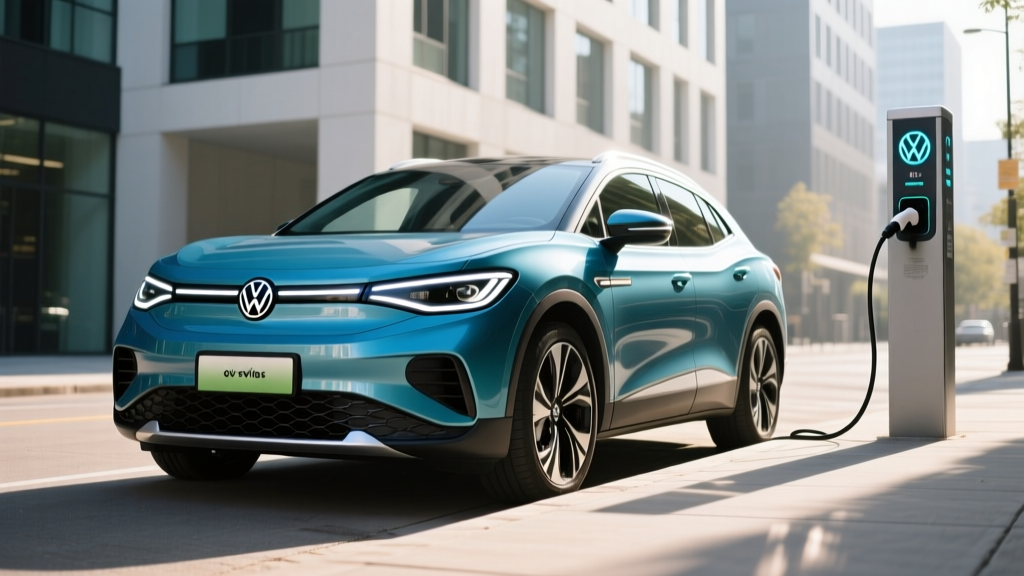
Volkswagen's electric SUV strategy centers on the ID.4, a compact crossover built on the MEB platform. While Volkswagen has announced the ID.7 (a sedan/wagon) and teased future models, the ID.4 remains the only widely available Volkswagen electric SUV in the US market as of 2026. The ID.4 competes directly with the Hyundai Ioniq 5, Ford Mustang Mach-E, and Tesla Model Y, offering a more traditional SUV shape and ride quality that appeals to buyers transitioning from gas vehicles like the Tiguan.
2026 Volkswagen ID.4: Core Specifications at a Glance
| Specification | ID.4 Pro (RWD) | ID.4 Pro S (RWD) | ID.4 AWD Pro S |
|---|---|---|---|
| EPA Range | 291 miles | 291 miles | 263 miles |
| Battery (usable) | 82 kWh (NMC) | 82 kWh (NMC) | 82 kWh (NMC) |
| Horsepower | 282 hp | 282 hp | 335 hp |
| 0–60 mph | ~7.3 sec | ~7.3 sec | ~5.4 sec |
| Max DC Fast Charge | 170 kW | 170 kW | 170 kW |
| 10–80% DC Charge | ~28 min | ~28 min | ~28 min |
| Level 2 Charge Rate | 11 kW | 11 kW | 11 kW |
| MPGe (combined) | 104 MPGe | 104 MPGe | 96 MPGe |
| Base MSRP | $39,735 | $43,735 | $47,735 |
| Battery Warranty | 8 yr / 100,000 mi | 8 yr / 100,000 mi | 8 yr / 100,000 mi |
Source: EPA fueleconomy.gov and Volkswagen USA specifications.
Real-World Range Reality: The EPA sticker says 291 miles for the RWD Pro and Pro S trims. In real-world highway driving at 70–75 mph, expect approximately 240–260 miles. In cold weather (below 32°F), range can drop to 190–220 miles due to battery resistance and cabin heating demands. The AWD variant loses roughly 10% range across all conditions. Plan trips around 200 miles of usable range to maintain a safety buffer.
ID.4 vs Gas SUV: The True Cost Comparison
The most common question from buyers considering a Volkswagen electric SUV is whether the higher sticker price pays off. Let's compare the ID.4 Pro S (RWD) against the 2026 Volkswagen Tiguan SEL (a similarly equipped gas compact SUV) over five years and 75,000 miles of mixed driving.
| Cost Factor | ID.4 Pro S (Electric) | Tiguan SEL (Gas) |
|---|---|---|
| MSRP | $43,735 | $36,490 |
| Federal Tax Credit (§30D) | Up to $7,500 (eligibility varies) | $0 |
| Effective Purchase Price | ~$36,235 (with full credit) | $36,490 |
| Fuel/Energy (75k mi) | $2,850 (home charging @ $0.14/kWh) | $8,100 (gas @ $3.40/gal, 28 MPG avg) |
| Maintenance (5 yr) | ~$1,200 | ~$3,800 |
| Insurance (5 yr avg) | ~$9,500 | ~$7,800 |
| 5-Year Total Cost | ~$49,785 | ~$56,190 |
| 5-Year Savings (EV) | $6,405 savings with ID.4 | |
Key assumptions: Home Level 2 charging at the US average residential rate of $0.14/kWh; the ID.4 averages 3.1 miles/kWh; the Tiguan achieves 28 MPG combined in real-world driving. Electricity and gas prices vary significantly by region. Public DC fast charging at $0.35–$0.50/kWh would raise the ID.4's energy cost to approximately $5,500–$7,000 over the same period, substantially narrowing the savings gap.
The takeaway: The ID.4's economics work best when you charge at home. Without home charging, the cost advantage over a gas Tiguan shrinks to $2,000–$3,000 over five years, and the convenience advantage disappears entirely.
Federal Tax Credit Eligibility: What You Actually Qualify For
The §30D federal tax credit can reduce the ID.4's effective price by up to $7,500, but eligibility depends on several factors that change regularly. As of 2026, the IRS requires:
- Income caps: Modified AGI ≤ $150,000 (single), $225,000 (head of household), $300,000 (joint)
- MSRP cap: SUVs/vans/pickups must have MSRP ≤ $80,000 (all ID.4 trims qualify)
- Battery sourcing: Critical minerals and battery components must meet phased-in domestic/free-trade-partner thresholds — the percentage requirement increases each year
- Assembly: Final assembly must occur in North America (the ID.4 is built in Chattanooga, Tennessee)
- Point-of-sale transfer: You can transfer the credit to the dealer for an upfront price reduction at purchase
Because battery sourcing rules tighten annually, the exact credit amount for the ID.4 can shift mid-year. Always verify current eligibility at fueleconomy.gov or with your tax professional before relying on the full $7,500 in your budget.
Real-World Ownership: What First-Time EV Buyers Need to Know
Home Charging Setup
The ID.4 accepts up to 11 kW on Level 2, meaning a standard 48-amp home charger (like a ChargePoint Home Flex or Emporia Level 2) will fully replenish the 82 kWh battery in about 8–9 hours. Installation costs typically range from $500 (simple outlet near the panel) to $2,500+ (panel upgrade, long conduit runs). Most homeowners with a 200-amp panel and a garage outlet within 50 feet of the panel spend $800–$1,500 on a licensed electrician.
| Item | Low End | High End |
|---|---|---|
| Level 2 Charger (hardware) | $350 | $700 |
| Electrician labor | $400 | $1,800 |
| Permit / inspection | $50 | $250 |
| Panel upgrade (if needed) | $0 | $2,500 |
| Total | $800 | $5,250 |
Public Charging Reality
The ID.4 uses the NACS connector for newer 2025+ models (Volkswagen transitioned from CCS1 starting with the 2025 model year). This gives you direct access to the Tesla Supercharger network, which remains the most reliable DC fast-charging network in the US with over 25,000 stalls nationwide. The ID.4 peaks at 170 kW on DC fast charging, meaning a 10–80% session takes approximately 28 minutes under ideal conditions. However, charging speed tapers significantly above 80% SoC — a 10–100% session can take 45+ minutes. For road trips, plan 20–30 minute stops at 20–25% remaining charge.
Cold Weather and Climate Considerations
The ID.4's 82 kWh NMC battery loses approximately 20–30% of its range in sustained sub-freezing temperatures. Volkswagen includes a heat pump on most trims, which mitigates cabin-heating energy draw, but battery chemistry itself is less efficient in cold. If you live in Minnesota, Michigan, or New England, budget for 190–220 miles of real winter range and plan charging stops accordingly. Preconditioning the battery before fast charging (available via the VW app or navigation routing to a charger) is essential for achieving advertised charge speeds in cold weather.
Common EV Misconceptions — Fact-Checked for the ID.4
| Myth | Fact |
|---|---|
| "The battery will need replacing in a few years." | Volkswagen warranties the ID.4 battery for 8 years/100,000 miles against capacity loss below 70%. Real-world degradation data from MEB-platform vehicles shows ~5–8% loss over the first 100,000 miles — far below the warranty threshold. |
| "Charging takes too long for road trips." | A 10–80% DC fast charge takes ~28 minutes at a 170 kW-capable station. Combined with rest stops, this adds roughly 30–40 minutes per 200 miles of highway driving — comparable to gas stops on long trips. |
| "EVs are worse for the environment because of electricity generation." | Even on the US average grid mix, the ID.4 produces roughly 60% fewer lifecycle emissions than a comparable gas SUV. As grids decarbonize, this advantage grows. Source: EPA Green Vehicles. |
| "I'll save a fortune on fuel." | Home charging at $0.14/kWh saves roughly $5,000 over 5 years vs gas. But if you rely exclusively on public DC fast charging at $0.40+/kWh, your energy costs approach those of an efficient gas SUV. |
| "The ID.4 is self-driving." | The ID.4's IQ.DRIVE system is SAE Level 2 driver assistance — it offers adaptive cruise control and lane centering, but you must keep your hands on the wheel and eyes on the road at all times. |
Decision Framework: Should You Buy the Volkswagen ID.4?
Buy the ID.4 if:
- You have access to Level 2 home charging (garage or driveway with a 240V outlet)
- Your daily driving is under 100 miles round-trip
- You qualify for the §30D federal tax credit (income and sourcing requirements)
- You want a traditional SUV driving feel without the learning curve of a Tesla
- You value NACS compatibility for Tesla Supercharger access on road trips
Consider a gas Tiguan or a PHEV alternative if:
- You live in an apartment or lack reliable home/workplace charging access
- You regularly tow (the ID.4 is rated for only 2,200 lbs with AWD)
- Your budget is strictly under $35,000 and you don't qualify for the tax credit
- You frequently drive 400+ miles in a single day in cold weather
Look at the Hyundai Ioniq 5 or Tesla Model Y instead if:
- You prioritize faster DC charging (Ioniq 5 peaks at 240 kW; Model Y at 250 kW)
- You want more interior cargo volume (Model Y offers 76 cu ft vs ID.4's 64.2 cu ft)
- Acceleration matters — both competitors hit 0–60 in under 5 seconds in performance trims
Frequently Asked Questions
Does the 2026 Volkswagen ID.4 qualify for the full $7,500 federal tax credit?
Eligibility depends on your income, the vehicle's battery sourcing compliance for the current year, and MSRP caps. The ID.4 is assembled in Tennessee and falls under the $80,000 SUV MSRP cap, but critical-mineral and battery-component sourcing thresholds tighten annually. Check the latest status at fueleconomy.gov and consult a tax professional. You can also transfer the credit to the dealer at point of sale for an immediate price reduction.
How much does it cost to charge a VW ID.4 at home per month?
Driving 1,000 miles per month at 3.1 miles/kWh requires about 323 kWh. At the US average residential rate of $0.14/kWh, that's approximately $45/month. In states with higher rates like California ($0.28/kWh average), expect closer to $90/month. Both figures are well below the $130–$160/month a comparable gas SUV would cost at current fuel prices.
What is the real-world highway range of the ID.4?
The EPA rates the RWD Pro and Pro S at 291 miles. In real-world 70–75 mph highway driving in moderate temperatures, expect 240–260 miles. In cold weather (below 32°F), plan for 190–220 miles. The AWD variant reduces these figures by approximately 10%.
Is the ID.4's battery NMC or LFP chemistry?
The ID.4 uses NMC (nickel manganese cobalt) chemistry in its 82 kWh usable battery pack. NMC offers higher energy density than LFP, which is why the ID.4 achieves 291 miles of EPA range in a relatively compact package. The trade-off is that NMC batteries are more sensitive to sustained 100% SoC storage — Volkswagen recommends daily charging to 80% and reserving 100% for long trips.
How does the ID.4 compare to the VW Tiguan in cargo space?
The ID.4 offers 30.3 cubic feet behind the rear seats and 64.2 cubic feet with the rear seats folded. The gas Tiguan provides 33.0 cubic feet behind the second row and 73.4 cubic feet total. The ID.4 is slightly smaller in cargo volume but offers a flat load floor and a small front trunk (frunk) for charging cables.
Does the ID.4 support vehicle-to-home (V2H) or vehicle-to-load (V2L)?
As of the 2026 model year, the US-market ID.4 does not support V2H or V2L functionality. If bidirectional power is a priority, consider the Ford F-150 Lightning (V2H capable) or the Hyundai Ioniq 5 (V2L via interior outlet on select trims).
Always verify current pricing, tax credit eligibility, and specifications with Volkswagen USA and the IRS before making a purchase decision. Rules and availability change. This guide reflects data available as of early 2026.