Quick Answer: Scout EV Torque & Performance
The Scout Traveler SUV and Scout Terra pickup — both slated for 2027 production — are engineered to deliver up to 1,000+ lb-ft of torque in their top dual-motor configurations, with 0-60 mph times estimated in the ~3.5-second range for the Terra. Both vehicles sit on a dedicated EV skateboard platform with an estimated ~100 kWh battery pack (NMC chemistry) targeting up to 350 miles of EPA range. Pricing is expected to start near $50,000 before incentives. These are preliminary, announced specifications — final EPA certification and production specs may differ.
Scout Motors, a standalone company backed by the Volkswagen Group but operating independently from VW's U.S. dealer network, has generated significant buzz with its revival of the International Harvester Scout nameplate as an all-electric brand. For truck and SUV buyers evaluating the Scout Traveler and Terra, the headline torque figures are eye-catching — but torque alone doesn't tell the full ownership story. This guide breaks down what those numbers mean in practice, how Scout's EVs compare to gas-powered rivals, and what real costs look like.
What 1,000+ lb-ft of Torque Actually Means for Scout Owners
Electric motors deliver peak torque from 0 RPM — no revving, no turbo spool-up, no transmission downshifts required. When Scout advertises 1,000+ lb-ft for its dual-motor setups, that's torque available the instant you press the accelerator. For context:
| Vehicle | Powertrain | Torque (lb-ft) | 0-60 mph (est.) |
|---|---|---|---|
| Scout Terra (dual-motor AWD) | BEV | ~1,000+ | ~3.5 sec |
| Scout Traveler (dual-motor AWD) | BEV | ~1,000+ | ~3.8 sec |
| Ford F-150 Lightning (Ext. Range) | BEV | 775 | 3.8 sec |
| Rivian R1T (Dual-Motor) | BEV | 829 | 4.5 sec |
| Ford F-150 (3.5L EcoBoost V6) | Gas | 500 | 5.5 sec |
| Chevrolet Silverado 1500 (6.2L V8) | Gas | 460 | 5.9 sec |
The practical implications of that instant electric torque extend beyond straight-line speed. For towing and off-road crawling, low-RPM torque matters enormously. Scout has positioned both vehicles with serious off-road intent — locking differentials, high ground clearance, and a body-on-frame-style architecture (though technically a unibody skateboard). The Terra's claimed towing capacity targets 10,000+ lbs, competitive with half-ton gas trucks.
However, there's a real-world trade-off: sustained high-speed towing significantly reduces range. Expect a 40-50% range reduction when towing at highway speeds with a heavy trailer — a limitation shared by every EV truck on the market, including the F-150 Lightning and Rivian R1T.
Range, Battery & Charging: The Numbers That Matter Daily
Torque grabs headlines, but range and charging speed determine whether an EV fits your life. Scout has announced a target of up to 350 miles of EPA-estimated range for the Traveler SUV, with the Terra pickup likely landing slightly lower due to its less aerodynamic profile — expect approximately 300-340 miles EPA for the Terra in its longest-range configuration.
Real-World Range Expectations (Scout Traveler, est. 350 mi EPA)
- Mixed city/highway (70°F): ~300-330 miles
- Highway-only at 75 mph: ~260-290 miles
- Cold weather (20°F), highway: ~220-250 miles (30-35% reduction)
- Towing 7,000+ lbs at 65 mph: ~150-180 miles
These are estimates based on observed efficiency patterns in comparable EV trucks and SUVs. Final EPA figures will be published closer to production.
The battery pack is expected to use NMC (nickel manganese cobalt) chemistry, which offers higher energy density than LFP — important for fitting 100+ kWh into a vehicle while maintaining payload and ground clearance. Scout has not yet confirmed whether an LFP option will be available for a lower-cost, longer-cycle-life variant.
Charging Speed & Infrastructure
| Charging Level | Power | Estimated Speed | Use Case |
|---|---|---|---|
| Level 1 (120V outlet) | ~1.4 kW | ~4-5 mi/hr | Emergency / overnight trickle |
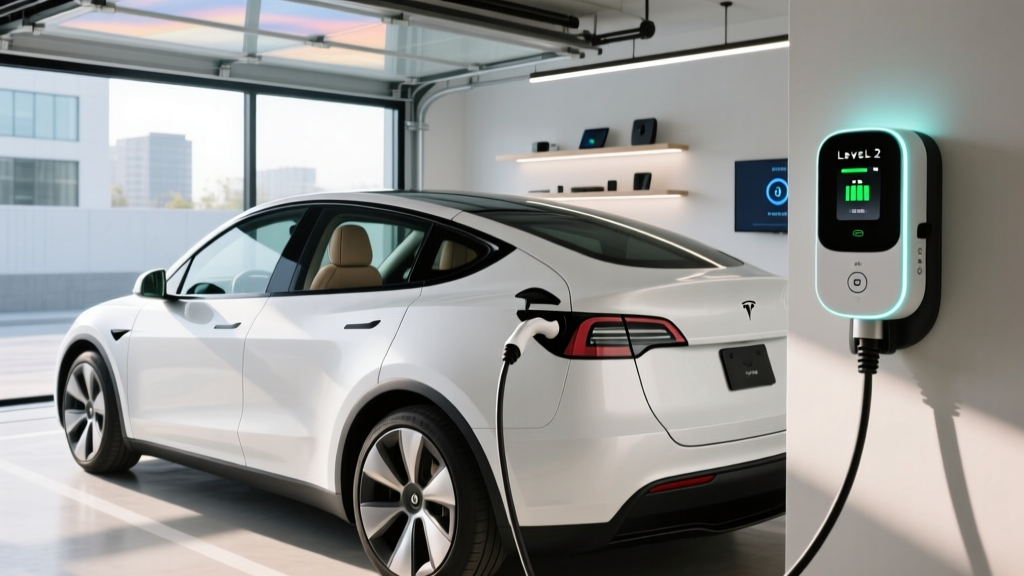
| Level 2 (240V home) | ~11.5 kW | ~30-35 mi/hr | Daily home charging |
| DC Fast Charge (peak) | ~200-250 kW (est.) | 10-80% in ~25-30 min | Road trips |
Scout has confirmed that both vehicles will use the NACS (North American Charging Standard) connector, granting native access to Tesla's Supercharger network — a significant advantage over CCS-equipped vehicles that require adapters. On a DC fast charger, expect peak rates around 200-250 kW with a typical charge curve that tapers above 80% State of Charge (SoC). A 10-80% session should take approximately 25-30 minutes under optimal battery preconditioning.
For home Level 2 charging, you'll want a 48-amp hardwired charger on a 60-amp circuit. Installation costs vary widely:
| Item | Estimated Cost Range |
|---|---|
| Level 2 charger (48A, NACS) | $400 - $700 |
| Electrician labor (standard install) | $500 - $1,500 |
| Permit & inspection | $50 - $250 |
| Electrical panel upgrade (if needed) | $1,500 - $3,500 |
| Total (no panel upgrade) | $950 - $2,450 |
Always hire a licensed electrician for a site assessment before purchasing equipment. A 200-amp panel is typically sufficient; older homes with 100-amp service may require an upgrade.
Scout EV vs. Gas Trucks & SUVs: Real Ownership Costs
The decision between a Scout Traveler/Terra and a gas-powered equivalent comes down to total cost of ownership, not just the sticker price. Here's a five-year comparison using the Scout Traveler against a comparably equipped mid-size gas SUV (e.g., Jeep Wrangler / Toyota 4Runner class):
| Cost Category (5 Years) | Scout Traveler (est.) | Gas SUV ($50K, 18 MPG) |
|---|---|---|
| Purchase price (base MSRP) | $50,000 | $50,000 |
| Federal tax credit (§30D) | Up to $7,500* | $0 |
| Fuel / electricity (75,000 mi) | $4,500 - $6,000 | $12,500 - $15,000 |
| Maintenance (oil, filters, brakes) | $800 - $1,200 | $3,000 - $4,500 |
| Insurance (average) | $9,000 - $11,000 | $7,500 - $9,500 |
| Estimated depreciation | $18,000 - $22,000 | $16,000 - $20,000 |
| Total 5-Year Cost | $59,800 - $71,700 | $89,000 - $99,000 |
*Federal §30D tax credit eligibility depends on MSRP caps ($80,000 for SUVs/trucks), buyer income limits ($300K joint / $150K single), battery component sourcing requirements, and point-of-sale transfer rules. Check current IRS guidance before purchase.
The Scout's fuel savings are substantial — approximately $8,000-$10,000 over five years at 15,000 miles/year, assuming an average electricity cost of $0.15/kWh and gas at $3.50/gallon. Maintenance savings add another $2,000-$3,000 thanks to regenerative braking (less brake wear), no oil changes, and fewer moving parts. Insurance tends to run 10-20% higher for EVs due to repair costs and parts pricing.
Scout's Direct-Sales Model & What First-Time EV Buyers Should Know
Scout Motors is pursuing a direct-to-consumer sales model, bypassing traditional franchised dealerships — similar to Tesla and Rivian. This means no dealer markups, no haggling over invoice prices, and a fixed MSRP. However, it also means no local dealer service center for warranty work. Scout is building dedicated service infrastructure, but coverage details remain preliminary as of early 2026.
Common Scout EV Misconceptions
| Myth | Fact |
|---|---|
| "It's just a rebadged VW ID.4" | Scout uses an entirely new, dedicated EV platform developed for truck/SUV duty cycles — not VW's MEB architecture. |
| "1,000 lb-ft means it tows forever on a charge" | Torque enables towing capability, but towing range drops 40-50% — same as every EV truck. |
| "You can buy one now" | Reservations are open, but production is targeted for 2027. Reservations require a refundable deposit. |
| "The $7,500 tax credit is guaranteed" | Eligibility depends on battery sourcing rules, buyer income, and MSRP caps — all subject to change under current IRS §30D rules. |
| "EV batteries need replacing every few years" | Modern NMC packs are warrantied for 8 years/100,000 miles with a minimum 70% capacity retention threshold. Most packs last well beyond the warranty period. |
For first-time EV buyers considering a Scout, here are the practical realities:
- Home charging is critical. Without Level 2 access at home, EV ownership becomes significantly less convenient. If you live in an apartment or lack a dedicated parking space with electrical access, evaluate public charging availability in your area before committing.
- Cold climate? Plan for range loss. If you regularly drive in sub-freezing temperatures, budget 25-35% range reduction. A heat pump (expected on Scout vehicles) helps mitigate cabin heating energy draw but doesn't eliminate the loss.
- Road trips require planning. With NACS access, Scout owners can use Tesla Superchargers — the most reliable DC fast-charging network in the U.S. — but routes through rural areas still require advance planning using tools like A Better Routeplanner.
- Reservations are not orders. Placing a refundable deposit holds your place in line, but final pricing, trim configurations, and delivery timelines won't be locked until closer to production.
Decision Framework: Is the Scout Right for You?
Choose the Scout Traveler or Terra if:
- You need a rugged, off-road-capable SUV or truck with serious towing capacity
- You have (or can install) Level 2 home charging
- You're willing to wait for 2027 production and accept preliminary specs
- You value direct-sales pricing without dealer markups
- Your daily driving is under 250 miles round-trip (covering most commutes comfortably)
Look elsewhere if:
- You need a vehicle now — the Ford F-150 Lightning, Rivian R1S/R1T, and Chevrolet Silverado EV are available today
- You lack home charging access and your area has limited public DC fast chargers
- You frequently tow heavy trailers over 300+ miles without stopping (no EV truck handles this well yet)
- You prefer the service convenience of a local franchised dealership
- Your budget is under $45,000 — consider a used EV or a PHEV like the Toyota Tacoma Hybrid instead
Frequently Asked Questions
How much torque does the Volkswagen Scout electric vehicle produce?
Scout Motors has announced that dual-motor configurations of the Scout Traveler SUV and Terra pickup will produce over 1,000 lb-ft of torque. This is a preliminary figure for the top performance variant; single-motor or base dual-motor trims may produce less. Final certified specifications will be released closer to the 2027 production start.
When can I actually buy a Scout Traveler or Terra?
Scout Motors targets production beginning in 2027 from its new manufacturing facility in Blythewood, South Carolina. Reservations are currently open with a refundable deposit. Delivery timelines will depend on trim priority and reservation date.
Will the Scout qualify for the $7,500 federal EV tax credit?
It's too early to confirm. The §30D credit requires that the vehicle meet MSRP caps ($80,000 for SUVs and trucks), buyer income limits, and increasingly strict battery component and critical mineral sourcing requirements. Scout's South Carolina production is a positive signal for domestic manufacturing, but final battery sourcing details will determine eligibility. Consult a tax professional and check IRS qualified vehicle lists at the time of purchase.
How does Scout's range compare to gas truck range?
A typical gas half-ton truck with a 26-gallon tank at 18 MPG combined achieves roughly 468 miles per fill-up. The Scout's estimated 300-350 miles falls short on paper, but most drivers charge at home overnight — starting every day with a "full tank" at a fraction of the per-mile cost. The gap matters primarily on road trips and when towing.
What battery warranty will Scout offer?
Scout Motors has not published final warranty terms, but federal regulations mandate a minimum of 8 years/100,000 miles for EV battery packs. Industry-standard capacity retention thresholds are 70% over the warranty period. Expect Scout to meet or exceed this baseline to remain competitive with Rivian (8yr/175,000mi) and Ford (8yr/100,000mi).
Is Scout the same company as Volkswagen?
Scout Motors is a separate brand owned by the Volkswagen Group but operates independently with its own platform, design, sales model, and service infrastructure. You will not buy or service a Scout at a VW dealership. The VW Group's backing provides manufacturing scale and capital, but Scout vehicles share no visible components with current VW models.