The Short Answer
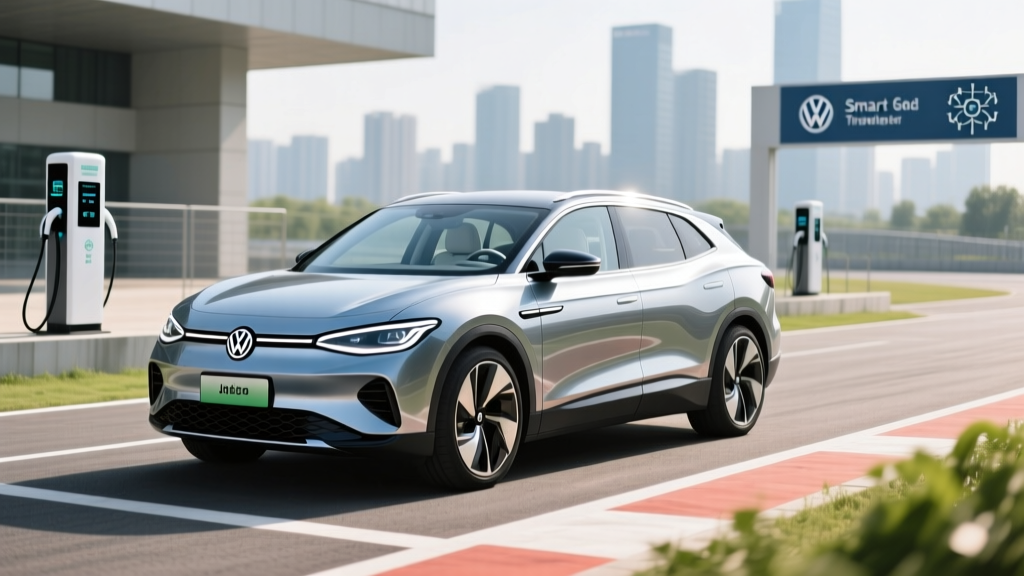
In late 2024 and accelerating into 2026, Volkswagen launched Jetta as a new electric SUV brand in China, repositioning the familiar Jetta nameplate as a standalone, EV-only sub-brand targeting budget-conscious Chinese buyers. The Jetta brand — a joint venture between Volkswagen Group and FAW Group (FAW-Volkswagen) — has unveiled a lineup of electric SUVs built on Chinese-developed platforms with competitive range, aggressive pricing (starting under ¥150,000 / ~$20,500 USD), and tech-forward interiors. For US buyers: these vehicles are not currently sold or announced for the American market. But understanding this move matters — it signals where the global EV price war is heading and what VW's strategy means for the models you can buy here.
Why Volkswagen Is Betting on Jetta as an EV Brand in China
China is the world's largest EV market, accounting for roughly 60% of global electric vehicle sales. Volkswagen, despite its massive footprint in the country through joint ventures FAW-VW and SAIC-VW, has struggled to compete with domestic brands like BYD, NIO, Xpeng, and Li Auto on price and software innovation. The Jetta sub-brand — originally launched in 2019 as a value-oriented ICE brand — is now pivoting fully to electric.
The strategic logic is straightforward:
- Platform localization: Jetta EVs for China use platforms co-developed with Chinese partners, sidestepping the cost structure of VW's global MEB architecture.
- Price positioning: By targeting the ¥120,000–¥200,000 segment (~$16,400–$27,400), Jetta undercuts VW's ID.4 Crozz (sold in China starting around ¥195,000) and competes directly with the BYD Atto 3 and Yuan Plus.
- Brand separation: Keeping Jetta distinct from the VW badge protects Volkswagen's premium positioning in China while letting Jetta fight in the high-volume budget segment.
What We Know About the Jetta Electric SUV Lineup
As of early 2026, the Jetta EV brand has revealed and begun delivering its first electric SUV models in China. Here are the key specifications based on announced and preliminary data:
| Spec | Jetta Compact SUV (Entry) | Jetta Mid-Size SUV (Higher Trim) |
|---|---|---|
| Battery Capacity | ~50 kWh (LFP) | ~70 kWh (LFP) |
| CLTC Range | ~400 km (249 mi) | ~550 km (342 mi) |
| Motor Output | ~150 kW (201 hp) | ~180 kW (241 hp) |
| 0-100 km/h | ~7.8 sec | ~6.5 sec |
| DC Fast Charge (peak) | ~90 kW | ~120 kW |
| 10-80% DC Charge | ~35 min | ~30 min |
| Starting Price (China) | ~¥130,000 ($17,800) | ~¥170,000 ($23,300) |
Important caveats: These are CLTC range figures — the Chinese testing standard, which is notably more optimistic than the US EPA cycle. Expect real-world EPA-equivalent range to be roughly 20-25% lower. That means the 400 km CLTC entry model would likely sticker around 185-200 miles EPA if sold in the US, and the 550 km version around 255-275 miles EPA.
CLTC vs. EPA: What the Range Numbers Really Mean
China's CLTC (China Light-Duty Vehicle Test Cycle) produces range estimates 15-25% higher than US EPA testing for the same vehicle. A 400 km CLTC rating translates to roughly 190-210 miles EPA. In real-world highway driving at 70 mph with climate control, expect another 10-15% reduction — so plan for ~165-185 usable highway miles from the entry battery in warm conditions, and ~140-160 miles in freezing temperatures due to LFP chemistry's cold-weather sensitivity and cabin heating demands.
How Does This Compare to EVs US Buyers Can Actually Purchase?
Since the Jetta electric SUVs aren't available in America, the practical question is: how do they stack up against what you can buy in the US at similar price points? Here's a comparison against budget-friendly EVs available or orderable in 2026:
| Vehicle | EPA Range | Battery | Peak DC Charge | 10-80% | Base MSRP |
|---|---|---|---|---|---|
| Chevrolet Equinox EV 2LT | 319 mi | 85 kWh (NMC) | 150 kW | ~28 min | $33,600 |
| Hyundai Kona Electric SEL | 261 mi | 64.8 kWh (NMC) | 100 kW | ~43 min | $32,975 |
| Kia EV6 Light RWD | 232 mi | 58 kWh (NMC) | 175 kW | ~25 min | $37,500 |
| Nissan Leaf SV Plus | 212 mi | 60 kWh (NMC) | 100 kW (CHAdeMO) | ~40 min | $30,190 |
| VW ID.4 Pro (US) | 291 mi | 82 kWh (NMC) | 170 kW | ~28 min | $39,735 |
The gap is stark. Even the most affordable US-market EVs start around $30,000-$34,000 before incentives — roughly 70-90% more expensive than the Jetta EV's China pricing. This reflects structural differences: US vehicles must meet different crash-safety standards (NHTSA FMVSS), include mandated ADAS features, and carry higher labor, logistics, and compliance costs.
The Real Cost Picture: EV Ownership Economics in 2026
Whether you're considering a VW ID.4 (the closest US relative to the Jetta EV brand) or another affordable electric SUV, the ownership math matters more than the sticker price alone.
| Cost Category | VW ID.4 Pro ($39,735) | Toyota RAV4 LE AWD ($30,425) |
|---|---|---|
| Purchase Price (after incentives) | ~$32,235 (est. $7,500 §30D credit*) | $30,425 |
| Fuel/Energy (5 yrs, 75k mi) | ~$4,200 (home L2, $0.14/kWh avg) | ~$9,750 ($3.25/gal, 30 MPG) |
| Maintenance (5 yrs) | ~$1,800 | ~$3,500 |
| Insurance (5 yrs avg) | ~$9,500 | ~$7,200 |
| Depreciation (est. 5-yr) | ~$16,000 | ~$11,500 |
| Estimated 5-Year Total | ~$63,735 | ~$62,375 |
*§30D federal tax credit eligibility depends on MSRP caps ($80,000 for SUVs), buyer income limits ($150K single / $300K joint AGI), battery critical-mineral and component sourcing requirements, and must be verified at IRS.gov qualified vehicle list. Point-of-sale transfer is available for 2026. Consult a tax professional.
The takeaway: EVs win decisively on fuel and maintenance, but higher insurance premiums and steeper depreciation (a market-wide trend for EVs in 2024-2026) narrow the gap. The Jetta EV's ultra-low China pricing would shift this equation dramatically — if it were available here.
Why You Probably Won't See Jetta EVs in the US Soon
Several structural barriers keep the China-market Jetta electric SUVs out of American showrooms:
- Tariffs: The US currently imposes 100% tariffs on Chinese-manufactured EVs (raised from 25% in 2024), effectively doubling the import price and eliminating any cost advantage.
- Homologation costs: Adapting a China-spec vehicle to meet NHTSA crash standards, EPA certification, and US ADAS requirements (automatic emergency braking, lane-keeping) requires significant re-engineering.
- Charging standard: China uses GB/T connectors; the US market has largely standardized on NACS (Tesla's connector, now adopted by most automakers for 2025+ models). Adapters exist but add friction.
- Brand positioning: VW has invested heavily in the ID. family for North America. Introducing a budget Jetta EV sub-brand could cannibalize ID.4 sales and dilute the VW badge.
Volkswagen's US strategy instead focuses on the ID.4 (assembled in Chattanooga, Tennessee), the upcoming ID.7 sedan, and next-generation models on the SSP platform expected later this decade.
Decision Framework: What Should US EV Buyers Do With This Information?
If You're Shopping for an Affordable Electric SUV in 2026
- If budget is your top priority (under $35K): Look at the Chevrolet Equinox EV, Hyundai Kona Electric, or a certified pre-owned Tesla Model Y. The Jetta EV pricing won't reach you.
- If you want VW specifically: The US-spec ID.4 Pro offers 291 miles EPA, 170 kW DC charging, and NACS compatibility (2026 models). It's a strong, if pricier, package.
- If you're flexible on brand and want maximum value: The Equinox EV at $33,600 with 319 miles of range is currently the value benchmark in this segment — especially with §30D credit eligibility.
- If you can wait: VW's next-gen SSP-platform SUVs (expected 2027-2028) may bring costs closer to Chinese-market levels through unified architecture and LFP battery options.
Common Misconceptions About VW's Jetta EV Move
| Myth | Fact |
|---|---|
| "The Jetta EV is coming to the US soon" | No US launch has been announced. Tariffs and regulatory barriers make near-term import unlikely. |
| "Jetta EVs use the same platform as the ID.4" | China-market Jetta EVs use localized platforms developed with FAW, not VW's global MEB. |
| "CLTC range is equivalent to EPA range" | CLTC overstates range by 20-25% vs. EPA. Always convert before comparing. |
| "LFP batteries are inferior" | LFP (lithium iron phosphate) offers longer cycle life (~3,000+ cycles vs. ~1,500-2,000 for NMC), better thermal stability, and lower cost — but lower energy density and worse cold-weather performance. |
| "VW is abandoning the Jetta sedan globally" | The Jetta sedan continues in the US (ICE) and China (ICE/PHEV). The EV sub-brand is a China-only expansion, not a global replacement. |
What First-Time EV Buyers Should Take Away
The Volkswagen-Jetta EV story in China is a window into the global EV market's direction — ultra-affordable electric SUVs with adequate range and fast-enough charging are becoming reality, just not in every market. For US buyers entering the EV space in 2026, the actionable insights are:
- Home charging is still the economic linchpin. The $4,200 five-year energy estimate above assumes primarily Level 2 home charging at ~$0.14/kWh. Relying exclusively on DC fast charging at $0.35-$0.50/kWh pushes energy costs to $8,000-$11,000 over five years — erasing much of the fuel savings vs. gas.
- Real-world range planning beats sticker range. Budget 20-25% below the EPA number for highway driving, and another 15-20% in sub-freezing weather. A 291-mile ID.4 realistically delivers ~220 miles on a winter road trip.
- Verify tax credit eligibility before committing. The §30D credit's battery-sourcing requirements have disqualified several popular models in 2025-2026. Check the fueleconomy.gov tax credit tool for the latest qualified vehicle list.
- Insurance quotes before purchase. EV insurance premiums run 15-30% higher than comparable gas vehicles. Get a quote for the specific model and trim before signing.
Frequently Asked Questions
Is the Jetta electric SUV sold in the United States?
No. As of 2026, the Jetta EV brand is exclusive to the Chinese market through the FAW-Volkswagen joint venture. Volkswagen has not announced any plans to export these vehicles to North America or Europe.
What is the closest VW electric SUV I can buy in the US?
The Volkswagen ID.4 (2026 model year, starting at $39,735) is VW's US-market electric compact SUV. It offers 291 miles EPA range, 170 kW peak DC fast charging (10-80% in ~28 minutes), and is assembled in Chattanooga, TN. It may qualify for the §30D federal tax credit depending on your income and the vehicle's battery-sourcing status — verify at IRS.gov.
Why are Chinese EVs so much cheaper than US-market EVs?
Three primary factors: (1) lower labor and manufacturing costs, (2) domestic battery supply chains (China produces ~75% of the world's lithium-ion cells, predominantly LFP chemistry which is cheaper than NMC), and (3) intense price competition among 50+ domestic EV brands driving margins to near-zero. US-market EVs carry additional costs from safety compliance, dealer networks, higher labor rates, and tariff-protected supply chains.
Will 100% US tariffs on Chinese EVs ever change?
Tariff policy is subject to trade negotiations and administration changes. As of 2026, the 100% tariff on Chinese-manufactured EVs remains in effect. Even if reduced, the homologation (regulatory compliance) costs to adapt Chinese-market vehicles for US sale would add thousands of dollars per unit, limiting the price advantage.
Should I wait for cheaper EVs before buying?
EV prices have been declining — average transaction prices dropped from ~$56,000 in 2023 to ~$44,000 by late 2025. If you need a vehicle now, current models like the Equinox EV and Kona Electric offer strong value. If you can wait 2-3 years, next-generation platforms (VW SSP, Hyundai eM, GM Ultium Gen 2) with LFP options may push entry prices below $30,000 before incentives. Factor in your current vehicle's operating costs while waiting.