Quick Verdict: The Electric Passat We've Been Waiting For
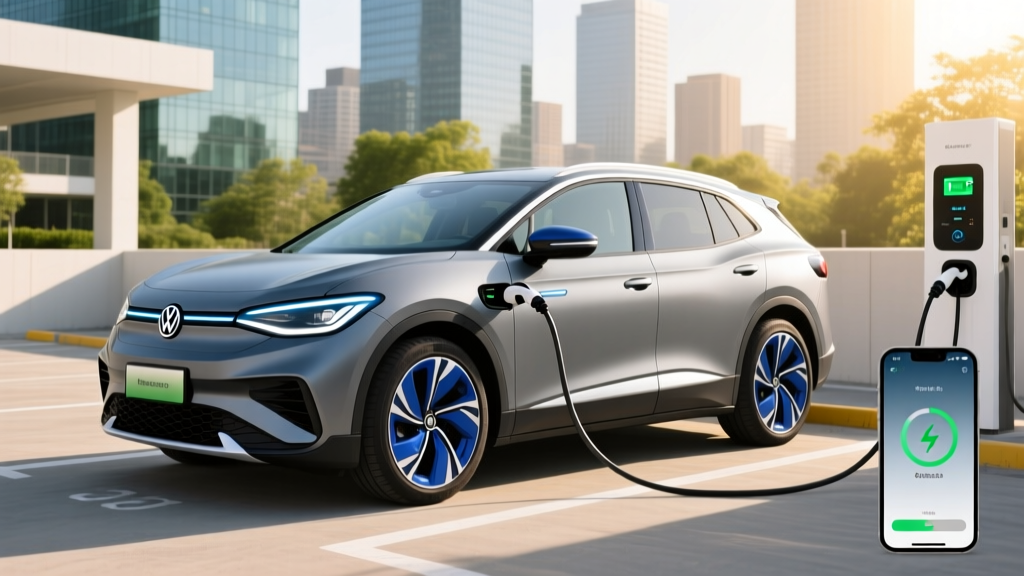
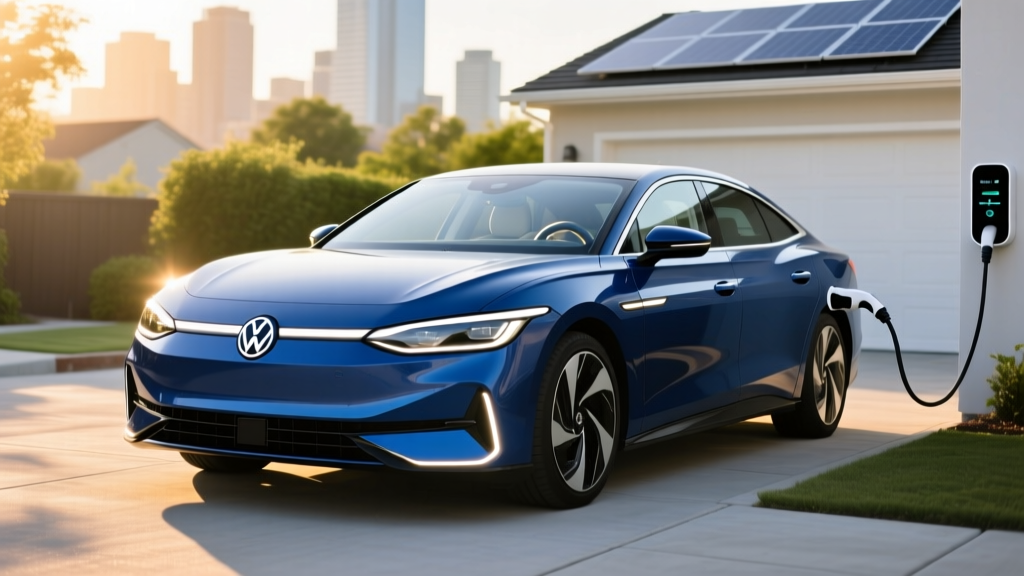
The 2026 Volkswagen ID.7 arrives as VW's flagship electric sedan on the MEB platform, filling the void left by the discontinued Passat with a spacious, tech-forward EV that targets Tesla Model S and Hyundai Ioniq 6 buyers. With up to 382 miles of EPA-estimated range on the Pro S trim, a refined ride, and class-leading rear-seat space, the ID.7 makes a compelling case as a daily-driver sedan that can also handle road trips. But at a starting MSRP above $52,000 and with charging speeds that lag behind Hyundai/Kia's 800-volt rivals, buyers need to weigh comfort against cutting-edge charging performance.
Range, Battery & Efficiency
Under the floor, the ID.7 Pro S houses an 86 kWh usable (91 kWh gross) lithium-ion battery pack using NMC (nickel-manganese-cobalt) chemistry. This is the larger of two battery options VW offers globally, and it's the one most US buyers will want for maximum range. The pack sits low in the chassis, contributing to a stable center of gravity that you can feel through corners.
| Spec | Pro (RWD) | Pro S (RWD) | AWD Pro S |
|---|---|---|---|
| EPA Range | ~342 mi | ~382 mi | ~340 mi |
| Battery (usable) | 77 kWh (NMC) | 86 kWh (NMC) | 86 kWh (NMC) |
| Horsepower | 282 hp | 282 hp | 335 hp |
| 0–60 mph | ~6.5 sec | ~6.5 sec | ~5.0 sec |
| Drivetrain | RWD | RWD | AWD (dual-motor) |
| MPGe (combined) | ~114 MPGe | ~118 MPGe | ~105 MPGe |
| Efficiency | ~29 kWh/100mi | ~28 kWh/100mi | ~32 kWh/100mi |
Efficiency lands around 28 kWh per 100 miles for the Pro S RWD, which translates to roughly 118 MPGe combined per fueleconomy.gov. That's competitive with the Tesla Model 3 Long Range and slightly behind the slipperier Hyundai Ioniq 6 (which benefits from a 0.21 drag coefficient). The ID.7's larger frontal area and sedan-wagon proportions create more drag, but the trade-off is substantially more interior volume.
Charging Speed: DC Fast, Level 2 & Home Setup
Charging is where the ID.7 shows both its strengths and its MEB-platform limitations. The Pro S supports a peak DC fast-charge rate of 175 kW on a CCS1 connector (NACS adapter availability for Tesla Supercharger access is expected but confirm with your dealer for the 2026 model year). On a 350 kW Electrify America or compatible station, VW claims a 10–80% charge in approximately 30 minutes.
| Level | Power (kW) | Speed / Time | Notes |
|---|---|---|---|
| Level 1 (120V) | ~1.4 kW | ~3–4 mi/hr | Emergency/trickle only |
| Level 2 (240V, 48A) | 11 kW | ~28–32 mi/hr; full charge ~9 hr | Home / workplace standard |
| DC Fast (CCS1) | 175 kW peak | 10–80% in ~30 min | Tapers above 80% SoC; ~50 kW avg after 85% |
Here's the real-world charging nuance that spec sheets omit: the ID.7's 175 kW peak is not sustained. Like most 400-volt MEB vehicles, the charge curve ramps quickly to around 170 kW between 10–30% SoC, holds near peak through about 50%, then tapers progressively. From 80–100%, expect speeds to drop below 50 kW. This means a 10–80% stop is efficient, but topping off to 100% on a road trip adds significant time. Plan your stops accordingly.
At home on a Level 2, 240V/48A circuit, the onboard charger accepts up to 11 kW, adding roughly 30 miles of range per hour. A full 0–100% charge takes about 9 hours — easily achievable overnight. Installation of a home Level 2 charger typically runs $800–$2,000 depending on your electrical panel capacity and run length; budget for a potential panel upgrade if you're still on a 100A service.
Performance & Driving Dynamics
The rear-wheel-drive ID.7 Pro and Pro S produce 282 horsepower and 339 lb-ft of torque from a single rear-mounted APP550 electric motor — a meaningful upgrade over the earlier APP310 motor found in the ID.4. The 0–60 mph sprint takes approximately 6.5 seconds, which feels brisk for a sedan of this size but won't embarrass a Model 3 Performance at a stoplight.
The dual-motor AWD Pro S bumps output to 335 hp and drops the 0–60 time to roughly 5.0 seconds, with the added benefit of all-weather traction. The trade-off is approximately 40 miles of EPA range and a higher starting price.
On the road, the ID.7's adaptive damping suspension (available on higher trims) delivers a composed, near-luxury ride quality that rivals the Tesla Model S and undercuts the firmer Ioniq 6. Road noise is well-suppressed, and the turning circle is surprisingly tight for a 195-inch sedan thanks to the rear-wheel steering option on certain trims. Regenerative braking offers adjustable levels via steering-wheel paddles, though VW still doesn't offer true one-pedal driving with a full stop — you'll need to use the brake pedal at low speeds, which frustrates some EV veterans.
Interior Space, Cargo & Technology
This is where the ID.7 justifies its existence over smaller electric sedans. Rear legroom measures approximately 40.1 inches, beating the Model 3 and rivaling full-size luxury sedans. The trunk offers 19.2 cubic feet of cargo space (sedan liftback design), expanding with a 60/40 split-folding rear seat. If you need more, the ID.7 Tourer (wagon variant) is available in Europe but has not been confirmed for the US market as of the 2026 model year.
The cabin centers around a 15-inch infotainment touchscreen running VW's ID.Software 4.0, which is a significant improvement over the laggy, frustrating ID.Software 3.x that plagued early ID.4 models. Response times are quicker, the menu hierarchy is more logical, and the illuminated touch-capacitive sliders for volume and temperature — a sore point in earlier ID models — have been replaced with backlit physical-touch sliders. Wireless Apple CarPlay and Android Auto are standard, along with wireless phone charging.
The driver faces a compact digital instrument cluster integrated into the steering column (similar to the ID.4), supplemented by an augmented-reality head-up display on Pro S trims that projects navigation arrows and speed directly into your sightline. The AR-HUD is genuinely useful for highway navigation and reduces glance-away time.
Driver assistance comes via VW's IQ.DRIVE suite, which includes adaptive cruise control with stop-and-go, lane centering, automatic emergency braking, and Travel Assist — a SAE Level 2 system that requires continuous driver supervision. It's competent for highway cruising but not hands-free like GM's Super Cruise or Ford's BlueCruise on approved highways. VW has not announced a higher-level autonomous system for the US ID.7.
Pricing, Trims & Federal Tax Credit Eligibility
The 2026 Volkswagen ID.7 is offered in three primary configurations for the US market:
| Trim | Base MSRP | Est. §30D Credit* | Effective Price* |
|---|---|---|---|
| Pro (RWD, 77 kWh) | ~$52,295 | Up to $7,500 | ~$44,795 |
| Pro S (RWD, 86 kWh) | ~$57,295 | Up to $7,500 | ~$49,795 |
| AWD Pro S (86 kWh) | ~$60,795 | Up to $7,500 | ~$53,295 |
*Pricing is approximate based on manufacturer announcements and may vary by dealer. Federal tax credit eligibility under IRS §30D depends on multiple factors that change frequently.
- MSRP Cap: Sedans must have an MSRP at or below $55,000 to qualify. The ID.7 Pro likely qualifies; the Pro S and AWD trims may exceed the cap — verify the exact MSRP breakdown with your dealer, as destination charges and options affect this.
- Income Limits: Modified adjusted gross income (MAGI) must not exceed $150,000 (single), $225,000 (head of household), or $300,000 (joint filers) for the year of delivery or the prior year.
- Battery Sourcing: The full $7,500 requires meeting both critical-minerals ($3,750) and battery-component ($3,750) sourcing requirements. Partial credit of $3,750 may apply if only one requirement is met. VW sources battery cells from SK On and other suppliers — confirm current-year compliance on the IRS eligible vehicle list before purchase.
- Point-of-Sale Transfer: As of 2024+, you can transfer the credit to the dealer at purchase, reducing your out-of-pocket cost at the dealership rather than waiting to claim it on your tax return.
Because the §30D rules around battery sourcing shift annually and VW's supply chain evolves, always verify the ID.7's current eligibility on the IRS clean vehicle list before signing paperwork. A tax professional can confirm your personal eligibility.
Warranty & Ownership Costs
Volkswagen backs the ID.7 with a competitive warranty package:
- Battery warranty: 8 years / 100,000 miles (whichever comes first), guaranteeing a minimum of 70% capacity retention (State of Health) over that period. If the battery degrades below 70% SoH within the warranty window, VW will repair or replace modules to restore it above the threshold.
- Powertrain warranty: 8 years / 100,000 miles, covering the electric motor(s), onboard charger, and related components.
- Bumper-to-bumper: 4 years / 50,000 miles.
- Complimentary maintenance: 2 years / 20,000 miles of scheduled service.
Insurance premiums for the ID.7 tend to run 10–15% higher than a comparable gas-powered midsize sedan, consistent with the EV segment average. Get quotes from your insurer before committing. Depreciation data for the ID.7 is still limited given its recent US launch, but VW's EV residuals have historically trailed Tesla and Hyundai/Kia — factor in a potential 45–55% depreciation over 5 years unless the used-EV market strengthens.
Pros, Cons & Who Should Buy
✅ Pros
- Class-leading rear-seat legroom (~40.1 in) — genuine family-sedan space
- Up to 382 miles EPA range on Pro S — competitive with top EV sedans
- Refined, quiet ride with adaptive suspension (on higher trims)
- AR head-up display is genuinely useful for navigation
- Improved ID.Software 4.0 infotainment with physical touch sliders
- Hatchback-style liftback trunk (19.2 cu ft) adds practicality
❌ Cons
- 175 kW DC peak charge rate trails Hyundai/Kia 800V rivals (~240 kW)
- Higher trims likely exceed $55K MSRP cap, eliminating federal tax credit
- No true one-pedal driving with full stop — a miss for EV enthusiasts
- IQ.DRIVE is competent but not hands-free like Super Cruise/BlueCruise
- US availability and dealer inventory still ramping up
- AWD range penalty (~40 miles) is steep
Who Is the ID.7 For?
Choose the ID.7 if: You want a spacious electric sedan for family commuting and road trips, prioritize ride comfort and cabin quietness over maximum charging speed, and can charge at home most nights. The Pro S RWD offers the best range-to-value ratio.
Look elsewhere if: You road-trip frequently and want the fastest possible DC charging (consider the Ioniq 6 or Model 3), need hands-free highway driving (GM Super Cruise), or want the absolute lowest price point (the Model 3 RWD starts significantly less).
Frequently Asked Questions
What is the real-world range of the 2026 Volkswagen ID.7?
The Pro S RWD carries an EPA estimate of approximately 382 miles. In real-world mixed driving at highway speeds (70–80 mph), expect 320–340 miles. In freezing temperatures without preconditioning, range can drop to 260–290 miles. Using the car's built-in preconditioning feature before driving or charging helps mitigate cold-weather losses significantly.
How fast does the ID.7 charge at home and on the road?
At home on a Level 2 (240V/48A) charger, the ID.7 accepts up to 11 kW, adding roughly 30 miles of range per hour and fully charging overnight in about 9 hours. On a DC fast charger, it peaks at 175 kW, achieving a 10–80% charge in approximately 30 minutes. Note that charging slows considerably above 80% SoC — plan road-trip stops around 10–80% cycles for efficiency.
Does the Volkswagen ID.7 qualify for the $7,500 federal EV tax credit?
It depends on the trim and your income. Under IRS §30D, sedans must have an MSRP at or below $55,000. The base Pro trim likely qualifies, while the Pro S and AWD trims may exceed the cap. You must also meet income limits ($150K single / $300K joint) and the vehicle must satisfy battery critical-minerals and component sourcing requirements. Always check the current IRS eligible vehicle list and consult a tax professional before purchasing.
Is the ID.7 worth buying over the Tesla Model 3 or Hyundai Ioniq 6?
The ID.7 wins on interior space and ride comfort — it's a genuinely roomy sedan, while the Model 3 and Ioniq 6 are tighter in the back seat. The Ioniq 6 charges faster (up to ~240 kW on 800V architecture), and the Model 3 offers access to the Supercharger network natively plus a lower starting price. If cabin space and comfort are your top priorities, the ID.7 earns its premium. If charging speed or price matters more, cross-shop aggressively.
What is the battery warranty on the ID.7?
Volkswagen provides an 8-year/100,000-mile battery warranty that guarantees a minimum of 70% State of Health (capacity retention). If degradation exceeds 30% within that period, VW will repair or replace battery modules. The powertrain (motor, onboard charger) is covered under the same 8-year/100,000-mile term, and bumper-to-bumper coverage runs 4 years/50,000 miles.
Does the ID.7 have one-pedal driving?
Not in the traditional sense. The ID.7 offers adjustable regenerative braking via steering-wheel paddles (B-mode provides strong regen), but it does not bring the car to a complete stop and hold it — you still need to use the brake pedal at stops. This is a deliberate VW engineering choice, but it disappoints drivers accustomed to full one-pedal operation in vehicles like the Tesla Model 3 or Nissan Leaf.