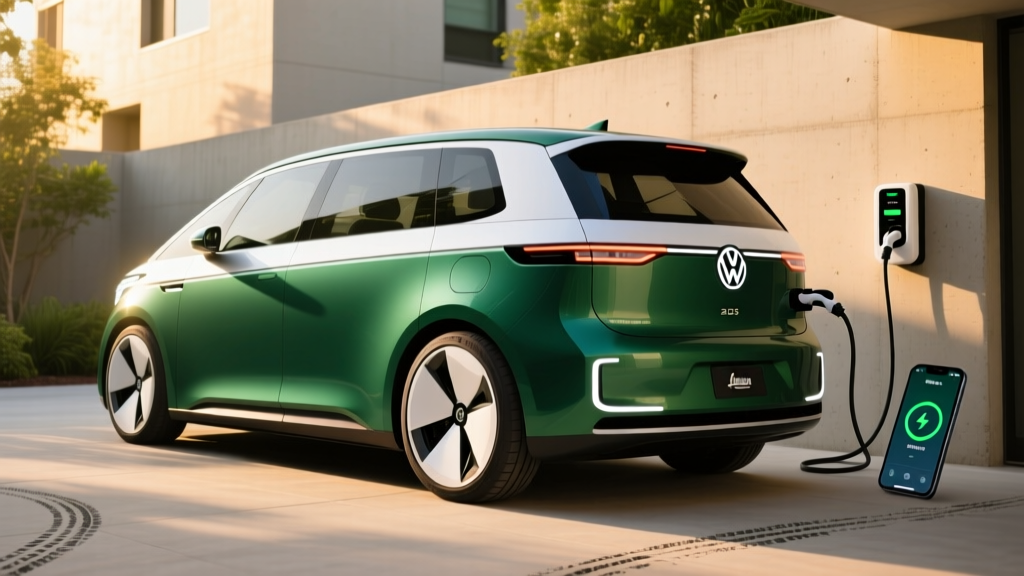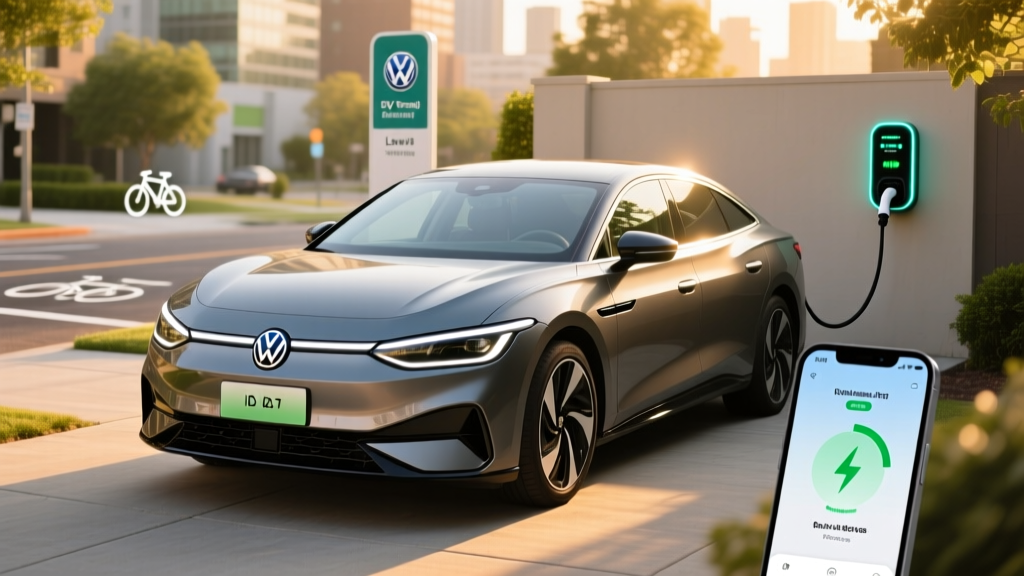
The Volkswagen ID.7 arrives in North America for the 2026 model year as VW's flagship electric sedan — a low-slung, aerodynamic alternative to the crossover-dominated EV market. Built on the MEB platform with an 86 kWh usable battery and a rear-wheel-drive layout, the ID.7 targets buyers who want Tesla Model S space and comfort without the Tesla badge. After spending time with the ID.7 Pro S on a mix of highway commuting and DC fast-charging road trips, here's exactly what the numbers look like in practice.
Specs at a Glance: 2026 Volkswagen ID.7 Pro S
| Specification | Value |
|---|---|
| EPA Estimated Range | 342 miles |
| Battery (usable) | 86 kWh, NMC chemistry |
| Peak DC Fast Charge | 200 kW |
| 10–80% DC Charge Time | ~26 minutes |
| Level 2 Home Charge Rate | 11 kW (AC) |
| Drivetrain | Rear-wheel drive (single motor) |
| Horsepower | 282 hp |
| 0–60 mph | 6.5 seconds |
| Combined MPGe | 114 MPGe |
| Efficiency | 29 kWh / 100 mi |
| Cargo Volume | 18.7 cu ft (trunk) + 0.5 cu ft (frunk) |
| Rear Legroom | 39.4 inches |
| Battery Warranty | 8 years / 100,000 miles |
| Base MSRP (Pro) | $47,990 |
| As-Tested MSRP (Pro S) | $52,490 |
Range and Efficiency: Sticker vs. Reality
The ID.7 Pro S carries an EPA-estimated 342 miles of range on a full charge. That figure benefits from the sedan's class-leading 0.23 Cd drag coefficient and VW's APP550 rear motor, which delivers improved efficiency over earlier MEB powertrains. On the combined cycle, the ID.7 returns 114 MPGe (29 kWh/100 mi), which is competitive with the Hyundai Ioniq 6 and slightly behind the Tesla Model 3 Long Range.
EPA sticker: 342 miles. In our mixed driving (70% highway at 70–75 mph, 30% suburban), we averaged 295–310 miles before hitting the low-SoC warning at 5%. In cold weather (below 32°F), expect a 15–22% reduction, bringing usable range to roughly 250–270 miles. City-heavy driving with regenerative braking can push range closer to or slightly above the EPA figure.
The ID.7's efficiency on the highway is where the aerodynamic sedan body pays dividends. At a steady 65 mph on flat terrain, we observed consumption as low as 26 kWh/100 mi. Push to 80 mph with headwinds and that climbs to 33–34 kWh/100 mi. For road-trippers, plan for charging stops every 230–260 miles in temperate weather and 190–220 miles in winter conditions.
Charging Speed: DC Fast Charge and Home Level 2
Volkswagen upgraded the MEB charging architecture for the ID.7, bumping peak DC fast-charge capability to 200 kW (up from the 170 kW ceiling on earlier ID.4 models). The ID.7 uses the NACS connector standard for North American deliveries, granting direct access to Tesla Supercharger V3 and V4 stalls without an adapter.
| Charging Level | Power | Miles Added per Hour | Notes |
|---|---|---|---|
| Level 1 (120V) | ~1.4 kW | ~4 mi/hr | Emergency/top-up only |
| Level 2 (240V, 48A) | 11 kW | ~37 mi/hr | Full charge in ~8.5 hours |
| DC Fast Charge | 200 kW (peak) | ~220 mi in 10 min | 10–80% in ~26 min |
On a 350 kW Electrify America station, we recorded the ID.7 pulling a sustained 185–195 kW between 10% and 45% SoC, with a gradual taper beginning around 55%. The 10–80% session took approximately 26 minutes in 65°F ambient conditions. Above 80%, the charge rate drops sharply — typical of NMC chemistry thermal management — so plan to unplug at 80% on road trips rather than waiting for a full charge.
At home on a 48-amp Level 2 circuit, the 11 kW onboard charger replenishes the 86 kWh battery from empty in roughly 8.5 hours. Most owners charging from 20% to 80% overnight will wake to a full battery with 5–6 hours of charging time. Installation of a 240V/50A circuit typically runs $800–$2,200 depending on panel proximity and local permit requirements — confirm specifics with a licensed electrician.
Performance and Driving Dynamics
The ID.7 Pro S uses VW's APP550 single rear motor producing 282 horsepower and 402 lb-ft of torque. The 0–60 mph sprint takes 6.5 seconds — brisk enough for confident highway merging but not in the dual-motor performance-sedan territory of a Tesla Model 3 Long Range AWD (4.2 seconds). VW has indicated an AWD GTX variant may follow, but for the 2026 launch, RWD is the only configuration.
Where the ID.7 excels is ride refinement. The multi-link rear suspension and 20-inch wheels (on Pro S) absorb highway imperfections with minimal harshness, and cabin noise levels at 70 mph are among the lowest in the segment. The steering is light and precise, though enthusiasts will note it lacks the communicative feedback of a BMW i4. Regenerative braking offers adjustable levels via steering-wheel paddles, including a B-mode for one-pedal-style driving — though it does not bring the car to a complete stop, which some competitors now offer.
Interior Space, Tech, and Standout Features
The ID.7's fastback sedan profile yields a surprisingly spacious cabin. Rear legroom measures 39.4 inches — enough for six-foot passengers to sit comfortably behind a similarly sized driver. The trunk offers 18.7 cubic feet of cargo volume with a wide-opening hatchback-style lid (technically a liftback), plus a small 0.5 cu ft front trunk for charging cables.
The centerpiece of the interior is a 15-inch infotainment touchscreen running VW's ID. Software 4.0. Response times are markedly improved over earlier ID models, and wireless Apple CarPlay and Android Auto are standard. A heads-up display with augmented-reality navigation overlays is available on the Pro S trim. The panoramic Smart Glass roof — standard on Pro S — can electronically dim or become opaque at the touch of a button, a genuinely useful feature for reducing solar heat gain.
Driver assistance comes via VW's IQ.DRIVE suite, which includes adaptive cruise control with stop-and-go, lane-centering assist, and Travel Assist. This is an SAE Level 2 system: the driver must keep hands on the wheel and eyes on the road at all times. It works well on divided highways but does not offer hands-free operation like GM's Super Cruise or Ford's BlueCruise. VW has announced a future over-the-air update for more advanced highway assist, but it is not available at launch.
IQ.DRIVE with Travel Assist is an SAE Level 2 driver-assistance system. It is not self-driving. The driver must remain fully engaged, monitor the road, and be prepared to take over at any moment. Performance degrades in heavy rain, construction zones, and faded lane markings.
Pricing, Trims, and Federal Tax Credit Eligibility
The 2026 Volkswagen ID.7 launches in two trims:
| Trim | MSRP | Key Features |
|---|---|---|
| ID.7 Pro | $47,990 | 19" wheels, heat pump, IQ.DRIVE, 15" display, power liftgate |
| ID.7 Pro S | $52,490 | 20" wheels, Smart Glass roof, AR HUD, premium audio, ventilated seats |
Both trims include the 86 kWh battery and 200 kW DC charging capability. Destination charges add approximately $1,295.
Regarding the federal §30D clean vehicle tax credit: the ID.7's eligibility depends on battery component and critical-mineral sourcing requirements that the IRS updates periodically. As of early 2026, the ID.7 qualifies for a partial credit of $3,750 (meeting critical-mineral thresholds but not full battery-component requirements, given VW's supply chain). Buyers must also meet income caps ($150,000 single / $300,000 joint modified AGI) and the vehicle MSRP must not exceed $55,000 for sedans — both ID.7 trims clear this cap. The credit can be transferred to the dealer at point of sale, reducing your purchase price directly. Consult a tax professional and verify current eligibility on the IRS website before purchasing, as sourcing rules are subject to change.
| Scenario | Pro Trim | Pro S Trim |
|---|---|---|
| MSRP | $47,990 | $52,490 |
| Estimated §30D Credit | −$3,750 | −$3,750 |
| Effective Price (before state incentives) | ~$44,240 | ~$48,740 |
Warranty and Long-Term Ownership
Volkswagen backs the ID.7's battery pack with an 8-year / 100,000-mile warranty, guaranteeing a minimum of 70% capacity retention over that period. The broader vehicle warranty covers 4 years / 50,000 miles bumper-to-bumper, with 2 years of complimentary scheduled maintenance. VW's 24/7 roadside assistance runs for the same 4-year / 50,000-mile term.
The 86 kWh NMC battery is liquid-cooled and actively thermal-managed, which helps mitigate degradation in both hot and cold climates. Based on degradation data from VW's earlier 77 kWh MEB packs, owners can expect roughly 8–12% capacity loss over the first 100,000 miles under normal use — well within the warranty threshold. The ID.7's battery is not user-serviceable; full pack replacement (out of warranty) is estimated at $12,000–$16,000 based on current MEB pricing, though module-level repair may be possible for partial failures.
How It Compares: ID.7 vs. Key Rivals
| Spec | VW ID.7 Pro S | Tesla Model 3 LR | Hyundai Ioniq 6 Limited |
|---|---|---|---|
| EPA Range | 342 mi | 363 mi | 320 mi |
| Battery | 86 kWh NMC | ~75 kWh NMC | 77.4 kWh NMC |
| Peak DC Charge | 200 kW | 250 kW | 240 kW |
| 10–80% Time | ~26 min | ~22 min | ~18 min |
| 0–60 mph | 6.5 sec | 4.2 sec (AWD) | 5.1 sec (AWD) |
| Rear Legroom | 39.4 in | 35.3 in | 36.0 in |
| Cargo | 18.7 cu ft | 23.0 cu ft | 12.3 cu ft |
| Base MSRP (comparable trim) | $52,490 | $47,740 | $52,600 |
| NACS Native | Yes | Yes | No (CCS1) |
The ID.7 trades peak performance and charging speed for superior rear-seat comfort, a quieter cabin, and a more traditional luxury-sedan driving feel. The Tesla Model 3 Long Range is faster, charges quicker, and has slightly more range — but its rear seat is tighter and its ride is firmer. The Ioniq 6 charges the fastest in this group but sacrifices cargo utility with a conventional trunk and offers less rear legroom.
Choose the ID.7 if: You prioritize rear-seat space, ride comfort, and a quiet cabin for long highway commutes or family use, and you value a liftback trunk over sporty acceleration.
Choose the Model 3 LR if: You want maximum range, quicker DC charging, AWD availability, and access to Tesla's Supercharger network without any adapter concerns.
Choose the Ioniq 6 if: Ultra-fast 800V charging (10–80% in ~18 min) is your top priority and you primarily drive solo or with one passenger.
Pros and Cons
- Class-leading rear legroom (39.4 in) and quiet cabin
- 342-mile EPA range is competitive for the segment
- NACS connector standard — native Supercharger access
- Liftback trunk with 18.7 cu ft is practical for a sedan
- Smart Glass panoramic roof is a genuine comfort feature
- Heat pump standard on all trims (cold-weather efficiency)
- 200 kW peak DC charge is slower than 800V rivals (Ioniq 6, EV6)
- RWD only at launch — no AWD option for snow-belt buyers
- Only partial ($3,750) federal tax credit, not the full $7,500
- IQ.DRIVE is competent but not hands-free like Super Cruise
- Infotainment still lacks physical climate controls (touch-capacitive sliders)
- Frunk is tiny (0.5 cu ft) — cable storage only
Frequently Asked Questions
What is the real-world range of the VW ID.7?
The EPA rates the ID.7 Pro S at 342 miles. In real-world mixed driving at highway speeds (70–75 mph), expect 295–310 miles. In cold weather below freezing, plan for 250–270 miles before needing to charge. City driving with regenerative braking can match or slightly exceed the EPA estimate.
How fast does the ID.7 charge at home and on the road?
On a DC fast charger, the ID.7 peaks at 200 kW and charges from 10–80% in approximately 26 minutes. At home on a 240V Level 2 charger (48 amps), it adds roughly 37 miles of range per hour, fully charging the 86 kWh battery in about 8.5 hours.
Does the 2026 VW ID.7 qualify for the federal EV tax credit?
As of early 2026, the ID.7 qualifies for a partial $3,750 credit under IRS §30D rules. It meets critical-mineral sourcing thresholds but not the full battery-component requirement. Both trims fall under the $55,000 sedan MSRP cap, and buyer income limits apply ($150K single / $300K joint). Always verify current eligibility at irs.gov before purchase.
Is the VW ID.7 worth buying over a Tesla Model 3 or Hyundai Ioniq 6?
If your priority is rear-seat comfort, a quiet ride, and practical liftback cargo space, the ID.7 is the strongest choice in this segment. If you need maximum range, faster charging, or AWD, the Model 3 Long Range or Ioniq 6 are better fits. The ID.7 occupies a comfort-oriented niche that neither rival fills as effectively.
What is the ID.7's battery warranty?
Volkswagen provides an 8-year / 100,000-mile battery warranty guaranteeing at least 70% capacity retention. The vehicle bumper-to-bumper warranty covers 4 years / 50,000 miles.
Does the ID.7 have a heat pump?
Yes. A heat pump is standard on all 2026 ID.7 trims, improving cold-weather efficiency and reducing range loss in freezing temperatures compared to resistive heating systems.
Who is the VW ID.7 best suited for?
The ID.7 is ideal for commuters and families who want a spacious, comfortable electric sedan for highway-heavy driving. Its strong rear-seat space, quiet cabin, and liftback utility make it well-suited for daily school runs, long road trips in temperate weather, and rideshare use. It is less suited for buyers in heavy-snow regions (no AWD at launch) or those who prioritize the fastest possible charging speeds.