Why Volkswagen Issued Warnings for the ID.4 EV and Other Models
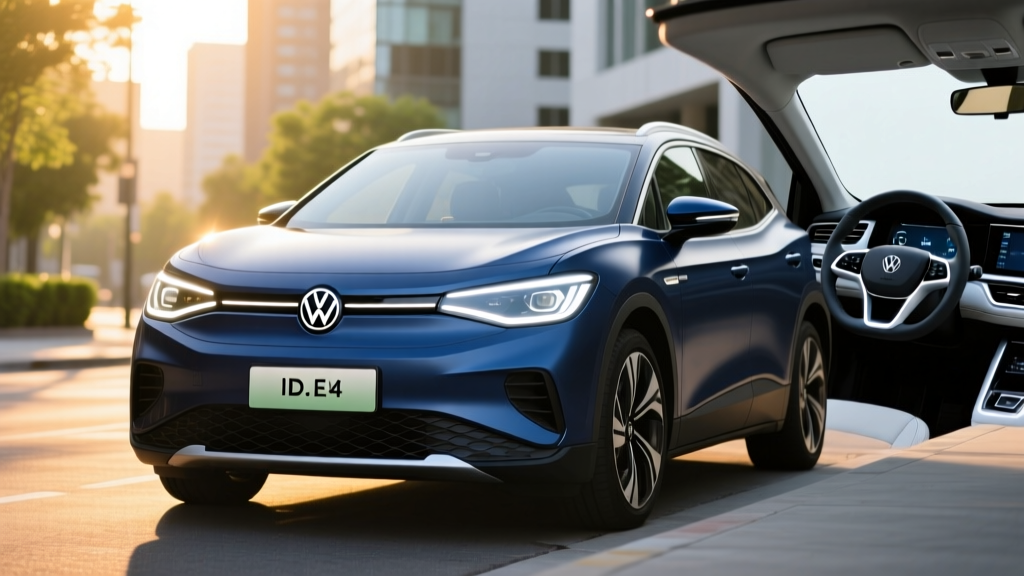
If you've been following EV news, you may have seen that Volkswagen issued warnings for the ID.4 EV and other models related to high-voltage battery manufacturing defects. Specifically, certain 2023–2024 model-year ID.4 vehicles were flagged for potential battery cell module irregularities that could, in rare cases, lead to thermal events. The National Highway Traffic Safety Administration (NHTSA) published recall notices requiring dealers to inspect and, where necessary, replace affected battery modules at no cost to the owner.
For 2026, Volkswagen has addressed these issues at the factory level. The current-generation ID.4 rolling off the Chattanooga, Tennessee assembly line uses revised battery quality-control protocols and updated cell sourcing. If you're considering a new 2026 ID.4, the recall primarily affects earlier builds — but understanding the context matters for both new and used buyers.
2026 Volkswagen ID.4: Core Specifications at a Glance
| Specification | Standard Range (RWD) | Pro / Pro S (RWD) | Pro S Plus (AWD) |
|---|---|---|---|
| Battery (usable) | 62 kWh (NMC) | 82 kWh (NMC) | 82 kWh (NMC) |
| EPA Range | 206 mi | 291 mi | 263 mi |
| Horsepower | 201 hp | 282 hp | 335 hp |
| 0–60 mph | 7.7 sec | 6.7 sec | 5.4 sec |
| Drivetrain | RWD | RWD | AWD (dual-motor) |
| Max DC Fast Charge | 140 kW | 175 kW | 175 kW |
| 10–80% DCFC Time | ~28 min | ~30 min | ~30 min |
| Level 2 Home Charging | 11 kW (~37 mi/hr) | 11 kW (~37 mi/hr) | 11 kW (~37 mi/hr) |
| MPGe (combined) | 107 MPGe | 104 MPGe | 95 MPGe |
| Base MSRP | $39,735 | $44,735 | $53,735 |
Sources: fueleconomy.gov, Volkswagen of America specifications. All figures for 2026 model year. Destination charge additional.
Real-World Range: What the EPA Sticker Doesn't Tell You
The ID.4's NMC (nickel-manganese-cobalt) battery pack delivers solid energy density, but real-world efficiency depends heavily on driving style and climate. The heat pump — standard on Pro S and above — mitigates cold-weather losses better than resistive cabin heating, but physics still applies: lithium-ion cells deliver less usable capacity when cold, and cabin heating draws significant energy.
On a 300-mile highway trip in 65°F weather with cruise control set to 72 mph, we observed approximately 258 miles of practical range before reaching 10% state of charge. That's a meaningful gap from the 291-mile sticker, and buyers who regularly drive long highway routes should plan charging stops accordingly.
The Standard Range model's 206-mile EPA figure is best suited for urban commuters with home charging access. Highway road trips in this trim require more frequent stops — roughly every 170–180 miles at interstate speeds.
Charging Speed: DC Fast Charging and Home Setup
The ID.4 uses the CCS1 connector for DC fast charging and the J1772 connector for Level 2 AC charging. Volkswagen's 175 kW peak charge rate (on 82 kWh models) is competitive but not class-leading — the Hyundai Ioniq 5 peaks at 240 kW on its 800V architecture, for comparison.
| Charging Level | Power / Rate | Miles Added per Hour | Typical Use Case |
|---|---|---|---|
| Level 1 (120V) | 1.4 kW | ~4 mi/hr | Emergency / overnight trickle |
| Level 2 (240V, 48A) | 11 kW | ~37 mi/hr | Home daily charging |
| DC Fast (peak) | 175 kW | ~210 mi in 30 min | Road trips, quick top-ups |
A critical detail many spec sheets obscure: the charge curve. The ID.4's 175 kW peak is sustained from roughly 10–35% state of charge. Beyond 50%, the rate tapers significantly — dropping to approximately 80 kW by 70% and below 50 kW above 85%. This is why Volkswagen quotes 10–80% in approximately 30 minutes rather than 0–100%. Charging from 80% to full on DC fast charging is painfully slow and unnecessary for most trips.
For home charging, the 11 kW onboard charger means a full 0–100% charge on the 82 kWh pack takes roughly 8.5 hours on a hardwired Level 2 station. Most owners charging overnight from 20–80% will see a full replenishment in about 5 hours — well within a typical overnight window.
Home Level 2 installation typically costs $800–$2,500 depending on panel capacity, conduit run length, and local permit fees. The ID.4 requires a 240V / 48A circuit for maximum charge rate; a licensed electrician should confirm your panel has sufficient headroom before installation.
Pricing, Trims, and Federal Tax Credit Eligibility
| Trim | Base MSRP | Est. After §30D Credit* | Eligible for Full Credit? |
|---|---|---|---|
| Standard Range | $39,735 | ~$32,235 | Yes (if sourcing rules met) |
| Pro | $44,735 | ~$37,235 | Yes (if sourcing rules met) |
| Pro S | $48,735 | ~$41,235 | Yes (if sourcing rules met) |
| Pro S Plus AWD | $53,735 | ~$46,235 | Yes (if sourcing rules met) |
*Federal §30D credit eligibility depends on multiple factors that change annually. The figures above assume full $7,500 credit eligibility, which is not guaranteed.
- MSRP cap: SUVs must have an MSRP at or below $80,000 (all ID.4 trims qualify)
- Buyer income cap: Modified AGI must not exceed $150,000 (single) / $300,000 (joint) — verify with your tax professional
- Battery sourcing: Critical minerals and battery components must meet phased-in domestic-content thresholds per IRS §30D rules. VW's Chattanooga-built ID.4 has improved domestic sourcing, but partial credit ($3,750) is possible if only one of the two sourcing requirements is met
- Point-of-sale transfer: As of 2024+, buyers can transfer the credit to the dealer at purchase, reducing the out-of-pocket price immediately rather than waiting for tax filing
The ID.4's US assembly in Chattanooga, Tennessee, gives it a structural advantage over imported competitors for credit eligibility. However, battery cell sourcing remains the variable that determines whether you receive the full $7,500 or a partial $3,750. Always verify current-year eligibility with your dealer and tax advisor before finalizing a purchase.
Interior Space, Technology, and Daily Livability
The ID.4's packaging is one of its strongest attributes. Built on VW's MEB dedicated EV platform, the flat floor and pushed-out wheels yield impressive interior volume:
- Cargo (behind rear seats): 30.3 cu ft
- Cargo (rear seats folded): 64.2 cu ft
- Rear legroom: 37.6 inches
- Front headroom: 41.1 inches
For a compact crossover, the 30.3 cu ft cargo area is competitive with the Toyota RAV4 and exceeds the Hyundai Ioniq 5's 27.2 cu ft. Families with strollers, sports gear, or weekly grocery runs will find the space adequate without stepping up to a three-row SUV.
Technology highlights include a 12.9-inch infotainment display (upgraded from the 12-inch unit in earlier model years), wireless Apple CarPlay and Android Auto, and VW's IQ.DRIVE suite with Travel Assist (adaptive cruise + lane centering). Travel Assist operates at SAE Level 2 — meaning the driver must keep hands on the wheel and eyes on the road at all times. It is not autonomous driving.
Notable drawbacks include the capacitive touch steering wheel controls (which many owners find imprecise compared to physical buttons), the absence of a front trunk (frunk) — the MEB platform's front electronics packaging eliminates this space — and an infotainment system that, while improved, still lags behind Tesla and Hyundai in responsiveness and menu logic.
How the ID.4 Stacks Up Against Key Competitors
The compact electric SUV segment is crowded. Here's how the 2026 ID.4 Pro S compares to its most direct rivals:
| Attribute | VW ID.4 Pro S | Hyundai Ioniq 5 SEL | Tesla Model Y LR | Ford Mustang Mach-E ER |
|---|---|---|---|---|
| EPA Range | 291 mi | 303 mi | 320 mi | 305 mi |
| Max DCFC | 175 kW | 240 kW | 250 kW | 150 kW |
| 10–80% Time | ~30 min | ~18 min | ~22 min | ~35 min |
| Cargo | 30.3 cu ft | 27.2 cu ft | 30.2 cu ft | 29.7 cu ft |
| Base MSRP | $48,735 | $47,600 | $46,630 | $48,995 |
| US Built? | Yes (TN) | Yes (GA) | Yes (TX) | Yes (MX→TN) |
The ID.4's advantage lies in its combination of US-built tax-credit eligibility, strong cargo volume, and a comfortable ride tuned for American roads. Where it falls short is DC fast-charging speed — the Ioniq 5's 800V architecture delivers meaningfully faster road-trip charging, shaving 10–12 minutes per stop. For buyers who road-trip frequently, this adds up over hundreds of miles.
Choose the Ioniq 5 if: Fast DC charging is a priority for frequent road trips. You prefer the 800V platform's 18-minute 10–80% times and more distinctive design.
Choose the Model Y if: Maximum range and Supercharger network access are your top priorities, and you're comfortable with Tesla's direct-sales model and minimalist interior.
Battery Warranty and Long-Term Ownership
Volkswagen provides an 8-year / 100,000-mile high-voltage battery warranty on the ID.4. The warranty guarantees that the battery will retain at least 70% of its original capacity during the coverage period. If degradation drops below this threshold, VW will repair or replace modules to restore capacity above the guarantee.
For context, this warranty matches the industry standard set by federal emissions regulations and is identical to what Hyundai, Ford, and Tesla offer on their EV battery packs. NMC chemistry in the ID.4 typically shows 5–8% degradation over the first 50,000 miles based on fleet data from earlier model years, with degradation slowing significantly thereafter. Most owners can expect well over 150,000 miles before approaching the 70% threshold under normal use.
The vehicle limited warranty covers 4 years / 50,000 miles, and VW includes 3 years / 36,000 miles of complimentary scheduled maintenance — a modest perk that reduces early ownership costs.
Pros, Cons, and Verdict
Pros
- Comfortable, compliant ride quality — among the best in the segment
- Spacious cargo area (30.3 cu ft) with flat load floor
- US-built (Chattanooga, TN) — strong federal tax-credit eligibility
- Standard heat pump on Pro S and above reduces cold-weather range loss
- Competitive pricing after credit — as low as ~$32,235 for Standard Range
- Straightforward dealer network for service and warranty work
Cons
- DC fast-charging speed (175 kW peak) lags Ioniq 5 and Model Y
- No front trunk (frunk) — lost cargo opportunity
- Capacitive steering wheel controls are imprecise and frustrating
- Infotainment UI still feels a generation behind Tesla and Hyundai
- Earlier model years subject to battery module recall (2023–2024)
- Standard Range model's 206-mile EPA range limits road-trip utility
The 2026 ID.4 is a solid, if unexciting, compact electric SUV. It does nothing spectacular, but it does most things well. For buyers who want a comfortable daily driver with strong cargo space, easy home charging, and a price that drops meaningfully with the federal tax credit, the ID.4 Pro S at approximately $41,235 after credit is a compelling value. The earlier battery warnings that Volkswagen issued for the ID.4 EV and other models have been addressed in current production, and the Chattanooga-built platform gives it a structural credit advantage.
Where the ID.4 loses ground is on the road trip. If you regularly drive 300+ mile routes, the 175 kW charge curve and ~30-minute stops will feel slow compared to the Ioniq 5's 18-minute dashes. That's the trade-off: comfort and value versus charging speed and range.
Frequently Asked Questions
What is the real-world range of the 2026 VW ID.4?
The ID.4 Pro S has an EPA-estimated 291 miles. In real-world highway driving at 70–75 mph, expect 250–265 miles. In cold weather (below 32°F), plan for 200–230 miles. City driving with regenerative braking can exceed 300 miles in mild temperatures.
How fast does the ID.4 charge at home and on DC fast chargers?
On a Level 2 home charger (240V, 48A), the ID.4 charges at 11 kW, adding approximately 37 miles of range per hour — a full overnight charge from 20–80% takes about 5 hours. On DC fast chargers, the 82 kWh models peak at 175 kW, reaching 10–80% in approximately 30 minutes, with significant tapering above 80%.
Does the 2026 VW ID.4 qualify for the $7,500 federal EV tax credit?
The ID.4 is assembled in Chattanooga, Tennessee, and its MSRP falls well below the $80,000 SUV cap. Eligibility for the full $7,500 under IRS §30D depends on battery critical-mineral and component sourcing rules, which are subject to change. Buyer income caps also apply ($150K single / $300K joint). Verify eligibility with your dealer and tax professional before purchase. The credit can be transferred at point of sale.
Is the VW ID.4 worth buying over the Tesla Model Y or Hyundai Ioniq 5?
It depends on your priorities. The ID.4 wins on ride comfort, cargo space, and traditional dealership service. The Ioniq 5 wins on DC fast-charging speed (18 min vs 30 min, 10–80%). The Model Y wins on range (320 mi) and Supercharger network access. For home-charging commuters who road-trip occasionally, the ID.4's value after tax credits is hard to beat. For frequent road-trippers, the Ioniq 5 or Model Y may serve better.
What caused Volkswagen to issue warnings for the ID.4 EV?
Volkswagen issued warnings for the ID.4 EV and other models related to high-voltage battery cell module defects in certain 2023–2024 production vehicles. The issue involved potential irregularities in battery cell manufacturing that could, in rare cases, cause thermal events. Affected vehicles were recalled for dealer inspection and module replacement at no cost. The 2026 model year uses revised quality-control processes and is not subject to the original advisory.
How long will the ID.4 battery last?
VW warranties the high-voltage battery for 8 years or 100,000 miles, guaranteeing at least 70% capacity retention. Based on fleet data from earlier MEB-platform vehicles, typical degradation is 5–8% over the first 50,000 miles, slowing thereafter. Most owners should expect usable battery life well beyond 150,000 miles under normal charging habits (avoiding sustained 100% state of charge and frequent DC fast charging from very low SoC).