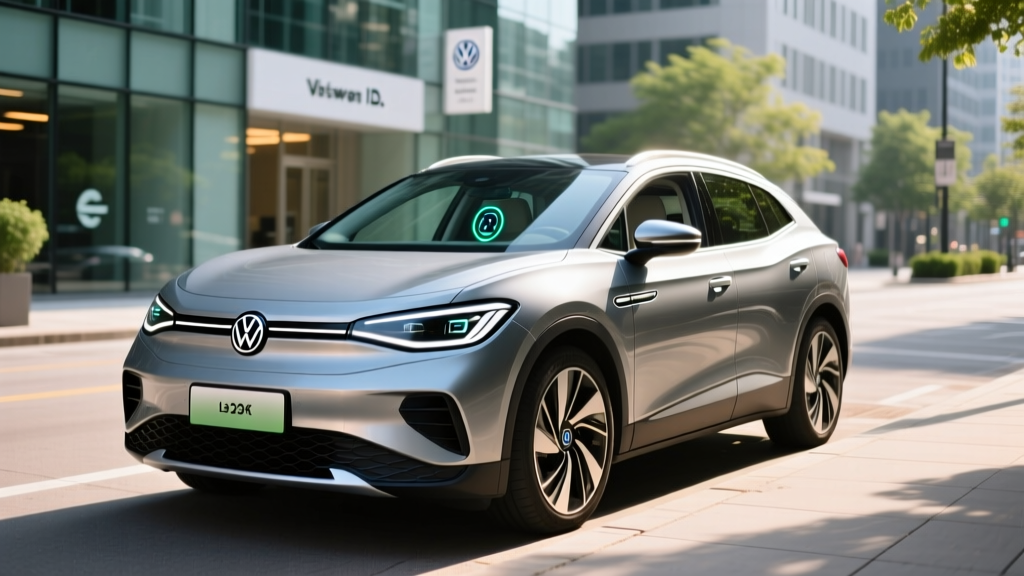
The Volkswagen ID.4 has been one of the most accessible electric SUVs on the market since its U.S. launch, but for 2026, the buying equation hinges on a question more complex than range or price: does the 2026 Volkswagen ID.4 still qualify for the federal EV tax credit? The answer depends on your income, the trim you choose, and a web of battery-sourcing requirements that shifted significantly under the Inflation Reduction Act. In this review, we'll untangle the 2026 Volkswagen ID.4 federal tax credit eligibility rules, then put the vehicle itself under the microscope — range, charging, performance, tech, and ownership costs — so you can decide if this compact electric SUV earns a spot in your driveway.
2026 Volkswagen ID.4 Federal Tax Credit Eligibility Explained
The federal EV tax credit, governed by IRS §30D, offers up to $7,500 for qualifying new clean vehicles. However, not every EV — and not every buyer — qualifies. For the 2026 Volkswagen ID.4, here's what you need to know:
IRS §30D Requirements for the 2026 ID.4
- MSRP Cap: The ID.4 is classified as an SUV under IRS guidelines, which sets the MSRP ceiling at $80,000. Every 2026 ID.4 trim falls well under this cap, so the vehicle itself clears this hurdle.
- Buyer Income Limits: Your modified adjusted gross income (MAGI) must not exceed $300,000 (joint filers), $225,000 (head of household), or $150,000 (single filers). This applies to the tax year you take delivery or the prior year — whichever is lower.
- Battery Component & Critical Minerals Sourcing: This is where eligibility gets tricky. The $7,500 credit splits into two $3,750 halves — one for battery component manufacturing (must be assembled in North America at required percentages) and one for critical minerals (sourced from the U.S. or free-trade-agreement partners). Battery-sourcing rules tighten annually, and Volkswagen has been working to localize its supply chain through its partnership with SK Innovation's U.S. plants.
- Point-of-Sale Transfer: As of 2024, buyers can transfer the credit to the dealer at purchase, reducing the vehicle price upfront rather than waiting for a tax refund. This option remains available for 2026, provided the dealer is registered with the IRS Energy Credits portal.
- FEOC Restriction: Vehicles with battery components from a "foreign entity of concern" (primarily Chinese manufacturers) are disqualified. VW's supply chain has been structured to avoid this, but confirm with your dealer for your specific VIN.
Bottom line: The 2026 ID.4's MSRP and VW's North American battery assembly position it well for the full $7,500 credit, but critical-minerals sourcing percentages could affect partial eligibility depending on the production batch. Always verify with your dealer and consult a tax professional before assuming the full credit. The IRS publishes a list of eligible vehicles that updates regularly.
Real-World Range and Efficiency: Beyond the EPA Sticker
The 2026 Volkswagen ID.4 carries over with a 82 kWh usable battery pack (91 kWh gross) using NMC (nickel-manganese-cobalt) lithium-ion chemistry. This is a proven, energy-dense chemistry that favors range and performance over the extreme cycle life of LFP packs — a trade-off that suits the ID.4's role as a family daily driver.
| Spec | Standard Range (RWD) | Pro S (RWD) | AWD Pro S |
|---|---|---|---|
| EPA Range | 206 mi | 291 mi | 263 mi |
| Battery (usable) | 62 kWh | 82 kWh | 82 kWh |
| Chemistry | NMC | NMC | NMC |
| MPGe (combined) | 104 MPGe | 107 MPGe | 98 MPGe |
| kWh/100 mi | 32 | 31 | 34 |
Real-World Range Reality Check
EPA estimate: 291 miles (Pro S RWD). What to actually expect: In mixed driving at moderate temperatures, plan for 250–270 miles on a full charge. Sustained highway speeds above 70 mph drop that to roughly 230–250 miles. In cold weather (below 30°F), expect a 20–30% reduction — meaning a winter highway range closer to 180–210 miles. The ID.4's heat pump (standard on Pro S and above) mitigates some of this cabin-heating penalty, but battery chemistry physics still apply.
Efficiency is respectable for a compact SUV in this weight class (roughly 4,700 lbs for the AWD). The 31 kWh/100 mi figure for the Pro S RWD translates to roughly $0.10–$0.13 per mile at the U.S. average electricity rate of $0.16/kWh — dramatically cheaper than a comparable gas SUV at current fuel prices.
Charging Speed: DC Fast Charging and Home Level 2
Charging capability is where the ID.4 has drawn both praise and criticism. The 2026 model continues with a maximum DC fast-charge rate of 170 kW (Pro S and AWD trims with the 82 kWh pack). That's competitive with the Hyundai Ioniq 5's base architecture but trails the 250+ kW peaks of Tesla's Supercharger network or the Ioniq 5's 800-volt system.
| Charging Level | Power | Speed / Time | Notes |
|---|---|---|---|
| Level 1 (120V household) | ~1.4 kW | ~3–4 mi/hr | Emergency/top-up only |
| Level 2 (240V home) | 11 kW (48A) | ~32 mi/hr; full charge ~9 hr | Requires 50A+ circuit |
| DC Fast Charge | Peak 170 kW | 10–80% in ~30 min | Speed tapers significantly above 80% SoC |
Charging curve reality: The ID.4 will sustain close to its 170 kW peak between roughly 10% and 35% state of charge, then step down progressively. Between 50–80%, expect rates closer to 80–100 kW. This means the 10–80% time of approximately 30 minutes is accurate under ideal conditions (preconditioned battery, warm ambient temperature, a functioning 175+ kW charger). In cold weather without preconditioning, that time can stretch to 40+ minutes.
The ID.4 uses the CCS1 connector for DC fast charging. With Volkswagen's adoption of the NACS (Tesla) standard for future models, 2026 ID.4 owners will likely receive a CCS-to-NACS adapter for Supercharger access, as VW has committed to the transition — but confirm adapter availability at purchase.
For home Level 2 charging, the onboard 11 kW charger is generous. A full overnight charge is realistic on a standard 48-amp Level 2 home charger (such as the ChargePoint Home Flex or Emporia Vue). Installation costs for a Level 2 home setup typically run $800–$2,000 depending on whether your electrical panel needs an upgrade — budget for a licensed electrician's assessment.
Performance and Drivetrain: RWD Comfort vs. AWD Capability
| Spec | RWD (Standard & Pro S) | AWD Pro S |
|---|---|---|
| Horsepower | 201 hp | 295 hp |
| Torque | 229 lb-ft | 339 lb-ft |
| 0–60 mph | ~7.7 sec | ~5.4 sec |
| Drivetrain | Rear-wheel drive (single motor) | Dual-motor AWD |
| Towing Capacity | 2,200 lbs (w/ factory hitch) | 2,700 lbs (w/ factory hitch) |
The rear-wheel-drive ID.4 prioritizes smooth, linear acceleration over sportiness. The 201 hp single-motor setup is perfectly adequate for commuting and highway merging, though it won't thrill anyone coming from a performance EV. The dual-motor AWD version is a different story — 295 hp and a 5.4-second 0–60 time give it genuine quickness off the line, and the added traction is valuable in rain, snow, and light off-pavement situations.
Ride quality is a genuine strength. VW tuned the ID.4's suspension for comfort over sportiness, and it absorbs road imperfections with a maturity that rivals vehicles costing $15,000 more. The turning circle is tight (31.5 feet), making it surprisingly maneuverable in urban environments. Regenerative braking offers multiple modes accessible through steering-wheel paddles, including a B-mode for stronger regen — though true one-pedal driving (full stop without touching the brake) is not available, which frustrates some EV veterans.
Interior, Cargo, and Technology
Inside, the ID.4 is roomy for its compact-SUV footprint. Rear legroom measures 37.6 inches — genuinely comfortable for adults on longer trips. Cargo volume is 30.3 cubic feet behind the second row and 64.2 cubic feet with the rear seats folded, which is competitive with the Toyota RAV4 and slightly less than the Hyundai Ioniq 5.
The infotainment system uses a 12.9-inch touchscreen (upgraded from earlier model years) running VW's latest ID. Software. Response times have improved markedly over the 2021–2023 models, which were plagued by lag and touch-capacitive slider frustrations. Wireless Apple CarPlay and Android Auto are standard. A head-up display with augmented-reality navigation arrows is available on Pro S Plus trims.
Driver assistance: The ID.4 comes equipped with VW's IQ.DRIVE suite, which includes adaptive cruise control with stop-and-go, lane centering, automatic emergency braking, and blind-spot monitoring. This is an SAE Level 2 system — meaning the driver must remain fully engaged and hands on or near the wheel at all times. It is not autonomous driving. The system is competent on highways but lacks the hands-free capability of GM's Super Cruise or Ford's BlueCruise.
Pros
- Comfortable, compliant ride quality that punches above its price class
- Generous rear-seat legroom and practical cargo space
- Strong MSRP-to-range value, especially Pro S RWD at 291 mi EPA
- Qualifies for up to $7,500 federal tax credit (subject to buyer eligibility)
- Competent 11 kW Level 2 onboard charger for fast home replenishment
- Heat pump standard on higher trims for cold-weather efficiency
Cons
- DC fast-charge peak of 170 kW trails competitors like Ioniq 5 and Tesla Model Y
- No true one-pedal driving mode
- Touch-capacitive steering wheel controls remain frustrating for some users
- Infotainment, while improved, still lags behind Tesla and Hyundai interfaces
- AWD range drops noticeably (263 mi vs. 291 mi RWD)
- No front trunk (frunk) — space is occupied by electronics
Pricing, Trims, and What You'll Actually Pay
| Trim | MSRP | Est. After $7,500 Credit* | Drivetrain | EPA Range |
|---|---|---|---|---|
| Standard | $39,735 | $32,235 | RWD | 206 mi |
| Pro | $43,735 | $36,235 | RWD | 291 mi |
| Pro S | $47,735 | $40,235 | RWD | 291 mi |
| AWD Pro S | $51,535 | $44,035 | AWD | 263 mi |
| Pro S Plus (AWD) | $55,235 | $47,735 | AWD | 263 mi |
*Estimated credit-adjusted prices assume full $7,500 §30D eligibility. Actual credit depends on battery sourcing, buyer income, and FEOC compliance. All trims fall under the $80,000 SUV MSRP cap. Destination charges (~$1,395) are additional. Consult IRS.gov and your tax advisor before purchasing.
The sweet spot in the lineup is the Pro S RWD at $47,735 — you get the full 291-mile EPA range, the heat pump, premium interior materials, and the 12.9-inch infotainment screen. After the potential $7,500 credit, you're looking at roughly $40,235 — putting the ID.4 in direct competition with a well-equipped Toyota RAV4 Hybrid on price, while offering dramatically lower fuel costs.
Warranty and Long-Term Battery Outlook
Volkswagen backs the ID.4's battery pack with an 8-year/100,000-mile warranty that guarantees at least 70% capacity retention. This is standard for the industry (matching Tesla, Hyundai, and Ford). The limited vehicle warranty covers 4 years/50,000 miles, with roadside assistance for 3 years/36,000 miles.
NMC battery chemistry in the ID.4 has shown favorable degradation patterns in real-world fleet data from European and early U.S. models. Most owners report 3–5% capacity loss in the first 30,000 miles, with the curve flattening significantly thereafter. To maximize longevity, VW recommends avoiding prolonged storage at 100% state of charge and limiting routine DC fast charging when Level 2 is available. The vehicle's battery management system includes a buffer (roughly 9 kWh of the 91 kWh gross pack is reserved) to protect against deep degradation.
Full battery replacement costs, should you need one out of warranty, are estimated at $12,000–$18,000 based on current VW parts pricing — though costs are expected to decline as the battery supply chain matures.
How the ID.4 Stacks Up Against Key Competitors
The compact electric SUV segment is crowded. Here's how the ID.4 compares on the metrics that matter most:
| Spec | VW ID.4 Pro S RWD | Hyundai Ioniq 5 SEL RWD | Tesla Model Y LR AWD | Ford Mustang Mach-E Premium RWD |
|---|---|---|---|---|
| EPA Range | 291 mi | 303 mi | 320 mi | 305 mi |
| Battery | 82 kWh (NMC) | 77.4 kWh (NMC) | 78.1 kWh (NMC) | 91 kWh (NMC) |
| Peak DC Charge | 170 kW | 240 kW (800V) | 250 kW | 150 kW |
| 10–80% DC Time | ~30 min | ~18 min | ~25 min | ~38 min |
| 0–60 mph | 7.7 sec | 7.0 sec | 5.0 sec | 6.1 sec |
| Base MSRP (equiv. trim) | $47,735 | $49,500 | $48,990 | $48,995 |
| Federal Credit Eligible | Up to $7,500 | Up to $7,500 | Up to $7,500 | Up to $7,500 |
Choose the VW ID.4 if:
- Ride comfort and quietness are your top priorities
- You want a mainstream-brand dealer network for service
- You value a traditional SUV driving feel over sporty dynamics
- Home Level 2 charging is your primary refueling method (11 kW onboard charger excels here)
Look elsewhere if:
- Fastest possible DC charging is critical (Ioniq 5 or Model Y win)
- You need hands-free highway driving (Ford Mach-E with BlueCruise or GM vehicles with Super Cruise)
- Maximum range per dollar is your sole criterion (Model Y edges ahead)
Who Should Buy the 2026 Volkswagen ID.4?
The ID.4 is best suited for suburban families and commuters who have reliable home Level 2 charging, drive 30–60 miles daily, and take occasional road trips of 200–300 miles. Its comfort-oriented tuning, spacious interior, and strong value proposition (especially after the tax credit) make it an excellent first EV for households transitioning from a gas-powered compact SUV.
It's less ideal for frequent long-distance road trippers who need the fastest possible charging (the 170 kW peak adds time on multi-state drives) or driving enthusiasts who want a sporty EV experience. For towing, the 2,700-pound AWD capacity handles a small utility trailer or a pair of jet skis, but it's not a heavy-hauler.
Frequently Asked Questions
What is the real-world range of the 2026 VW ID.4?
The EPA rates the Pro S RWD at 291 miles. In real-world mixed driving, expect 250–270 miles. Highway-only driving at 75+ mph reduces this to roughly 230–250 miles, and cold weather (below 30°F) can push it down to 180–210 miles. The heat pump on Pro S and above helps mitigate winter losses.
How fast does the 2026 ID.4 charge?
On a DC fast charger, the ID.4 peaks at 170 kW and charges from 10–80% in approximately 30 minutes under ideal conditions. At home on a Level 2 (240V, 48A) charger, it adds roughly 32 miles of range per hour, with a full charge taking about 9 hours. The 11 kW onboard charger is one of the faster units in this class.
Does the 2026 ID.4 qualify for the full $7,500 federal tax credit?
The 2026 ID.4 meets the MSRP cap (under $80,000 for SUVs) and VW has structured its battery supply chain to comply with North American component manufacturing and critical-minerals sourcing requirements. However, the full $7,500 credit also depends on your personal income (MAGI caps apply) and the specific battery batch in your vehicle. Verify eligibility on the IRS clean vehicle credit page and with your dealer before purchase.
Is the VW ID.4 worth buying over the Tesla Model Y or Hyundai Ioniq 5?
It depends on your priorities. The ID.4 wins on ride comfort, cabin quietness, and dealer service accessibility. The Ioniq 5 charges significantly faster (18 minutes 10–80% vs. 30 minutes). The Model Y offers the longest range and access to the Supercharger network natively. If comfort and value (post-credit) matter most, the ID.4 holds its own.
What are the biggest drawbacks of the ID.4?
The most common complaints are its middling DC fast-charge speed (170 kW peak), the lack of true one-pedal driving, frustrating touch-capacitive steering wheel controls, and no front trunk. Infotainment has improved but still isn't class-leading.
How long will the ID.4 battery last?
VW warrants the battery for 8 years or 100,000 miles with at least 70% capacity retention. Real-world data from early ID.4 owners suggests 3–5% degradation in the first 30,000 miles, with the rate slowing significantly afterward. Most owners should expect 85%+ capacity at 100,000 miles with reasonable charging habits.