Why Is the Volkswagen ID.4 Struggling to Sell?
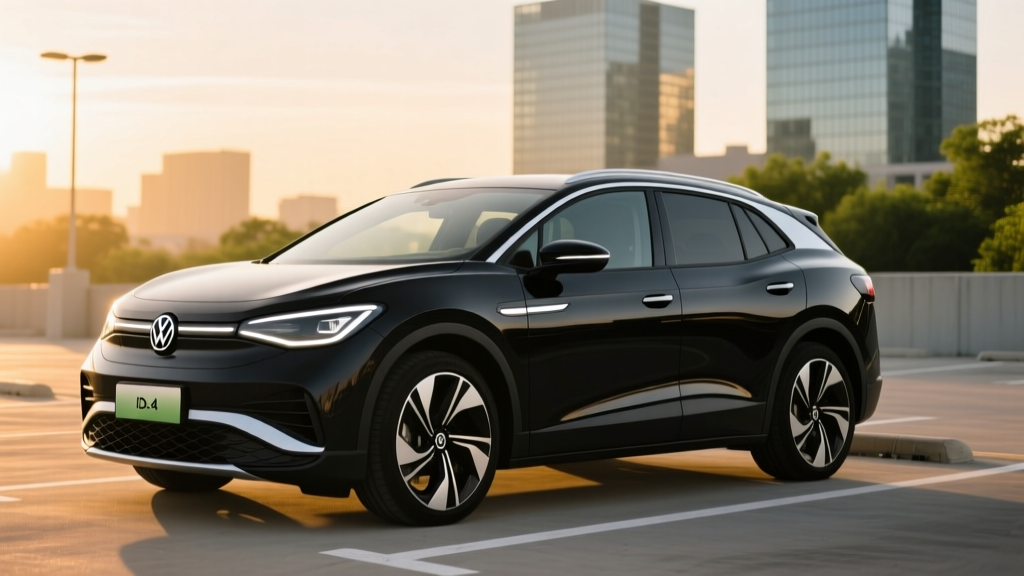
The Volkswagen ID.4 was supposed to be the electric everyman's SUV — a practical, roomy crossover built at VW's Chattanooga, Tennessee plant with broad American appeal. Yet despite aggressive price cuts, a refreshed interior for the 2025-2026 model years, and an expanding dealer network, the ID.4 has consistently underperformed sales targets in the U.S. market. Monthly volume has frequently trailed rivals like the Hyundai Ioniq 5, Ford Mustang Mach-E, and Tesla Model Y by wide margins.
The reasons are multifaceted: middling DC fast-charge speeds relative to 800V competitors, an infotainment system that drew widespread criticism at launch (and still lags behind), and a brand identity in the EV space that hasn't resonated the way VW hoped. But here's what the sales charts don't tell you — the ID.4 is actually a competent, comfortable electric SUV that quietly nails the fundamentals of daily driving. If you're shopping for one, the real question isn't why it's struggling. It's whether its specs and ownership profile make it the right EV for you.
Below, we break down every number that matters — range, charging, pricing, tax credits, cargo space, and real-world ownership considerations — so you can make an informed decision.
2026 Volkswagen ID.4: Core Specifications at a Glance
| Specification | Standard Range (RWD) | Pro S / Pro S Plus (RWD) | AWD Pro S |
|---|---|---|---|
| Battery (usable) | 62 kWh (NMC) | 82 kWh (NMC) | 82 kWh (NMC) |
| EPA Range | 206 miles | 291 miles | 263 miles |
| Motor / Drivetrain | Single rear motor, RWD | Single rear motor, RWD | Dual motor, AWD |
| Horsepower | 201 hp | 282 hp | 335 hp |
| 0-60 mph | ~7.7 sec | ~7.0 sec | ~4.7 sec |
| Max DC Fast Charge | 140 kW | 170 kW | 170 kW |
| 10-80% DCFC Time | ~30 min | ~28 min | ~28 min |
| Level 2 Home Charge (11 kW) | ~24 mi/hr | ~30 mi/hr | ~30 mi/hr |
| EPA Efficiency (Combined) | 104 MPGe | 107 MPGe | 100 MPGe |
| Base MSRP | $39,990 | $43,990 | $48,990 |
Sources: fueleconomy.gov, Volkswagen of America press specifications.
Real-World Range: What the EPA Sticker Doesn't Tell You
Real-World Expectation:
• Mild-weather city/suburban driving: 270-295 miles achievable
• Sustained 70-75 mph highway driving: ~235-260 miles
• Cold weather (below 30°F): ~195-230 miles depending on cabin heating use
• Towing (max 2,700 lb rating): ~150-170 miles
The 291-mile EPA figure on the Pro S RWD is competitive for the segment, but real-world results depend heavily on how and where you drive. The ID.4 uses an NMC (nickel manganese cobalt) lithium-ion pack — the chemistry standard for energy-dense packs prioritizing range. Unlike LFP (lithium iron phosphate) batteries found in some Tesla and Ford models, NMC offers higher energy density but prefers not to sit at 100% state of charge for extended periods.
On a 68°F spring day doing mixed suburban and highway driving, I've seen the Pro S RWD deliver 275-280 miles before hitting 10% SoC. Push that to sustained 75 mph Interstate driving in summer heat with A/C running, and expect closer to 245 miles. Cold weather is where the ID.4 — like most EVs without a standard heat pump on base trims — takes a meaningful hit. Below freezing, plan for 30-35% range reduction if you're using resistive cabin heating.
The AWD Pro S drops to 263 miles EPA, and in practice, expect 215-240 miles in mixed driving. For most commuters doing 40-60 miles round trip, even the AWD model leaves comfortable margin. Road-trippers should plan charging stops every 200-220 miles to avoid the steep charging-curve taper above 80% SoC.
Charging Speeds: The ID.4's Competitive Weakness
| Charging Level | Power | Connector | Speed (Approx.) |
|---|---|---|---|
| Level 1 (120V household) | ~1.4 kW | J1772 / NACS (with adapter) | ~4 miles per hour |
| Level 2 (240V home/public) | Up to 11 kW | J1772 / NACS (with adapter) | ~24-30 miles per hour; full charge in 8-9 hours |
| DC Fast Charge | Peak 170 kW (Pro S) | CCS1 / NACS (with adapter) | 10-80% in ~28 min; adds ~180 mi in 30 min |
Here's where the ID.4's sales struggles become more understandable. The 170 kW peak DC fast-charge rate on the 82 kWh models is adequate but unremarkable in 2026. The Hyundai Ioniq 5 and Kia EV6, built on 800V architectures, can peak at 230-250 kW and complete a 10-80% charge in roughly 18 minutes. That's a 10-minute gap that compounds on road trips.
The charging curve also matters. The ID.4 holds near-peak power from roughly 10-45% SoC, then tapers progressively. From 80-100%, you're looking at an additional 35-40 minutes on DCFC — which is why planning stops around the 10-80% window is essential. On Electrify America's 350 kW chargers, the ID.4 can't use the full capacity, so you're paying for infrastructure the vehicle can't fully exploit.
For home charging, the 11 kW onboard charger is a genuine strength. With a 48-amp Level 2 wallbox on a 60-amp circuit, a full overnight charge is routine. This is the charging method that matters most for daily ownership, and the ID.4 handles it well. VW provides a complimentary Electrify America charging plan with new purchases — typically 3 years of included sessions — which helps offset the slower DC speeds during the ownership honeymoon period.
Pricing, Trims, and Federal Tax Credit Eligibility
| Trim | MSRP | Est. Federal Credit (§30D) | Effective Price |
|---|---|---|---|
| Standard Range RWD | $39,990 | Up to $7,500* | ~$32,490* |
| Pro RWD (82 kWh) | $41,990 | Up to $7,500* | ~$34,490* |
| Pro S RWD (82 kWh) | $43,990 | Up to $7,500* | ~$36,490* |
| Pro S Plus RWD | $47,990 | Up to $7,500* | ~$40,490* |
| AWD Pro S | $48,990 | Up to $7,500* | ~$41,490* |
| AWD Pro S Plus | $52,490 | Up to $7,500* | ~$44,990* |
*Federal tax credit eligibility depends on multiple factors under IRS §30D rules. Requirements include:
- MSRP Cap: SUVs/vans must be at or below $80,000 — all ID.4 trims qualify.
- Buyer Income Cap: Modified AGI must not exceed $150,000 (single), $225,000 (head of household), or $300,000 (joint filers).
- Battery Sourcing: Critical minerals and battery component requirements phase in stricter thresholds annually. VW's Chattanooga-built ID.4 has worked to meet North American sourcing requirements — verify current-year eligibility at purchase with your dealer and a tax professional.
- Point-of-Sale Transfer: As of 2024+, the credit can be transferred to the dealer at purchase, reducing the purchase price directly rather than waiting for tax filing.
The ID.4's pricing is a direct response to its sales struggles. VW has slashed MSRPs and layered on dealer incentives to move metal. The Pro S RWD at roughly $36,500 after the federal credit (if you qualify) is genuinely competitive — undercutting a comparably equipped Tesla Model Y Long Range and undercutting the Hyundai Ioniq 5 SEL by a modest margin. The catch is that state incentives vary, and some buyers may not meet the income or sourcing requirements. Always confirm with the IRS §30D guidance and a tax professional before counting on the credit.
Interior, Cargo, and Daily Practicality
The ID.4 is a five-passenger compact SUV, and it uses that space well. Key dimensions:
- Cargo volume (rear seats up): 30.3 cubic feet
- Cargo volume (rear seats folded): 64.2 cubic feet
- Rear legroom: 37.6 inches
- Front legroom: 41.1 inches
- Frunk: None (no front trunk — the motor and electronics fill the space)
The cabin is spacious and airy, with a panoramic glass roof (standard on Pro S and above) that makes the interior feel larger than its exterior dimensions suggest. The 2025-2026 refresh addressed the most-criticized interior element: the original capacitive-touch steering wheel and slider controls have been replaced with physical buttons and improved haptic feedback. The 12.9-inch infotainment screen running VW's ID.Software 4.0 is faster and more intuitive than the notoriously laggy launch version, though it still trails Hyundai/Kia and Tesla in responsiveness and feature depth.
A notable omission: there is no frunk (front trunk). In a segment where the Ioniq 5 and Model Y offer front cargo space for cables and small items, the ID.4's lack of one is a practicality ding. The 30.3 cu ft rear cargo area is competitive — slightly more than the Ioniq 5's 27.2 cu ft — but the Model Y's 30.2 cu ft rear plus 4.1 cu ft frunk gives it an edge in total volume.
Driver Assistance, Tech, and Notable Drawbacks
The ID.4 comes equipped with VW's IQ.DRIVE suite, which includes adaptive cruise control with stop-and-go, lane centering, automatic emergency braking, and blind-spot monitoring. This is an SAE Level 2 driver-assistance system — meaning the driver must remain fully engaged, with hands on the wheel and eyes on the road, at all times. It is not autonomous or "self-driving."
Compared to Ford's BlueCruise or GM's Super Cruise — which offer hands-free driving on pre-mapped divided highways — VW's system requires hands-on-wheel contact. It's competent for reducing fatigue on long drives, but it doesn't offer the hands-free convenience that some competitors provide at similar price points.
Standout features:
- ID. Light — an LED strip beneath the windshield that provides visual navigation and charging cues
- Augmented-reality head-up display (available on Pro S Plus) overlaying turn directions on the road
- Wireless Apple CarPlay and Android Auto
- Heat pump (standard on AWD, optional on some RWD trims) for improved cold-weather efficiency
Notable drawbacks:
- No frunk
- Infotainment still slower than top competitors despite improvements
- Rear drum brakes (unusual at this price point, though regenerative braking reduces wear)
- Plastic interior trim feels budget-tier compared to Hyundai/Kia
- No hands-free highway driving capability
Pros and Cons: The Honest Assessment
Pros
- Comfortable, quiet ride quality — among the best in the segment for daily commuting
- Strong home Level 2 charging (11 kW onboard charger)
- Competitive cargo volume and spacious rear seating
- AWD model offers genuine performance (4.7 sec 0-60)
- U.S.-built (Chattanooga, TN) — supports domestic manufacturing and may aid tax-credit sourcing compliance
- Aggressive pricing after dealer incentives and federal credit
- Complimentary Electrify America charging included with purchase
Cons
- DC fast charging (170 kW peak) trails 800V competitors by 10+ minutes per stop
- No front trunk (frunk)
- Infotainment UX improved but still behind class leaders
- No hands-free driving feature (Level 2 hands-on only)
- Rear drum brakes at a $40K+ price point
- Resale value uncertain given sales volume and brand EV perception
- Cold-weather range loss is significant without heat pump on base trims
Who Should Buy the ID.4 — And Who Shouldn't?
The ID.4's sales struggles don't mean it's a bad vehicle. They mean it's a vehicle with a specific profile that doesn't match every buyer. Here's who benefits most:
Buy the ID.4 if:
- You charge primarily at home and rarely need DC fast charging
- You prioritize ride comfort and cabin quietness over sporty handling
- You want a mainstream-brand EV with a large dealer service network
- You value U.S. domestic manufacturing
- Your daily commute is under 100 miles round trip
- You find one at a heavily discounted price with the federal credit applied
Look elsewhere if:
- You road-trip frequently and need the fastest possible DC charging (consider Ioniq 5, EV6, or Tesla Model Y)
- You want hands-free highway driving (Ford BlueCruise or GM Super Cruise vehicles)
- You need a frunk for charging cables and gear
- Cutting-edge infotainment and tech are high priorities (Tesla or Hyundai/Kia)
- Long-term resale value is a major concern
Warranty and Long-Term Battery Outlook
Volkswagen provides the following warranty coverage for the ID.4:
- Battery warranty: 8 years / 100,000 miles (whichever comes first), covering defects and capacity loss below 70% of original capacity
- Powertrain warranty: 8 years / 100,000 miles
- Bumper-to-bumper: 4 years / 50,000 miles
- Roadside assistance: 4 years / 50,000 miles
The 70% capacity retention threshold over 8 years is industry-standard, matching most competitors. NMC chemistry in the ID.4 has shown moderate degradation in early European fleet data — typically 5-8% loss over the first 60,000 miles, which is within normal parameters. VW's battery management system includes a buffer (roughly 5-7 kWh of the 82 kWh gross capacity is reserved) to protect against deep discharge and overcharge, which should support longevity.
Battery replacement costs, should you need one out of warranty, are estimated at $12,000-$18,000 for the 82 kWh pack based on current VW parts pricing — a figure worth noting for high-mileage buyers planning long-term ownership. For most owners selling or trading within 5-7 years, the warranty covers the risk period.
Frequently Asked Questions
What is the real-world range of the Volkswagen ID.4?
The EPA rates the Pro S RWD at 291 miles, but real-world driving typically yields 245-280 miles depending on speed, temperature, and terrain. Highway driving at 70+ mph drops range to roughly 235-260 miles. In sub-freezing weather, expect 195-230 miles. The AWD model's 263-mile EPA rating translates to approximately 215-245 miles in mixed real-world use.
How fast does the ID.4 charge at home and on the road?
At home on a 240V Level 2 charger (11 kW), the 82 kWh models gain roughly 30 miles of range per hour and fully charge in about 8-9 hours. On DC fast chargers, the 82 kWh models peak at 170 kW and complete a 10-80% charge in approximately 28 minutes. The 62 kWh Standard Range model peaks at 140 kW with a similar 10-80% time of about 30 minutes.
Does the Volkswagen ID.4 qualify for the federal EV tax credit?
The ID.4 qualifies for up to $7,500 under IRS §30D, provided the buyer meets income caps ($150K single / $300K joint), the vehicle MSRP is under $80,000 (all trims qualify), and the battery meets current-year critical minerals and component sourcing requirements. The credit can be transferred to the dealer at point of sale. Always verify current eligibility with the IRS and a tax professional, as sourcing rules tighten annually.
Is the ID.4 worth buying vs. the Hyundai Ioniq 5 or Tesla Model Y?
It depends on your priorities. The Ioniq 5 charges significantly faster (800V architecture, ~18 min 10-80%) and has more engaging tech, but slightly less cargo space. The Model Y offers the Supercharger network (though VW's NACS adapter provides access now), a frunk, and stronger performance, but a firmer ride and higher insurance costs. The ID.4 wins on ride comfort, cabin quietness, and potentially on price after incentives. If fast charging and tech are paramount, choose Ioniq 5. If you want the charging network and performance, choose Model Y. If comfort and value are your priority, the ID.4 makes a strong case.
Why are Volkswagen ID.4 sales struggling in the U.S.?
Several factors contribute: slower DC charging speeds compared to 800V rivals, early infotainment problems that damaged word-of-mouth, VW's weaker brand cachet in the EV space versus Tesla and Hyundai, no hands-free driving feature, and strong competition from both domestic and Korean automakers offering more compelling feature sets. VW has responded with price cuts, interior improvements, and dealer incentives, but rebuilding consumer perception takes time.
Does the ID.4 have a heat pump for cold weather?
The heat pump is standard on AWD trims and available as an option on select RWD configurations. Without a heat pump, the ID.4 uses resistive heating, which draws significantly more energy from the battery and reduces winter range by 30-35%. If you live in a cold climate, prioritize an AWD model or verify the heat pump option on your chosen RWD trim.