Is the Volkswagen ID.4 Reliable in 2026?
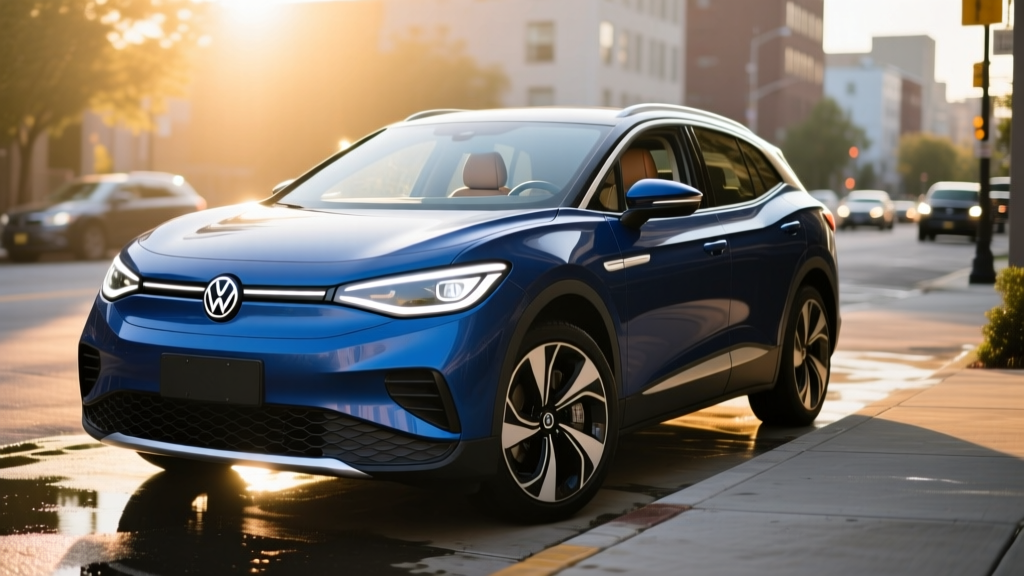
The Volkswagen ID.4 has been on American roads since the 2021 model year, giving us over four years of real-world ownership data to evaluate. For shoppers researching Volkswagen ID.4 reliability, the picture in 2026 is nuanced: the MEB-platform crossover has matured significantly through software and hardware revisions, but early-model-year owners have documented a specific pattern of issues worth understanding before you buy.
This review covers the current 2026 Volkswagen ID.4 lineup with an emphasis on long-term durability, battery health, real-world efficiency, and the ownership economics that determine whether this EV delivers on its promises over 100,000 miles and beyond.
| Spec | Standard Range (RWD) | Pro / Pro S (RWD) | AWD Pro / Pro S |
|---|---|---|---|
| Usable Battery | 62 kWh (NMC) | 82 kWh (NMC) | 82 kWh (NMC) |
| EPA Range | 206 mi | 291 mi | 263 mi |
| Horsepower | 201 hp | 282 hp | 335 hp |
| 0–60 mph | ~7.7 sec | ~6.5 sec | ~5.4 sec |
| Max DC Fast Charge | 135 kW | 175 kW | 175 kW |
| 10–80% DC Time | ~30 min | ~28 min | ~28 min |
| Level 2 Home Rate | 11 kW (~33 mi/hr) | 11 kW (~33 mi/hr) | 11 kW (~33 mi/hr) |
| MPGe (Combined) | 104 MPGe | 107 MPGe | 97 MPGe |
| Base MSRP | $39,735 | $44,735 | $48,735 |
Real-World Range: What the EPA Sticker Doesn't Tell You
Expect 245–265 miles in mixed real-world driving at highway speeds (70–75 mph). In cold weather (below 32°F), range drops to approximately 200–225 miles due to cabin heating demands and increased battery resistance. City driving with regenerative braking can push closer to the EPA estimate or slightly above, around 280–300 miles.
The ID.4 Pro's 82 kWh usable battery (NMC chemistry, supplied primarily by SK On) delivers an EPA-estimated 291 miles in the RWD configuration. That number holds up reasonably well in moderate temperatures and suburban driving, where the ID.4's efficiency peaks around 3.0–3.2 kWh per mile.
On sustained highway trips at 75 mph, efficiency drops to roughly 3.4–3.7 kWh/mile, cutting range by 10–15%. This is typical for a crossover of this weight (~4,700 lbs) and aerodynamic profile. The AWD variant sacrifices about 28 miles of EPA range for the added traction, landing at 263 miles — a meaningful tradeoff if you rarely encounter snow or steep grades.
The Standard Range model's 62 kWh battery and 206-mile EPA rating make it strictly a commuter and city vehicle. For road-trip duty, the Pro or Pro S with the larger pack is the only practical choice.
Charging Speed and Infrastructure Compatibility
| Charging Level | Power / Rate | Miles Added | Notes |
|---|---|---|---|
| Level 1 (120V) | ~1.2 kW | ~3–4 mi/hr | Emergency/trickle only |
| Level 2 (240V, 48A) | 11 kW | ~33 mi/hr | Full charge in ~8 hrs (82 kWh) |
| DC Fast Charge (Std Range) | Peak 135 kW | ~150 mi in 30 min | Tapers sharply above 80% |
| DC Fast Charge (Pro/AWD) | Peak 175 kW | ~170 mi in 25 min | 10–80% in ~28 min |
The ID.4's DC fast-charging performance is adequate but not class-leading. The 82 kWh models peak at 175 kW on a compatible charger, sustaining roughly 140–150 kW between 10% and 50% State of Charge before tapering. The 10–80% session takes approximately 28 minutes under ideal thermal conditions.
Here's the real-world nuance: preconditioning matters enormously. The ID.4's battery thermal management system needs the pack warmed to roughly 77–95°F to hit peak charge rates. If you arrive at a DC fast charger cold — without using the navigation-routed preconditioning feature — expect peak rates closer to 90–110 kW, stretching your 10–80% time to 35–40 minutes. Always set the charger as your navigation destination to trigger active battery preconditioning.
Above 80% SoC, the charge curve tapers dramatically to protect the NMC cells, dropping below 50 kW. This is standard behavior for lithium-ion packs, but it means charging past 80% on a road trip is rarely time-efficient. Plan to charge to 80% and move on.
For home charging, the 11 kW onboard AC charger is a strong point. On a 48-amp Level 2 circuit (hardwired, 60-amp breaker), you'll add roughly 33 miles of range per hour, meaning a depleted 82 kWh pack reaches full overnight in about 8 hours. This is competitive with the segment.
Battery Degradation and Long-Term Reliability Data
The central question for any EV buyer is battery longevity. The ID.4's NMC (nickel manganese cobalt) battery pack, manufactured primarily by SK On for North American models, carries an 8-year/100,000-mile warranty against defects and excessive capacity loss. Volkswagen defines excessive loss as falling below 70% of original capacity during the warranty period.
Based on aggregated owner data from 2021–2024 model-year vehicles now approaching or exceeding 60,000 miles, the ID.4 battery is showing approximately 4–7% degradation at the 50,000–70,000 mile mark. This is within the normal band for liquid-cooled NMC packs and projects to roughly 85–90% State of Health at 100,000 miles — comfortably above the warranty threshold.
Factors that accelerate degradation in the ID.4 include:
- Frequent DC fast charging above 80%: Habitually charging to 100% on DC fast chargers stresses NMC chemistry. For daily use, set your charge limit to 80%.
- Sustained high SoC in heat: Leaving the ID.4 parked at 100% charge in hot climates (Arizona, Texas summers) accelerates calendar aging.
- Aggressive driving in cold: Drawing high current from a cold battery increases internal resistance and long-term wear.
For owners who charge primarily at home on Level 2 and keep daily SoC between 20–80%, projections suggest the battery will retain 80–85% capacity at 150,000 miles, which is the practical lifespan of the vehicle for most first owners.
Known Issues and Build Quality Track Record
Volkswagen ID.4 reliability has improved markedly since the troubled 2021–2022 launch. Here is a candid accounting of the issues documented across model years:
2021–2022 Models (Highest Issue Frequency)
- 12V battery drain: The most widespread complaint. The 12V auxiliary battery would deplete unexpectedly, leaving the vehicle unable to start even with a full traction battery. VW addressed this with multiple software updates and, in some cases, 12V battery replacements under warranty.
- Infotainment/software glitches: Slow response times, random reboots, and CarPlay disconnections plagued early ID.4 software (version 2.x and early 3.x).
- Charge port door issues: The motorized charge port door on some units failed to open or close reliably, particularly in freezing temperatures.
- Capacitive touch controls: The touch-sensitive steering wheel and HVAC sliders drew widespread criticism for accidental inputs and lack of tactile feedback.
2023–2024 Models (Improved)
- Software version 3.2+ resolved most infotainment instability.
- The 12V battery issue was largely mitigated through updated battery management firmware.
- VW introduced the GTX trim and AWD variants with a revised rear motor and updated thermal management.
2025–2026 Models (Current Generation)
- Software 4.0 brought a redesigned infotainment interface with improved responsiveness and native wireless Apple CarPlay and Android Auto.
- Physical buttons replaced the capacitive steering wheel controls on 2025+ models — a direct response to owner feedback.
- The HV battery management system received further refinements to optimize charge curves and thermal conditioning.
- Remaining complaints are primarily minor: wind noise at highway speeds, rear drum brake feel (regenerative braking integration), and the absence of a front trunk (frunk).
From a mechanical standpoint, the ID.4's electric drivetrain is straightforward and robust. Electric motors have far fewer moving parts than internal combustion engines — no timing belts, no oil changes, no exhaust systems. The single-speed reduction gear requires no routine fluid service. The primary wear items are tires (EVs are heavy and torque-heavy; expect 30,000–40,000 miles from a set), cabin air filters, wiper blades, and brake pads — which last significantly longer than on gas cars thanks to regenerative braking.
Pricing, Tax Credits, and Total Ownership Cost
| Trim | MSRP | §30D Credit Eligibility | Effective Price (if eligible) |
|---|---|---|---|
| Standard Range | $39,735 | Up to $7,500* | ~$32,235 |
| Pro | $44,735 | Up to $7,500* | ~$37,235 |
| Pro S | $49,735 | Up to $7,500* | ~$42,235 |
| Pro S Plus (AWD) | $53,735 | Up to $7,500* | ~$46,235 |
*Federal tax credit eligibility under IRS §30D is not automatic. To qualify for the full $7,500 credit, the following must all be true for the 2026 tax year:
- MSRP cap: The vehicle's MSRP must not exceed $80,000 for SUVs (the ID.4 qualifies — all trims are under this cap).
- Buyer income limits: Modified adjusted gross income must not exceed $150,000 (single), $225,000 (head of household), or $300,000 (married filing jointly).
- Battery sourcing requirements: A percentage of critical minerals and battery components must be sourced from the U.S. or free-trade-agreement countries. The ID.4's SK On battery (with components from South Korea, an FTA partner) has historically met partial or full requirements, but sourcing rules tighten annually. Verify current-year eligibility on the IRS qualified vehicles list before purchasing.
- Point-of-sale transfer: As of 2024, you can transfer the credit to the dealer at purchase, reducing your out-of-pocket cost immediately rather than waiting to claim it on your tax return.
- Final assembly: The ID.4 for the North American market is assembled in Chattanooga, Tennessee, satisfying the final-assembly requirement.
Always confirm eligibility with a tax professional and check the fueleconomy.gov tax credit tracker for the specific trim and model year before committing to a purchase.
5-Year Ownership Cost Snapshot
Compared to a similarly priced gas crossover (e.g., VW Tiguan, ~$38,000), the ID.4 delivers meaningful savings over five years and 75,000 miles:
- Fuel vs. electricity: At $0.14/kWh (national average home rate) and 3.2 kWh/mile, the ID.4 costs roughly $0.045/mile to fuel. A Tiguan at 26 MPG combined and $3.40/gallon costs $0.13/mile. That's approximately $6,375 in fuel savings over 75,000 miles.
- Maintenance: No oil changes, no spark plugs, minimal brake wear. Estimated savings of $2,000–$3,000 over five years.
- Insurance: EV insurance premiums run 10–20% higher on average. Budget an additional $600–$1,200 over five years.
- Depreciation: The ID.4 has experienced steeper depreciation than Tesla or Hyundai/Kia EVs. Expect roughly 45–55% value retention at five years, depending on mileage and condition.
Cargo, Interior Space, and Daily Practicality
The ID.4 is one of the more practical compact electric crossovers for family duty:
- Cargo volume: 30.3 cubic feet behind the rear seats; 64.2 cubic feet with rear seats folded.
- Rear legroom: 37.6 inches — generous for the segment and competitive with the Hyundai Ioniq 5 and Toyota RAV4.
- Front headroom: 41.1 inches, aided by the panoramic glass roof (standard on Pro S and above).
- No frunk: The ID.4 does not have a front trunk. The space under the hood houses electronics and the HVAC system. This is a notable omission vs. the Ioniq 5 and Ford Mustang Mach-E.
- Towing: The AWD models are rated for 2,700 lbs (braked trailer). RWD models are rated for 2,200 lbs. Sufficient for a small utility trailer or a pair of dirt bikes, but not a full-size camping trailer.
The interior materials are durable if not luxurious. VW uses a mix of soft-touch and hard plastics that hold up well to daily use. The 12.9-inch infotainment screen (updated for 2025+) is responsive, and the new physical-button steering wheel is a major ergonomic improvement over the earlier capacitive design.
Driver Assistance and Safety Technology
The ID.4 comes equipped with VW's IQ.DRIVE suite, which includes:
- Adaptive cruise control with stop-and-go
- Lane-keeping assist with centering
- Automatic emergency braking with pedestrian detection
- Blind-spot monitoring with rear cross-traffic alert
- Travel Assist (combined lane-centering + adaptive cruise for highway use)
Travel Assist is a Level 2 driver-assistance system. It can manage steering, acceleration, and braking on marked highways, but the driver must remain fully engaged with hands on the wheel and eyes on the road at all times. It is not autonomous or self-driving. The ID.4 does not offer hands-free driving like GM's Super Cruise or Ford's BlueCruise.
The ID.4 earned the IIHS TOP SAFETY PICK+ rating for recent model years and a 5-Star overall rating from NHTSA, making it one of the safer choices in the compact EV crossover segment.
How the ID.4 Stacks Up Against Key Competitors
| Spec | VW ID.4 Pro RWD | Hyundai Ioniq 5 SEL RWD | Tesla Model Y Long Range | Ford Mach-E Premium RWD |
|---|---|---|---|---|
| EPA Range | 291 mi | 303 mi | 320 mi | 290 mi |
| Battery | 82 kWh NMC | 77.4 kWh NMC | ~78 kWh NMC | 75.7 kWh NMC |
| Peak DC Charge | 175 kW | 238 kW | 250 kW | 150 kW |
| 10–80% DC Time | ~28 min | ~18 min | ~20 min | ~36 min |
| 0–60 mph | 6.5 sec | 7.2 sec | 4.8 sec | 6.1 sec |
| Cargo (rear up) | 30.3 cu ft | 27.2 cu ft | 30.2 cu ft | 29.7 cu ft |
| Base MSRP | $44,735 | $46,650 | $44,990 | $43,995 |
The ID.4's competitive position in 2026 is clear: it offers strong cargo space, a comfortable ride, and a strong safety record, but it trails the Ioniq 5 and Model Y in charging speed and the Model Y in range and performance. The Mach-E is a close match in most metrics but also lags in DC charging.
Where the ID.4 wins is ride comfort, cabin quietness, and dealer service accessibility. VW's U.S. dealer network provides a service experience that many Tesla owners envy, and the ID.4's suspension tuning prioritizes comfort over sportiness — a deliberate choice that suits family buyers.
- You prioritize ride comfort and cabin quietness over sporty handling
- You want a mainstream dealer service network for warranty work
- Cargo space and rear-seat roominess are top priorities
- You primarily charge at home and take road trips 2–3 times per year
- Fast DC charging is critical (Ioniq 5 or Model Y charge significantly faster)
- You want maximum range per dollar (Model Y Long Range leads)
- You need hands-free highway driving (Super Cruise or BlueCruise vehicles)
- You want a frunk for additional storage
Pros and Cons at a Glance
- Comfortable, quiet ride quality — best in segment for highway cruising
- Strong cargo and passenger space (30.3 / 64.2 cu ft)
- Chattanooga-built; qualifies for §30D credit (verify sourcing annually)
- Competitive 8-year/100,000-mile battery warranty at 70% capacity floor
- Improved infotainment and physical controls on 2025+ models
- Top Safety Pick+ and 5-star NHTSA ratings
- DC charging speed (175 kW peak) trails Ioniq 5 and Model Y
- No front trunk (frunk) — lost storage opportunity
- Early model years (2021–2022) had significant software and 12V issues
- Rear drum brakes feel unusual in an EV this price (regenerative integration)
- Depreciation steeper than Tesla or Hyundai/Kia competitors
- No hands-free driving option (Level 2 only)
Frequently Asked Questions
What is the real-world range of the Volkswagen ID.4?
The 2026 ID.4 Pro RWD carries an EPA rating of 291 miles. In real-world mixed driving, expect 245–265 miles at highway speeds, and as low as 200–225 miles in freezing weather. City driving with regenerative braking can approach or slightly exceed the EPA estimate.
How fast does the ID.4 charge at home and on the road?
At home on a 48-amp Level 2 charger, the ID.4 charges at 11 kW, adding roughly 33 miles per hour — a full charge in about 8 hours. On DC fast chargers, the Pro and AWD models peak at 175 kW, achieving a 10–80% charge in approximately 28 minutes with proper battery preconditioning.
Does the 2026 VW ID.4 qualify for the $7,500 federal EV tax credit?
The ID.4 is assembled in Chattanooga, TN, and all trims fall under the $80,000 MSRP cap for SUVs. However, eligibility depends on your income (under $150K single / $300K joint), the battery's critical-mineral and component sourcing for the 2026 tax year, and your tax liability. The credit can be transferred to the dealer at point of sale. Verify on the IRS qualified vehicle list before purchasing.
Is the ID.4 more reliable than the Tesla Model Y?
Reliability is comparable in different ways. The ID.4's mechanical drivetrain is simple and robust, and VW's dealer network provides accessible warranty service. Tesla's Model Y has fewer reported 12V and software issues in recent years but relies on mobile service and service centers that can have long wait times. For 2025–2026 models, both vehicles show improved build quality over their early production years.
How long will the ID.4 battery last?
Based on current degradation data from 2021–2024 models, owners who charge primarily at home and keep SoC between 20–80% can expect 80–85% battery capacity at 150,000 miles. The battery is warranted for 8 years or 100,000 miles against dropping below 70% capacity. Out-of-warranty battery replacement, if ever needed, is estimated at $12,000–$18,000 depending on pack size and labor.
Is the VW ID.4 worth buying in 2026?
For family buyers who prioritize comfort, space, safety, and dealer support — and who charge primarily at home — the ID.4 is a strong value, especially with the federal tax credit. If fast road-trip charging, maximum range, or cutting-edge driver assists are your top priorities, the Ioniq 5 or Model Y may serve you better.