Volkswagen ID.4 Production Pause: What Buyers Need to Know in 2026
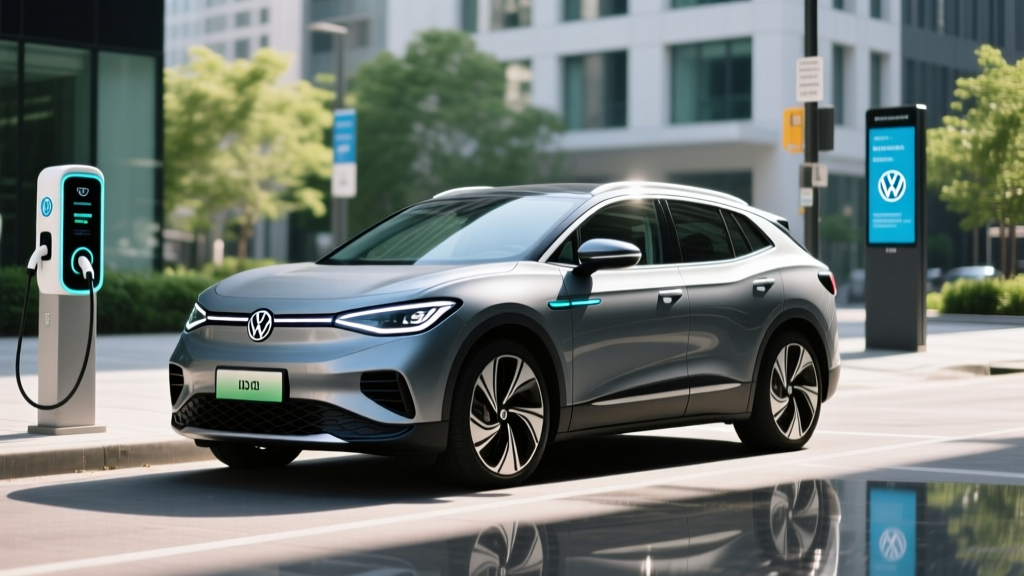
The Volkswagen ID.4 has been one of the most accessible compact electric SUVs on the U.S. market since its launch, offering competitive range, practical cargo space, and a comfortable ride. But recent reports of a Volkswagen ID.4 production pause at VW's Chattanooga, Tennessee assembly plant have left prospective buyers with questions: Is the ID.4 being discontinued? Will current inventory dry up? And more importantly — is the 2026 ID.4 still worth buying while you can get one?
This review covers everything you need to know about the 2026 Volkswagen ID.4, including the context behind the production pause, full specifications, real-world range and charging performance, pricing, tax credit eligibility, and how it stacks up against rivals like the Tesla Model Y, Hyundai Ioniq 5, and Ford Mustang Mach-E.
2026 Volkswagen ID.4 Specifications at a Glance
| Spec | ID.4 Standard (RWD) | ID.4 AWD Pro S |
|---|---|---|
| EPA Range | 291 miles | 263 miles |
| Battery (usable) | 77 kWh (NMC) | 77 kWh (NMC) |
| Horsepower | 282 hp | 335 hp |
| 0-60 mph | 7.3 sec | 5.4 sec |
| Drivetrain | RWD (single motor) | AWD (dual motor) |
| Max DC Fast Charge | 175 kW | 175 kW |
| 10-80% DC Time | ~28 min | ~28 min |
| Level 2 Charge Rate | 11 kW (~37 mi/hr) | 11 kW (~37 mi/hr) |
| MPGe (combined) | 104 MPGe | 95 MPGe |
| Efficiency | 32 kWh/100 mi | 35 kWh/100 mi |
| Cargo (behind rear) | 30.3 cu ft | 30.3 cu ft |
| Cargo (seats folded) | 64.2 cu ft | 64.2 cu ft |
| Rear Legroom | 37.6 in | 37.6 in |
| Towing Capacity | 2,200 lbs (w/ hitch) | 2,700 lbs (w/ hitch) |
| Base MSRP | $39,735 | $48,735 |
Source: EPA / fueleconomy.gov and Volkswagen USA.
Real-World Range: What the EPA Number Doesn't Tell You
EPA Sticker: 291 miles (RWD Standard) / 263 miles (AWD Pro S)
Real-World Expectations:
- City/suburban mixed driving (65-75°F): ~270-285 miles — close to EPA with generous regen use
- Highway sustained (70-80 mph): ~230-250 miles — aerodynamic drag cuts range 15-20%
- Cold weather (20-35°F, cabin heat): ~200-230 miles — NMC chemistry loses 20-30% without preconditioning
- Cold + highway combo: As low as ~180-200 miles in worst-case winter road trips
The ID.4's 77 kWh usable NMC (nickel-manganese-cobalt) battery pack sits in a skateboard platform beneath the floor. NMC chemistry offers higher energy density than LFP (lithium iron phosphate), which translates to more range in a smaller, lighter pack — but it's also more sensitive to extreme temperatures and benefits from not being regularly charged to 100%. VW recommends an 80% daily charge limit for longevity, which effectively gives you about 62 kWh of daily-use energy. Plan your road trips around that reality.
Charging Speed: DC Fast Charging and Home Level 2
Charging speed is where the ID.4 reveals both its strengths and its generational gap versus newer rivals. The 175 kW peak DC fast-charge rate was competitive at launch, but the Hyundai Ioniq 5 and Kia EV6 now peak at 240+ kW on 800V architectures. Here's what the ID.4 actually delivers at the plug:
| Charging Level | Power | Speed | Notes |
|---|---|---|---|
| Level 1 (120V) | 1.4 kW | ~4 mi/hr | Emergency/trickle only; full charge in ~55 hrs |
| Level 2 (240V, 48A) | 11 kW | ~37 mi/hr | Full charge in ~7.5 hrs; ideal for overnight home |
| DC Fast (peak) | 175 kW | 10-80% in ~28 min | Peak only at low SoC; tapers above 60% |
| DC Fast (sustained avg) | ~110-130 kW | 10-80% realistic ~32 min | Charge curve drops significantly after 60% SoC |
Charge curve reality check: The ID.4 hits its 175 kW peak only between roughly 5-30% state of charge (SoC). By 50% SoC, power drops to ~130 kW. By 70%, it's around 80-90 kW. Above 80%, charging slows dramatically to protect battery health — expect 80-100% to take an additional 25-30 minutes. This is why we measure 10-80% times: the last 20% is where you're standing at the charger watching the taper. On a road trip, plan to charge from 10-80% and drive on, rather than topping off to 100%.
The ID.4 uses the CCS1 connector for DC fast charging. With the industry's shift toward NACS (Tesla's connector), VW has confirmed that future models will adopt NACS, but the current ID.4 retains CCS. Adapters are available for Tesla Supercharger access at NACS-equipped stalls, though compatibility should be verified with VW before relying on this for road trips.
Pricing, Trims, and Federal Tax Credit Eligibility
The 2026 ID.4 lineup starts at $39,735 for the Standard trim (RWD, 291 miles) and climbs to $53,235 for the fully loaded AWD Pro S Plus. Here's the trim breakdown:
| Trim | Drivetrain | MSRP | Est. After §30D Credit* |
|---|---|---|---|
| Standard | RWD | $39,735 | ~$32,235 |
| Pro | RWD | $43,735 | ~$36,235 |
| Pro S | RWD | $46,235 | ~$38,735 |
| Pro S | AWD | $48,735 | ~$41,235 |
| Pro S Plus | AWD | $53,235 | ~$45,735 |
*Federal §30D credit amount assumes full eligibility. Actual credit depends on battery component and critical mineral sourcing requirements, buyer income, and MSRP caps. Consult IRS.gov or a tax professional before purchasing.
- MSRP Cap: SUVs must be ≤$80,000 — all ID.4 trims qualify ✓
- Buyer Income Cap: AGI ≤$150,000 (single) / ≤$300,000 (joint) — verify your MAGI
- Battery Sourcing: Must meet critical mineral and battery component requirements (phased thresholds increase annually through 2026) — verify current-year compliance on fueleconomy.gov
- Point-of-Sale Transfer: Eligible buyers can transfer the credit to the dealer for an upfront price reduction at purchase
- Assembly: Must be assembled in North America — Chattanooga-built ID.4 qualifies ✓
Performance, Ride Quality, and Daily Driving
The RWD ID.4 delivers 282 horsepower from a single rear-mounted permanent-magnet synchronous motor. The 0-60 mph time of 7.3 seconds isn't thrilling by EV standards, but it's adequate for merging and passing. The AWD dual-motor variant bumps output to 335 hp and drops the 0-60 to 5.4 seconds — noticeably quicker and worth the premium if you regularly drive in snow or need confident highway acceleration.
Where the ID.4 genuinely shines is ride comfort. VW tuned the suspension for compliance over sportiness, and the result is one of the smoothest-riding compact electric SUVs in its class. Road noise is well-isolated, the steering is light and predictable, and the turning radius is remarkably tight for a crossover — a boon in parking garages and city driving.
Regenerative braking offers two modes: a coasting mode (B-mode off) that lets the SUV glide like a traditional car, and a stronger regen mode (B-mode on) that provides moderate one-pedal-like deceleration. It won't bring you to a complete stop like Tesla or Nissan's e-Pedal, but it's effective for daily commuting and extends range in stop-and-go traffic.
Interior, Tech, and Cargo Practicality
The ID.4's cabin is spacious and minimalist, with a 12.9-inch infotainment touchscreen (on Pro trims and above) running VW's latest ID. Software 4.0. The system supports wireless Apple CarPlay and Android Auto, over-the-air updates, and voice commands via the "Hello ID." wake word. Earlier model years drew criticism for laggy software and capacitive touch sliders for volume and climate — VW has improved responsiveness in the 2026 software revision, though physical buttons would still be preferable for gloved winter use.
Passenger space is generous: 41.1 inches of front legroom and 37.6 inches of rear legroom comfortably accommodate adults in both rows. The panoramic glass roof (standard on Pro S and above) adds an airy feel. Cargo capacity of 30.3 cubic feet behind the rear seats expands to 64.2 cubic feet with the 60/40 split rear seats folded — competitive with the Model Y and more practical than the Ioniq 5 for bulky cargo.
Driver assistance: The ID.4 comes standard with VW's IQ.DRIVE suite, which includes adaptive cruise control with stop-and-go, lane-keeping assist, front assist with automatic emergency braking, and travel assist (a Level 2 highway driving aid). This is SAE Level 2 — you must keep your hands on the wheel and eyes on the road at all times. It's not self-driving. The system is competent for highway cruising but doesn't match the sophistication of GM's Super Cruise or Ford's BlueCruise for hands-free operation on mapped highways.
Pros, Cons, and the Competition
- Comfortable, composed ride — best-in-class comfort
- Spacious cabin with generous rear legroom
- Competitive EPA range (291 mi RWD)
- U.S.-built (Chattanooga) — supports §30D credit
- Tight turning radius, easy city manners
- Strong cargo capacity (30.3 / 64.2 cu ft)
- Heat pump on upper trims improves winter efficiency
- DC fast charging slower than Ioniq 5/EV6 (175 vs 240+ kW)
- Infotainment still relies on capacitive touch controls
- Production pause creates inventory and availability uncertainty
- CCS connector (not NACS) — adapter needed for some networks
- RWD 0-60 of 7.3 sec feels sluggish vs. rivals
- No frunk (front trunk) — motor fills the space
- Long-term resale value uncertain given production pause
Choose the VW ID.4 if:
- You prioritize ride comfort and cabin quietness over sporty acceleration
- You want a U.S.-built EV likely eligible for the full §30D credit
- You need practical cargo space for a family without stepping up to a 3-row SUV
- You can find one in dealer inventory at or near MSRP during the production pause
- You need the fastest DC charging available → Hyundai Ioniq 5 / Kia EV6 (800V, 240+ kW)
- You want access to Tesla Superchargers natively → Tesla Model Y (NACS, 250 kW)
- You want hands-free highway driving → Ford Mustang Mach-E (BlueCruise) or Chevy Equinox EV (Super Cruise)
- You're concerned about long-term parts support given the production pause → consider a model with confirmed ongoing production
Warranty and Long-Term Ownership
Volkswagen backs the ID.4 with a competitive warranty package:
- Battery warranty: 8 years / 100,000 miles (retains ≥70% of original capacity)
- Powertrain warranty: 8 years / 100,000 miles
- Bumper-to-bumper: 4 years / 50,000 miles
- Roadside assistance: 4 years / 50,000 miles
The 70% capacity retention threshold is industry-standard, matching Tesla, Hyundai, and Ford. Real-world degradation data from earlier ID.4 model years (2021-2024) suggests most owners will retain 90-93% capacity after 3 years of typical use — well within warranty limits. The NMC chemistry in the ID.4 benefits from VW's liquid thermal management system, which keeps the pack in its optimal temperature window during charging and driving.
A note on the production pause and ownership: Volkswagen has confirmed that warranty service, parts supply, and software updates for the ID.4 will continue regardless of production status. The Chattanooga plant has produced the ID.4 since 2022, and VW's U.S. dealer network (over 600 locations) is equipped to service the vehicle. However, if the pause extends into a longer-term discontinuation, resale values could be affected — something to factor into your total cost of ownership calculations.
Frequently Asked Questions
What is the real-world range of the VW ID.4?
The EPA rates the RWD ID.4 at 291 miles and the AWD at 263 miles. In real-world driving, expect 270-285 miles in mild city/suburban conditions, 230-250 miles on the highway, and as low as 200-230 miles in cold winter weather. The heat pump on Pro S and higher trims helps reduce cold-weather losses.
How fast does the ID.4 charge at home and on DC fast chargers?
At home on a Level 2 (240V, 48A) charger, the ID.4 charges at 11 kW, adding about 37 miles of range per hour — a full charge takes roughly 7.5 hours overnight. On DC fast chargers, it peaks at 175 kW and can go from 10-80% in about 28 minutes under ideal conditions, though real-world sessions average 32 minutes due to charge-curve tapering above 60% SoC.
Does the VW ID.4 qualify for the $7,500 federal EV tax credit?
The ID.4 is assembled in Chattanooga, Tennessee, and falls under the $80,000 SUV MSRP cap, so it meets the basic §30D requirements. However, the actual credit amount depends on battery critical-mineral and component sourcing rules (which tighten each year), your adjusted gross income (≤$150K single / ≤$300K joint), and current-year IRS rules. Check IRS.gov and fueleconomy.gov for the latest eligibility details. Eligible buyers can transfer the credit to the dealer for a point-of-sale price reduction.
Is the VW ID.4 being discontinued?
As of 2026, Volkswagen has paused ID.4 production at its Chattanooga plant but has not announced a permanent discontinuation. VW has stated it will continue to sell, service, and support existing ID.4 vehicles. The pause appears tied to broader EV market restructuring and shifting demand. Dealer inventory remains available while supplies last.
Is the ID.4 worth buying versus the Tesla Model Y or Hyundai Ioniq 5?
The ID.4 wins on ride comfort, cabin quietness, and value with the tax credit. The Model Y wins on charging infrastructure (Supercharger network) and acceleration. The Ioniq 5 wins on DC fast-charge speed (800V architecture, 240 kW peak). If you find a well-priced ID.4 in inventory during the production pause and your priority is daily comfort over sporty performance or ultra-fast charging, it remains a strong choice.
What connector does the ID.4 use? Can I charge at Tesla Superchargers?
The ID.4 uses the CCS1 connector for DC fast charging and J1772 for Level 2 AC. It does not natively use NACS (Tesla's connector). Some Tesla Supercharger locations now offer CCS-compatible stalls or NACS-to-CCS adapters, but availability varies. Check the Tesla app for station compatibility before planning a trip around Supercharger access.
Sources: fueleconomy.gov (EPA range and efficiency), Volkswagen USA (specifications and pricing), IRS.gov (§30D tax credit rules), NHTSA.gov (safety ratings).