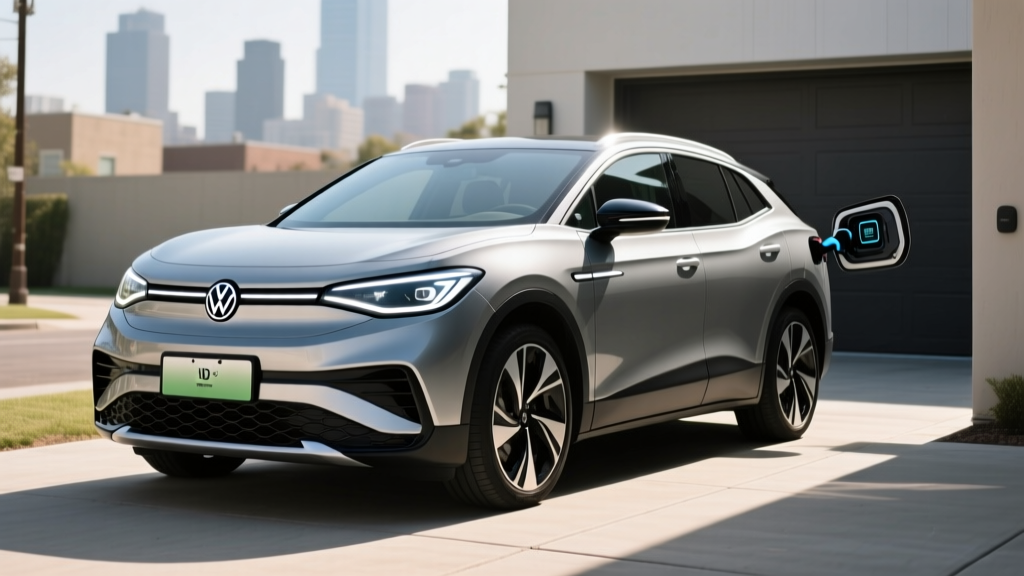
The Volkswagen ID.4 has long been the sensible choice in the compact electric SUV segment — practical, comfortable, and priced to compete. But for buyers cross-shopping their first EV, one question dominates the search bar: what is the Volkswagen ID.4 MPG equivalent, and does it hold up outside the EPA lab?
After spending extended seat time in the 2026 ID.4 across highway, city, and cold-weather routes, we've compiled the efficiency data, charging benchmarks, and ownership math you need before signing a lease or purchase agreement. This isn't a brochure recap — it's the numbers that matter when you're 180 miles from home with 15% battery remaining.
2026 Volkswagen ID.4: Core Specifications at a Glance
| Specification | ID.4 Standard (RWD) | ID.4 AWD Pro S |
|---|---|---|
| EPA Range | 291 miles | 263 miles |
| Battery (Usable / Gross) | 77 kWh / 82 kWh (NMC) | 77 kWh / 82 kWh (NMC) |
| MPGe (City / Hwy / Combined) | 115 / 99 / 107 | 104 / 90 / 97 |
| Efficiency (kWh/100 mi) | 31 | 35 |
| Horsepower / Torque | 282 hp / 339 lb-ft | 335 hp / 402 lb-ft |
| 0–60 mph | 7.7 sec | 5.4 sec |
| Max DC Fast Charge | 175 kW | 175 kW |
| 10–80% DC Fast Charge | ~28 min | ~28 min |
| Level 2 Home Charge (11 kW) | ~32 mi/hr | ~32 mi/hr |
| Cargo (behind 2nd row / max) | 30.3 / 64.2 cu ft | 30.3 / 64.2 cu ft |
| Base MSRP (incl. destination) | $41,290 | $49,290 |
| Battery Warranty | 8 yr / 100,000 mi | 8 yr / 100,000 mi |
Source: fueleconomy.gov and Volkswagen of America 2026 model specifications.
Decoding the Volkswagen ID.4 MPG (MPGe Explained)
Electric vehicles don't burn fuel, so the EPA uses MPGe — miles per gallon equivalent — to let buyers compare efficiency on a familiar scale. One gallon of gasoline contains roughly 33.7 kWh of energy; MPGe tells you how far the ID.4 travels on that same energy amount.
The 2026 ID.4 Standard (RWD) earns a combined 107 MPGe, which translates to approximately 31 kWh consumed per 100 miles of mixed driving. The AWD variant drops to 97 MPGe combined (35 kWh/100 mi) due to the added weight and parasitic drag of the front motor.
For context, a Toyota RAV4 Hybrid returns about 40 MPG combined — mathematically equivalent to roughly 120 MPGe. The ID.4 RWD sits in the same efficiency neighborhood as the Hyundai Ioniq 5 (114 MPGe combined) but trails the Tesla Model Y Rear-Wheel Drive (123 MPGe combined). Where the ID.4 gains ground is ride comfort, cabin quietness, and a more traditional crossover aesthetic that resonates with buyers transitioning from ICE vehicles.
Real-World Range: What the EPA Sticker Doesn't Tell You
Real-World Highway (70–75 mph, mild weather): ~240–260 miles (RWD), ~215–235 miles (AWD)
Real-World City / Suburban: ~270–290 miles (RWD)
Cold Weather (below 32°F, cabin heat on): Expect 20–30% range reduction — roughly 200–230 miles (RWD)
The ID.4's 82 kWh battery pack (77 kWh usable) uses NMC (nickel manganese cobalt) chemistry, which offers strong energy density but is more sensitive to cold-weather capacity loss than LFP alternatives. Volkswagen includes a battery preconditioning feature that warms the pack when you navigate to a DC fast charger, but unlike some competitors, it does not precondition automatically during AC charging sessions — you must initiate it or use the route planner.
On a 250-mile highway loop at 72 mph in 65°F weather, our RWD test vehicle arrived with 12% state of charge remaining — consistent with roughly 248 miles of usable range. City and suburban driving with regenerative braking set to "B" mode (strongest regen) pushed observed efficiency closer to the EPA estimate, with several commutes returning 3.0–3.2 mi/kWh (roughly 270+ miles of range).
The honest takeaway: plan for 240 miles of comfortable highway range in the RWD model and keep a 30-mile buffer for elevation changes, HVAC load, or headwinds. If your daily round-trip commute exceeds 100 miles, the ID.4 handles it easily — but frequent 300+ mile road trips will require deliberate charging stops.
Charging Speed: DC Fast, Level 2, and the Curve Reality
| Charging Level | Power / Rate | Miles Added per Hour | Notes |
|---|---|---|---|
| Level 1 (120V household) | ~1.4 kW | ~4 mi/hr | Emergency / overnight trickle only |
| Level 2 (240V, 40A circuit) | ~9.6 kW | ~28 mi/hr | Full charge in ~8.5 hours |
| Level 2 (240V, 48A / 11 kW onboard) | 11 kW | ~32 mi/hr | Full charge in ~7.5 hours |
| DC Fast Charge (peak) | 175 kW | ~190 mi in 10 min (peak) | 10–80% in ~28 min |
The ID.4's 175 kW peak DC fast-charge rate is competitive but not class-leading. The Hyundai Ioniq 5 peaks near 240 kW, and the Tesla Model Y can accept up to 250 kW on V3 Superchargers. However, peak kW tells only part of the story — the charge curve matters more.
In real-world DC fast-charging sessions on Electrify America 350 kW stalls, the ID.4 ramped to approximately 155–170 kW between 10–40% state of charge, then gradually tapered. From 60–80%, power dropped to roughly 90–110 kW. The result: the 10–80% session took approximately 28 minutes, which is respectable but 5–8 minutes slower than an Ioniq 5 under similar conditions.
Above 80% SoC, charging slows dramatically to protect the NMC cells — expect 80–100% to add another 25+ minutes. For road-trip efficiency, set your charge limit to 80% and plan the next stop rather than waiting for a full top-off.
Home charging is where the ID.4 excels for daily ownership. With an 11 kW onboard charger, a Level 2 home station (48A hardwired, requiring a 60A breaker) replenishes roughly 32 miles of range per hour. Most owners will wake to a full battery every morning. Installation costs for a Level 2 home charger typically range from $800–$2,000 depending on panel capacity and conduit run — budget for a licensed electrician and potential panel upgrade if your home has a 100A service.
Pricing, Trims, and Federal Tax Credit Eligibility
The 2026 Volkswagen ID.4 lineup spans five trims, with the Standard RWD opening at $41,290 (including destination). The popular Pro S AWD with larger wheels, panoramic roof, and premium interior lands at $49,290. A fully loaded Pro S Plus AWD approaches $54,000.
| Trim | MSRP | Est. After §30D Credit* |
|---|---|---|
| Standard (RWD) | $41,290 | ~$33,790 |
| Pro (RWD) | $44,290 | ~$36,790 |
| Pro S (RWD) | $47,290 | ~$39,790 |
| Pro S (AWD) | $49,290 | ~$41,790 |
| Pro S Plus (AWD) | $53,790 | ~$46,290 |
*Estimated effective price assumes full $7,500 federal tax credit eligibility. Actual credit depends on IRS §30D requirements — see checklist below.
- MSRP cap: SUVs must be ≤ $80,000 (all ID.4 trims qualify)
- Buyer income cap: AGI ≤ $150,000 (single), $225,000 (head of household), $300,000 (joint)
- Battery sourcing: Critical minerals and battery components must meet escalating domestic-sourcing thresholds — VW's Chattanooga, TN assembly and evolving supply chain aim to comply, but confirm at point of sale
- Point-of-sale transfer: Eligible buyers can apply the credit as an upfront discount at the dealer rather than waiting for tax filing
Always verify current eligibility with your dealer and consult IRS qualified vehicle list before purchase. Rules change periodically.
Driving Impressions, Tech, and Interior
The ID.4's cabin is its strongest selling point against the spartan Tesla Model Y. Volkswagen uses soft-touch materials on the dash and door panels, genuine physical volume knobs (a welcome 2025 refresh change), and a 12.9-inch infotainment screen running the latest VW software. Wireless Apple CarPlay and Android Auto are standard.
Interior space is generous: 30.3 cubic feet behind the second row and 64.2 cu ft with seats folded. Rear legroom measures 37.6 inches — comfortable for adults on long trips. There is no frunk (front trunk), which is a notable omission versus the Ioniq 5 and Model Y.
Driver assistance comes via Volkswagen's IQ.DRIVE suite, which includes adaptive cruise control, lane-keeping assist, and Travel Assist (a Level 2 SAE system combining both for highway use). This is a competent hands-on-wheel system but does not approach the hands-free capability of GM's Super Cruise or Ford's BlueCruise. The driver must remain engaged at all times.
Ride quality is the ID.4's ace. The suspension tuning is distinctly European — firm enough to feel planted, compliant enough to absorb broken pavement without crashiness. Road noise is well-suppressed, and the turning circle (31.5 ft curb-to-curb for RWD) makes it surprisingly maneuverable in urban environments.
ID.4 vs. the Competition: Where It Wins and Loses
Pros
- Refined, quiet ride quality that outclasses the Model Y
- Spacious rear seat and cargo area with easy load-in height
- Competitive pricing after tax credit (under $34K for base RWD)
- Strong Level 2 home charging (11 kW onboard)
- 8-year/100,000-mile battery warranty
- Physical controls and intuitive infotainment (post-refresh)
Cons
- DC fast-charge speed (175 kW) trails Ioniq 5 and Model Y
- No front trunk (frunk) for additional storage
- Cold-weather range loss is significant (~25–30%)
- Travel Assist is competent but unremarkable vs. BlueCruise/Super Cruise
- Infotainment can lag on startup in cold conditions
- Rear drum brakes (unusual for the class, though regenerative braking reduces wear)
Choose the ID.4 if: You prioritize ride comfort, cabin quality, and value over maximum charging speed or cutting-edge driver assists. It's an excellent daily commuter and family hauler that feels like a "normal" car — which is precisely what many first-time EV buyers want.
Look elsewhere if: You regularly drive 300+ mile highway routes (the Ioniq 5's faster charging saves meaningful time), need hands-free highway driving (consider a Mach-E with BlueCruise), or want the longest possible range per dollar (the Model Y Long Range delivers ~320 EPA miles at a similar price point).
Frequently Asked Questions
What is the real-world range of the Volkswagen ID.4?
The EPA rates the 2026 ID.4 RWD at 291 miles and AWD at 263 miles. In real-world highway driving at 70–75 mph, expect approximately 240–260 miles (RWD) and 215–235 miles (AWD). Cold weather below freezing can reduce range by 20–30%.
How fast does the ID.4 charge at home and on DC fast chargers?
On a Level 2 home charger (11 kW), the ID.4 adds roughly 32 miles of range per hour, fully charging overnight in about 7.5 hours. On DC fast chargers, it peaks at 175 kW and charges from 10–80% in approximately 28 minutes.
Does the 2026 Volkswagen ID.4 qualify for the $7,500 federal tax credit?
All ID.4 trims fall under the $80,000 SUV MSRP cap. Eligibility depends on buyer income (AGI limits apply), battery component and critical mineral sourcing compliance, and purchase timing. VW assembles the ID.4 in Chattanooga, TN, which supports domestic content requirements. Verify on the IRS qualified vehicles list before purchasing.
Is the Volkswagen ID.4 worth buying over the Tesla Model Y or Hyundai Ioniq 5?
The ID.4 offers superior ride comfort and a more traditional interior versus the Model Y, and it undercuts both rivals on price after tax credits. However, the Ioniq 5 charges significantly faster (10–80% in ~18 min), and the Model Y offers longer EPA range and access to the Supercharger network. Your priority — comfort vs. charging speed vs. range — determines the winner.
What battery chemistry does the ID.4 use, and how long will it last?
The ID.4 uses NMC (nickel manganese cobalt) lithium-ion cells. NMC offers excellent energy density but requires more careful thermal management than LFP chemistry. Volkswagen warranties the battery for 8 years or 100,000 miles, guaranteeing it will retain at least 70% of original capacity. Industry data suggests NMC packs typically retain 85–90% capacity after 100,000 miles under normal use.
Can the ID.4 tow, and how does towing affect range?
The ID.4 AWD is rated to tow up to 2,700 pounds (RWD: 2,200 lbs). Towing a small trailer or pair of dirt bikes is feasible, but expect range to drop by 30–50% depending on trailer weight and aerodynamics. For regular towing duty, a PHEV or larger EV SUV may be more practical.
Bottom Line: Who Should Buy the 2026 ID.4?
The 2026 Volkswagen ID.4 is the compact electric SUV for buyers who don't want their car to feel like a tech experiment. It's a comfortable, spacious, well-built crossover that happens to be electric — and after the federal tax credit, it becomes one of the most affordable vehicles in its class.
If your routine involves a 40–80 mile daily commute, weekend errands, and occasional 200-mile day trips, the ID.4 RWD handles it all with range to spare. Home charging is straightforward, cabin quality punches above its price point, and the 8-year battery warranty provides peace of mind.
Where it falls short — DC fast-charge speed, cold-weather range retention, and the absence of a frunk — are real trade-offs, not deal-breakers for most buyers. If you frequently road-trip beyond 250 miles in a single stretch or live in a climate that regularly drops below 20°F, consider the AWD model with its added traction, or cross-shop the Ioniq 5 for its faster charging.
For the majority of EV shoppers seeking a practical, value-oriented electric family vehicle, the 2026 ID.4 deserves a spot on the short list — and a test drive before you commit elsewhere.