Why the 2026 Volkswagen ID.4 Lease Is Drawing Attention
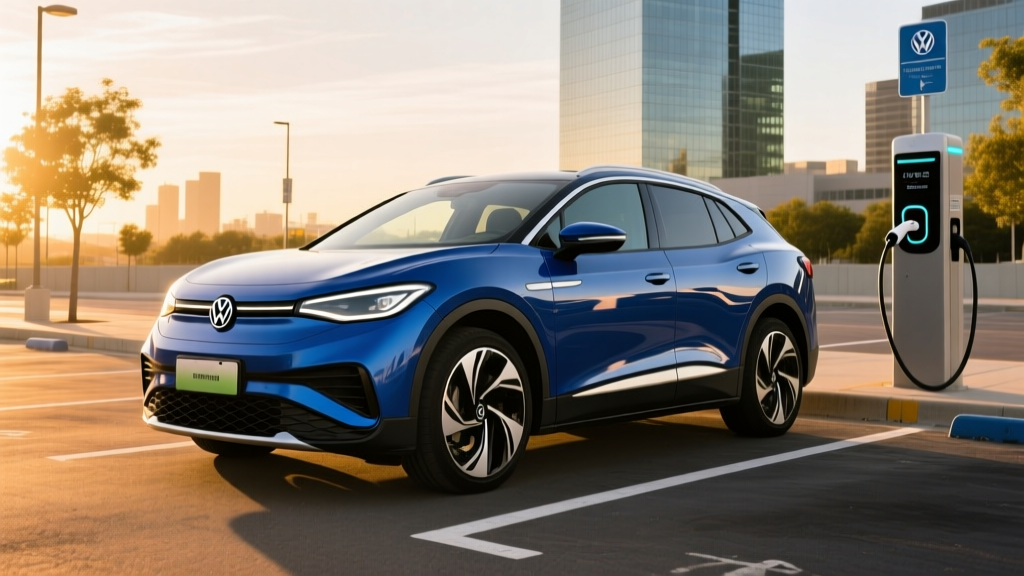
The 2026 Volkswagen ID.4 occupies a rare position in the compact electric SUV segment: it's a practical, roomy family hauler with competitive range, and aggressive leasing deals have made it one of the most accessible EVs on the market. Volkswagen has historically used lease incentives — sometimes stacking dealer discounts, factory-to-dealer cash, and federal credit pass-throughs — to push ID.4 volumes. For 2026, the ID.4 continues to be assembled at VW's Chattanooga, Tennessee plant, which is critical for federal tax credit eligibility under IRS §30D rules.
This review dissects the 2026 ID.4 lineup with a focus on what lease offers actually mean for your wallet — monthly payments, money factors, residual values, and how the federal EV tax credit factors into a lease versus a purchase. We'll also cover real-world range, charging speed, and how this EV stacks up against the Hyundai Ioniq 5, Tesla Model Y, and Ford Mustang Mach-E.
2026 VW ID.4 Range, Battery, and Efficiency
Real-World Expectation: Plan for 240–260 miles on mixed highway driving at 70 mph. In cold weather (below 30°F), expect a 15–25% reduction, dropping effective range to roughly 200–220 miles. City driving with regenerative braking can push closer to the EPA sticker.
The 2026 ID.4 is available with two battery configurations. The base Standard trim carries a 62 kWh (usable) lithium-ion battery with NMC (nickel manganese cobalt) chemistry, yielding an EPA-estimated 206 miles of range. The volume sellers — Pro, Pro S, and Pro S Plus trims — use an 82 kWh usable NMC pack rated for up to 291 miles in rear-wheel-drive form. All-wheel-drive (AWD) variants with dual motors sacrifice roughly 20 miles of range, landing at 270 miles EPA.
| Spec | Standard (RWD) | Pro / Pro S (RWD) | AWD Pro S |
|---|---|---|---|
| Battery (usable) | 62 kWh NMC | 82 kWh NMC | 82 kWh NMC |
| EPA Range | 206 mi | 291 mi | 270 mi |
| Horsepower | 201 hp | 282 hp | 335 hp |
| 0-60 mph | ~8.5 sec | ~7.2 sec | ~5.4 sec |
| Drivetrain | RWD single motor | RWD single motor | Dual-motor AWD |
| MPGe (combined) | 104 MPGe | 107 MPGe | 98 MPGe |
| kWh/100 mi | 32 kWh | 31 kWh | 34 kWh |
Efficiency is competitive but not class-leading. The Hyundai Ioniq 5 achieves up to 114 MPGe combined, thanks to its lighter platform and more aggressive thermal management. That said, the ID.4's 31 kWh/100 mi in the Pro RWD trim translates to roughly $0.045 per mile at the national average residential electricity rate of $0.14/kWh — meaning a 15,000-mile year costs about $675 in electricity. Compare that to a 28-MPG gas SUV at $3.40/gallon, and you're looking at $1,821 in fuel. The savings are real.
Charging Speed: DC Fast Charging and Home Level 2
Charging speed remains one of the ID.4's stronger attributes in the compact EV SUV class. The 82 kWh models accept a peak DC fast-charge rate of 175 kW on CCS-equipped vehicles (the 2026 ID.4 now includes NACS compatibility in select trims, with a CCS-to-NACS adapter included). Under ideal conditions with a preconditioned battery, the ID.4 can charge from 10% to 80% in approximately 28 minutes.
| Charging Level | Power (kW) | Miles Added per Hour | Typical Use Case |
|---|---|---|---|
| Level 1 (120V household) | ~1.2 kW | ~3–4 mi/hr | Overnight trickle / emergency |
| Level 2 (240V, 32A) | 7.7 kW | ~25 mi/hr | Home daily charging |
| Level 2 (240V, 48A) | 11.5 kW | ~37 mi/hr | Home fast overnight |
| DC Fast Charge (peak) | 175 kW | ~200+ mi in 30 min | Road trips, public stations |
The ID.4's onboard AC charger is rated at 11.5 kW on Pro and above trims, meaning a full charge from near-empty on a 48-amp Level 2 home charger takes roughly 7.5 hours — easily achievable overnight. On a standard 32-amp Level 2 (like many included mobile connectors), expect closer to 10–11 hours for a full charge.
One important note on the DC charging curve: the ID.4 sustains its peak 175 kW rate only between roughly 10% and 35% state of charge. From 35% to 60%, it tapers to around 120–130 kW, and above 80%, it drops significantly to protect battery health, falling below 50 kW. This is typical of NMC chemistry but means your actual average charging speed on a road trip is closer to 100–110 kW sustained. Plan stops accordingly.
Volkswagen includes three years of complimentary 30-minute DC fast-charging sessions on the Electrify America network with every new ID.4, which helps offset road-trip fueling costs in the early ownership years.
Pricing, Lease Offers, and Federal Tax Credit
The 2026 VW ID.4 lineup starts at a base MSRP of approximately $39,735 for the Standard trim (including destination) and climbs to around $53,735 for the fully loaded Pro S Plus AWD. Here's how the trim ladder breaks down:
| Trim | Drivetrain | Base MSRP (incl. dest.) | §30D Credit Eligible? |
|---|---|---|---|
| Standard | RWD | $39,735 | Yes (up to $7,500) |
| Pro | RWD | $43,735 | Yes (up to $7,500) |
| Pro S | RWD | $47,235 | Yes (up to $7,500) |
| Pro S Plus | RWD | $50,235 | Yes (up to $7,500) |
| AWD Pro S | AWD | $50,735 | Yes (up to $7,500) |
| AWD Pro S Plus | AWD | $53,735 | Yes (up to $7,500) |
Federal tax credit (§30D) details: Because the ID.4 is assembled in Chattanooga, Tennessee, and meets battery-component and critical-minerals sourcing thresholds, it qualifies for the full $7,500 federal tax credit for eligible buyers. However, eligibility depends on several IRS rules effective for 2026:
- MSRP cap: The vehicle's MSRP must not exceed $80,000 for SUVs — all ID.4 trims clear this easily.
- Buyer income cap: Modified adjusted gross income (MAGI) must not exceed $150,000 (single), $225,000 (head of household), or $300,000 (married filing jointly).
- Battery sourcing: The ID.4's battery meets critical-minerals and component-sourcing requirements as of the 2026 tax year. Always verify with your tax professional and the IRS qualified vehicles list.
- Point-of-sale transfer: For 2026, the credit can be transferred to the dealer at the point of sale as an upfront discount, which is especially relevant for lease structures.
How Lease Offers Actually Work for the ID.4
When you lease an EV, the tax credit technically goes to the lessor (Volkswagen Credit, in this case), not to you directly. However, VW has consistently passed this credit through as a "capital cost reduction" — effectively lowering your monthly payment by building the $7,500 into the deal. Combined with VW's own lease cash incentives (which have ranged from $2,000 to $5,000 depending on the month and region), the effective discount on an ID.4 lease can be substantial.
Typical 2026 ID.4 lease structures look like this:
- 36-month / 10,000 miles per year: Expect $299–$399/month on Pro trims with $2,500–$3,500 due at signing, depending on regional incentives and your credit tier.
- 36-month / 12,000 miles per year: Add roughly $20–$35/month over the 10k lease.
- Money factor: Typically 0.00125–0.00175 for tier-1 credit (equivalent to roughly 3.0–4.2% APR).
- Residual value: Around 48–52% for a 36-month lease, which is conservative — good for lessees because it keeps monthly payments lower.
Always confirm with your local VW dealer whether the $7,500 federal credit is being passed through as lease cash, and whether any regional incentives stack. Lease deals vary significantly by ZIP code and time of month.
Interior, Cargo Space, and Technology
The ID.4's cabin prioritizes function over flash. The Pro S and Pro S Plus trims include a panoramic fixed glass roof, a 12.9-inch infotainment touchscreen (upgraded from earlier model years), and VW's latest ID. Software 4.0, which has significantly improved response times and menu logic over the frustrating ID.3-era interface.
Passenger space is generous for the class:
- Front headroom: 41.1 inches
- Rear legroom: 37.6 inches — enough for two adults on long trips comfortably
- Cargo behind rear seats: 30.3 cubic feet
- Cargo with rear seats folded: 64.2 cubic feet
- No frunk: The ID.4 does not offer a front trunk, a missed opportunity versus the Ioniq 5 and Mach-E
Technology highlights include wireless Apple CarPlay and Android Auto, a heated steering wheel (Pro S+), ventilated front seats (Pro S Plus), and a head-up display with augmented-reality navigation prompts. On the driver-assistance front, the ID.4 comes standard with VW's IQ.DRIVE suite — adaptive cruise control with stop-and-go, lane-keeping assist, automatic emergency braking, and rear cross-traffic alert. This is a Level 2 SAE driver-assist system, meaning you must keep your hands on the wheel and eyes on the road at all times. It is not self-driving.
Notable drawbacks: the ID.4's infotainment still relies on capacitive touch sliders for volume and climate, which many owners find frustrating compared to physical knobs. Rear drum brakes (on RWD trims) draw criticism, though VW defends them as adequate for an EV's weight distribution and regen-heavy braking profile. Towing capacity maxes out at 2,700 pounds with the AWD model — fine for a small trailer, but not competitive with the F-150 Lightning or Rivian R1S for serious hauling.
Warranty and Long-Term Battery Coverage
Volkswagen backs the 2026 ID.4 with a comprehensive warranty package:
- Limited vehicle warranty: 4 years / 50,000 miles
- Powertrain warranty: 4 years / 50,000 miles
- High-voltage battery warranty: 8 years / 100,000 miles, guaranteeing at least 70% capacity retention (State of Health) over that period
- Roadside assistance: 4 years / 50,000 miles
The 8-year/100,000-mile battery warranty with a 70% capacity retention floor is industry-standard and matches competitors like Hyundai and Ford. NMC batteries in the ID.4 have shown modest degradation in real-world fleet data — typically 5–8% loss over the first 50,000 miles, well within the warranty threshold. For lessees returning the vehicle after 36 months, battery degradation is essentially a non-issue.
How the ID.4 Compares to Key Competitors
| Spec | VW ID.4 Pro S RWD | Hyundai Ioniq 5 SEL RWD | Tesla Model Y Long Range | Ford Mach-E Premium RWD |
|---|---|---|---|---|
| EPA Range | 291 mi | 303 mi | 330 mi | 290 mi |
| Battery (usable) | 82 kWh NMC | 77.4 kWh NMC | 75 kWh NMC | 91 kWh NMC |
| Peak DC Charge | 175 kW | 240 kW (10-80% ~18 min) | 250 kW | 150 kW |
| 0-60 mph | 7.2 sec | 7.0 sec | 4.8 sec | 6.1 sec |
| Base MSRP (comparable trim) | $47,235 | $48,500 | $47,990 | $48,995 |
| Cargo (behind 2nd row) | 30.3 cu ft | 27.2 cu ft | 30.2 cu ft | 29.7 cu ft |
| Federal Credit | $7,500 | $7,500 | $7,500 | $7,500 |
Choose the Hyundai Ioniq 5 if: You take frequent road trips and need the fastest DC charging in the class (18-minute 10-80% stops).
Choose the Tesla Model Y if: Maximum range and Supercharger network access are your top priorities, and you're comfortable with the minimalist interior.
Choose the Ford Mach-E if: You want sportier handling dynamics and a more engaging driving experience at the cost of some range efficiency.
Who the 2026 ID.4 Suits Best
The ID.4 is ideal for suburban families and commuters who need a practical daily driver with enough range for the occasional road trip. Its 291-mile EPA range (Pro S RWD) covers most round-trip commutes with room to spare, and home Level 2 charging means you'll start each day with a full "tank." The AWD variant adds confidence for snow-belt buyers, though it sacrifices 21 miles of range and $3,500 in MSRP.
For road-trip-heavy drivers who regularly exceed 250 miles between stops, the ID.4's 175 kW peak charge rate — while adequate — means you'll spend 28–35 minutes at DC fast chargers where Ioniq 5 drivers are already back on the road in 18–20 minutes. If you tow regularly, look elsewhere; the 2,700-pound max is limiting.
For lease-focused buyers who plan to return the vehicle after three years, the ID.4 is arguably the best value in the segment. The combination of Chattanooga-built §30D credit eligibility, VW's aggressive lease cash, and competitive residuals can yield monthly payments that undercut rivals by $50–$100/month in many markets.
Pros and Cons at a Glance
- Class-leading cargo volume (30.3 cu ft) with wide, low load floor
- Strong lease incentives and §30D credit eligibility
- Comfortable ride quality and quiet cabin at highway speeds
- Comprehensive IQ.DRIVE safety suite standard on all trims
- 3 years free Electrify America DC charging included
- Spacious rear seat (37.6" legroom) for adults
- Capacitive touch sliders for volume/climate are frustrating
- No front trunk (frunk) — lost storage vs competitors
- DC charging (175 kW peak) slower than Ioniq 5 and Model Y
- Infotainment still lags rivals in responsiveness and UX design
- Rear drum brakes on RWD trims feel outdated at this price
- Towing limited to 2,700 lbs (AWD only)
Frequently Asked Questions
What is the real-world range of the 2026 VW ID.4?
The EPA rates the ID.4 Pro S RWD at 291 miles. In real-world mixed driving at highway speeds (70–75 mph), expect 240–260 miles. In cold weather below 30°F, range can drop to 200–220 miles due to battery chemistry limitations and cabin heating demands. City driving with regenerative braking can get you closer to the EPA figure.
How fast does the ID.4 charge at home and on the road?
On DC fast chargers, the ID.4 peaks at 175 kW and charges from 10% to 80% in about 28 minutes under ideal conditions. At home on a 48-amp Level 2 charger (240V), it adds roughly 37 miles of range per hour, fully charging overnight in about 7.5 hours. On a 32-amp Level 2, expect about 25 miles per hour.
How much does the ID.4 cost after tax credits?
When purchasing, eligible buyers can apply the $7,500 federal §30D credit, bringing a $47,235 Pro S down to an effective $39,735. On a lease, the credit is typically passed through as a capital cost reduction, lowering monthly payments. Combined with VW lease cash, effective lease payments on Pro trims have been as low as $299–$399/month with $2,500–$3,500 due at signing.
Does the 2026 VW ID.4 qualify for the federal EV tax credit?
Yes — the ID.4 is assembled in Chattanooga, Tennessee, and meets battery sourcing requirements for the full $7,500 §30D credit. Eligibility requires the buyer to fall under IRS income caps ($150K single / $300K married filing jointly) and the vehicle's MSRP must be under $80,000 (all trims qualify). Always confirm current eligibility on the IRS qualified vehicle list before signing.
Is the VW ID.4 worth leasing versus buying?
Leasing is often the smarter play for the ID.4 because VW consistently offers aggressive lease cash incentives that stack with the federal credit pass-through. You avoid long-term depreciation risk, and the 3-year/36,000-mile lease term keeps you within the full bumper-to-bumper warranty. If you plan to keep the vehicle 6+ years and drive under 12,000 miles/year, purchasing with the point-of-sale $7,500 credit can also make sense.
Is the ID.4 good for road trips?
It's adequate but not class-leading. With 291 miles of EPA range and a 28-minute 10-80% DC charge time, you'll stop more often and longer than Ioniq 5 or Model Y drivers. The complimentary Electrify America sessions help with cost, but if you regularly drive 400+ mile routes, consider the Model Y's 330-mile range and Supercharger network.
What's the difference between kW and kWh on the ID.4?
kW (kilowatts) measures power — how fast energy flows. The ID.4 charges at up to 175 kW. kWh (kilowatt-hours) measures energy capacity — the size of the "tank." The ID.4 Pro has an 82 kWh battery. Think of kW as the width of the hose, and kWh as the size of the bucket.