Is the Volkswagen ID.4 Lease Offer Worth It in 2026?
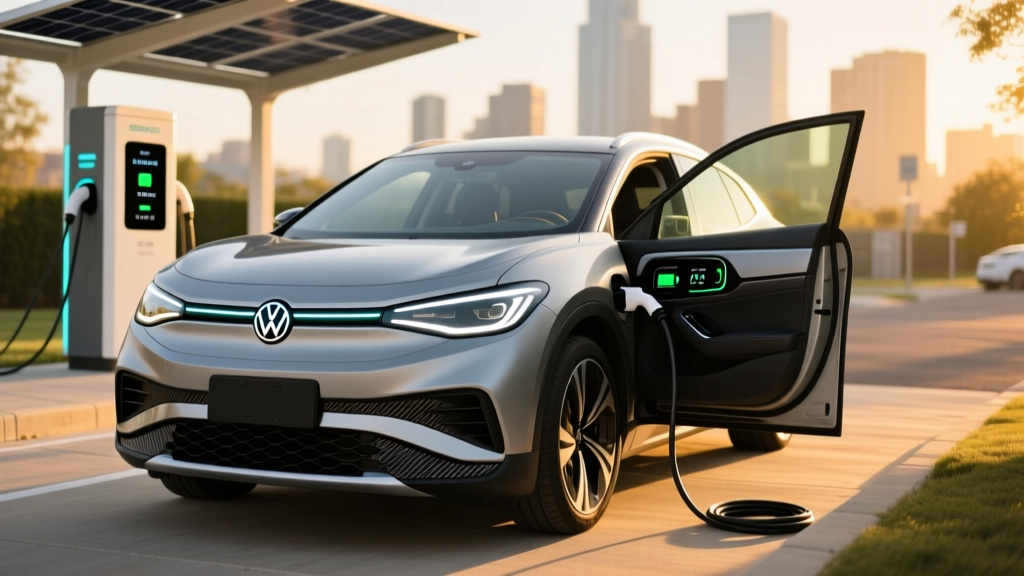
The Volkswagen ID.4 occupies a sweet spot in the compact electric SUV segment: sensible range, competitive pricing, and access to one of the strongest dealer networks in the U.S. For 2026, VW continues to refine the ID.4 with updated software, faster charging capability, and aggressive lease offers that can make this one of the most affordable electric SUVs on the market — especially when federal incentives are factored in.
This review breaks down every number that matters: EPA range versus what you'll actually see on the road, DC fast-charging reality, total lease economics, and how the ID.4 stacks up against the Hyundai Ioniq 5, Tesla Model Y, and Ford Mustang Mach-E. If you're weighing a Volkswagen ID.4 lease offer against an outright purchase or a competitor, here's the data you need.
Range, Battery, and Real-World Efficiency
The 2026 Volkswagen ID.4 is available with two battery configurations across its trim lineup. The Standard Range models use a 62 kWh (usable) lithium-ion NMC (nickel manganese cobalt) battery pack, while the Pro and Pro S trims step up to an 82 kWh usable NMC pack. VW does not currently offer an LFP (lithium iron phosphate) variant in the U.S. market.
Real-World Range Reality Check
EPA Estimated Range: 206 miles (Standard Range RWD) | 275 miles (Pro RWD) | 263 miles (Pro S AWD)
What to Expect in Practice: In mixed suburban/highway driving at moderate temperatures (60-75°F), expect roughly 245-260 miles from the Pro RWD on a full charge. Sustained highway driving at 75+ mph drops that to approximately 225-240 miles. In cold weather (below 32°F), range loss of 20-30% is typical for NMC chemistry without aggressive preconditioning — plan for 180-210 miles from the Pro in winter conditions. The heat pump, available on higher trims, mitigates some cabin-heating drain but does not eliminate cold-weather range loss entirely.
Efficiency ratings from fueleconomy.gov place the ID.4 Pro RWD at approximately 104 MPGe combined (roughly 32 kWh/100 mi). The AWD Pro S drops to around 98 MPGe combined. These figures are competitive with the segment but trail the Hyundai Ioniq 5's slightly superior efficiency by a small margin.
| Spec | Standard Range RWD | Pro RWD | Pro S AWD |
|---|---|---|---|
| EPA Range | 206 mi | 275 mi | 263 mi |
| Battery (usable) | 62 kWh NMC | 82 kWh NMC | 82 kWh NMC |
| Horsepower | 201 hp | 282 hp | 335 hp |
| 0-60 mph | ~7.7 sec | ~6.5 sec | ~5.4 sec |
| Drivetrain | RWD | RWD | Dual-Motor AWD |
| Efficiency (combined) | ~101 MPGe | ~104 MPGe | ~98 MPGe |
| Cargo (rear seats up) | 30.3 cu ft | ||
| Cargo (rear seats folded) | 64.2 cu ft | ||
| Rear Legroom | 37.6 in | ||
Charging Speed: DC Fast Charge and Home Level 2
Charging speed remains one of the most consequential specs for EV ownership, and the 2026 ID.4 delivers respectable but not class-leading DC fast-charging performance.
| Charging Level | Standard Range (62 kWh) | Pro / Pro S (82 kWh) | Miles Added per Hour |
|---|---|---|---|
| Level 1 (120V, 12A) | 1.4 kW | 1.4 kW | ~3-4 mi/hr |
| Level 2 (240V, 32A) | 7.7 kW | 7.7 kW | ~22-26 mi/hr |
| Level 2 (240V, 48A) | 11.5 kW | 11.5 kW | ~32-37 mi/hr |
| DC Fast Charge (peak) | 135 kW | 175 kW | N/A |
| DC 10-80% Time | ~30 min | ~28 min | N/A |
Charging curve reality: The ID.4 Pro's peak 175 kW rate is achieved at low state-of-charge (roughly 5-25% SoC) and tapers progressively. By 60% SoC, expect rates around 100-120 kW; above 80%, charging slows dramatically to roughly 30-40 kW as the battery management system protects cell longevity. A full 10-80% session at a capable 175+ kW charger takes approximately 28 minutes for the 82 kWh pack — competitive with the Ford Mustang Mach-E but trailing the Hyundai Ioniq 5's 800V architecture, which can do 10-80% in roughly 18 minutes.
For home charging, the onboard 11.5 kW AC charger (on 48A circuits) means a full charge from empty takes about 7-8 hours for the 82 kWh pack. Most owners charging overnight from 20-80% will see a full replenishment in roughly 4.5 hours — more than adequate for daily use. Note: your actual Level 2 rate depends on your home circuit. A standard NEMA 14-50 outlet on a 40A circuit delivers roughly 9.6 kW (about 28 mi/hr for the Pro).
2026 ID.4 Lease Offer Breakdown and Pricing
Volkswagen has historically used aggressive lease pricing to move ID.4 units, and 2026 is no exception. Lease offers vary by region, dealer, and creditworthiness, but here is the pricing landscape as of early 2026:
| Trim | Base MSRP | Typical Lease Offer (36 mo, 10k mi/yr) | Federal Credit Eligible? |
|---|---|---|---|
| Standard Range | $39,735 | $249-$329/mo (with ~$2,500 due at signing) | Yes — up to $7,500 (see rules below) |
| Pro | $44,235 | $299-$389/mo (with ~$3,000 due at signing) | Yes — up to $7,500 |
| Pro S | $49,235 | $349-$449/mo (with ~$3,500 due at signing) | Yes — up to $7,500 |
| Pro S Plus AWD | $53,735 | $399-$499/mo (with ~$3,500 due at signing) | Yes — up to $7,500 |
Lease-vs-buy tax credit advantage: One of the most important nuances in the current EV incentive landscape is that leased vehicles can qualify for the federal EV tax credit under IRC §30D — or the commercial clean vehicle credit under §45W when structured through the leasing company — without being subject to the same MSRP caps, buyer income limits, or battery-sourcing requirements that apply to purchases. Many VW dealers apply a lease cash incentive (often $5,000-$7,500) directly to the lease, effectively passing the credit through as a capitalized-cost reduction. This can make leasing significantly cheaper than buying, even for buyers who would not qualify for the purchase credit due to income or sourcing restrictions.
For outright buyers: the §30D purchase credit requires the buyer to meet income caps ($150,000 single / $300,000 joint modified AGI), the vehicle MSRP must not exceed $80,000 for SUVs, and the battery must meet critical-mineral and component-sourcing thresholds that change annually. The ID.4's Chattanooga, TN assembly and evolving battery supply chain have generally kept it eligible, but always verify current-year sourcing compliance with your dealer and tax professional before signing.
Interior Space, Technology, and Daily Usability
The ID.4's interior is where VW's practical-compact-SUV DNA shows through. With 30.3 cubic feet of cargo space behind the second row and 64.2 cu ft with the 60/40 split rear seats folded, it slots between the Tesla Model Y's more generous frunk-equipped layout and the tighter cargo area of the Chevy Equinox EV.
Passenger space is genuinely comfortable for four adults. Rear legroom measures 37.6 inches — sufficient for six-foot passengers without knee contact. Headroom is generous thanks to the flat floor and tall roofline. The absence of a transmission tunnel creates a flat rear floor that middle-seat passengers will appreciate.
Infotainment and tech: The 2026 ID.4 continues with VW's 12.9-inch touchscreen running the latest ID. Software 4.x, which addresses many of the early-generation complaints about laggy response and confusing menu structures. Wireless Apple CarPlay and Android Auto are standard. The augmented-reality head-up display (available on Pro S and above) overlays navigation arrows onto the road ahead — a genuinely useful feature once you acclimate to it.
Driver assistance: VW's IQ.DRIVE suite is standard across all trims and includes adaptive cruise control with stop-and-go, lane-centering assist, front and rear automatic emergency braking, and blind-spot monitoring. This is an SAE Level 2 driver-assist system — the driver must keep hands on the wheel and remain fully engaged at all times. It is not autonomous driving. The Travel Assist feature handles highway cruising competently but requires periodic steering-wheel touch confirmation and does not handle complex interchanges or construction zones without driver intervention.
Notable drawbacks: The ID.4's capacitive-touch steering wheel controls remain a frustration point — they lack the tactile feedback of physical buttons and are prone to accidental inputs. Rear drum brakes (on RWD models) are adequate for the vehicle's weight but feel like a cost-saving measure in this price segment. The absence of a front trunk (frunk) means less total storage than competitors like the Ford Mustang Mach-E or Hyundai Ioniq 5.
Warranty Coverage and Battery Longevity
Volkswagen backs the 2026 ID.4 with a competitive warranty package:
- Limited Vehicle Warranty: 4 years / 50,000 miles
- High-Voltage Battery Warranty: 8 years / 100,000 miles (retains minimum 70% of original capacity)
- Powertrain Warranty: 8 years / 100,000 miles (electric motor, power electronics)
- Roadside Assistance: 4 years / 50,000 miles
The 70% capacity retention threshold over 8 years is the industry-standard floor, matching what most competitors offer. Real-world degradation data from early ID.4 owners (2021-2023 models) suggests typical capacity loss of roughly 5-8% over the first 60,000 miles for NMC packs — well within warranty thresholds. To maximize longevity, VW recommends keeping daily charge limits at 80% for routine use and reserving 100% charges for road trips. The vehicle's battery management system includes active liquid cooling/heating, which helps maintain cell health across temperature extremes.
How the ID.4 Compares: Worth It vs. the Competition?
The compact electric SUV segment is crowded. Here's how the ID.4 Pro RWD stacks up against its most direct rivals:
| Metric | VW ID.4 Pro RWD | Hyundai Ioniq 5 SEL RWD | Tesla Model Y LR | Ford Mach-E Select RWD |
|---|---|---|---|---|
| EPA Range | 275 mi | 303 mi | 330 mi | 250 mi |
| Battery | 82 kWh NMC | 77.4 kWh NMC | ~78 kWh NMC | 75.7 kWh NMC |
| Peak DC Charge | 175 kW | 238 kW (800V) | 250 kW | 150 kW |
| 10-80% DC Time | ~28 min | ~18 min | ~20 min | ~34 min |
| 0-60 mph | 6.5 sec | 7.2 sec | 4.8 sec | 6.3 sec |
| Starting MSRP | ~$44,235 | ~$46,500 | ~$47,990 | ~$42,995 |
| Cargo (rear up) | 30.3 cu ft | 27.2 cu ft | 30.2 cu ft | 29.7 cu ft |
Where the ID.4 wins: Ride comfort and cabin quietness are standout qualities — the ID.4's suspension tuning prioritizes compliance over sportiness, making it the most comfortable highway cruiser in this group. VW's dealer network provides broader service access than Tesla's mobile-ranger-dependent model in many rural areas. Lease pricing with incentives applied can undercut every competitor here on monthly cost.
Where the ID.4 falls short: Charging speed is the most significant competitive gap. The Ioniq 5's 800V architecture delivers meaningfully faster road-trip charging (10 minutes faster per stop on a long drive). The Tesla Model Y's Supercharger network advantage and superior range make it the default road-trip pick. The ID.4's infotainment system, while improved, still trails Tesla's responsiveness and Hyundai's intuitive interface.
Who Should Lease the Volkswagen ID.4?
The ID.4 Lease Makes Sense If:
- You want a comfortable, quiet compact EV SUV primarily for commuting and daily errands
- You have reliable home Level 2 charging and rarely need DC fast charging
- You value dealer-network service access over cutting-edge tech
- You want to maximize monthly savings through lease cash incentives that bypass purchase-credit restrictions
- You plan to drive 10,000-12,000 miles per year (within typical lease limits)
Look Elsewhere If:
- Road-trip charging speed is a priority (consider Ioniq 5 or Model Y)
- You need maximum range for long commutes without home charging (Model Y or Ioniq 5 offer more buffer)
- You want to modify, keep the vehicle 8+ years, or drive high annual miles (buying is more economical)
- You need a frunk or maximum cargo versatility (Mach-E or Ioniq 5)
Frequently Asked Questions
What is the real-world range of the 2026 Volkswagen ID.4?
The EPA rates the ID.4 Pro RWD at 275 miles. In real-world mixed driving at moderate temperatures, expect 245-260 miles. Highway-only driving at 75+ mph reduces this to roughly 225-240 miles, and cold-weather (below freezing) driving can drop range by 20-30%, yielding approximately 180-210 miles. These figures assume the battery is preconditioned and climate control is in use.
How fast does the ID.4 charge at home and on DC fast chargers?
On a DC fast charger, the Pro (82 kWh) peaks at 175 kW and charges from 10-80% in approximately 28 minutes, though the rate tapers significantly above 60% SoC. At home on a 240V Level 2 charger (48A circuit), the ID.4 accepts up to 11.5 kW, adding roughly 32-37 miles of range per hour — a full overnight charge is easily achievable.
Does the Volkswagen ID.4 qualify for the federal EV tax credit?
Yes, the 2026 ID.4 generally qualifies for up to $7,500 under the federal §30D tax credit for purchases, subject to buyer income caps ($150,000 single / $300,000 joint), MSRP limits ($80,000 for SUVs), and battery critical-mineral/component sourcing requirements that are updated annually. For leases, the credit is typically applied through the leasing company as a capital-cost reduction (lease cash), often without the same income or sourcing restrictions — making leasing an attractive path for buyers who might not qualify for the purchase credit. Always confirm current-year eligibility with your dealer and consult IRS guidance before finalizing.
How much does the ID.4 cost after tax credits and incentives?
For a Pro RWD at $44,235 MSRP with the full $7,500 federal credit applied, the effective price drops to approximately $36,735 before state incentives, dealer fees, or destination charges. On a lease, monthly payments in the $299-$389 range (with $3,000 due at signing) are common when VW's lease cash is applied. State-level rebates (such as those in California, Colorado, or New York) can reduce costs further — check your local programs.
Is it better to lease or buy the ID.4?
Leasing is advantageous if you want the lowest monthly payment, plan to stay under 10,000-12,000 miles annually, want to avoid long-term battery degradation risk, and can benefit from lease-cash incentives that bypass purchase-credit restrictions. Buying is better if you drive high annual miles, want to keep the vehicle 6+ years, plan to customize it, or want to build equity. The ID.4's relatively modest depreciation curve (compared to luxury EVs) makes buying less risky than with higher-priced electric vehicles.
What are the biggest pros and cons of the ID.4?
Pros: Comfortable, quiet ride quality; spacious cabin for the segment; strong dealer/service network; competitive lease pricing with incentives; solid IQ.DRIVE safety suite; good cargo capacity.
Cons: DC fast-charging speed trails Ioniq 5 and Model Y; capacitive-touch controls are frustrating; no frunk; infotainment still less intuitive than key competitors; real-world winter range loss is significant without preconditioning discipline.
How does the ID.4 handle towing?
The 2026 ID.4 is rated to tow up to 2,700 pounds (AWD models with the factory tow package). This is sufficient for a small utility trailer, a pair of dirt bikes, or a light pop-up camper — but not adequate for most boat trailers or larger travel trailers. Towing will reduce range by roughly 30-50% depending on trailer weight and aerodynamics.