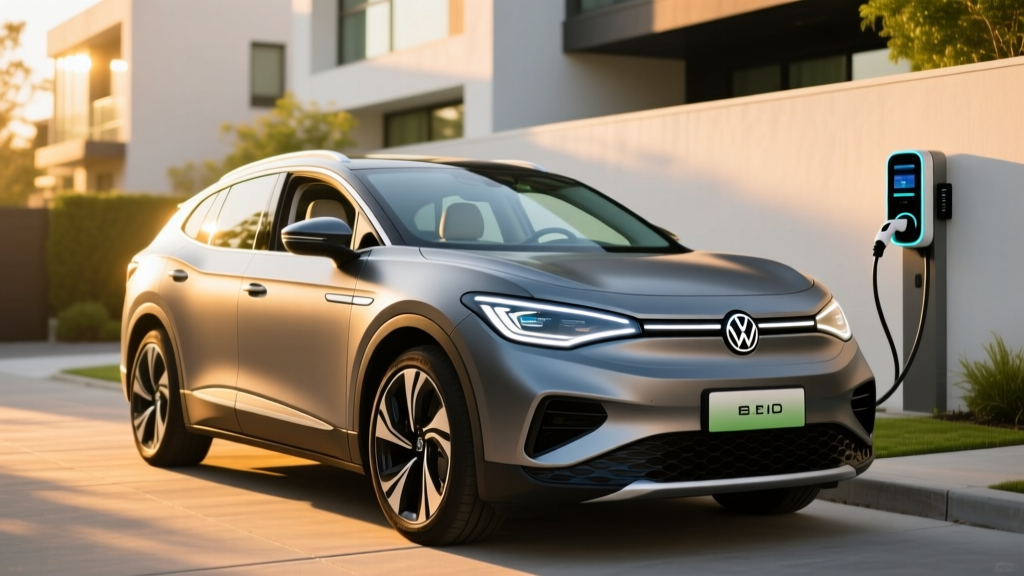
The Volkswagen ID.4 occupies a peculiar space in the American EV market: it's a practical, comfortable compact electric SUV that rarely dominates headlines but consistently delivers where it counts. For 2026, VW has refined the formula with incremental software improvements and sustained aggressive pricing that makes the ID.4 a compelling candidate for lease shoppers. But is a Volkswagen ID.4 lease deal the smartest path into this electric crossover, or does buying outright make more financial sense? This review dissects every number that matters.
Quick Verdict: Who Should Lease the 2026 VW ID.4?
The 2026 ID.4 is best suited for suburban families and daily commuters who prioritize ride comfort, interior space, and straightforward ergonomics over cutting-edge performance or tech-forward interfaces. It's not the fastest-charging EV in its class, nor the longest-range, but its 291-mile EPA maximum range and well-tuned chassis make it one of the most livable compact electric SUVs available. A lease makes particular sense for buyers who want to hedge against battery degradation uncertainty or plan to transition to a next-gen platform in three years.
Choose a lease if: You drive under 15,000 miles/year, want to avoid long-term battery risk, and prefer lower monthly payments without a large down payment.
Choose to buy if: You exceed typical lease mileage limits, want to claim the full $7,500 §30D federal tax credit upfront (lease credits go to the lessor), or plan to keep the vehicle 5+ years.
Range, Battery & Real-World Efficiency
The 2026 ID.4 carries an 82 kWh usable lithium-ion battery pack (NMC chemistry — nickel manganese cobalt). Rear-wheel-drive (RWD) models achieve an EPA-estimated 291 miles of range on the Pro trim, while the dual-motor all-wheel-drive (AWD) Pro S drops to 263 miles due to the added weight and drivetrain losses.
EPA Estimate: 291 miles (RWD Pro) / 263 miles (AWD Pro S)
Real-World Expectation: In mixed suburban/highway driving at 70°F, expect 255–275 miles from the RWD model. Highway-only trips at 75+ mph reduce range to approximately 220–240 miles. In freezing temperatures (below 32°F), plan for a 20–30% range reduction — roughly 195–225 miles for RWD — due to cabin heating demands and reduced battery efficiency. The ID.4's heat pump (standard on Pro S, optional on lower trims) mitigates some cold-weather loss.
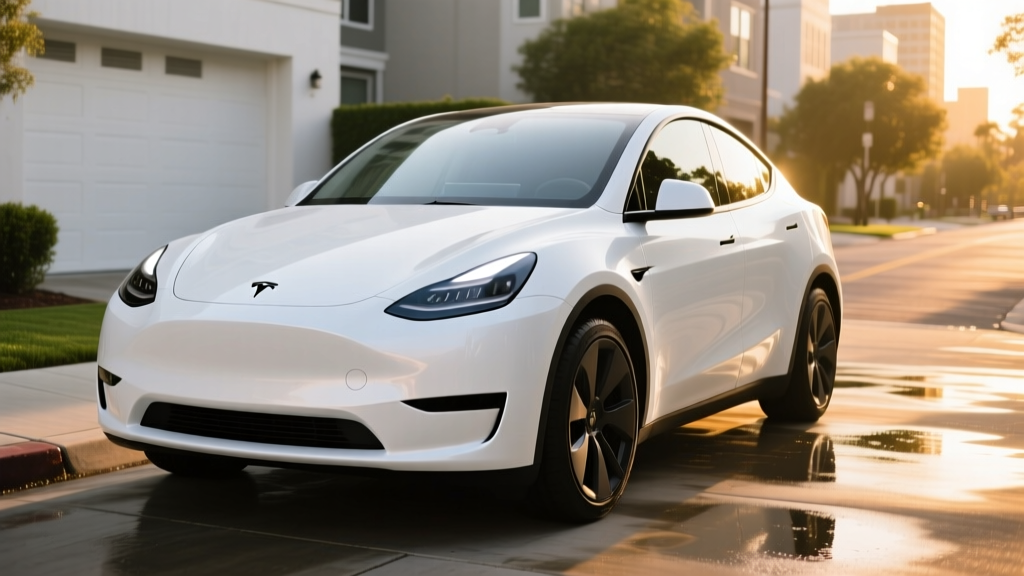
Efficiency ratings from fueleconomy.gov place the RWD ID.4 at 104 MPGe combined (32 kWh/100 mi), which is competitive with the Hyundai Ioniq 5 but trails the Tesla Model Y's 120 MPGe. The AWD version drops to 95 MPGe combined.
| Spec | Pro (RWD) | Pro S AWD |
|---|---|---|
| EPA Range | 291 mi | 263 mi |
| Battery (usable) | 82 kWh, NMC | 82 kWh, NMC |
| Horsepower | 282 hp | 335 hp |
| 0–60 mph | 7.7 sec | 5.4 sec |
| Max DC Fast Charge | 175 kW | 175 kW |
| 10–80% DC Time | ~28 min | ~28 min |
| Level 2 Charge Rate | 11 kW (~37 mi/hr) | 11 kW (~37 mi/hr) |
| MPGe (combined) | 104 MPGe | 95 MPGe |
| Cargo Volume | 30.3 cu ft (rear up) / 64.2 cu ft (rear folded) | 30.3 cu ft / 64.2 cu ft |
| Base MSRP | $39,735 | $48,595 |
Charging Speed: Home & DC Fast Charging
The ID.4 supports a peak DC fast-charge rate of 175 kW via its CCS1 connector (NACS adapter available through VW for Tesla Supercharger access). On a 350 kW Electrify America or similar station, the ID.4 will charge from 10% to 80% in approximately 28 minutes under ideal thermal conditions.
Charging Curve Reality: The ID.4 peaks near 175 kW only between roughly 10–30% state of charge. From 30–60%, it sustains approximately 120–140 kW, and from 60–80% it tapers to 60–80 kW. This means the commonly cited "28-minute" 10–80% time assumes battery preconditioning is active (triggered automatically when you navigate to a charger in the infotainment system). Without preconditioning — for example, on a cold morning with no navigation destination set — that 10–80% session can stretch to 40+ minutes.
| Level | Power (kW) | Miles Added per Hour | Full Charge Time |
|---|---|---|---|
| Level 1 (120V household) | ~1.4 kW | ~4–5 mi/hr | ~60+ hours |
| Level 2 (240V home) | 11 kW | ~37 mi/hr | ~8.5 hours |
| DC Fast Charge | 175 kW (peak) | ~200+ mi in 30 min | 10–80% in ~28 min |
For home Level 2 charging, the ID.4's onboard charger accepts up to 11 kW, which means you'll need a 48-amp dedicated circuit (hardwired) or a 40-amp NEMA 14-50 outlet to get the full rate. Most owners will find an overnight charge from 20% to 100% completes in roughly 8–9 hours — perfectly adequate for daily replenishment.
Pricing, Lease Deals & Federal Tax Credit
The 2026 ID.4 starts at $39,735 for the Pro RWD (including destination) and climbs to $48,595 for the Pro S AWD. A fully loaded Pro S Plus AWD can approach $55,000. Volkswagen has historically offered some of the most attractive lease deals in the EV segment, often subsidizing money factors to keep monthly payments competitive.
Typical 2026 ID.4 lease structures run $299–$429/month for 36 months with $2,500–$3,999 due at signing, depending on trim and regional incentives. However, there's a critical financial distinction buyers must understand:
Lease vs. Buy Tax Credit Warning: When you lease an EV, the $7,500 federal tax credit under IRS §30D goes to the leasing company (the legal owner), not to you. The lessor may pass some or all of this savings through as a capitalized-cost reduction (lowering your monthly payment), but they are not required to. VW has historically passed through most of the credit, which is why ID.4 lease payments are so competitive — but always confirm the "cap cost reduction" line item on your lease agreement.
If you buy outright (or finance), you may claim the $7,500 credit on your tax return — or, as of 2024, transfer it to the dealer at point of sale for an immediate price reduction — provided you meet all eligibility requirements:
- MSRP Cap: SUVs must have a base MSRP at or below $80,000 (all ID.4 trims qualify)
- Buyer Income Cap: Modified adjusted gross income ≤ $150,000 (single) / $225,000 (head of household) / $300,000 (joint)
- Battery Sourcing: Critical minerals and battery components must meet escalating domestic-content thresholds; VW sources from approved supply chains, but verify current-year compliance at fueleconomy.gov
- Assembly: Final assembly must occur in North America — the ID.4 is built in Chattanooga, Tennessee, satisfying this requirement
| Trim | MSRP | After $7,500 Credit | Typical Lease (36 mo) |
|---|---|---|---|
| Standard Range | $39,735 | ~$32,235 | ~$299/mo ($3,499 due) |
| Pro RWD | $43,735 | ~$36,235 | ~$349/mo ($3,499 due) |
| Pro S AWD | $48,595 | ~$41,095 | ~$399/mo ($3,999 due) |
| Pro S Plus AWD | $54,595 | ~$47,095 | ~$449/mo ($3,999 due) |
Performance, Ride Quality & Drivetrain
The RWD ID.4 produces 282 horsepower from its rear-mounted permanent-magnet synchronous motor, delivering a 0–60 mph time of 7.7 seconds. That's adequate for highway merging and daily driving but won't win any stoplight races. The AWD dual-motor variant bumps output to 335 hp and drops the sprint to 5.4 seconds — noticeably quicker and confidence-inspiring in wet or snowy conditions.
Where the ID.4 genuinely shines is ride quality. VW's MEB platform delivers a composed, well-damped ride that absorbs road imperfections better than the stiffer-sprung Hyundai Ioniq 5 or Kia EV6. Steering is light and precise, though feedback is minimal. The turning circle of 31.5 feet is exceptionally tight for a compact SUV, making parking-lot maneuvers effortless.
Regenerative braking offers two modes: a "D" (drive) mode with mild regen that allows coasting, and a "B" (brake) mode with stronger regen that approximates one-pedal driving — though it won't bring the car to a complete stop, unlike Nissan's e-Pedal or Tesla's hold mode.
Interior, Cargo & Technology
The ID.4's cabin is spacious and airy, with a panoramic fixed glass roof (standard on Pro S and above) that amplifies the sense of openness. Rear-seat legroom measures 37.6 inches — generous for the segment — and the flat floor (no transmission tunnel) makes the middle seat usable for adults on short trips.
Cargo volume stands at 30.3 cubic feet behind the rear seats and 64.2 cubic feet with the 60/40 split rear bench folded. There is no front trunk (frunk); VW uses that space for electronics and the HVAC system. A power liftgate is standard on Pro S trims.
The infotainment system runs on VW's ID. Software 4.0 on a 12.9-inch touchscreen. Response times have improved markedly over early ID.4 models, and wireless Apple CarPlay/Android Auto is standard. However, the capacitive-touch slider controls for volume and temperature remain a frustration point — they lack haptic feedback and are too easy to bump accidentally. Physical steering-wheel buttons (reintroduced for 2025) are a welcome improvement over the earlier touch-sensitive pads.
Driver-assistance tech includes VW's IQ.DRIVE suite: adaptive cruise control with stop-and-go, lane-centering assist, automatic emergency braking, and blind-spot monitoring. This is SAE Level 2 driver assistance — meaning you must keep your hands on the wheel and eyes on the road at all times. It works competently on highways but doesn't match the lane-centering smoothness of GM's Super Cruise or Ford's BlueCruise.
Warranty Coverage
Volkswagen backs the ID.4 with a competitive warranty package:
- Battery: 8 years / 100,000 miles (retains ≥70% capacity)
- Powertrain: 8 years / 100,000 miles
- Bumper-to-bumper: 4 years / 50,000 miles
- Roadside Assistance: 3 years / 36,000 miles
- Complimentary DC Fast Charging: 3 years of unlimited 30-minute sessions at Electrify America (for new purchases/leases)
The 70% capacity-retention threshold is industry-standard. Real-world degradation data from older ID.4 models (2021–2023) suggests most packs retain 92–95% capacity after 3 years and 30,000–45,000 miles, though long-term 8-year data remains limited. NMC chemistry typically degrades slightly faster than LFP in high-cycle, high-heat scenarios, but VW's active liquid thermal management system mitigates this.
Competitive Comparison: ID.4 vs. Ioniq 5 vs. Model Y
| Attribute | VW ID.4 Pro RWD | Hyundai Ioniq 5 SEL RWD | Tesla Model Y LR AWD |
|---|---|---|---|
| EPA Range | 291 mi | 303 mi | 320 mi |
| Max DC Charge | 175 kW | 240 kW | 250 kW |
| 10–80% Time | ~28 min | ~18 min | ~20 min |
| 0–60 mph | 7.7 sec | 7.0 sec | 4.8 sec |
| Base MSRP | $39,735 | $42,600 | $47,990 |
| Cargo (rear up) | 30.3 cu ft | 27.2 cu ft | 30.2 cu ft |
The ID.4 trades charging speed and performance for a lower entry price, superior ride comfort, and a more traditional SUV interior layout. The Ioniq 5 charges significantly faster thanks to its 800V architecture, and the Model Y leads in range and acceleration — but both command higher MSRPs. For lease shoppers specifically, VW's aggressive subvention often makes the ID.4 the lowest monthly payment of the three.
Pros, Cons & Final Assessment
Pros
- Comfortable, well-damped ride quality
- Spacious rear seat and generous cargo area
- Aggressive lease pricing with tax credit pass-through
- 3 years free Electrify America charging
- Tight turning circle for easy city driving
- Built in USA (Chattanooga, TN)
Cons
- Slower DC charging than Ioniq 5 / EV6 / Model Y
- Capacitive-touch climate/volume sliders are frustrating
- No front trunk (frunk)
- Lane-centering assist less refined than competitors
- Real-world highway range falls notably short of EPA
- Infotainment learning curve for first-time EV buyers
A 2026 Volkswagen ID.4 lease deal makes strong financial sense for cost-conscious families who prioritize comfort over performance metrics and who have reliable home charging. If your daily commute is under 60 miles round-trip and you can charge overnight on Level 2, the ID.4's real-world range is more than sufficient, and the monthly lease cost undercuts most competitors. Road-trippers who frequently drive 300+ miles in a day should consider the faster-charging Ioniq 5 or the longer-range Model Y — but for the vast majority of suburban EV use cases, the ID.4 delivers exactly what it promises: a quiet, comfortable, and affordable electric daily driver.
Frequently Asked Questions
What is the real-world range of the 2026 VW ID.4?
The RWD ID.4 is EPA-rated at 291 miles, but real-world mixed driving typically yields 255–275 miles. Highway-only trips at 75+ mph reduce this to approximately 220–240 miles. In sub-freezing temperatures, expect 195–225 miles due to cabin heating loads and reduced battery efficiency.
How fast does the ID.4 charge at home and on DC fast chargers?
On a Level 2 home charger (240V, 48A), the ID.4 charges at up to 11 kW, adding roughly 37 miles of range per hour — a full charge takes about 8.5 hours. On DC fast chargers, it peaks at 175 kW and charges from 10–80% in approximately 28 minutes with battery preconditioning active. Without preconditioning, add 10–15 minutes.
How much does the ID.4 cost after the federal tax credit?
If you purchase and qualify for the full $7,500 §30D credit (subject to income caps and battery-sourcing rules), the Pro RWD effectively costs about $36,235. If you lease, the credit goes to the leasing company, but VW historically passes most of it through as a cap-cost reduction, yielding monthly payments around $299–$449 depending on trim.
Does the 2026 ID.4 qualify for the $7,500 federal EV tax credit?
Yes — the ID.4 is assembled in Chattanooga, TN (meeting the North American assembly requirement), its MSRP is well under the $80,000 SUV cap, and VW's battery supply chain currently satisfies critical-mineral and component-sourcing thresholds. However, buyer income must not exceed $150K (single) / $300K (joint). Verify current-year eligibility at fueleconomy.gov and consult a tax professional.
Is the ID.4 worth leasing vs. the Hyundai Ioniq 5 or Tesla Model Y?
If your priority is the lowest monthly payment and ride comfort, the ID.4 lease is hard to beat. If you frequently road-trip and need the fastest possible DC charging, the Ioniq 5's 800V architecture (18-min 10–80%) is superior. If range, performance, and Supercharger network access are paramount, the Model Y leads — but at a significantly higher price point.
What is the ID.4's battery warranty?
Volkswagen warrants the ID.4's high-voltage battery for 8 years or 100,000 miles against defects and excessive capacity loss (defined as dropping below 70% of original capacity). The powertrain carries the same 8-year/100,000-mile coverage.