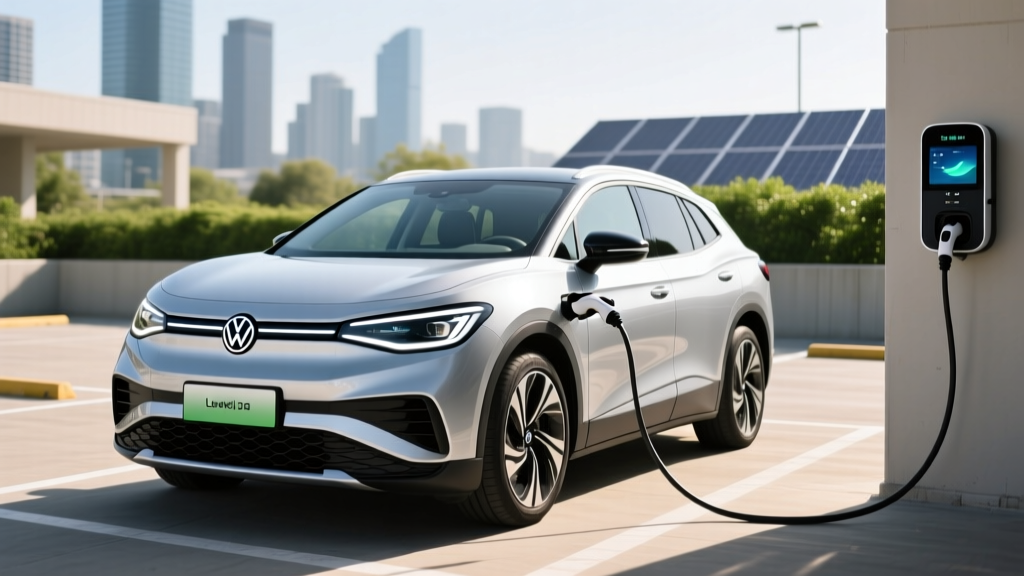
The Volkswagen ID.4 has been the brand's electric-volume play in the U.S. since 2021, and for the 2025 model year it received its first meaningful mid-cycle refresh — what enthusiasts and European media have dubbed the Volkswagen ID.4 facelift. That update carries into the 2026 model year with additional software refinements and a streamlined trim lineup. The result is an EV that addresses the most common complaints about the original: sluggish infotainment, soft acceleration, and an interior that felt a step behind rivals. But in a compact electric SUV segment now stacked with the Hyundai Ioniq 5, Tesla Model Y, Ford Mustang Mach-E, and Kia EV6, does the refreshed ID.4 still hold up?
I've spent time with the updated ID.4 across highway commutes, cold-weather errands, and DC fast-charging stops to give you the numbers that matter — not the brochure highlights. Here's everything you need to know before you buy.
Quick Verdict: Who the ID.4 Facelift Is For
Choose the 2026 VW ID.4 if: You want a comfortable, quiet, spacious compact electric SUV with straightforward controls, strong build quality, and you prioritize ride comfort over sporty handling. It's a strong pick for two-row families and daily commuters who charge at home.
Look elsewhere if: You need maximum DC fast-charging speed for frequent road trips (the Ioniq 5 and EV6 charge significantly faster), you want a frunk, or you want the longest possible EPA range in the segment.
Range, Battery, and Real-World Efficiency
The 2026 ID.4 Pro and Pro S trims use an 82 kWh usable battery (91 kWh gross) with NMC (nickel-manganese-cobalt) chemistry. The rear-wheel-drive models deliver an EPA-estimated 291 miles of range, while the all-wheel-drive Pro S Plus drops to 263 miles EPA.
Real-World Range Reality: The EPA 291-mile figure is achievable in mixed city/suburban driving at moderate temperatures. Expect ~250–265 miles on a highway-heavy trip at 70–75 mph, and ~210–230 miles in sub-30°F winter conditions without preconditioning. The AWD model loses proportionally more in cold weather due to the front motor's energy draw. These figures are competitive with the segment but trail the Long Range Model Y and Ioniq 5 Extended Range.
| Spec | Pro / Pro S (RWD) | AWD Pro S Plus |
|---|---|---|
| EPA Range | 291 miles | 263 miles |
| Battery (usable / gross) | 82 kWh / 91 kWh (NMC) | 82 kWh / 91 kWh (NMC) |
| MPGe (city / hwy / combined) | 115 / 98 / 107 | 104 / 90 / 97 |
| Energy Consumption | 31 kWh/100 mi | 35 kWh/100 mi |
| Horsepower / Torque | 282 hp / 339 lb-ft | 335 hp / 402 lb-ft |
| 0–60 mph | 7.3 seconds | 5.4 seconds |
| Drivetrain | Rear-wheel drive (single motor) | Dual-motor AWD |
| Max DC Fast Charge | 175 kW | 175 kW |
| 10–80% DCFC Time | ~28 minutes | ~28 minutes |
| Level 2 Home Charge Rate | 11 kW (~37 mi/hr) | 11 kW (~37 mi/hr) |
| Cargo Volume (rear seats up / down) | 30.3 / 64.2 cu ft | 30.3 / 64.2 cu ft |
| Rear Legroom | 37.6 inches | 37.6 inches |
| Towing Capacity | 2,200 lbs (w/ factory hitch) | 2,700 lbs (w/ factory hitch) |
Efficiency at 31 kWh/100 miles combined for the RWD is respectable — roughly on par with the Ford Mustang Mach-E Extended Range RWD and slightly behind the Ioniq 5's 30 kWh/100 mi. It's not class-leading, but it's honest.
Charging Speed: Home and DC Fast Charging
The facelifted ID.4's biggest charging improvement came in the 2024–2025 transition: VW bumped the peak DC fast-charging rate from 135 kW to 175 kW. That shaves meaningful minutes off road-trip stops, though it still trails the 800-volt architecture competitors.
| Charging Level | Power | Speed / Time |
|---|---|---|
| Level 1 (120V household) | ~1.4 kW | ~4–5 miles per hour |
| Level 2 (240V home / public) | 11 kW (48A) | ~37 miles per hour; 0–100% in ~9 hours |
| DC Fast Charging (peak) | 175 kW | 10–80% in ~28 min |
| DC Fast Charging (sustained avg) | ~125 kW (10–80%) | Average ~5.5 mi/min on highway stops |
Charging curve reality: The ID.4 hits its 175 kW peak only between roughly 10% and 25% state of charge on a compatible 350 kW charger with a properly preconditioned battery. From 25% to 60%, it sustains around 130–145 kW. Above 80%, it tapers sharply to under 50 kW — so don't plan on charging past 80% at a road-trip stop unless absolutely necessary. Preconditioning activates automatically when you set a DC fast-charger as your navigation destination, which is critical for hitting advertised speeds in cooler weather.
At home on a Level 2 charger, the 11 kW onboard charger is a strong point. A full overnight charge from near-empty takes about 9 hours, meaning a standard 8-hour sleep easily replenishes 80%+ of the battery. This is faster than the base Model Y's 11.5 kW capability and on par with most competitors. The ID.4 uses the NACS (Tesla-style) connector for the 2026 model year, giving native access to Tesla Superchargers without an adapter — a significant convenience upgrade over the CCS1 port on 2021–2024 models.
Performance and Driving Impressions
The facelift brought a meaningful power bump for the RWD model: the rear motor now produces 282 hp (up from 201 hp on the original ID.4), cutting the 0–60 time from a leisurely 8.5 seconds to 7.3 seconds. That's still not quick by EV standards — the Ioniq 5 RWD does it in 6.3 seconds — but it's adequate for merging and passing, and the instant torque makes it feel sprightlier around town than the number suggests.
The dual-motor AWD model's 335 hp and 5.4-second 0–60 is genuinely brisk and handles rain and light snow with confidence. VW's tuning prioritizes comfort over sportiness: the ride is supple, body roll is well-controlled, and cabin noise is among the lowest in the segment. The steering is light and numb, which some drivers appreciate for commuting and others find uninspiring on back roads.
Regenerative braking offers two modes: a coasting "D" mode and a "B" mode with stronger regen. It's not true one-pedal driving — the car doesn't come to a complete stop without brake input — but B mode handles 90% of deceleration in traffic. VW's decision not to implement full one-pedal stop remains a point of contention among EV veterans.
Interior, Tech, and the Infotainment Fix
The single biggest improvement in the ID.4 facelift is the upgraded infotainment system. VW moved to the ID. Software 4.0 platform with a larger 12.9-inch center touchscreen (up from 12 inches), faster processor, and — critically — restored physical-capacitive slider controls for volume and temperature that the original ID.4's frustrating touch-sensitive sliders replaced. Response times are dramatically improved, wireless Apple CarPlay and Android Auto are standard, and the voice assistant actually understands natural speech.
Other tech highlights:
- Travel Assist with lane centering and adaptive cruise is standard on all trims — a Level 2 driver-assist system that works reliably on highways, though it requires hands on the wheel (capacitive sensing, not torque-based).
- Park Assist Plus with memory parking can learn your driveway or garage routine and repeat it.
- Heads-up display with augmented-reality navigation arrows (Pro S and above).
- IQ.DRIVE suite includes front assist, lane assist, and rear traffic alert standard.
The cabin materials are a mixed bag. Soft-touch surfaces on the dash and door tops feel premium, but the lower door panels and center console use hard plastics that feel below what you'll find in the Ioniq 5 or Mach-E at similar price points. The panoramic fixed glass roof (Pro S and above) floods the cabin with light but has no shade — a problem on hot summer days.
Cargo space is a strong suit: 30.3 cubic feet behind the rear seats and 64.2 cubic feet with them folded. That beats the Ioniq 5 (27.2 / 59.3) and is close to the Model Y (30.2 / 76.2). There is no front trunk (frunk) — the space under the hood houses electronics and washer fluid.
Pricing, Trims, and Federal Tax Credit Eligibility
VW streamlined the 2026 ID.4 into three trims:
| Trim | Drivetrain | MSRP | Est. After §30D Credit* |
|---|---|---|---|
| Pro | RWD | $44,995 | $37,495 |
| Pro S | RWD | $48,495 | $40,995 |
| AWD Pro S Plus | AWD | $53,495 | $45,995 |
*Estimated effective price assumes full $7,500 federal tax credit via point-of-sale transfer. Actual eligibility depends on multiple factors — see checklist below.
Federal §30D EV Tax Credit Requirements (2026 rules):
- MSRP cap: SUVs/vans/pickups must be ≤ $80,000 (ID.4 qualifies on all trims).
- Buyer income cap: Modified AGI ≤ $150,000 (single), $225,000 (head of household), $300,000 (joint).
- Battery sourcing: Increasing percentages of critical minerals and battery components must be sourced from the U.S. or FTA partners. VW's Chattanooga, TN assembly and supply chain have been structured to meet these requirements, but always verify on the IRS qualified vehicles list before purchase.
- Point-of-sale transfer: Eligible buyers can apply the credit as an immediate price reduction at the dealer rather than waiting for a tax refund.
- No prior title transfer: The credit applies to new vehicles only; the vehicle must be new to you and the original buyer.
The ID.4's MSRP positions it in the thick of the segment. The Pro trim at $44,995 undercuts the Model Y Long Range and is within a few hundred dollars of a comparably equipped Ioniq 5 SEL. The AWD Pro S Plus at $53,495 pushes into luxury-adjacent territory, where the Mach-E Premium AWD and Ioniq 5 Limited AWD are fierce alternatives.
Warranty and Long-Term Ownership
Volkswagen backs the ID.4 with competitive warranty coverage:
- High-voltage battery: 8 years / 100,000 miles, warranting against capacity loss below 70% of original.
- Electric powertrain (motor, inverter): 8 years / 100,000 miles.
- New vehicle limited warranty: 4 years / 50,000 miles.
- Complimentary maintenance: 2 years / 20,000 miles (covers cabin air filter, brake fluid, tire rotation).
- Roadside assistance: 4 years / 50,000 miles.
The 70% battery capacity retention threshold is industry-standard (matching Tesla, Hyundai/Kia, and Ford). Based on data from earlier ID.4 models and the MEB platform, NMC degradation has been modest — most owners report 94–97% state of health after 30,000 miles. VW's Chattanooga-built battery packs use proven LG Energy Solution cells, and there have been no widespread degradation complaints in the U.S. fleet to date.
How It Compares to Key Competitors
The compact electric SUV segment doesn't forgive weakness. Here's how the ID.4 facelift stacks up against the three vehicles most buyers cross-shop:
| Spec | VW ID.4 Pro S (RWD) | Hyundai Ioniq 5 SEL (RWD LR) | Tesla Model Y (LR RWD) | Ford Mach-E (ER RWD) |
|---|---|---|---|---|
| EPA Range | 291 mi | 318 mi | 320 mi | 305 mi |
| Battery | 82 kWh (NMC) | 84 kWh (NMC) | 78 kWh (NMC/LFP) | 91 kWh (NMC) |
| Peak DCFC | 175 kW | 240 kW (800V) | 250 kW | 150 kW |
| 10–80% DCFC | ~28 min | ~18 min | ~22 min | ~36 min |
| 0–60 mph | 7.3 sec | 6.3 sec | 6.5 sec | 6.1 sec |
| Base MSRP (comparable) | $48,495 | $49,850 | $46,630 | $48,995 |
| Cargo (rear up) | 30.3 cu ft | 27.2 cu ft | 30.2 cu ft | 29.7 cu ft |
Where the ID.4 wins: Ride comfort, cabin quietness, rear-seat legroom (37.6 in.), and straightforward controls. It's the most "normal car" feeling EV in the group — which is a compliment for buyers transitioning from a gas SUV.
Where it falls short: DC fast-charging speed is the biggest gap. The Ioniq 5's 800-volt system charges 10 minutes faster on a road trip, which adds up over a 1,000-mile journey. The Model Y offers access to the full Supercharger network natively (though the ID.4's NACS port now opens up Superchargers too), and its range edges ahead by ~30 miles. The Mach-E is more engaging to drive, though its charging speed is even slower than the ID.4's.
Pros and Cons at a Glance
Pros
- Comfortable, quiet ride — best in class for daily comfort
- Spacious rear seat (37.6 in. legroom) and 30.3 cu ft cargo
- Greatly improved infotainment with faster software
- Strong Level 2 home charging (11 kW, ~37 mi/hr)
- NACS connector for native Supercharger access
- Standard Travel Assist (adaptive cruise + lane centering)
- Built in Chattanooga, TN — supports §30D credit eligibility
- Competitive pricing after tax credit
Cons
- 175 kW peak DCFC is slower than Ioniq 5, EV6, and Model Y
- RWD 0–60 of 7.3 sec feels unenthusiastic vs. rivals
- No front trunk (frunk)
- No full one-pedal driving stop
- Panoramic roof lacks a shade
- Hard plastics on lower interior surfaces
- Real-world highway range drops noticeably from EPA sticker
Frequently Asked Questions
What is the real-world range of the 2026 Volkswagen ID.4?
The EPA rates the RWD ID.4 at 291 miles, but in real-world highway driving at 70–75 mph, expect around 250–265 miles. In cold weather (below 30°F), range can drop to 210–230 miles without preconditioning. The AWD model's 263-mile EPA rating translates to roughly 225–240 miles on the highway and as low as 190 miles in deep winter.
How fast does the ID.4 facelift charge at home and on DC fast chargers?
At home on a Level 2 (240V) charger, the ID.4 accepts up to 11 kW, adding roughly 37 miles of range per hour and fully charging from empty in about 9 hours. On a DC fast charger, it peaks at 175 kW and charges from 10–80% in approximately 28 minutes — though sustained average power is closer to 125 kW due to charge-curve tapering.
How much does the 2026 ID.4 cost after federal tax credits?
If you qualify for the full $7,500 federal §30D credit via point-of-sale transfer, the Pro RWD drops from $44,995 to an effective $37,495, and the AWD Pro S Plus drops from $53,495 to $45,995. Eligibility depends on your income (≤ $150K single / $300K joint), the vehicle's MSRP (all trims qualify under the $80K SUV cap), and battery-sourcing requirements. Verify current eligibility on the IRS qualified vehicle list.
Does the 2026 ID.4 qualify for the federal EV tax credit?
Yes — as of the current IRS guidance, all 2026 ID.4 trims appear on the qualified clean vehicles list, having met the critical minerals and battery component sourcing thresholds. The vehicle is assembled in Chattanooga, Tennessee. However, your personal eligibility depends on your modified adjusted gross income, and the credit can be transferred to the dealer at the point of sale for an immediate price reduction.
Is the VW ID.4 facelift worth buying over the Ioniq 5 or Model Y?
It depends on your priorities. If road-trip charging speed and maximum range top your list, the Ioniq 5 (318 mi, 18-min 10–80%) and Model Y (320 mi, ~22 min) are stronger picks. If you value ride comfort, cabin quietness, rear-seat space, and a traditional SUV feel, the ID.4 is arguably the best in the segment. The pricing after tax credits makes it highly competitive, and VW's build quality and warranty are solid.
What are the biggest drawbacks of the ID.4?
The three most common complaints are: (1) DC fast-charging speed is slower than 800V rivals — adding ~10 minutes per road-trip stop vs. the Ioniq 5; (2) the RWD model's 7.3-second 0–60 time feels leisurely for an EV; and (3) there's no frunk, which limits front storage for charging cables. The fixed glass roof without a shade is also a notable miss for sunny climates.
Does the ID.4 have one-pedal driving?
Not fully. The "B" drive mode provides strong regenerative braking that handles most deceleration, but the car will not come to a complete stop without using the brake pedal. This is a deliberate VW design choice, and opinions are split — some drivers prefer the natural feel, while EV veterans accustomed to full one-pedal driving find it annoying.