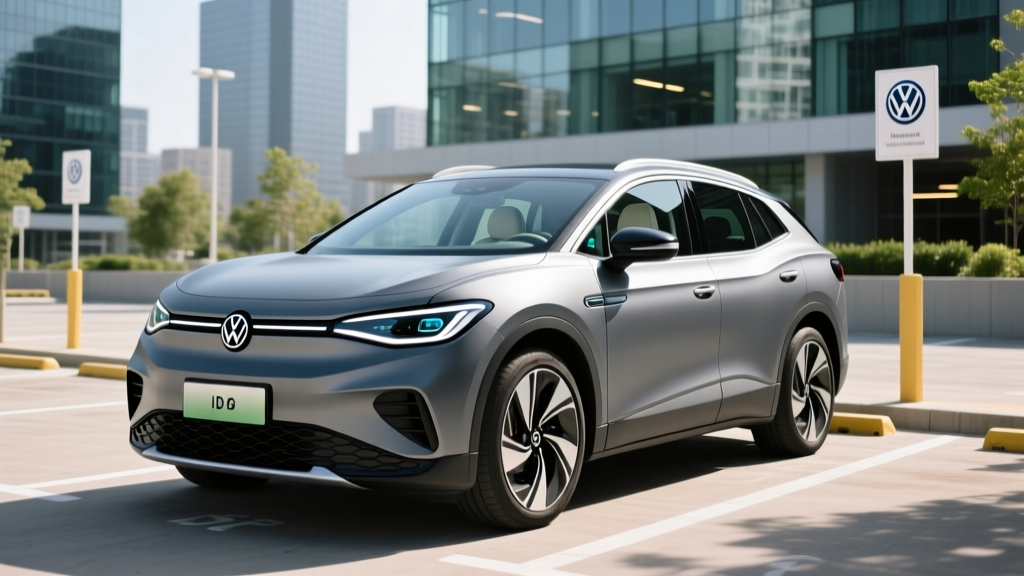
Quick Answer: Is the Volkswagen Electric SUV Worth It?
The 2026 Volkswagen ID.4 delivers 275 miles of EPA range (AWD Pro S), 170 kW DC fast charging (10-80% in ~30 minutes), and starts at $39,995. After the $7,500 federal tax credit (if eligible), effective cost drops to ~$32,495 — competitive with gas crossovers like the Toyota RAV4. Real-world highway range is ~230-250 miles; cold weather reduces this further. Best for buyers with home Level 2 charging who drive under 250 miles daily and want mainstream dealer support.
2026 Volkswagen ID.4: Range, Battery & Efficiency
The 2026 ID.4 uses an 82 kWh usable lithium-ion NMC battery (rear-wheel drive) or dual-motor AWD configuration. EPA estimates vary by trim:
- ID.4 Standard Range (RWD): 206 miles EPA, 62 kWh battery
- ID.4 Pro (RWD): 275 miles EPA, 82 kWh battery
- ID.4 Pro S AWD: 263 miles EPA, 82 kWh battery
Real-world caveat: In 70°F highway testing at 70 mph, expect ~230-250 miles from the Pro RWD. Cold weather (below 32°F) can reduce range 20-30% due to battery heating demands and cabin climate load — plan for ~180-200 miles in winter conditions. The ID.4's heat pump (standard on Pro trims) helps but doesn't eliminate cold-weather loss.
Efficiency ratings from fueleconomy.gov show 104 MPGe combined (Pro RWD), translating to ~2.0 kWh/mile. This is average for the compact electric SUV segment — the Hyundai IONIQ 5 achieves 114 MPGe, while the Ford Mustang Mach-E lands at 101 MPGe.
Charging Speed: Home & DC Fast Charging
The ID.4 supports three charging levels:
| Level | Power | Charging Time | Miles Added/Hour |
|---|---|---|---|
| Level 1 (120V) | 1.4 kW | ~60 hours (0-100%) | ~4 miles/hour |
| Level 2 (240V, 48A) | 11.5 kW | ~7.5 hours (0-100%) | ~32 miles/hour |
| DC Fast Charge | 170 kW peak | ~30 min (10-80%) | ~200+ miles in 30 min |
Charging curve reality: The 170 kW peak rate applies only between 10-30% state of charge. Above 50%, charging slows to ~100 kW; above 80%, it tapers to ~50 kW to protect battery longevity. This is normal for NMC chemistry but means a 10-90% charge takes ~45 minutes, not 30.
For home charging, a Level 2 installation typically costs $800-$2,000 (equipment + electrician + permit). If your electrical panel needs upgrading from 100A to 200A service, add $1,500-$3,000. Most ID.4 owners charge overnight at home, adding ~200 miles in 6-7 hours — sufficient for daily driving.
Pricing, Tax Credits & Ownership Costs
2026 Volkswagen ID.4 MSRP by trim:
- Standard Range: $39,995
- Pro: $43,995
- Pro S: $47,995
- Pro S AWD: $51,495
Federal tax credit (§30D): The ID.4 qualifies for up to $7,500 if you meet IRS requirements: adjusted gross income under $150K (single) / $300K (joint), vehicle MSRP under $80K (SUV classification), and battery components/critical minerals sourcing thresholds. The credit can transfer to the dealer at point-of-sale, reducing your purchase price directly. Check current eligibility on IRS.gov — rules change annually.
| 5-Year Cost | VW ID.4 Pro | Toyota RAV4 Gas | Toyota RAV4 Hybrid |
|---|---|---|---|
| Purchase Price (after credit) | $36,495 | $32,000 | $34,500 |
| Fuel/Energy (75K miles) | $3,750 | $7,500 | $5,625 |
| Maintenance | $1,500 | $3,000 | $2,800 |
| Insurance (avg) | $9,000 | $7,200 | $7,500 |
| Total 5-Year | $50,745 | $49,700 | $50,425 |
The ID.4's higher insurance premiums (~$1,800/year vs ~$1,440 for gas RAV4) offset some fuel savings. However, maintenance costs are 50% lower — no oil changes, fewer brake replacements (regen braking extends pad life), and no transmission service.
EV vs Gas: Real-World Decision Framework
| Factor | VW ID.4 (EV) | Gas SUV (RAV4) |
|---|---|---|
| Daily range needed | 200-250 miles realistic | 400+ miles |
| Refueling time | 30 min (DC fast) or overnight (home) | 5 minutes |
| Home charging access | Required for convenience | Not needed |
| Cold weather impact | -20-30% range | Minimal |
| Long road trips | Plan charging stops (30 min each) | Gas stations everywhere |
| Maintenance complexity | Low (fewer moving parts) | Higher (engine, transmission) |
Choose the ID.4 if:
- You have home Level 2 charging (garage/driveway with 240V access)
- Daily driving is under 200 miles
- You qualify for the $7,500 tax credit
- You value low maintenance and smooth, quiet acceleration
- You live in a mild-to-moderate climate (or accept winter range loss)
Stick with gas/hybrid if:
- You lack home charging (apartment, street parking)
- You regularly drive 300+ miles in a day
- You live in extreme cold climates (below 0°F regularly)
- You can't absorb higher upfront cost even with tax credit
- You tow frequently (ID.4 max tow: 2,700 lbs vs RAV4: 3,500 lbs)
Common Misconceptions About the ID.4
| Myth | Fact |
|---|---|
| "EVs are more expensive long-term" | ID.4 5-year cost is within $1,000 of gas RAV4, with lower maintenance and no gas |
| "Batteries need frequent replacement" | VW warranties the ID.4 battery for 8 years/100,000 miles (70% capacity retention). Most EV batteries last 15+ years before significant degradation |
| "Charging takes too long" | Home charging happens overnight (you sleep); DC fast charging adds 200 miles in 30 minutes on road trips |
| "EVs don't work in cold weather" | They work but lose 20-30% range. With 275 miles EPA, you still have ~190 miles in winter — sufficient for most daily driving |
| "Electricity isn't cleaner than gas" | Even on coal-heavy grids, EVs emit 50-70% less CO2 over their lifetime. On clean grids (solar/wind/nuclear), it's 80-90% less |
First-Time EV Buyer: What You Must Know
1. Home charging is non-negotiable for convenience. Relying solely on public DC fast charging is expensive ($0.40-$0.60/kWh vs $0.12-$0.18 at home) and time-consuming. If you can't install Level 2 at home, consider a plug-in hybrid instead.
2. Plan for real-world range, not EPA stickers. Highway driving at 75 mph, cold weather, and aggressive acceleration all reduce range 15-30%. Buy an EV with 20-30% more EPA range than your typical daily need.
3. Insurance costs 20-30% more. EVs have higher repair costs (specialized parts, battery protection). Get insurance quotes before purchasing — some insurers offer EV discounts.
4. Tax credit rules are complex. The $7,500 credit has income caps, MSRP limits, and battery sourcing requirements that change yearly. Consult a tax professional or use the IRS worksheet before assuming eligibility.
5. Public charging networks vary by region. Electrify America (which VW helped fund) has improved reliability but still has gaps. Tesla Superchargers (now open to non-Tesla EVs via adapter) are the most reliable network. Download multiple charging apps (PlugShare, ChargePoint, EVgo) before road trips.
Performance, Interior & Technology
The ID.4 Pro RWD produces 201 horsepower and 229 lb-ft of torque, achieving 0-60 mph in 7.7 seconds. The AWD variant bumps this to 295 hp and 0-60 in 5.4 seconds. Acceleration is smooth and linear — typical of electric motors — but the ID.4 prioritizes comfort over sportiness.
Interior highlights:
- 12-inch infotainment touchscreen (Pro S and above)
- Wireless Apple CarPlay/Android Auto
- Heated front seats and steering wheel (standard on Pro S)
- Panoramic fixed glass roof (Pro S)
- Cargo volume: 30.3 cu ft (rear seats up), 64.2 cu ft (folded)
The ID.4 includes VW's IQ.DRIVE suite: adaptive cruise control, lane-keeping assist, automatic emergency braking, and blind-spot monitoring. This is SAE Level 2 driver assistance — you must remain engaged and hands-on the wheel. It's not self-driving.
Safety ratings from NHTSA: 5-star overall. IIHS rates it Top Safety Pick+ (highest honor).
Frequently Asked Questions
How long does the ID.4 battery last?
VW warranties the battery for 8 years/100,000 miles against degradation below 70% capacity. Real-world data from similar NMC batteries suggests 15-20 years before significant capacity loss. Replacement cost (if needed post-warranty) is $12,000-$18,000, but full replacements are rare.
Can I charge the ID.4 at Tesla Superchargers?
Yes, with a CCS-to-NACS adapter (sold separately, ~$200). Tesla has opened select Supercharger stalls to non-Tesla EVs, but availability varies by location. The ID.4's native CCS port works with Electrify America, EVgo, and ChargePoint networks.
Is the ID.4 good for road trips?
Adequate but not ideal. With 275 miles EPA range and 30-minute DC fast charging, you'll stop every 200-230 miles for 30 minutes. Compare this to a gas SUV: 400 miles, 5-minute stops. For frequent long-distance drivers, a plug-in hybrid or gas vehicle is more convenient.
What if I live in an apartment without charging?
The ID.4 (or any EV) is impractical without home or workplace charging. Public DC fast charging costs 3-4x more than home charging and requires 30-45 minutes per session. Consider a Toyota RAV4 Hybrid instead — no charging needed, 40 MPG.
Does the ID.4 qualify for the $7,500 tax credit?
Likely yes, if you meet income requirements (under $150K single / $300K joint) and the vehicle's battery sourcing meets 2026 thresholds. The credit can transfer to the dealer at purchase, reducing your out-of-pocket cost. Verify current eligibility on IRS.gov before buying.