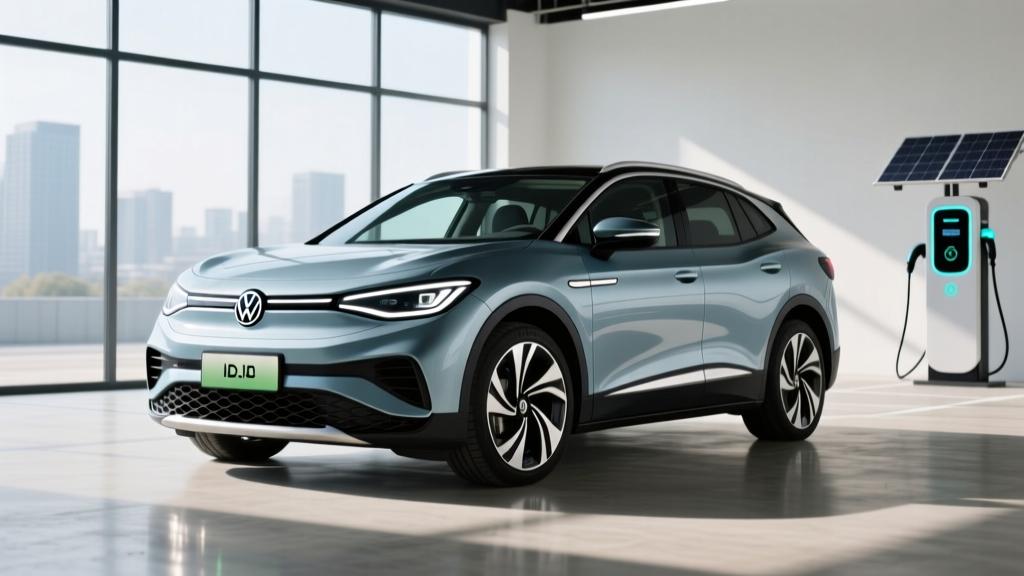
The Volkswagen ID.4 has been VW's volume electric play since 2021, and the 2026 model year brings incremental but meaningful refinements to infotainment responsiveness, battery preconditioning logic, and trim packaging. For buyers searching for a volkswagen id 4 electric car that balances practicality, public charging access, and mainstream dealership support, the ID.4 occupies a specific niche: it's the conservative, family-first crossover in a segment full of polarizing designs. This review breaks down the real numbers that matter — EPA range versus real-world expectations, charging curve behavior, total cost after federal incentives, and where it lands against rivals like the Hyundai Ioniq 5, Tesla Model Y, and Ford Mustang Mach-E.
Quick Verdict: Who Should Buy the ID.4?
The 2026 ID.4 is best suited for suburban families and commuters who prioritize a comfortable ride, straightforward controls, and a dealer network that can handle warranty work without a three-week wait. It is not the fastest-charging or longest-range option in its class. If you regularly drive 300+ miles between charging stops in cold weather, you'll want to cross-shop the Ioniq 5 or Model Y Long Range. But if your daily loop is under 80 miles, you have home Level 2 charging, and you want a quiet, soft-riding crossover with competitive cargo space, the ID.4 Pro S and AWD Pro S trims deliver strong value — especially when the federal tax credit applies.
Range, Efficiency, and Real-World Expectations
VW equips the 2026 ID.4 with an 82 kWh gross battery pack (approximately 77 kWh usable) using NMC (nickel manganese cobalt) chemistry. The rear-wheel-drive Pro and Pro S trims carry an EPA-estimated range of 275 miles, while the dual-motor AWD variants drop to 263 miles due to the added weight and front motor drag.
- EPA Estimate (RWD): 275 miles
- Real-World Highway (70 mph, 65°F): ~235–250 miles
- Real-World Highway (30°F, no heat pump): ~185–210 miles
- Real-World City/Commuter (mixed, moderate climate): ~260–275 miles
EVs lose range at sustained highway speeds and in cold temperatures due to increased aerodynamic drag and battery heating demands. The ID.4's available heat pump (standard on Pro S and above in 2026) recovers some cold-weather efficiency, but expect a 20–30% reduction in freezing conditions versus the EPA sticker.
Efficiency ratings land at 104 MPGe combined for RWD models, translating to roughly 32 kWh per 100 miles in mixed driving — competitive but not class-leading. The Hyundai Ioniq 5 RWD achieves around 114 MPGe, and the Tesla Model Y Long Range hits 122 MPGe, meaning those rivals squeeze more miles from each kWh of battery.
| Spec | RWD (Pro / Pro S) | AWD (Pro S / Pro S Plus) |
|---|---|---|
| EPA Range | 275 miles | 263 miles |
| Battery (Usable) | 77 kWh (NMC) | 77 kWh (NMC) |
| Horsepower | 282 hp | 335 hp |
| 0–60 mph | 7.3 sec | 5.4 sec |
| MPGe (Combined) | 104 MPGe | 98 MPGe |
| Max DC Fast Charge | 170 kW | 170 kW |
| 10–80% DC Time | ~30 min | ~30 min |
| Level 2 Charge Rate | 11 kW (~37 mi/hr) | 11 kW (~37 mi/hr) |
| Drivetrain | Rear-Wheel Drive | Dual-Motor AWD |
Charging Speed: DC Fast, Level 2, and the Curve Reality
The ID.4 peaks at 170 kW on DC fast chargers (CCS1 connector; NACS adapter available for Tesla Supercharger access). VW quotes a 10–80% charge time of approximately 30 minutes, which is accurate under ideal thermal conditions — meaning the battery is preconditioned and ambient temperatures are moderate (60–80°F).
| Level | Power | Miles Added per Hour | Typical Use Case |
|---|---|---|---|
| Level 1 (120V) | ~1.4 kW | ~4 miles/hr | Emergency / overnight trickle |
| Level 2 (240V, 48A) | 11 kW | ~37 miles/hr | Home daily charging (7–8 hr full) |
| DC Fast (CCS/NACS) | Up to 170 kW | ~650 mi/hr (peak) | Road trips; 10–80% in ~30 min |
Charging curve reality: The 170 kW peak only holds between roughly 10–30% State of Charge. After 50%, the rate tapers to ~100 kW, and above 80% it drops sharply to ~40 kW to protect battery longevity. This is standard behavior for NMC packs but means the last 20% can take as long as the first 50%. On road trips, plan to charge from 10–80% and drive on — don't sit at a charger waiting for 100%.
Home charging on a Level 2 wallbox at 11 kW fills the 77 kWh usable pack in about 7–8 hours, making overnight replenishment straightforward. Most ID.4 owners will need a 240V/50A circuit installed; expect $800–$2,000 for a professional Level 2 home installation depending on panel proximity and local permitting. VW includes three years of complimentary 30-minute DC fast-charging sessions on the Electrify America network for new ID.4 purchases.
Performance and Drivetrain
The 2026 ID.4's APP 550 rear-mounted permanent-magnet motor produces 282 horsepower and 339 lb-ft of torque in RWD trims. The 0–60 mph sprint takes 7.3 seconds — adequate for merging and passing but noticeably relaxed compared to the Hyundai Ioniq 5 (5.0 sec RWD) or Tesla Model Y Long Range (4.8 sec).
Step up to the AWD Pro S or Pro S Plus and a front induction motor joins the party, bumping combined output to 335 hp and dropping the 0–60 time to 5.4 seconds. The AWD system is on-demand: the front motor disengages during light-load cruising to preserve efficiency, re-engaging in milliseconds when traction or acceleration demands increase.
Ride quality is where the ID.4 earns its reputation. The MEB platform delivers a compliant, well-damped feel that absorbs highway expansion joints better than most competitors. Steering is light and numb by enthusiast standards, but for the family-hauler mission, it's exactly right. Towing capacity is rated at 2,700 pounds for AWD models (2,200 lb for RWD) — enough for a small utility trailer or a pair of dirt bikes, but not a camper.
Interior, Cargo, and Technology
The ID.4 cabin is minimalist and material-forward, with soft-touch surfaces on the dash and door uppers, though lower door panels and the center console bin use harder plastics. VW has addressed earlier infotainment complaints by upgrading to the ID.Software 4.0 platform for 2026, which brings faster screen response, improved voice recognition, and a revised 12.9-inch center touchscreen with higher resolution.
Passenger space is generous: 41.1 inches of front legroom and 37.6 inches of rear legroom make the back seat comfortable for adults on longer trips. Cargo volume measures 30.3 cubic feet behind the rear seats and 64.2 cubic feet with the 60/40 split rear bench folded. There is no front trunk (frunk) — the space under the hood houses power electronics and the cabin HVAC components.
Standard driver-assistance features include:
- Travel Assist (adaptive cruise + lane centering, SAE Level 2)
- Front Assist with automatic emergency braking and pedestrian detection
- Blind-spot monitor with rear traffic alert
- Park Assist with surround-view camera (Pro S and above)
Pricing, Trims, and Federal Tax Credit Eligibility
The 2026 ID.4 lineup starts at $39,735 (including destination) for the Standard trim with the smaller 62 kWh battery and ~206 miles of range. The volume-selling trims are:
| Trim | MSRP | Est. After §30D Credit* | Key Additions |
|---|---|---|---|
| Standard (RWD, 62 kWh) | $39,735 | ~$32,235 | Base infotainment, cloth seats, 206-mi range |
| Pro (RWD, 82 kWh) | $43,735 | ~$36,235 | 275-mi range, heated seats, power liftgate |
| Pro S (RWD, 82 kWh) | $48,735 | ~$41,235 | Panoramic roof, heat pump, 12.9" screen |
| Pro S (AWD, 82 kWh) | $52,535 | ~$45,035 | Dual motor, 335 hp, 263-mi range |
| Pro S Plus (AWD) | $56,235 | ~$48,735 | Leather, head-up display, premium audio |
*Federal tax credit estimates assume full eligibility under IRS §30D rules. Actual credit depends on battery component and critical-mineral sourcing requirements, buyer income caps ($150K single / $300K joint MAGI), and the vehicle's MSRP falling under the $80,000 SUV cap. The credit can be transferred to the dealer at point of sale as a purchase-price reduction. Always verify current eligibility on IRS.gov and with your tax professional before purchasing.
For 2026, the ID.4 qualifies for a partial or full federal credit depending on the specific battery-cell sourcing for the production batch. VW has been progressively shifting cell supply chains to comply with North American critical-mineral requirements, but buyers should confirm the credit amount with their dealer at the time of purchase, as it can vary by production month.
- MSRP Cap: Must be under $80,000 (ID.4 qualifies — classed as SUV)
- Buyer Income Cap: Modified AGI ≤ $150,000 (single) or ≤ $300,000 (married filing jointly)
- Battery Sourcing: Critical minerals and battery components must meet phased-in domestic/free-trade requirements per IRS §30D
- Point-of-Sale Transfer: Eligible buyers can apply the credit as an immediate price reduction at the dealership
- Assembly: Final assembly must occur in North America (ID.4 for the US market is built in Chattanooga, TN)
Warranty and Ownership Costs
Volkswagen backs the 2026 ID.4 with a 4-year/50,000-mile limited vehicle warranty and an 8-year/100,000-mile high-voltage battery and powertrain warranty. The battery warranty guarantees that the pack will retain at least 70% of its original capacity during the coverage period — consistent with industry norms from Hyundai (8/100K), Ford (8/100K), and Tesla (8/120K on Model Y).
Based on fueleconomy.gov data and national average electricity rates of $0.16/kWh, charging an ID.4 at home costs approximately $5.12 per 100 miles. A comparable gas-powered compact SUV at 28 MPG combined and $3.40/gallon would cost about $12.14 per 100 miles — a savings of roughly $7 per 100 miles, or $840 over 12,000 annual miles. Public DC fast charging at $0.40–$0.55/kWh narrows that gap significantly, making home charging the economic linchpin of EV ownership.
Insurance premiums for the ID.4 run 10–15% higher than a comparably priced gas crossover, reflecting higher repair costs for EV-specific components. Depreciation remains a wildcard: VW ID.4 resale values have lagged the Tesla Model Y but have been more stable than some other non-Tesla EVs, aided by VW's Chattanooga assembly and parts availability.
How the ID.4 Compares to Key Competitors
| Spec | VW ID.4 Pro S (RWD) | Hyundai Ioniq 5 SEL (RWD LR) | Tesla Model Y Long Range | Ford Mach-E Premium (RWD ER) |
|---|---|---|---|---|
| EPA Range | 275 mi | 303 mi | 320 mi | 310 mi |
| Battery (Usable) | 77 kWh (NMC) | 77.4 kWh (NMC) | 78.1 kWh (NMC/LFP) | 88 kWh (NMC) |
| Max DC Charge | 170 kW | 238 kW | 250 kW | 150 kW |
| 10–80% Time | ~30 min | ~18 min | ~22 min | ~38 min |
| 0–60 mph | 7.3 sec | 7.0 sec | 4.8 sec | 6.1 sec |
| MPGe (Combined) | 104 | 114 | 122 | 101 |
| Cargo (rear up) | 30.3 cu ft | 27.2 cu ft | 30.2 cu ft | 29.7 cu ft |
| Base MSRP (comparable) | ~$48,735 | ~$49,500 | ~$48,990 | ~$48,995 |
- You value ride comfort and quiet over sporty handling
- You want a mainstream dealer network for service and warranty work
- You prioritize straightforward controls over tech-forward UIs
- You can charge at home and rarely drive 250+ miles in a single day
- Ioniq 5: You want faster DC charging (18-min 10–80%) and more range
- Model Y: You need Supercharger network access, longest range, or the quickest acceleration
- Mach-E: You prefer a sportier driving feel and don't mind slower DC charging
Pros and Cons
Pros
- Compliant, quiet ride quality that outclasses most rivals on highway comfort
- Strong cargo volume (30.3 cu ft) with a flat load floor
- Competitive pricing with available federal tax credit bringing Pro S under $42K
- Chattanooga, TN assembly supports North American parts and service supply
- Three years of free Electrify America DC fast charging included
- Updated ID.Software 4.0 resolves prior infotainment lag complaints
- Heat pump standard on Pro S and above improves cold-weather range retention
Cons
- 170 kW peak DC charging is slower than Ioniq 5 (238 kW) and Model Y (250 kW)
- No front trunk (frunk) — under-hood space is fully occupied
- Rear drum brakes (regenerative-assisted) draw criticism despite adequate stopping performance
- 275-mile EPA range trails class leaders by 25–45 miles
- No hands-free highway driving option (Travel Assist requires hands-on-wheel)
- Touch-capacitive steering wheel controls are prone to accidental inputs
Frequently Asked Questions
What is the real-world range of the 2026 Volkswagen ID.4?
The EPA rates the RWD ID.4 at 275 miles and the AWD at 263 miles. In real-world highway driving at 70 mph in moderate temperatures, expect 235–250 miles. In freezing weather without frequent preconditioning, range can drop to 185–210 miles. The heat pump on Pro S trims helps mitigate cold-weather losses by ~10–15%.
How fast does the ID.4 charge at home and on DC fast chargers?
On a Level 2 home charger (11 kW / 48A), the ID.4 adds about 37 miles of range per hour, fully charging in 7–8 hours. On a DC fast charger, it peaks at 170 kW and charges from 10–80% in approximately 30 minutes under optimal thermal conditions. Above 80%, the charge rate tapers sharply to protect the battery.
Does the 2026 ID.4 qualify for the $7,500 federal EV tax credit?
The ID.4 is assembled in Chattanooga, TN and falls under the $80,000 SUV MSRP cap, making it structurally eligible. However, the actual credit amount (up to $7,500) depends on battery critical-mineral and component sourcing requirements that phase in annually under IRS §30D. Buyer income must not exceed $150K (single) or $300K (joint). Confirm the exact credit amount with your dealer at purchase, as it can vary by production batch. The credit can be applied as a point-of-sale price reduction.
Is the VW ID.4 worth buying over the Tesla Model Y or Hyundai Ioniq 5?
It depends on your priorities. The ID.4 offers the most comfortable ride and the most conventional dealership experience. The Ioniq 5 charges significantly faster (18 min vs. 30 min, 10–80%) and has more range. The Model Y leads in efficiency, range, and charging infrastructure via Superchargers. If comfort, dealer support, and value-after-credit are your top criteria, the ID.4 is competitive. If road-trip charging speed and maximum range matter more, the Ioniq 5 and Model Y are stronger choices.
What is the battery warranty on the ID.4?
VW covers the high-voltage battery for 8 years or 100,000 miles, whichever comes first, guaranteeing at least 70% capacity retention during that period. The general vehicle warranty is 4 years / 50,000 miles.
Can the ID.4 use Tesla Superchargers?
Yes. VW offers a NACS adapter for the ID.4, enabling access to the Tesla Supercharger network (V3 and V4 stalls). Electrify America remains VW's primary included charging partner, but Supercharger access significantly expands road-trip routing options, particularly in rural corridors where EA coverage is thinner.
How much does it cost to charge the ID.4 at home?
At the national average residential electricity rate of ~$0.16/kWh, a full charge of the 77 kWh usable battery costs approximately $12.32 and provides around 240 real-world miles. That works out to roughly $5.12 per 100 miles — less than half the fuel cost of a comparable gas SUV.
Sources: fueleconomy.gov (EPA range and efficiency data), IRS.gov (§30D clean vehicle credit rules), Volkswagen USA (manufacturer specifications).